(#402) Over Your Head


The exceptional leaders take their moments of vulnerability
and build on them.

The most effective leaders I have collaborated with found themselves there more times than you might imagine. If you haven’t found yourself there yet, you will. At least, you will if you want to grow.

There” refers to the state of being over your head. Feeling like you have wadded into something you lack the wherewithal to handle.   It can be frightening. It tests—maybe even shakes—your confidence and determination to move forward. You question your skillset.  You feel vulnerable.

You might even say to yourself, “I had no idea it would be this rough. Geez, what in the world was I thinking.”

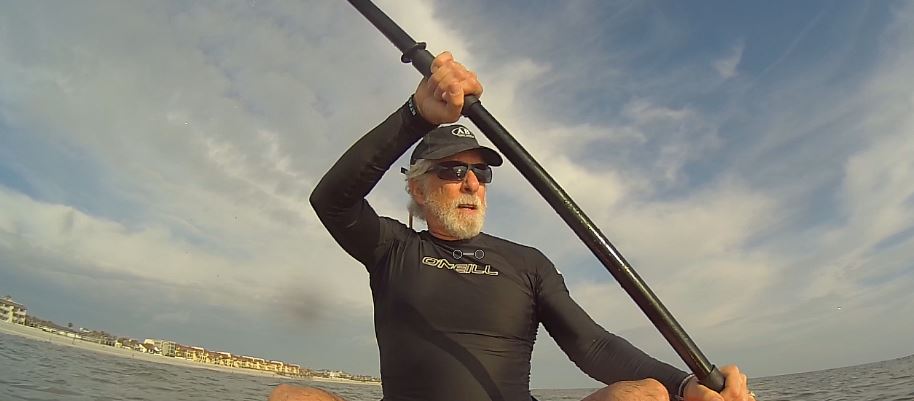
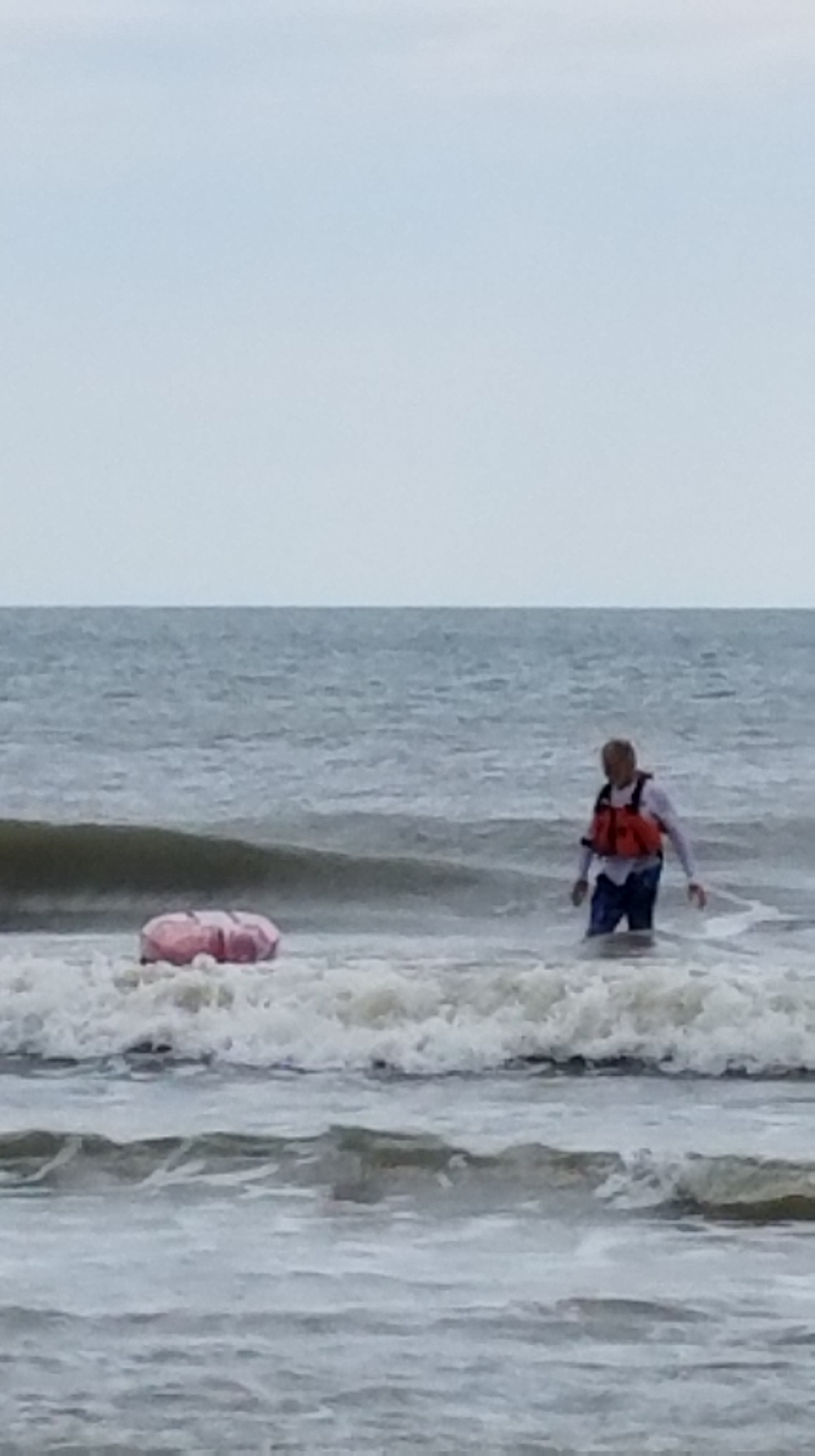
Ocean kayaking provides an instructive metaphor.  Standing on shore the waves do not look quite as challenging as when you paddle through them.  What appeared to be modest undulations while standing on the sand, feel like a tsunami when you find yourself being tossed every which way. The tools you brought with you are the same ones that worked well (really well!) in the past. You remember the paddle in your hands being much more effective on the river or the lake. But not today. You are over your head. And you might get (probably will get) tossed from the boat. Frustrated, battered, and with bruised ego, you drag yourself to shore.

The ineffective managers look to blame something or someone. They fail to make meaningful adjustments. Why should they, they could not be the problem! “My way is still the best way and we keep moving in that direction.” Rather than seek feedback and make corrections, they stubbornly move forward.  Unfortunately, depending on the situation, the upheaval may have dire consequences for all around.

The exceptional leaders take their moments of vulnerability and build on them. They ask for coaching. Recheck their equipment. Look at their compass. Take stock of what they have and what they need. Ask for critiques.  They may even backup, return to calmer waters, gain more experience, and return with renewed strength.

These leaders know they cannot go it alone. They need confidants and advisers.

To whom do you turn?

Video recommendation for the week:

Vulnerability does not equate with weakness.

Make it an inspiring year and H.T.R.B. as needed.

For information about and to order my book, Stories About Teaching, Learning, and Resilience: No Need to be an Island, click here.  A number of colleges and one state-wide agency have adopted it for training and coaching purposes. Contact me if you and your team are interested in doing the same.

My podcasts: The Growth and Resilience Network™ (http://stevepiscitelli.com/media-broadcast/podcast).

My programs and webinars: website  (http://stevepiscitelli.com/programs/what-i-do) and (http://stevepiscitelli.com/programs/webinars).

Pearson Education publishes my student textbooks for life success—Choices for College Success (3rd edition) and Study Skills: Do I Really Need This Stuff? (3rd edition).

(c) 2018. Steve Piscitelli. All rights reserved.

Posted in accountability, assumptions, authenticity, awareness, Choice, coaching, collegiality, confidence, Life lessons, resilience, risk-taking, self-awareness, self-efficacy, vulnerability | Tagged , , , , , , , , , | 1 Comment

(#401) Improv and Leadership


Incompetent and fear-based managers rely on rigid scripts.

Sam Wasson’s Improv Nation: How We Made a Great American Art provides lessons for transformational leadership.

As early Improv players experimented and developed the art form, they learned the power of two words: Yes, and.  When players adheres to this rule, they do not deny their stage partners. They enhance and enable. The partners deny their respective egos for the sake of the scene.

Wasson describes it like this:

Rule 1, the central tenet of agreement, would never be overturned. For the rule of “yes, and” is the rule that make cohabitation possible; it is improvisation’s peace treaty, its bill of rights…”Don’t deny” really worked.

“Yes, and” gets the players out of their heads and requires each person to listen, really listen, to the other people. They travel and “get there” together.

Extraordinary leaders understand the power of “Yes, and.”  That mindset allows for challenging assumptions and moving into the future. Reform-minded people can end up shackled to the past, mired in so-called “best practices.”

Incompetent and fear-based managers rely on rigid scripts.

Transformational leaders break the script and know how to connect with the people in front of them.

My former college entered a critical and exciting stage this past week. The District Board of Trustees has begun its search for a new president.  I have urged the Board to look for a transformational leader who is capable of authentic “Yes, and” conversations.

Building community one “yes, and” at a time.

Video recommendation for the week:

Can you engage in both convergent and divergent thinking?  As this video suggests, leaders might be predisposed to “edit too quickly.”

Make it an inspiring year and H.T.R.B. as needed.

For information about and to order my book, Stories About Teaching, Learning, and Resilience: No Need to be an Island, click here.  A number of colleges and one state-wide agency have adopted it for training and coaching purposes. Contact me if you and your team are interested in doing the same.

My podcasts: The Growth and Resilience Network™ (http://stevepiscitelli.com/media-broadcast/podcast).

My programs and webinars: website  (http://stevepiscitelli.com/programs/what-i-do) and (http://stevepiscitelli.com/programs/webinars).

Pearson Education publishes my student textbooks for life success—Choices for College Success (3rd edition) and Study Skills: Do I Really Need This Stuff? (3rd edition).

(c) 2018. Steve Piscitelli. All rights reserved.
Posted in acceptance, Appropriate Behavior, Choice, Civility, collaboration, collegiality, Communication, effective meetings, generativity, growth, improv, professional development, resilience, self-awareness, self-regulatory behavior, Teaching, teaching and learning, vulnerability, wisdom, Words | Tagged , , , , , , , | 1 Comment

(#400) Do We Live In A Post-Fact World?


Perhaps we live in a time when the question to ponder becomes,
“If a fact is offered and it is not ‘liked,’ is it a fact?”

Have we morphed into a post-fact world, as one source states, “in which virtually all authoritative information sources are called into question and challenged by contrary facts of dubious quality and provenance.”

Those who teach “information literacy” typically focus on four steps:

  1. Identifying what pertinent factual information is needed to complete a task.
  2. Understanding where to find that information—factual sources as well as location.
  3. Evaluating the information for soundness, accuracy, and currency.
  4. Organizing and using the information for a cogent and honest presentation.

Those steps use to represent a straight-forward teaching approach.


Classroom colleagues have shared that it has become increasingly more difficult to hold classroom conversations about controversial topics. Camps of opinion (which are not new) become bitterly hostile.  Anything (true or not) that does not connect to a person’s beliefs is subject to disagreement and virulent personal rants and attacks.

I always encouraged vigorous debate in classroom sessions. All sides welcomed, as long as three things were present:

  1. Civility and respect;
  2. A clearly stated fact, proposition, or thesis; and
  3. Support (read: facts) to buttress the fact, proposition, or thesis.

While some students attempted to use “If-it’s-my-opinion-it-can’t-be-wrong” argument, most made the effort to present evidence.

Have we moved to a place where instead of “truth” we settle for “truthiness”?  Can the “facts” be replaced with “alternative facts”? And who become the “fact checkers”? And do we trust them?

For teachers, a larger question looms.  How do you teach information literacy in a social media culture where thousands upon thousands (upon thousands) yell for your students’ attention each day?  Can the four steps of information literacy above still serve the needs of our current discourse? Do we need to add another step–or six? What are the weak signals for the classroom?

Do you remember the question, “If a tree falls in the forest and no one hears it, did it make a sound?”

Have we evolved/devolved to a time when the question to ponder has become, “If a fact is offered and no one ‘likes’ it, is it a fact?”

As some might say, sad, sad, very sad.

How do we combat this? Can we combat this? How do we train and coach teachers to do this so their students live in a truth-based world?

Your facts are welcomed.

Video recommendation for the week:

Stephen Colbert presents “truthiness.”

Make it an inspiring year and H.T.R.B. as needed.

For information about and to order my book, Stories About Teaching, Learning, and Resilience: No Need to be an Island, click here.  A number of colleges and one state-wide agency have adopted it for training and coaching purposes. Contact me if you and your team are interested in doing the same.

My podcasts: The Growth and Resilience Network™ (http://stevepiscitelli.com/media-broadcast/podcast).

My programs and webinars: website  (http://stevepiscitelli.com/programs/what-i-do) and (http://stevepiscitelli.com/programs/webinars).

Pearson Education publishes my student textbooks for life success—Choices for College Success (3rd edition) and Study Skills: Do I Really Need This Stuff? (3rd edition).

(c) 2018. Steve Piscitelli. All rights reserved.

Posted in Appropriate Behavior, assumptions, authenticity, awareness, Choice, Civility, curiosity, focus, fortitude, Grit, information literacy, Integrity, Personal Wellbeing, Priority management, self-awareness, self-efficacy, Words | Tagged , , , , , , , , , , | 3 Comments

(#399) Inappropriate or Authentic?


Feedback is powerful.
Evaluated feedback carries more weight.

Not all feedback is created equally.

[Source unknown]

Back in August of 2013 I posted a photo of myself on my social media sites. I loved the look, the playfulness, the setting, and the message it sent. The photographer and I had fun with the shoot. The photo remains as my profile photo on LinkedIn.

Soon after the photo “went public” I received the following LinkedIn message from a “connection”:

This self-appointed monitor for all things professional was a speaker I had met over the years.  You will notice he referenced his article that, I guess, would guide me to proper photogenic and sartorial behavior.

I was struck by the word “inappropriate.”   Synonyms include “tasteless, unseemly, improper, and irrelevant.”

Hmm. A photo on a beach, with a button-down collared shirt, and dress slacks.

So, I waited for more feedback. Again, unsolicited. Maybe I had misread something.  The other responses I got did not indicate “inappropriate” as the bloviating critic had opined. My response:

Never heard from the photo police again.

Feedback is powerful. Evaluated feedback carries more weight. Understand why people critique as they do.

Understand why you do what you do. Is it authenticity, show, money, “likes,” or something else? Be honest and be transparent with yourself and those who depend on you for a service or product. What you portray will play a part in what you attract.

For instance, if an organization would not hire me to speak or write because of an open-collared shirt, then I more than likely do not want to collaborate with them. Isn’t it great we know that up front? No false image. Transparency.  As long as I understand that (I do) and can live with it (I can) and I am not hurting anyone (I’m not), then my path is not determined by you.  I create it.

Be true to yourself.

Video recommendation for the week:

Tom Petty sings it well. What is your personal brand going to be?

Make it an inspiring year and H.T.R.B. as needed.

For information about and to order my book, Stories About Teaching, Learning, and Resilience: No Need to be an Island, click here.  A number of colleges and one state-wide agency have adopted it for training and coaching purposes. Contact me if you and your team are interested in doing the same.

My podcasts: The Growth and Resilience Network® (http://stevepiscitelli.com/media-broadcast/podcast).

My programs and webinars: website  (http://stevepiscitelli.com/programs/what-i-do) and (http://stevepiscitelli.com/programs/webinars).

Pearson Education publishes my student textbooks for life success—Choices for College Success (3rd edition) and Study Skills: Do I Really Need This Stuff? (3rd edition).

(c) 2018. Steve Piscitelli. All rights reserved.

Posted in acceptance, amplifying, branding, Civility, courage, Critical Thinking, curiosity, feedback, Gratitude, self-awareness, self-efficacy, self-love | Tagged , , , , , , , | 1 Comment

(#398) We Are Where We Are


 “We are where we are, however we got here.
What matters is where we go next.”—Isaac Marion

The New Year inevitably brings resolutions. Just as inescapable are posts about those inexorable goals for the next 12 months.

We generally hear goal statements or sentiments accompanied by words like “intention,” “focus,” “the best year ever,” “the dawn of new you,” “we’ll see what happens,” and “this year’s gotta be better than last.”

We hear of “to do” lists for the coming year.  Richard Branson urges people to ditch that list with a “to be” list.

Isaac Marion’s quote above reminds me that my choices get me to where I am. And my next choice will move me toward where I want to be. Where I go next depends on what I do now.  Today really is the tomorrow I created yesterday.

If we don’t like our today, perhaps we would do well to evaluate what we did yesterday. And the day before that. And before that.  And then…zero in on where we go next—tomorrow.  I’ve heard athletes say they quickly put a failure (strikeout, interception, missed game-winning shot) behind them and focus on the next at bat, play, or run down the court. If they didn’t, they would encumber themselves with needless baggage.

No doubt that events do happen to us. Injustice occurs. Cancer arrives uninvited. Death appears arbitrary. A natural disaster takes everything a family owns. An election turns a nation on its collective heads. In those situations, it appears disingenuous to say “focus on the journey” or “your yesterday got you to today.”

Events, people, or circumstances do play a role in our journey. So does our response.  I can be upset with a day from Hell in the airport—and let it ruin my entire day (which, unfortunately, I have done too often for no good return). In that case, the airport is where I am and where I go next (in my mind) is up to me.  I cannot take control of the airline schedules or weather. I can control me.

Someone recently said to me that he could not understand how I could be so positive given the condition of our world.  (Pretty broad, I know.) I saw someone in the gym a few months back crying. She was upset about the direction of our nation. She said to me, “How can you remain so calm?” Well, what am I to do? Walk around tied up in angst?

I may not be able to change the world from my location but I sure as heck can make an impact on the people I meet—one person at a time.  It comes down to perspective.

For sure, I am where I am.  And I am going where I take myself.  Unless I want to wait for someone else to do my work to achieve my goals. And do I want to be carried along on my journey by negative, pessimistic, fearful, and myopic minds?

What matters is where I go next.

Video recommendation for the week:

Believe in yourself.

Make it an inspiring year and H.T.R.B. as needed.

For information about and to order my book, Stories About Teaching, Learning, and Resilience: No Need to be an Island, click here.  A number of colleges and one state-wide agency have adopted it for training and coaching purposes. Contact me if you and your team are interested in doing the same.

My podcasts: The Growth and Resilience Network™ (http://stevepiscitelli.com/media-broadcast/podcast).

My programs and webinars: website  (http://stevepiscitelli.com/programs/what-i-do) and (http://stevepiscitelli.com/programs/webinars).

Pearson Education publishes my student textbooks for life success—Choices for College Success (3rd edition) and Study Skills: Do I Really Need This Stuff? (3rd edition).

(c) 2018. Steve Piscitelli. All rights reserved.

Posted in Anxiety, authenticity, awareness, Balance, Choice, Goals, Integrity, intentionality, Life lessons, priorities, resilience, wisdom, Words and Action | Tagged , , , , , , , | Leave a comment

(#397) A Blogger’s Retrospective: 2017 in Review


May you create, share, and savor powerful moments
in the coming year and beyond.

While sitting in an Austin hotel room at the end of May 2010, I wrote my first post for this blog. At that time, I had three goals:

  • Experience a new (for me) aspect of social media
  • Develop and flesh out new ideas
  • Provide something of value—not just another cyber rant.

I believe I have accomplished the first and the second. It is up to you whether I have accomplished the third. My blog posts contain videos, book recommendations and summaries, questions to ponder, and always a takeaway to apply immediately to life.  I have remained true to my commitment to publish one blog post per week. This post marks the 397th consecutive week.  And I know that I am #alwayslearning!


Since the first post, this blog has had nearly 38,000 visits and evolved into www.thegrowthandresiliencenetwork.net. Thank you!


Thank you for reading, commenting, and sharing.  I would love to hear what you find of value on this blog. And, please feel free to share any ideas you have for future posts.


Video Recommendation for the Week.

A brief thank you from me to my followers.


As has now become tradition for this blog, this last-of-the-year offering lists each of the previous week’s posts I added this year. Along with each title, you will find a teaser about each. Perhaps a nugget or two will provide inspiration. I have linked each title to the actual blog should you want to read it, re-read it, or share it. Thank you for your continued support and comments.

I also have included (1) top five blog posts (by number of views/visits) since I started this journey in 2010; and (2) the top five blog posts for 2017.

*Top Five All-Time Posts on this Blog*

  1. (#194) Honor the Past. Celebrate the Present. Embrace the Future.
  2. (#86) A Model for Critical Thinking
  3. (#18) Crab Pot Mentality
  4. (#93) SQ4R: Strategic Reading Strategies for the Classroom and Beyond
  5. (#219) The First Day of Class: People Before Paper!

*Top Five 2017 Posts on this Blog* 

  1. (#392) He Made Me a Better Version of Myself
  2. (#351) Show Don’t Tell
  3. (#379) Accommodations for My Students Made Me a Better Teacher
  4. (#368) Fake, Illegitimate, or Incomplete Information 
  5. (#354) What Can You Really Control?

*2017 in Review*

  1. A Piece of the Puzzle * You may not even “get anything” for it. But you may carry an important piece to someone else’s puzzle.
  2. Video Outtakes: Finding Humor And Moving Forward * Enjoy three-minutes-and-fifty-one-seconds of my miscues. And consider how each miscue you make can strengthen you and maybe help someone else. Don’t be ruled by fear of failure.
  3. Clues At The Tip Of My Nose * The little child had returned to remind and reassure me to believe in my abilities and myself.
  4. Repair The Bucket. Fill The Bucket * Who can help you? Who can you help?
  5. A Tangled Mess * We could ignore the tangles and hope they go away on their own. What is the healthiest and safest manner to help us stop going in circles, loosen up, and prosper?
  6. Regrets? Choices And Lessons. * A culmination of all those choices. Some small.
    Some large. All help create the person you are becoming.
  7. Show Don’t Tell * Saying it doesn’t make it so…too much talking mutes the story.
  8. When Islands Protect and Support * “This country will not be a good place for any of us to live in unless we make it a good place for all of us to live in.”—Teddy Roosevelt
  9. Change Management * We are all in the change management business.
  10. What Can You Really Control? * Perhaps understanding and accepting the uncertainty will allow you to see additional choices and paths to success.
  11. Go-Go or No-Go? * Do you allow people into your head who would not invite into your home?
  12. Are You Listening Or Adding To The Noise? * With a world full of noise, how can we fine-tune the needed listening skill?
  13. Perspective * Our attention will determine our interpretation.
  14. I Don’t Want To Burnout * How can we raise our awareness, question our assumptions, and create meaningful actions for improvement?
  15. Collisions And Serendipity * If managers across the company landscape remain insular, they can end up repeating redundant routines and retreating behind territorial barriers.
  16. Embrace Life’s Fragility * A reminder to appreciate.
  17. Where’s My Trophy? * How would you develop a meaningful and effective employee recognition program? What represents “average” and what looks like “excellent” at your workplace?
  18. Small Acts Of Gratitude * “Silent gratitude is not much use to anyone.”
  19. A Resiliency Group: Collaboration, Creativity, Caring, and Collegiality* Rather than waiting for (or blaming) “them” to do something, get creative and start a resiliency movement yourself.
  20. Your Legacy * Whatever you build, destroy, hand down, create, or undo will be your legacy.
  21. Listening For Stories Of Inspiration * Inspirationfrom a woman who did not let circumstance dictate her outcome.
  22. Why Not You? * Speaking and writing does not belong to some elite group of individuals.
  23. Understand You Goal Motivation * Create a space for transparency, authenticity, and accountability for yourself.
  24. Fake, Illegitimate, Or Incomplete Information * Just because you find a lot of information does not mean you have found accurate or credible information.
  25. About Kayaks And Perspective * If we focus on the possible negative, we get sucked into it.

  26. What’s Your B.M.I (Bureaucratic Mass Index)? * Has your bureaucracy morphed into a soul-sucking and resilience-retarding beast?
  27. Your Life. Your Choices. * What do we choose to allow into our lives? What do we dismiss from our lives?
  28. Independence * Consider where you can expand beyond your comfort zone.
  29. What Factors Affect Teaching Efficacy * Teaching efficacy reflects the teacher’s belief that he or she can impact student learning.
  30. Can a Community be Inclusive and Like-Minded? * When dialogues devolve into collective monologues do we miss out on our shared identity?
  31. Capacities for Community Growth and Resilience * A community needs to be vigilant; to continuously deepen and develop capacities for sharing, cooperating, and growing.
  32. The Lesson of the Bunny and the Deer * We can walk a pathway and never see it at all.
  33. Your Future Self * These strategies can help students (and, after all, aren’t we all students?) stay the course, continue their journey, and enjoy growth and resilience.
  34. If Something Happens and No One Sees it, Does Anything Happen? * Quietly reaching out and forging a connection and creating change.
  35. Accommodations for My Students Made Me a Better Teacher * Being a teacher is more than knowing one’s content and “covering” the material. Effective teachers do what they can to connect with each student and build a community of learners who connect with one another.
  36. The Sun Rises Each Morning. Sometimes We Cannot Recognize It * The sun will shine on the thousands of people who helped thousands of others survive the catastrophe. The storm saw strangers not acting as strangers.
  37. Before and After the Conversation * Conversation presupposes an interaction between two or more people. Synergy can develop with due consideration. Collaboration can result in movement for improvement.
  38. We All Live Downstream * Does your community resemble a collection of isolated islands? Maybe you can be the bridge builder for a movement to unite.
  39. Creating Direction * While simple dichotomies may be deceptively simplistic, they can provide a starting point for conversation and movement.
  40. Without Relationships What Do You Have? * These bureaucrats failed to establish a basic, meaningful, and respectful relationship with us.
  41. Don’t Let Anyone Discount Your Agenda * Your agenda is important.
    Your issues, trials, tribulations, strife, successes, collaborations, family, friends, and resilience mean something to you and to others.
  42. The Paddle Out * Sometimes we have to plow through rough water to find our happy places.
  43. Lessons From Elementary School * Adults, are we listening?
  44. Dividers. Adopters. Resistors * We have to know who “gets it, wants it, and has the capacity for it.”
  45. Create Your Own Breaking News Alerts * Start small. Start local. Do nothing.
  46. A Seven Week Challenge For Purpose and Growth * May you finish 2017 with clarity, peace, and vision for your future as well as those in your life.
  47. Hot dogs, Weak Signals, and Promising Practices * What signals need to be heeded for the future? How can you move “best practices” to “promising practices”?
  48. He Made Me a Better Version of Myself * Charles, thank you for being there for so many of us. Thank you for reminding us of the importance of humility, hard work, personal fortitude, paying attention, listening, and mostly, being human. You made me a better version of myself. You will be missed.
  49. Incompetent People Who Believe They Are Exceptional * They not only lack the ability to see superior talent and skills in others, they possess a blatant inability to recognize their own ineptitude and shortcomings.
  50. Resilience: Supporting, Flourishing, Growing * Do you see resilience as springing solely from adversity? Can it build from positive interactions in times that lack trauma?

  51. Anticipate. Appreciate. * Acknowledge the past. Anticipate the future. And do not forget to appreciate the present. 
  52. Circle the Wagons? * Rather than circling the wagons, maybe we should let the horses run.
  53. A Blogger’s Retrospective: 2017 in Review * A listing of the previous 51 blog posts for 2017 + other blog posts that have proven to be reader favorites.

Make it an inspiring week, end of the year, and New Year–and H.T.R.B. as needed!

For information about and to order my new book, Stories About Teaching, Learning, and Resilience: No Need to be an Island, click here.

My podcasts: The Growth and Resilience Network™ (http://stevepiscitelli.com/media-broadcast/podcast).

My programs and webinars: website  (http://stevepiscitelli.com/programs/what-i-do) and (http://stevepiscitelli.com/programs/webinars).

Pearson Education publishes my student textbooks for life success—Choices for College Success (3rd edition) and Study Skills: Do I Really Need This Stuff? (3rd edition).

(c) 2017. Steve Piscitelli. All rights reserved.
Posted in authenticity, awareness, Blogging, Dreams, growth, Life lessons, resilience | Tagged , , | Leave a comment

(#396) Circle the Wagons?


Rather than circling the wagons,
maybe we should let the horses run.

NOTE to my followers.  This will be my last post for 2017.  Next week in this space you will find my annual end-of-year retrospective.  Thank you for following, commenting, and sharing my posts.  I appreciate you. May you end your year creating, sharing, and savoring wonderful moments for yourself and those you love.  See you in 2018.


Once again, the teacher receives a lesson from the student.

Last week a former student of mine had the harrowing experience of being with a man when he died. The situation was a triathlon. The man was a participant and collapsed as he neared shore at the end of the swim portion of the event.  Adam, my student and friend, happened to be nearby. He helped with CPR. To no avail.

As Adam said, “Death is the ultimate reality check….. he went out in a blaze of glory as a relatively healthy guy having fun on a beautiful Sunday morning instead of dying slowly and ‘safely’ on his couch or in a bed at home.”

Nothing can erase the shock, the sense of loss, or the anguish involved for that man’s family, the first-responders, and people like Adam.  And, most of what we say in such situations, while from the heart, can come off as trite and cliché. Adam’s words, though, provide a reminder.

We can easily end up “circling the wagons” rather than enjoying and growing from what life has to offer.  When we circle those wagons, we end up restricting our environment and experiences. We move into a defensive position for a presumptive attack. We limit our sites. And we wait—and possibly waste.

As one writer noted, circling the wagons also created another problem: Manure. With wagons circled and the animals contained within, by morning the pioneers were deep in doo-doo.

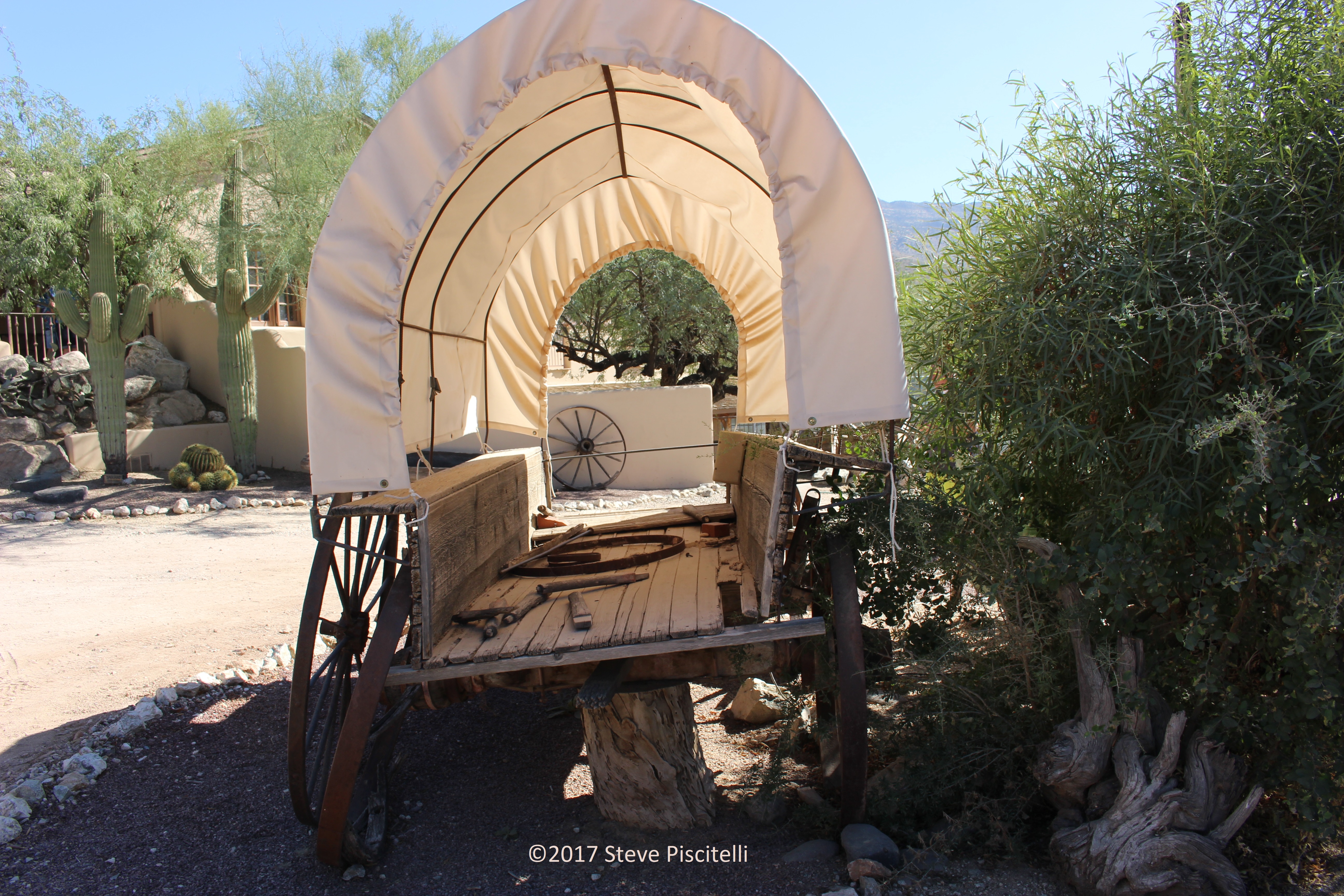
Rather than circling the wagons, maybe we should let the horses run. Those “horses” represent your dreams, desires, and destiny.  As you look to the New Year and new possibilities, will you circle the wagons or let the horses run?


Video recommendation for the week:

Playing it safe? Hmm.


Make it an inspiring week and H.T.R.B. as needed.

For information about and to order my book, Stories About Teaching, Learning, and Resilience: No Need to be an Island, click here.  A number of colleges and one state-wide agency have adopted it for training and coaching purposes. Contact me if you and your team are interested in doing the same.

My podcasts: The Growth and Resilience Network™ (http://stevepiscitelli.com/media-broadcast/podcast).

My programs and webinars: website  (http://stevepiscitelli.com/programs/what-i-do) and (http://stevepiscitelli.com/programs/webinars).

Pearson Education publishes my student textbooks for life success—Choices for College Success (3rd edition) and Study Skills: Do I Really Need This Stuff? (3rd edition).

(c) 2017. Steve Piscitelli. All rights reserved.

Posted in Appropriate Behavior, Being REMARKABLE, Choice, creating your future, lifelong learning, Mindfulness, Purpose, resilience | Tagged , , , , | 7 Comments

(#395) Acknowledge. Anticipate. Appreciate.


Acknowledge the past. Anticipate the future.
And do not forget to appreciate the present. 

As I enjoyed a Bahamian sunrise last week—disconnected from all but the waves and wind rushing by the ship’s balcony—three words came to mind. Acknowledge. Anticipate. Appreciate.

Earlier on the cruise my wife had reminded me of Lao Tzu wisdom:

“If you are depressed you are living in the past.
If you are anxious you are living in the future.
If you are at peace you are living in the present.”

Sage observation as any of us can be paralyzed by the past, paranoid of the future, or embrace the promise of the present.

We can trap ourselves in the past with ruminations about this, that, and the other. It’s easy to ruminate about

  • what did not work well in the last presentation,
  • an investment gone bad,
  • the vacation from hell,
  • the loss of someone special,
  • a missed career opportunity,
  • the “like” we did not get,
  • what he/she should have said, or
  • a dream never realized.

As we hold on to the past, we miss the present in which we stand and which will quickly move to the immediate past. Live this way and we remain fixated on the rear view mirror. It might serve us better to acknowledge what has happened and enjoy a fuller present moment because of lessons learned.

Similarly, it’s easy to get trapped in the future as we

  • prepare for the next presentation,
  • scrutinize an investment’s potential earnings,
  • envision a much-needed vacation,
  • hope for the end to a traumatic time,
  • plan for a career move,
  • await the next text, tweet, or post,
  • contemplate the direction of a relationship, or
  • dream of a better …. [You fill in the blank].

Yes, we need to anticipate and prepare (as best we can) for what is on the horizon. But do we need to endlessly rehearse and worry over every little thing that could go wrong at the expense of living the present?

As trite as it sounds, that present moment is the only thing we have. The future cannot be reached without moving through the present. Life happens one moment at a time. If we don’t pay attention and appreciate the moments in front and around us, what do we have?

Acknowledge the past. Anticipate the future. And do not forget to appreciate the present.  After all, the past is filled with memories, the future holds our hopes, while the present allows for what is.

Video recommendation for the week:

Eckhart and Oprah say it well.

Make it an inspiring week and H.T.R.B. as needed.

For information about and to order my new book, Stories About Teaching, Learning, and Resilience: No Need to be an Island, click here.

My podcasts: The Growth and Resilience Network™ (http://stevepiscitelli.com/media-broadcast/podcast).

My programs and webinars: website  (http://stevepiscitelli.com/programs/what-i-do) and (http://stevepiscitelli.com/programs/webinars).

Pearson Education publishes my student textbooks for life success—Choices for College Success (3rd edition) and Study Skills: Do I Really Need This Stuff? (3rd edition).

(c) 2017. Steve Piscitelli. All rights reserved.

Posted in Anxiety, Appreciation, authenticity, awareness, Balance, Choice, Dreams, empathy, Life lessons, resilience, soft skills, ultradian rhythms | Tagged , , , , , , , , | 1 Comment

(#394) Resilience: Supporting, Flourishing, Growing


Do you see resilience as springing solely from adversity?
Can it build from positive interactions in times that lack trauma?

As we age, do we become more of ourselves? Do we become more of what we have already been in our lives? That is, based on our track record, will we become more loving, fearful, cheerful, optimistic, pessimistic, healthy, kind, or mean?

Can we become more resilient? Some research points to factors that help children develop resilience (even in—maybe especially in—difficult and horrific situations).

Or has our resilience become a defined quality and quantity based on our background?

Do a quick search of the word “resilience” and you will find 66+ million hits on Google, more than 35,000 products on Amazon, and about three-quarters of a million YouTube videos. There is no lack of research and views.

The typical definition of resilience points to one’s ability to rise above, recover from, move on from, and learn from adversity.  But is that the only way one grows resilience? Do you see resilience as springing solely from adversity? Can it build from positive interactions in times that lack trauma?

About two years ago on this blog I offered the following thought:

Can we look at resilience from a slightly different perspective? Maybe we can approach resilience as a condition of being adaptable to a disaster and also living and sustaining a healthy life that avoids (or at least, prepares for) disaster before it happens. 

Edith Grotberg of the International Resilience Project believes we can develop resilience by focusing on three areas:

  • What I Have (building a support system of relationships);
  • What I Am (developing intrinsic strengths/thoughts)’
  • What I Can (acquiring and growing interpersonal skills and critical thinking).

Last week, Maria Popova’s Brain Pickings asked readers,

If the object of life is not mere resilience but flourishing, attaining it may be less a matter of wild pursuit of favorable outcomes that leave us perpetually dissatisfied and reaching for more, than of wise acceptance that allows us to do the best we can with the cards we’ve been dealt.

I recently spoke with an adult friend who related a traumatic experience he encountered as an adolescent. He is not sure how, but he not only rebounded from the incident, he thrived and developed survival strategies.

A mother shared with me the trials and tribulations of her teenage son who was making ill-advised choices.  She and her husband provide the support system (“tough love”) that is helping (albeit slowly) the child to grow his interpersonal and critical thinking skills. The parents continue to focus on the long game.  When he comes out on the other end of this turbulent time, he will have developed coping mechanisms that will allow him to flourish.

At least that is the hope.

Will he become more of what he has been the last few years or more of what he has the capacity to build within himself and for others? His strong support system points to the latter.

How does your support system help you to flourish?  How can you help someone this week?


Video recommendation for the week:

Support networks. Recognize them. Build them. Create community.  A powerful video about the power of relationships.


Make it an inspiring week and H.T.R.B. as needed.

For information about and to order my new book, Stories About Teaching, Learning, and Resilience: No Need to be an Island, click here.

My podcasts: The Growth and Resilience Network™ (http://stevepiscitelli.com/media-broadcast/podcast).

My programs and webinars: website  (http://stevepiscitelli.com/programs/what-i-do) and (http://stevepiscitelli.com/programs/webinars).

Pearson Education publishes my student textbooks for life success—Choices for College Success (3rd edition) and Study Skills: Do I Really Need This Stuff? (3rd edition).

(c) 2017. Steve Piscitelli. All rights reserved.

Posted in accountability, assumptions, change, collegiality, Community, parenting, resilience | Tagged , , | 5 Comments

(#393) Incompetent People Who Believe They Are Exceptional


They not only lack the ability to see superior talent and skills in others,
they possess a blatant inability to recognize their own ineptitude and shortcomings.

You know the type. Perhaps you work with one, or two, or more. You may even catch them on the evening news or featured in one of your streaming news alerts. Or the driver in the next lane.

Or maybe it is the average to below-average colleague, politician, celebrity, or latest conspiracy advocate who cannot believe anyone would evaluate her as anything less than excellent.  The person who lacks competence but believes he far excels beyond all others on the team—all evidence to the contrary ignored.

Frustrating.

In 1999, two psychologists identified the Dunning-Kruger Effect: People with low ability suffer from an “illusory superiority” when they compare themselves to others. They not only lack the ability to see superior talent and skills in others, they possess a blatant inability to recognize their own ineptitude and shortcomings.

The paper introducing the findings was aptly titled, “Unskilled and Unaware of It.”

Hmm.  Anybody (bodies) come to mind?  Think of the news.  Think of your local community. How about your team?  Yourself?

In my mind’s eye, I see two people at the local gym as examples.  Neither of them says much kind about anyone or anything; and both always have to talk in broad generalities and obscenities about others. Everyone, in their view, knows much less than they do.  These non-stop talkers suffer from what I call “I-cannot-NOT-talk” syndrome.  Maybe you know some of these pontificating blowhards who speak as if all they spout represents mana from the gods.

For years my colleagues and I taught students strategies required of information literate citizens.  One of those steps demands that we carefully and critically evaluate the sources of information. Understanding concepts like confirmation bias is a must.  We did this long before the term “fake news” became a popular euphemism.

Your task this week requires that you be vigilant for any “Dunning-Krugerites” (my phraseology—not the psychologists’) who cross your path, come on one of your screens, cut you off in traffic, or cannot believe well-founded/supported criticism of themselves or their views.

Do you want to depend on these people? Would you invest your life savings with them? Depend on them for a medical diagnosis? Follow them blindly down an oblivious path to heaven knows where?

Tread carefully, my friend.


Video recommendation for the week:

This video provides a visual overview.


Make it an inspiring week and H.T.R.B. as needed.

For information about and to order my new book, Stories About Teaching, Learning, and Resilience: No Need to be an Island, click here.

My podcasts: The Growth and Resilience Network™ (http://stevepiscitelli.com/media-broadcast/podcast).

My programs and webinars: website  (http://stevepiscitelli.com/programs/what-i-do) and (http://stevepiscitelli.com/programs/webinars).

Pearson Education publishes my student textbooks for life success—Choices for College Success (3rd edition) and Study Skills: Do I Really Need This Stuff? (3rd edition).

(c) 2017. Steve Piscitelli. All rights reserved.

Posted in accountability, assumptions, awareness, Critical Thinking, curiosity, decision making, Discipline, Dunning-Kruger Effect, Education, information literacy, Mindfulness | Tagged , , , , , | 2 Comments