(#302) Show Muscles


We can end up doing things that look good, feel good, or make a splash
while ignoring the support system behind each of those choices.

My trainer, Charles, recently introduced me to a new (for me) exercise in the gym.  The Multi-Hip Extension machine allows me to focus on important muscles that help support posture, lower back, stability, tone, and leg strength.  I now do 200 reps four or five times per week. I have noticed increased flexibility and improved strength.

Charles reminded me that these exercises do not work muscles that we normally see—or at the very least, they are not what he termed “show muscles.”

“Show muscles” typically get a lot of emphasis in the gym. Biceps and pectorals come to mind.  These are what others will see when a tank top is worn for emphasis and, well, show. Same for quads or well-defined calves. When developed they “show” well in shorts, skirts, or high heels. Nothing particularly wrong with that,

Image courtesy of imagerymajestic @ FreeDigitalPhotos.net

Image courtesy of imagerymajestic                                     @FreeDigitalPhotos.net

Often,though, the “support muscles” do not get enough attention.  And if you ignore the “support muscles” long enough it will become difficult for the “show muscles” to continue to show off! As I understand the concept, a strong and well-developed bicep will do better (be healthier/stronger/toned so to speak) with attention paid to the opposing triceps. Pecs benefit from strong back muscle groups. Quads get help from healthy hamstrings.

And there are a host of smaller and deeper muscles that further help the “show muscles” prosper. I think of the rotator cuff muscles I have had repaired in both shoulders. These are critical to my movement and fitness even though I don’t necessarily see such muscles.

As I thought more and more about this label of “show muscles” I thought of applicability in so many other parts of our lives.  We can end up doing things that look good, feel good, or make a splash while ignoring the support system behind each of those choices.  At some point, we have to pay the piper.  Consider a few examples:

1.  A few days ago, I washed my car and put the type of spray protection on the tires that make them shine. The vehicle looked great for an impending road trip. This was the “show muscle.” The next day, when I started the car I noticed a slight hesitation. It was, I thought, a warning of a weakening battery (the “support muscle”).  An hour later I had the results of a diagnostic test that showed the batter was OK—and while it could last 6 months, it may die in a few days.  I decided to beef up my “support muscle”—bought a new battery.  Better, I thought, for my car to look good and be moving on my trip than to look good and broken down on the side of the road.

2. How about the “show muscle” of expensive clothes, jewelry and other consumer items?  Is the “support muscle” of wealth building (the disciplined, unseen and sacrificial offerings made for savings and retirement) getting attention?

3. Houses can have “show muscles.” Great curb appeal. People ooh and ah as they drive by.   Unfortunately, the “support muscles” of regular maintenance—regular caulking, painting, and wood repair that might not be very sexy—may not get as much attention as the “show muscles.”  Who really notices that? No one does, until critters and moisture start undermining the structure and appearance (the “show muscles”) of the house.

4.  The person who sacrifices mightily to climb the promotional ladder at work may be going for the “show muscle”—the title, prestige, power and/or money.  In the meantime, what toll taken has been exacted on the “support muscles” of relationships and personal well-being? Is he or she even aware of the physical and emotional impact? As Charles, my trainer, reminded my listeners on a recent podcast, “How do you walk around in something you were born with and  not know anything about it or not be aware of what affects it?” 

Video recommendation of the week: This week’s spotlight turns to one of my podcast episodes about fitness and discipline.


6. Turn on your PC or open your tablet and all sorts of “show muscles” appear right there on the home screen.  We dig in and start using all of these great conveniences.  But what happens when we receive a notice to update our anti-virus program or install the latest OS? We tend to ignore these “support muscles” until a more convenient time or wait until the computer shuts down on its own.   (Yep, I’m guilty.)

7. My blog posts, podcasts, live events, and writing projects can fall into the category of “show muscle.”  Nothing wrong with being proud and continuing to make a difference in lives. That is great!   However, I need to pause and think of all the “support muscles” that allow me to show my stuff. A short list of “support muscle” gratitude looks like this:

· the computer tech who designed and put my computer together
· the IT people who help me at every live stage event
· the people who take the time to reach out and engage me to come to their campus or corporation
· the people in production who made my books look good (“show muscle”!) on the bookshelves
· the marketing and sales reps who sell my books
· my colleagues who inspire me
· my wife who inspires me more than all others, and
· my car that recently got me to Raleigh, N.C. for a speaking engagement this week…see #1 above.

And I can go on and on with the metaphor. You can think of even more.  Your Call-to-Action for this week is to give thanks for and be proud of those “show muscles.” Then make sure your “support muscles” get their due consideration. Those “support muscles,” after all, keep those “show muscles” strutting their stuff!

Make it an inspiring week as you pursue your authentic “hell, yeah!” goals.—
H.T.R.B. as needed.

You can subscribe to my newsletter by clicking here.

You can find my podcast series at Growth and Resilience (http://stevepiscitelli.com/video-media/podcasts). 

Check out my website  (http://www.stevepiscitelli.com/programs.html) for programming information as well as details about upcoming webinars (http://www.stevepiscitelli.com/webinars).

My books Choices for College Success (3rd edition) and Study Skills: Do I Really Need This Stuff?  (3rd edition) are published by Pearson Education.

(c) 2016. Steve Piscitelli. All rights reserved.


Posted in core values, courage, faculty development, fitness, generativity, Gratitude, Integrity, Life lessons, life success, mindset, Passion, Personal growth, Personal Wellbeing, Physcial health, Purpose, resilience, Success, wisdom | Tagged , , , , , , , , , , , , , | 2 Comments

(#301) Authenticity: What Does It Look Like For You?


As you live your life
Please take my cue
To thine own self be true

In a TEDx talk, psychologist Maria Sirois states, “When we are authentic all of the parts get to exist.”

All of our parts get to exist.

Often, though, some of those parts might be denied. Regretfully denied.

In a previous post on this blog, I suggested we all take time to give our goals a second R.E.A.D. to make sure the goals we set really stand for and represent what we truly want to do and who we are in this life.  We would do well to make sure the goals allow for Relationships that matter; for Excitement in our lives; for our Authenticity to shine; and for us to make a Difference in our world.

If our goals pass the second R.E.A.D. we then have a better chance to live our own authentic lives not the scripts expected of us by others.

Arvind Balaraman@FreeDigitalPhotos.net

Image courtesy of Arvind Balaraman @FreeDigitalPhotos.net

The article “The 5 Biggest Regrets People Have Before They Die” makes the point that the common deathbed regrets did not include absent titles, unearned degrees, pretty looks or adulated celebrity. As I review the regret list below (according to work done by a hospice nurse), I thought about how things might have been different for these people if earlier in their lives they had given their paths a second R.E.A.D.

  1. “I wish I’d had the courage to live a life true to myself, not the life others expected of me.”
    *This speaks to Authenticity–living your life according to your healthy and ethical standards; not succumbing to group-think or doing what someone else considers to be the correct path for you to follow. Because it is good for him or her does not mean it is good for you.
  2. “I wish I hadn’t worked so hard.”
    *Are you creating a life or a resume? If the resume takes precedence, then how Excited are you about it? When you look at the journey you travel, does it create a positive Difference in the world around you?
  3. “I wish I’d had the courage to express my feelings.”
    *Do you speak up? Or do you follow the expectations to go along and get along? When we are not Authentic to ourselves, we need to ask why. First that requires an awareness that something is amiss. Remember, being authentic does not mean we have to be butt-holes about it. Yes, self-expression can be scary—and it can be liberating.  It will create consequences.
  4. “I wish I had stayed in touch with my friends.”
    *Genuine and healthy Relationships can help keep us grounded. They can help us stay in touch with our authentic selves.
  5. “I wish that I had let myself be happier.”
    *Do we stay on the proverbial treadmill out of expectation or because we want to? Do our goals bring Excitement to our lives?

There are stories we tell ourselves and there are stories we live. What is the gap between the two? Do your stories represent you as your authentic self?  Do they allow your whole being to be authentic? What adjustments or tweaks need to be made to continue to live your already authentic life or to live a more authentic life? What incremental steps can you take today?

The bridge in one of my songs (“Love My Life”) from my second CD (Find Your Happy Place!) simple sings

As you live your life
Please take my cue
To thine own self be true

Video recommendation of the week:  Dr. Maria Sirois speaks about the authentic self in this TEDx Talk.

Make it an inspiring week as you pursue your authentic “hell, yeah!” goals.—H.T.R.B. as needed.

You can subscribe to my newsletter by clicking here.

You can find my podcast series at Growth and Resilience (http://stevepiscitelli.com/video-media/podcasts). 

Check out my website  (http://www.stevepiscitelli.com/programs.html) for programming information as well as details about upcoming webinars (http://www.stevepiscitelli.com/webinars).

My books Choices for College Success (3rd edition) and Study Skills: Do I Really Need This Stuff?  (3rd edition) are published by Pearson Education.

(c) 2016. Steve Piscitelli. All rights reserved.


Posted in authenticity, Dreams, Goals, intentionality, Passion, Personal growth, Personal Wellbeing, Purpose, Reflection, Reflective practice, relevance, risk-taking | Tagged , , , , , , , , , , | 3 Comments

(#300) Is Grit A Crutch? An Excuse? A Strategy? A Game Changer?


To disregard fortitude ignores the importance of personal effort.
No, it does not always “pay off” like we might want it to.
Grit, though, is a contributing factor on our journey.

Type in the words grit or fortitude into Google and you will get millions of hits. Is it becoming a cliché or overused? Yes, according to an article a colleague recently shared. The author said he was “tired of grit” for three reasons:

  1. Grit offers simplistic solutions
  2. Grit does not give due consideration to genetics
  3. Grit “attempts to equate unequals as equals.”

During my decades in the classroom, I found “grit” to be an important (and, at times, game-changing) factor in student success. Not the only factor but nevertheless a key factor.  When I started my teaching and learning career three-plus decades ago, I don’t even remember the term “grit” getting much (any?) use. We heard about “hard work,” “effort,” “diligence,” “stick-to-it-iveness” or “fortitude.” Similar concepts with similar connotations.

amenic181@FreeDigitalPhotos.net

amenic181@FreeDigitalPhotos.net

Early in my career I taught students classified as “gifted.” Even within that sub-population of the larger population of students there was a discernible bell curve of achievement.  Many factors came into play: home life, academic preparation, work ethic and health issues were a few.  Even though all the students had the “gifted” label not all were academically equal. There were super stars—like the few students who eventually scored perfect scores on their SAT tests.  And there were those who struggled to keep up with their classmates, as well as those right in the middle of the curve. Fortitude or the lack thereof had an impact on all.

Each semester at the college level I witnessed grit/effort/hard work/fortitude that had an impact. For some students, it was the tenacity to go to tutoring, visit professors, and collaborate with classmates that helped them overcome academic (and other) challenges. They had, developed, or fine-tuned the fortitude to dig deeper and work harder (or even, work minimally) and that provided the added punch that was needed to help get them through an obstacle and keep their dreams alive. Conversely, I also saw the academically gifted/well-prepared fail to achieve their goals due to (in part) a lack of effort.

Paul Stoltz breaks grit into four components: Growth, Resilience, Instinct, and Tenacity. He also recognizes that not all grit is created equally. In other words, someone can have grit and still not be “successful” in her chosen direction if she applies it inappropriately.

Video recommendation of the week:  Perhaps Daniel Coyle (Talent Code) who examined the “space” between not being very good at something and being good at something was on to something. When he studied hotbeds of talent and genius he found that when people struggled and continued reaching (fortitude) they got better.  Constantly reaching and repeating. Aware of what did and didn’t work.  Sounds like grit. No, not everyone will be a “genius” like Coyle studied; but grit moves the person further along toward his or her upper level—wherever that may be.

Or maybe Tony Schwartz (The Way We’re Working Isn’t Working) had the secret when he spoke of ultradian rhythms.

To attribute academic or career shortcomings simply to a lack of effort would be a gross overstatement.  Many factors contribute. However, to disregard fortitude might ignore the importance of personal effort.  No, it does not always “pay off” like we might want it to. Maybe one of the “isms” intervenes and sabotages our efforts.  Maybe we don’t have natural talents to do what we would like to do. Grit, though, is a contributing factor on that journey.

I would be hesitant to discount the importance of grit.  I have seen people (including myself) who were told, in one way or another, that they were just not good enough to do what they wanted to do—but through diligent effort, goals were achieved.

Make it a wonderfully successful week as you pursue your “hell, yeah!” goals.—H.T.R.B. as needed.

You can subscribe to my newsletter by clicking here.

You can find my podcast series at Growth and Resilience (http://stevepiscitelli.com/video-media/podcasts). 

Check out my website  (http://www.stevepiscitelli.com/programs.html) for programming information as well as details about upcoming webinars (http://www.stevepiscitelli.com/webinars).

My books Choices for College Success (3rd edition) and Study Skills: Do I Really Need This Stuff?  (3rd edition) are published by Pearson Education.

(c) 2016. Steve Piscitelli. All rights reserved.

 

Posted in awareness, Grit, health, Life lessons, reslience | Tagged , , , , | 1 Comment

(#299) The First Forty Years


If you held me down to provide the “secret sauce,”
I’d say it is simply giving each other space.

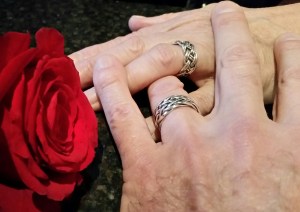
40th Anniversary Rings

This week’s blog posting has a more personal indulgence than past posts. Hopefully, in keeping with the theme of this blog, you will see the connection to growth and resilience.  Valentine’s Day is not just another holiday on the calendar for me. It our wedding anniversary. And February 14, 2016 marks our 40th year.  Forty years!  Amazing to think of that number. It seems like it belongs to someone else—someone much, much, much older! Where did the time go?  My wife and I agree that it has gone by in a blink.

Scan_Pic0003

Photo: Barkley Geib

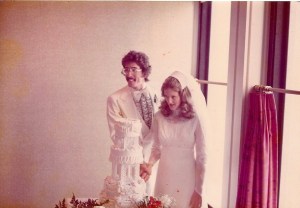
A little background.  My wife Laurie (Hoppi) and I met on a blind date during my senior year in college.  (Wednesday, January 21, 1975 to be exact). We went to a Jacksonville University Dolphin basketball game at the old Jacksonville Coliseum. Three months after our introduction, I graduated and started a career.

Spring of 1975

Spring of 1975

One month after that, Hoppi moved to Jacksonville.  Nine months after that we were married. The year was 1976.

Photo: Barkley Geib

Photo: Barkley Geib

Historical context.  It’s really difficult for either of us to forget our anniversary date.  The day is a holiday and the year saw our nation celebrating its bicentennial. For those readers who might have a bit of difficulty remembering that year, here is a (very) little time capsule:

  • Pittsburgh beat Dallas in Super Bowl X.
  • A new figure on the national political scene won the Democratic Caucus in Iowa—and eventually the presidency.
  • The Toronto Blue Jays baseball team came into existence.
  • Apple Computer Company was created by Jobs and Wozniak.
  • The New York Yankees were swept by the Cincinnati Reds in the World Series.
  • NBC replaced the peacock logo (remember that logo?).
  • Ted Turner purchased the Atlanta Braves for $12 million (not sure that would even pay for the salary of a “star” in 2016).
  • Laverne and Shirley premiered.
  • The minimum wage hit $2.35.
  • Bruce Jenner won the Olympic decathlon.
  • The number one Billboard song on February 14, 1976: “Fifty Ways to Leave Your Lover” (Not sure that was a good omen for a wedding day! But I digress.)
(Above from http://www.timelines.ws/20thcent/1976.HTML;
https://en.wikipedia.org/wiki/List_of_Billboard_Hot_100_number-one_singles_of_1976)

Secret Sauce?  But obviously for this 22-year old couple, the big news was our wedding—and the beginning of a life-long adventure.

People have asked us about the “secret” to 40 years of marriage.  I never like those types of questions. The answers usually sound so freakin’ pompous and self-serving.  For us, there is no secret; no formula. We have had our difficulties like all others.

PISCITELLI002

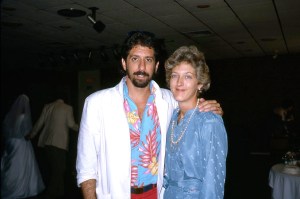
Heck, truth be told, we didn’t know what we were getting into.  We didn’t have a checklist of what we wanted or were looking for.  But, if you held me down to provide a “secret,” I’d say it is simply giving each other space.  That “secret sauce” was there in 1976. Still present today.  Heck, who else would go to a wedding with someone who looked like he had stepped out of Miami Vice? (See above photo sometime in the 1980s. Sonny Crockett anyone?)

We have encouraged each other, supported each other, and challenged each other along these four decades.  We have NEVER “kept score.” You know, the kind of relationship you might hear something like, “Well, I did such and such last week…so you have to do such and such this week.”

We did share—and I think more than we really knew at the time—a value structure about the things that really mattered. Trust. Respect. Laughter.  Simplicity. Work and play ethic. That has been huge as we moved through–and continue to move through–life. Growth and resilience were nurtured.

Amsterdam circa 1983

Amsterdam circa 1983

But mostly the reason for our success and longevity is that I “married up”!  I’ve said this often. I hit the jackpot.  Cliché? Guilty!  But if there is such a thing, I married an old soul.  Hoppi lets so many things roll off her back—while I fuss and fume.  We’ve had our share of challenges and disagreements—and, again, she had the winning attitude.

One card I got her (on our 35th anniversary) pretty much summed it up: “Of course I love you. Who else would put up with all my crap?”  She is amazing.

Video recommendations for the week:

So, happy anniversary to my (and many people’s) inspiration.  I’ll leave with two songs. Billy Joel’s “You’re My Home” was our wedding song. (The wedding reception band we hired was named Sounds Interesting.)

And Alan Jackson simply captures the range of experiences over time.

When you spend more than two-thirds of your life with one person, it is healthy to remember all the good times and the not-so good times that made us stronger and increasingly resilient.  And the many, many good times to still come.  I love you, Hoppi!

Oahu circa 1985

Oahu circa 1985

Savannah 2015

Savannah, Georgia 2015

Make it a spectacular week as you grab for each moment.—H.T.R.B. as needed.

You can subscribe to my newsletter by clicking here.

You can find my podcast series at Growth and Resilience (http://stevepiscitelli.com/video-media/podcasts). 

Check out my website  (http://www.stevepiscitelli.com/programs.html) for programming information as well as details about upcoming webinars (http://www.stevepiscitelli.com/webinars).

My books Choices for College Success (3rd edition) and Study Skills: Do I Really Need This Stuff?  (3rd edition) are published by Pearson Education.

(c) 2016. Steve Piscitelli. All rights reserved.
 

Posted in Appreciation, assumptions, awareness, Being REMARKABLE, curiosity, Discipline, Dreams | Tagged , , , , , , , , , , | 9 Comments

(#298) Do You Have “Hell, Yeah” Goals?


When you establish new goals,  consider these four components.
Give your goals a second R.E.A.D.

During one of my recent podcast recordings, film producer Pepper Lindsey posed an intriguing question:  “What does success look like to you?” (This podcast will air on March 15, 2016. Click here for more information.) What a wonderfully thought-provoking query.  Consider it for yourself. Is success for you measured by money, fame, a certain title, ego, an opulent life style, a simple lifestyle, making a difference in your community, driving a larger car, or taking trips? Something else?

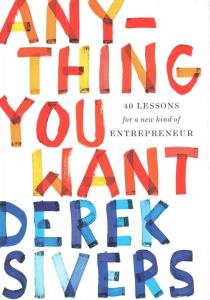
Derek Sivers, in his book Anything You Want: 40 Lessons for a New Kind of Entrepreneur, asks a similarly interesting question:  “How do you grade yourself?”

Does success to you only matter if other people notice? Does success only matter if (for instance) you have your name on a park or building? Or is it more connected to the programs you helped start in that park or building—programs that will live well beyond you and your name recognition?

sivers

Both of these questions tie directly to why we want to do what we want to do—our goals.

Goals can be powerful motivators. They provide direction, purpose and energy.  And, if we are not clear on the what and the why of our goals they can lead us in unhealthy directions. We may even beat ourselves up because we have not achieved a certain goal (“Life is passing me by”; “I’m not getting any younger!”).

How are we grading ourselves? How do we define success?

Have you had a remarkable career (read: you have made a difference for those around you) but because you have not reached the “next level” (however you define that) you do not consider it a success? What is important—the difference made or the title not achieved?

Do you take on projects and tasks that you’re truly juiced about or do you settle for anything with the hope it will bring you something.  Sivers proposes you only consider those goals to which you say “Hell, yeah!” Projects that give you energy and purpose

We all have different versions/definitions of what success looks like and how we grade ourselves. The point: Be aware of  and understand the assumptions you make when establishing your goals—and ask whether they meet your definition of success. Allow me to use a personal example.

I learned early on to carefully weigh whether I will take on a speaking or writing opportunity.  I use what I have come to call my R.E.A.D. principle. That is, for me to take on an engagement (a new goal), four components must be in place.

  • Relationship. I have to work with people I enjoy and respect. This requires validation by and for all parties and not manipulation by any party.
  • Excitement. I have to have enjoyment preparing for and doing the event. This is a major piece of the “Hell, yeah!” factor.
  • Authenticity. I have to be allowed to be my authentic true self. Don’t ask me to be something I am not. Yes, the event is about your needs and your people. However, if who I am does not fit that need, then we should not sign a contract. (Why would you even ask me?)
  • Difference. I want my participation to make a difference in the lives of the people in the audience. I don’t want to waste their time with exhortations and clichés.

You see, my goal is not to have an engagement. It goes beyond the numbers. My goal is to have the right engagement. If the potential gig does not have a proper R.E.A.D. for me, I will no longer agree to it.

When setting and re-evaluating your goals give them a second R.E.A.D. and determine if you can enthusiastically yell, “Hell, yeah!”

Video Recommendation for the Week:

While this video clip looks at entrepreneurial decisions, consider where and when you can apply this in your life. Yes, when you “work for someone else” you may feel you have fewer options to say “Hell, no!”

And then, that might provide reason for another conversation to have with yourself.

Make it a wonderfully successful week as you pursue your “hell, yeah!” goals.—H.T.R.B. as needed.

You can subscribe to my newsletter by clicking here.

You can find my podcast series at Growth and Resilience (http://stevepiscitelli.com/video-media/podcasts). 

Check out my website  (http://www.stevepiscitelli.com/programs.html) for programming information as well as details about upcoming webinars (http://www.stevepiscitelli.com/webinars).

My books Choices for College Success (3rd edition) and Study Skills: Do I Really Need This Stuff?  (3rd edition) are published by Pearson Education.

(c) 2016. Steve Piscitelli. All rights reserved.
 

Posted in Appropriate Behavior, assumptions, awareness, Balance, Being REMARKABLE, branding, confidence, core values, courage, creating your future, Dreams, fortitude, Grit, growth, habits, life success, Life's purpose, little pleasures, Motivation, Passion, Personal growth, Relationship, relevance, tenacity | Tagged , , , , , , , , , , , , , | 24 Comments

(#297) In Their Words: Leadership and Collaboration


The leadership concepts and exhortations below can be summed up in a word, RESPECT.
Respect for your abilities, respect for your followers, respect for your team,
respect for the mission, respect for humor, and respect for relationship building.

My inspiration for this week’s blog post came from two sources: An international magazine and my community’s recent city commission meeting.

Fast Company dubbed its February offering the 2016 Leadership Issue. The article “Lessons of Leadership” presented lessons learned and shared at the inaugural Fast Company Innovation Festival.

As you read the selected insights below consider how both your team’s and your world-view compare to their views on trust, failure, innovation, listening, possibilities, and self-limiting constraints. Maybe you don’t wish to measure up; maybe you do. By any measure, their experiences offer points for consideration.   So, in their words (bold-faced highlights are my emphasis), here are a few lessons for leadership and collaboration:

Image: dan@FreeDigitalPhotos.net

Image: dan@FreeDigitalPhotos.net

“In the work environment, innovation comes from great trust, from people having a voice. Fear inhibits innovation.”-Susan Reilly Salgado (Union Square Hospitality)

“The difference between skill and talent: A skill is something you learn. Talent is what you can’t help doing.”-Caroline Gibson (Levo)

“Don’t be afraid to fail, but when you do, fail fast and laugh at yourself.” Michael Houston (Grey North America)

“As exciting as the digital age is, the most brilliant, fastest tech can’t bring what human connection can bring.” Jim Brett (West Elm)

“First of all, just listen and learn.”-Angela Ahrendts (Apple)

“If you make something you love, people are going to fall in love with it.”-Brown Johnson (Sesame Workshop)

Learn. Know what you didn’t know before.”-Eileen Fisher (Eileen Fisher, Inc)

“It’s the hypothesis that there’s nothing sacred that can’t be changed…If you just think about the world of possibilities with the existing infrastructure, you’re massively limiting yourself…There’s something beautiful about ignoring all realistic constraints.”-Anne Wokcicki (23andMe)

Ahrendts of Apple (and previously of Burberry) emphasized that when we listen we build trust and the people we lead want to collaborate. The followers gladly follow and go beyond being clock punchers. She cited that Apple’s recent retention rate among employees hit 81% “because they feel connected.”  And the effective leaders and teams have “emotional electricity.” (See the TEDx video below.)

Consider where you hone your calling each day.  Is there a feeling that you bring about meaningful change and that you are leaving/have left the world better than you found it? Are you building human connections—validating relationships? Does your life’s work have relevance?

The leadership concepts and exhortations above can be summed up in a word, RESPECT. Respect for your abilities, respect for your followers, respect for your team, respect for the mission, respect for humor, and respect for relationship building.

Video Recommendation for the Week:

This TEDx video looks at the power of human energy.

Every two weeks the Atlantic Beach City (Florida) Commission convenes to discuss the business of our community. And like any example of democracy in progress, the public has the opportunity to address our elected representatives.  As I entered the chamber this past week, I picked up a Speaker Request Form and found at its top a reminder as to what respect means:

Refrain from put downs, criticism and personal attacks.

Encourage others to state their views.

Support each other, even if you don’t agree.

Practice active listening.

Express yourself assertively not aggressively, not submissively.

Collaborate, do not compete or collude.

Trust each other, unless and until such trust is violated.

Atlantic Beach at Sunrise (Steve Piscitelli)

Atlantic Beach at Sunrise (Steve Piscitelli)

Make it a wonderfully successful week as you create and tap into your emotional electricity—H.T.R.B. as needed.

You can subscribe to my newsletter by clicking here.

You can find my podcast series at Growth and Resilience (http://stevepiscitelli.com/video-media/podcasts). 

Check out my website  (http://www.stevepiscitelli.com/programs.html) for programming information as well as details about upcoming webinars (http://www.stevepiscitelli.com/webinars).

My books Choices for College Success (3rd edition) and Study Skills: Do I Really Need This Stuff?  (3rd edition) are published by Pearson Education.

(c) 2016. Steve Piscitelli. All rights reserved.

Posted in leadership, Life lessons, respect, transformational leadership | Tagged , , , | 2 Comments

(#296) Not Us. Them.


“A building is not just about itself, but the place where it resides.”-Craig Dykers

Did you hear the one about the college president’s view of how to handle struggling students? Reportedly his suggestion was to “drown the bunnies.”

No, that’s not the setup for a bad joke.  According to a recent article in Inside Education that is what a college president said (though, the president says he can’t remember his exact language) when discussing ways to increase retention numbers for his institution. One such method put forth: Encourage those who might fail to withdraw early in the semester—and protect retention numbers for the institution.

Ambro/FreeDigitalPhotos.net

Ambro/FreeDigitalPhotos.net

Where does one even start with such a sentiment? Let’s hope in this case the president was incorrectly or inaccurately quoted. If not, is this what happens when the institutional management thinks they have become the institution?

Students bring their academic and non-academic challenges with them when they step on campus.  Any college is more than its bricks and mortar. The college is the community it serves.  Of course, not all students will be successful. Colleges (like community colleges) that have open admission policies agree to take on 100% of their applicants.  Some will not be successful–and many will. And it often takes longer than one or two semesters for students to find their footing and transition into the ethos of higher education.

The campus is not about the president, professors or custodians—it’s about the community. To be sure, all of those people (and more) make up the community.  We need transformational leaders and effective faculty.  But we need to examine the mission.  Has it come to be directed by and for retention numbers on an Excel spreadsheet rather than the human lives that cross the threshold each day?

I know first-hand that colleges across our great nation have a plethora of resources available for student success. Colleges like San Jacinto College have an interest in the student as a total person.  Florida State College at Jacksonville has a program  to steer students toward important resources during the critical first semester. Northern Virginia Community College “is committed to helping students reach their goals with a network of support services.”  And the list goes on and on around the nation.  These higher education institutions definitely see more than “bunnies” to be quickly dispatched.

A concomitant question: What admission criteria do colleges and universities use?

As presented on CBS News last week, according to a recent report titled “Turning the Tide,” colleges and universities are starting to review their admission criteria.  Traditional benchmarks (ACT/SAT, for instance) are being questioned for their efficacy. This conversation eventually connects to retention of students from one semester to the next.

cbs

Perhaps the unfortunate wording and/or sentiment of one college president may help to further the meaningful conversation about who the college admits, under what circumstances and with what promises for assistance and chances for success. Access without opportunity is hollow. What markers spot potential and which ones don’t?

I read the quote that opens this post in the February issue of Fast Company. The issue is the magazine’s 2016 leadership issue.  I believe it applies to our college campuses across the nation where our students depend on effective and meaningful leadership and teaching.

It’s not about us. It’s about them.

Make it a wonderfully successful week—H.T.R.B. as needed.

You can subscribe to my newsletter by clicking here.

You can find my podcast series at Growth and Resilience (http://stevepiscitelli.com/video-media/podcasts). 

Check out my website  (http://www.stevepiscitelli.com/programs.html) for programming information as well as details about upcoming webinars (http://www.stevepiscitelli.com/webinars).

My books Choices for College Success (3rd edition) and Study Skills: Do I Really Need This Stuff?  (3rd edition) are published by Pearson Education.

(c) 2016. Steve Piscitelli. All rights reserved.

Posted in assumptions, Choice, collaboration, college retention, common sense, Community, faculty development, ideologies, intentionality, leadership, Life lessons, Making a Difference, Relationship, teaching and learning | Tagged , , , , , , | 2 Comments

(#295) His Heart Created A Wonderful Life


Stay healthy and hug a little longer.

A few days ago, the world lost a wonderful soul. My friend (dating back more than 40 years to our college days) Royce Duncan made the transition from this world to what lies beyond. The end came far too soon and far too quickly for family and friends.

2014-06-13 19.28.39

I think when we reach the end of our time in this world, one question can help determine the impact and legacy we leave behind: “What good did we do with the talents and opportunities afforded us while we walked the earth?” By any measure, Royce did well. Very well.  His life epitomized the ideas of personal growth, integrity and resilience. No matter what he did, Royce did it with absolute and authentic joy.

I will miss attending Braves baseball games and having a beer in the 755 Club with Royce. (Royce once told me with a smile, “Life is too short to drink bad beer.” Yes, it is–on both counts.) I will miss his wisdom and guidance on all things tax-related. (He was our accountant for 40 years). I will miss his practical jokes and his sense of humor. (He loved April Fool’s Day. One year he had an assistant call me to tell me our tax returns had been mistakenly shredded! He loved a good laugh.) I will miss our political conversations. (Even when we disagreed, it was with civility and respect. We attempted to understand and learn from each other. That is becoming a lost art.) I will miss his generosity of spirit. (He and his wife did mission work in Central America.)

I will miss this man with a heart who created a wonderful life for all those he touched.

Photo by Steve Piscitelli

Photo by Steve Piscitelli

While there remains a hole in so many hearts with the sudden loss of our dear friend, I take great comfort in the lessons he left.

In an earlier post on this blog I wrote, “There is a basic need to be heard, to be listened to, to share, and to build a community.” Royce had the ability to hear, listen, share and build. Some of us can do one or two. Not many have the talent to bring all together.

Photo by Steve Piscitelli

His deeds reminded me that we would do well to live each moment with:

  • Appreciation.
  • Community-Mindedness.
  • Discipline.
  • Gratitude
  • Humor.
  • Joy.
  • Love.
  • Passion.
  • Positivity.
  • Present-Mindedness.
  • Respect.

He used his talents, savored his life, loved his family and cherished his friends. And he did it with a genuine and authentic spirit of love.  He had a quiet self-confidence that touched all he came into contact with.

Video Recommendation for the Week:

The man with the a heart created a wonderful life. I’ll catch up with you, my friend, on the other side.


Stay healthy and hug a little longerH.T.R.B. as needed.

You can subscribe to my newsletter by clicking here.

You can find my podcast series at Growth and Resilience (http://stevepiscitelli.com/video-media/podcasts). 

Check out my website  (http://www.stevepiscitelli.com/programs.html) for programming information as well as details about upcoming webinars (http://www.stevepiscitelli.com/webinars).

My books Choices for College Success (3rd edition) and Study Skills: Do I Really Need This Stuff?  (3rd edition) are published by Pearson Education.

(c) 2016. Steve Piscitelli. All rights reserved.
 

Posted in Friendship, humor, Mindfulness, mindset, Passion | Tagged , , , , , , , , | 3 Comments

(#294) Benefits Of Remaining A Continual Learner


It can help us fill in gaps between assumptions and realities.

A few months ago on this blog I posed the question, “Do we take time to experience what our customer, client, or student is experiencing?” Regardless of your profession or calling, do you remain a constant learner from the perspective of the people you are serving?

We have all heard (what can become) the cliché about the importance of “life-long learning.” At one level, that can mean staying current with reading, new trends, and updated content in your calling. Important for sure.

I’d like to dig down a little deeper on this; go beyond “staying current” by reading an article or two. Let’s move to learning from the perspective of the people you are serving.

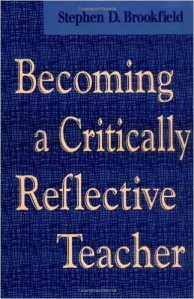
Stephen Brookfield puts forth a simple reminder in his book Becoming a Critically Reflective Teacher.

brookfield

Teachers need to remember what it is like to be a learner in a “foreign” (read: unknown; difficult; demanding; uninteresting to them) field.  One way for those of us in “front of the class” to stay in touch with our inner learner is to take a course in a “foreign” field. Perhaps a history instructor enrolls in a chemistry class or the English teacher signs up for Algebra.  I did this sort of learning when I participated in an 8-week improv workshop this past summer. I’m doing it now as I participate in an online writing Master Class by James Patterson.  Experiences such as these can bring us face-to-face with feelings of anxiety, boredom, irrelevance, and vulnerability—just like a student has to do when sitting in a required core class.   It can help us fill in gaps between assumptions and realities.

Ph.D. candidates may face the same feelings as they complete the required coursework for the degree. I know I did when I had to take M.Ed. and M.A. classes that I had absolutely zero interest in taking. I had to find ways to soldier through—and that kept me in touch with my students.

Video recommendation for the week:

Brookfield aptly points out that when teachers, in particular, take on the role of a student in an area/class in which they have no or limited skill/knowledge they will have a better chance of understanding the trepidation that their students have in front of them.

Maybe the college administrator teaches a full semester course (not just one or two sessions) to acquaint (or re-acquaint) herself with what it’s like to be the classroom teacher who has to, each semester, “learn” the dynamics of a particular class/group of students. This includes facing these students each class day of the semester and dealing with the human drama that comes in the door.  That is a lot different from reading the latest research about a pedagogical breakthrough.  And the experience can remind the administrator of the joys and frustrations of teaching.  A similar argument can be made for a teacher participating in an administrative training class.

I had a colleague who taught French. During the summer, he would immerse himself in learning a new language. I seem to remember Chinese was one summer’s undertaking. This could help the teacher see the perspective of an online student.

Another example. I have been regularly working with a trainer in the gym over the last eight months.  Each session, I’m a learner as I pay attention to form, reps, weight and sets. And each session I come up short on some routines; and I excel on others. I am reminded about the need to be fully present in the class (my training) and do my “homework” in between sessions.

Besides staying in touch with the student’s, client’s or customer’s perspective, I think this type of intentionality helps to build resilience. Placing oneself in a difficult or vulnerable to failure position (not unsafe or unhealthy), requires and develops a certain amount of flexibility.

Where can you become a neophyte over the coming months? How can you better understand the perspective of those you serve?

Make it a wonderful week—H.T.R.B. as needed.

You can subscribe to my newsletter by clicking here.

You can find my podcast series at Growth and Resilience (http://stevepiscitelli.com/video-media/podcasts). 

Check out my website  (http://www.stevepiscitelli.com/programs.html) for programming information as well as details about upcoming webinars (http://www.stevepiscitelli.com/webinars).

My books Choices for College Success (3rd edition) and Study Skills: Do I Really Need This Stuff?  (3rd edition) are published by Pearson Education.

(c) 2016. Steve Piscitelli. All rights reserved.


Posted in Anxiety, assumptions, change, college retention, Critical Thinking, effective teaching, growth, habits, Integrity, intentionality, Reflection, Reflective practice, resilience, vulnerability | Tagged , , , , , , , , , , , , , | 1 Comment

(#293) Community Resilience


Maybe we can approach resilience as a condition of
not only being adaptable to a disaster but also living
and sustaining a healthy life that avoids (or, at least, prepares for) disaster before it happens.

Thinking out loud about resilience….

Does resilience necessitate a response to disaster? That is, does resilience only exist in conjunction with a disaster?

A good deal of the reading I’ve done on resilience focuses on “adapting to or bouncing back from adversity and disaster.”  There are some veiled references to protection or sustainability—but again, my (limited) reading finds those concepts couched in terms of adversity.

For instance, the American Psychological Association sees “resilience as the process of adapting well in the face of adversity, trauma, tragedy, threats or significant sources of stress— such as family and relationship problems, serious health problems or workplace and financial stressors. It means ‘bouncing back’ from difficult experiences.”

The RAND Corporation approaches community resilience as “a measure of the sustained ability of a community to utilize available resources to respond to, withstand, and recover from adverse situations.”

Again, that description goes back to adversity.

Video recommendation for the week:

This short video follows along those lines as it introduces a “volunteer network that aims to coordinate and deliver a local response to emergencies.”

Licensed Mental Health Counselor Eileen Crawford told me recently, “In counseling, we look at [resilience] with a deeper context: not only bouncing back from disaster, but finding meaning in the experience and growing as a result of it. In personal terms, one becomes a changed human being as a result of going through an experience; whether that change is for better or worse is where resilience comes into play.”

OK, I do understand that.  Can we, as well, look at resilience from a slightly different perspective, I wonder? Maybe we can approach resilience as a condition of not only being adaptable to a disaster but also living and sustaining a healthy life that avoids (or at least, prepares for) disaster before it happens. In the RAND wording above I read three key concepts that, I believe, go beyond just coping with and bouncing back from adversity and stress after the fact: Preparedness, Protection and Development (my wording not theirs).

As a metaphor, consider those of us who go to the gym on a regular basis, eat healthy meals, and get appropriate sleep. From our physical standpoint we build tools of resilience—and maintain those tools with regular adherence to a healthy lifestyle. We don’t go to the gym (necessarily) to adapt to physical or emotional adversity—we go to the gym to build, maintain and sustain our healthy bodies.  We nurture sustainability within ourselves. We understand the importance of self-efficacy: Our effort does matter.

Crawford, the mental health counselor, shared that perhaps what I am grappling with is intentionality.  Or, as she phrased it, “growth through intentional living.”

That makes sense.  Can we intentionally build a sense of and a practice of resilience prior to adversity? Maybe I’m parsing words but I’m thinking it’s a worthy goal for individuals and communities alike. I’m not arguing for one (response after disaster) or the other (preparation prior to disaster).  I am proposing we examine both in our quest for resilience.

Is a community’s resilience only measured by rebounding from disaster or can it, too, be viewed as the manner in which a community organizes its social capital, manages resources and risk, and provides access to public goods to avoid (or lesson the effects of) disasters before they happen. That does take intentionality. And that’s where transformational leaders (like Doc Hendley of Wine to Water) become critical. And from what I am hearing, seeing, and reading, the effective communities do those things at one level or another.

Consider one company’s perspective to “manage and leverage change” buy understanding what is coming and preparing for that:

RAND speaks of eight “Levers of Resilience” for a community: Wellness, Access, Education, Engagement, Self-Sufficiency, Partnership, Quality and Efficiency.  I would like to think my seaside community of Atlantic Beach, Florida considers these levers as it prepares for a sustainable future by preparing and developing plans for resilience that will protect our families and lifestyles.

And think of your workplace community. How does it measure up to RAND’s eight levers? Do you work in a space that waits for disaster…or one that prepares, protects and develops its team members? How about the community in which you live?

Make it a wonderful week—H.T.R.B. as needed.

You can subscribe to my newsletter by clicking here.

You can find my podcast series at Growth and Resilience (http://stevepiscitelli.com/video-media/podcasts). 

Check out my website  (http://www.stevepiscitelli.com/programs.html) for programming information as well as details about upcoming webinars (http://www.stevepiscitelli.com/webinars).

My books Choices for College Success (3rd edition) and Study Skills: Do I Really Need This Stuff?  (3rd edition) are published by Pearson Education.

(c) 2016. Steve Piscitelli. All rights reserved.


Posted in Critical Thinking, Mindfulness, Personal growth, Personal Wellbeing, resilience, risk-taking | Tagged , , , , , , | 5 Comments