(#373) What Factors Affect Teaching Efficacy?


Teaching efficacy reflects the teacher’s belief that
he or she can impact student learning.


Video recommendation for the week.

Let me reverse format this week and start with a video clip. While this post addresses “classroom teachers,” this topic (and the video) go beyond traditional classrooms. “Teaching and learning” takes place in various settings (college, elementary school, corporate training, personal coaching, and more).


Below you will find the scenario* addressed in the above clip. As you read it, keep these two questions in mind:

  1. Did you find your teachers’ sense of efficacy important in your learning?
  2. What factors, traits, or habits affect teaching efficacy?

If you are not a “teacher” per se, remember that teaching (and efficacy) connect to many situations. A corporate trainer can be a “teacher.” So can a Little League coach, a community leader, and a parent.  No matter the situation or setting, what role does the teacher play and what does the student need to bring to the table?

Faculty entered the room for their kick-off of the semester faculty meeting. The dean greeted each faculty member as they came in with a warm smile and greeting. He was authentic and greeted each faculty member as if he or she were the only person in the room.

The first thing the faculty noticed (after the warm reception) was the setup of the room.  They had been using this same classroom for faculty meetings for the last three years. It comfortably fit everyone and allowed for a degree of intimacy and ease of communication.  Today the tables had been removed and chairs were set up in two large circles; one circle on either side of the room. On the wall closest to each circle was a piece of flip chart paper.

One side of the room said: “The bottom line for teaching and learning is what the student brings into the classroom. The professor cannot do much if the student is not motivated.”

On the other side the paper read: “With few exceptions and with my diligent effort I can reach even the most challenging student.”

The dean instructed his faculty to take a seat. “I realize few people will agree totally with each statement. For our purposes today, I would like for you to sit nearest the sign that you believe captures what you have experienced, for the most part, in your teaching career.”

Matt, a math professor with a sense of humor, moved his seat to the middle space between the two circles. He sat there and smiled.

With that, the faculty chose their seats, and the meeting began.

Where would you sit in this meeting—and for what reasons?

[*The full scenario with questions and further discussion can be found in Steve Piscitelli’s Stories About Teaching, Learning, and Resilience: No Need To Be An Island. Atlantic Beach, Florida: The Growth and Resilience Network, 2017. Pp. 106-109]

Make it an inspiring week and H.T.R.B. as needed.


For information about and to order my new book, Stories About Teaching, Learning, and Resilience: No Need to be an Island, click here.

You can subscribe to my newsletter by clicking here.

My podcasts: The Growth and Resilience Network™ (http://stevepiscitelli.com/media-broadcast/podcast).

My programs and webinars: website  (http://stevepiscitelli.com/programs/what-i-do) and (http://stevepiscitelli.com/programs/webinars).

Pearson Education publishes my student textbooks for life success—Choices for College Success (3rd edition) and Study Skills: Do I Really Need This Stuff? (3rd edition).

(c) 2017. Steve Piscitelli. All rights reserved.

Posted in Life lessons | Tagged , , , , , , , | 1 Comment

(#372) Independence


Consider where you can expand beyond your comfort zone.

Insights can come at any time.  We just need to be open.  One appeared a few days ago in a yoga class–while I was doing my best imitation of swaying tree, twisted mountain, and wobbly chair poses. (For those not familiar with yoga, the real names are tree, mountain, and chair.  I bring my own, how do you say, flare, to yoga.)

Our instructor, Shannon, used the imagery of the majestic eagle as we seamlessly moved from one pose to another. (Well, the others in the class moved seamlessly.  I provided sound effects by grunting and tipping over. Nothing like being the session’s star yoga casualty. But I digress.)

At strategic points in our practice, Shannon encouraged us to feel free, like the eagle, and flow with a sense of independence and release. Each inhalation and exhalation helped us to mentally focus, discharge emotional tension, and strengthen our physical selves.

As we moved through the practice, my focus was not so much on what I could not do, but rather on how I could stretch myself—literally and figuratively.  Consider it a metaphor for life.

As you move into this week, consider where you can expand beyond your comfort zone. In what areas have you been reticent to spread your wings? What do you need to release? Fear? Shame? Control? Perfectionism? What do you need to embrace? Confidence? Fortitude? Risk? Uncertainty? Independence? Maybe a coach or mentor could help you focus on your independence.

Does fear limit your life? Do you know how far your wings could spread—if you would allow them to do what they were meant to do? Do you find yourself viewing opportunities from the perspective of “what if I fail” and then getting sucked into the complacency of standing pat?

Bernadette Jiwa’s latest book Hunch reminds us that the “lack of certainty makes us uncomfortable—and it’s something we need to become accustomed to if we want to make progress.”

Anne Lamott shares that “rationality squeezes out much that is rich and juicy and fascinating.”

How can you spread your wings a little further this week to feel that sense of independence that can set you free on the next part of your journey?

Create your future one stretch at a time.


Video recommendation for the week.

Staying with the eagle metaphor, I offer two short videos for your enjoyment. One is a cool computer animation of an eagle’s flight. The other captures the magnificence in nature.


Make it an inspiring week and H.T.R.B. as needed.


For information about and to order my new book, Stories About Teaching, Learning, and Resilience: No Need to be an Island, click here.

You can subscribe to my newsletter by clicking here.

My podcasts: The Growth and Resilience Network™ (http://stevepiscitelli.com/media-broadcast/podcast).

My programs and webinars: website  (http://stevepiscitelli.com/programs/what-i-do) and (http://stevepiscitelli.com/programs/webinars).

Pearson Education publishes my student textbooks for life success—Choices for College Success (3rd edition) and Study Skills: Do I Really Need This Stuff? (3rd edition).

(c) 2017. Steve Piscitelli. All rights reserved.

Posted in Appreciation, authenticity, awareness, change, Choice, coaching, confidence, creating your future, curiosity, Discipline, Excuses, Failure, fitness, Gratitude, Grit, growth, habits, resilience | Tagged , , , , , , , , , , , , , | 3 Comments

(#371) Your Life. Your Choices.


What do we choose to allow into our lives?
What do we dismiss from our lives?

On a friend’s recommendation, I bought Traction: Get A Grip On Your Business. The author lays out a simple premise, “If you’re not happy with the current state of your company, you have three choices. You can live with it, leave it, or change it.”

As often happens with business-related works, I find that entrepreneurial strategies have applicability to life issues.

Consider my Six Fs model below.  Pick one dimension from your life that needs some tweaking—that needs change. Maybe “fitness” needs your attention (weight, diet, and exercise).  Take the first part of the statement above: “You’re not happy with the current state of your” fitness.

You can choose to

  1. Live with your current condition and habits, in which case your fitness level does not change—and might well get worse. You make the choice to leave things as they exist. Or you can…
  2. Change your conditioning by making mindful and healthy improvements.

Think of “friends.”  Maybe there is a friend who annoys you more than a date constantly checking text messages during dinner.

You can choose to

  1. Live with the status quo by trying to ignore the behavior.
  2. Leave the relationship.
  3. Change the relationship dynamics by addressing the issue.

The Six Fs (Steve Piscitelli)

Do the same for each of the other four dimensions of your life.  Start with the premise, I’m not happy with the current state of my…finances…family…faith…function.

Then ask yourself a few beginning questions.

  1. What happens if I live with the current state of dis-ease? What will that look like?
  2. What happens if I leave the current state of dis-ease? How will I do that and what will that look like?
  3. What happens if I change the current state of dis-ease? How will I do that and what will that look like?

Change can be messy. Change can be healthy. Change can take time. Meaningful change requires that we raise our awareness, question our assumptions, and take considered action.

A common observation holds that in order to lead others, we must first lead ourselves.


Video recommendation for the week.

I dug back into the video archives for this one.  Although I recorded this on the last day of 2011 (sporting longer hair!), the message remains:  What do we choose to allow into our lives?  What do you have power to change?


It’s our choice.

Make it an inspiring week and H.T.R.B. as needed.

You can subscribe to my newsletter by clicking here.

For information about and to order my new book, Stories About Teaching, Learning, and Resilience:
No Need to be an Island
, click here.  

My podcasts: The Growth and Resilience Network™ (http://stevepiscitelli.com/media-broadcast/podcast).


My programs and webinars: website  (http://stevepiscitelli.com/programs/what-i-do) and (http://stevepiscitelli.com/programs/webinars).

Pearson Education publishes my student textbooks for life success—Choices for College Success (3rd edition) and Study Skills: Do I Really Need This Stuff? (3rd edition).

(c) 2017. Steve Piscitelli. All rights reserved.

Posted in Appropriate Behavior, assumptions, authenticity, awareness, change, change management, Choice, empathy, focus, fortitude, Friendship, habits, health, Life lessons, practicality, priorities, Priority management, resilience, Success, vulnerability | Tagged , , , , , , , , , , , , | 3 Comments

(#370) What’s Your B.M.I. (Bureaucratic Mass Index)?


Has your bureaucracy morphed into a soul-sucking and
resilience-retarding beast?

Bureaucracy catches a lot of heat. “The Bureaucracy.”  When something goes wrong….blame it on “The Bureaucracy.”  Of course, “The Bureaucracy” provides the structure. The people (the bureaucrats) make it move or stall. The organizational chart might tell the people where they fit in as a cog in the structure.  But those same people give life (or inertia) to the chart.

Anyone who has ever worked in or attempted to navigate through a bureaucracy may think of the words entrenched, glacial, and obstacles.  How does this happen? A short list includes ineffective leadership, poor hiring practices, rigidity, and an institutional culture that rewards non-risk-taking transactional interactions over transformative measures.

Before you can begin to unravel this Gordian knot of inflexible mindsets, you have to recognize the causes of organizational (structural, leadership, and followership) inefficiencies. A recent article in the Harvard Business Review listed seven warning signs that your bureaucracy has morphed into a soul-sucking and resilience-retarding beast.

  1. Bloat: too many managers, administrators, and management layers;
  2. Friction: too much busywork that slows down decision making;
  3. Insularity: too much time spent on internal issues;
  4. Disempowerment: too many constraints on autonomy;
  5. Risk Aversion: too many barriers to risk taking;
  6. Inertia: too many impediments to proactive change;
  7. Politics: too much energy devoted to gaining power and influence.”

The article says to take account of, what the authors call, the B.M.I.: “Bureaucracy Mass Index.”  A difficult task that takes concerted effort by insiders and customers alike.

The HBR articled asks, “How pervasive is bureaucracy in your organization? How much time and energy does it suck up? To what extent does it undermine resilience and innovation? Which processes are more trouble than they’re worth?”

The HBR list can (at least) provide a starting point for a conversation.  Just don’t let the conversation become one more stultifying exercise in bureaucratic futility.

More poignantly, do nothing and Pogo proves prophetic.


Video recommendation for the week.

Perhaps this young actress will help us listen more intently to the “Sh*t Bureaucrats Say.”


Make it an inspiring week and H.T.R.B. as needed.


For information about and to order my new book, Stories About Teaching, Learning, and Resilience: No Need to be an Island, click here.

You can subscribe to my newsletter by clicking here.

My podcasts: The Growth and Resilience Network™ (http://stevepiscitelli.com/media-broadcast/podcast).

My programs and webinars: website  (http://stevepiscitelli.com/programs/what-i-do) and (http://stevepiscitelli.com/programs/webinars).

Pearson Education publishes my student textbooks for life success—Choices for College Success (3rd edition) and Study Skills: Do I Really Need This Stuff? (3rd edition).

(c) 2017. Steve Piscitelli. All rights reserved.

Posted in bureaucracy, collaboration, Communication, Critical Thinking, decision making, Haters, institutional climate, institutional culture, leadership, resilience, transactional leadership, transformational leadership | Tagged , , , , , , , , | 1 Comment

(#369) About Kayaks And Perspective


If we focus on the possible negative, we get sucked into it.

Lessons. Everywhere, lessons present themselves.  And they remind us that we are always students. Lifelong learners. If we pay attention.

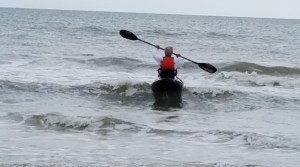
My latest education has come over the past few weeks courtesy of my new twelve-foot ocean kayak.

Previously, I had paddled in the Gulf of Mexico, the Caribbean, the Florida Keys, and in North Florida inlets.  Let’s say my first week of ocean kayaking has gifted me some wonderful lessons.

  • Perspective. I spend time on the beach observing surfers and paddle boarders. I notice smooth water, small waves, and storm-tossed breakers. The appreciation for the conditions, though, changed when I walked my kayak into the ocean for the first time. The waves took on a very different perspective  atop of (and soon tossed from) my kayak seat.
    • Lesson. Until we dive into a project, we do not have a full appreciation of what to expect.  A new job might look perfect—until we report to work. Perhaps it’s criticizing a co-worker, government action, or the stance of a group different from ours.  Until we get into that water, we really don’t understand that perspective.

  • Respect and Fear. I have always had a deep respect for the ocean.  That is different from the fear I felt the first time I paddled beyond the breakers. I could feel myself tense up—which in turn led to poor body mechanics. Instead of attacking the waves, I stopped paddling–and eventually ended up in the water with the boat on top of me. (With a broken seat back and lost sunglasses, thank you very much!)
    • Lesson. Fear can lead to counter-productive actions. We start to focus on the thing we do NOT want to do. I once heard a race car driver’s advice on how NOT to hit the racetrack wall. Simply, he said, do NOT look at the wall. If we focus on the possible negative, we get sucked into it. My first day on the kayak I focused on the waves and not being tossed rather than focusing on the shore and gliding to a stop. I tensed up and face planted in the water.

  • Adrift. The first time I got beyond the breakers and to (relatively) smoother, less undulating water, I looked back and saw that I was further from shore than I had thought. The voice in my head cried, “What the hell are you doing out here? Way out here?”
    • Lesson. When we attempt something new, when we stretch ourselves, we might feel adrift. Like we have no anchor. We find ourselves treading unfamiliar waters. Some people quit. Some figure out how to persevere. Some look for reassurance and guidance.  In my case, I looked a little north and spied surfers and paddle boarders. I felt better knowing others were close by. They wouldn’t paddle my boat but just knowing others were in similar waters gave me a feeling of security. When you feel lost and adrift, look around for those who may be in similar waters. Collegiality can be a powerful motivator.
  • Coaching. I sought out a neighbor with experience to help me with kayaking technique.  From posture, to paddle stroke, to entering and leaving the surf, he has provided needed guidance. Simple ideas take root due to his repetition
    • Lesson.  There is no need to be an island.  Reach out for coaching.  A fresh set of eyes and a different perspective can help move you to a new level. (And do not forget gratitude. Bruce found a twelve-pack of his favorite beverage on his patio later that week.)
  • Daily Discipline. Each day I go out, I see improvement. I paddle further; spill less frequently; unload, load, and strap the kayak to the cart with more skill.  I now look at how the waves break on a particular day before lunging into the surf.  I am more aware. I still have a long way to paddle—and I have come a long way, as well.
    • Lesson. Whether you want to call it locus of control or self-efficacy, when you fall short, get up, fall again, get up again…ad nauseum….you learn, you grow, and move closer to a goal. If we fail to notice that we fail to notice—we hinder our movement forward.


Video recommendation for the week.

Sometimes laughing is the best way to soothe a bruised ego. With that in mind, my bride sent me this video link.  Even kayakers have a blooper reel.


Make it an inspiring week and H.T.R.B. as needed.

For information about and to order my new book, Stories About Teaching, Learning, and Resilience: No Need to be an Island, click here.

You can subscribe to my newsletter by clicking here.

My podcasts: The Growth and Resilience Network™ (http://stevepiscitelli.com/media-broadcast/podcast).

My programs and webinars: website  (http://stevepiscitelli.com/programs/what-i-do) and (http://stevepiscitelli.com/programs/webinars).

Pearson Education publishes my student textbooks for life success—Choices for College Success (3rd edition) and Study Skills: Do I Really Need This Stuff? (3rd edition).

(c) 2017. Steve Piscitelli. All rights reserved.
Posted in Appreciation, awareness, coaching, emotional intelligence, empathy, Excuses, Failure, fear, focus, Grit, resilience | Tagged , , , , , , , , , , | 3 Comments

(#368) Fake, Illegitimate Or Incomplete Information?


Just because you find a lot of information does not mean
you have found accurate or credible information

If, as famed architect Frank Lloyd Wright claimed, “An expert is a man who stops thinking because he knows,” then can we say the same for a person who claims one source of information as the fount of all legitimacy and contrary accounts to be illegitimate or “fake”? Has she stopped discerning because she “knows” what is legitimate and what is fake?

More than five years ago, I shot a quick video (see below) outlining four basic considerations when considering information to address an issue or task?

  1. What information do you need for the task at hand?
  2. Where will you find that information?
  3. How will you evaluate the information you find for accuracy and legitimacy?
  4. How will you organize and use the information for your audience?

Can we grow as individuals if we filter what we read, hear, and see through one source (or a number of like-minded sources)?  Are we motivated to grow–or just “be right” even in the face of confounding information?

Do we care?

A friend shared two stories this week.  I doubt they are apocryphal.

  • A neighbor asked my friend where she got her news. My friend rattled off a list of seven or eight sources. Out of hand, the neighbor dismissed the entire list as thoroughly “illegitimate.” When asked what her source of information was, the neighbor mentioned one source. Just one source. It was, according to her, legitimate. End of story. (See numbers two and three, above.)
  • My friend has found the same situation in her college classroom.  No matter the topic,  two camps emerge. Diametrically opposed. Refusing to listen and discuss with the other. Each considering their source(s) of information legitimate and the others’ suspect at the least and fake at the worst.

Is this a sign of intellectual laziness? A lack of critical thinking? Or is this sort of thing nothing new—just magnified because everyone can have a social media platform where we surround ourselves with “likes” and “shares” and then block opposing viewpoints?  (I still remember my mother often warning me (more than fifty years ago) not to speak about politics or religion.) It does seem like today’s volume, as well as the personal vitriol, has been cranked up considerably.

I offered a suggestion to my friend.

  1. Pick two sources of news that generally disagree on issues and stances.
  2. Find one current news story on which both of these sources present a similar account of the issue or event.
  3. Print both stories without any attribution (nothing that would identify the sources).
  4. Ask your friend (or students) to identify the “illegitimate source” based solely on the content presented. If both stories are drawing the same conclusion then how can the argument hold that a particular source is always illegitimate?

Perhaps you could do it as well to at least start a rational conversation. Start with common ground and move from there.


Video recommendation for the week.

Just because you find information does not mean you have credible information.


Make it an inspiring week and H.T.R.B. as needed.


For information about and to order my new book, Stories About Teaching, Learning, and Resilience: No Need to be an Island, click here.

You can subscribe to my newsletter by clicking here.

My podcasts: The Growth and Resilience Network™ (http://stevepiscitelli.com/media-broadcast/podcast).

My programs and webinars: website  (http://stevepiscitelli.com/programs/what-i-do) and (http://stevepiscitelli.com/programs/webinars).

Pearson Education publishes my student textbooks for life success—Choices for College Success (3rd edition) and Study Skills: Do I Really Need This Stuff? (3rd edition).

(c) 2017. Steve Piscitelli. All rights reserved.

Posted in Appropriate Behavior, assumptions, collaboration, Communication, Critical Thinking, curiosity, empathy, fortitude, Grit, Haters, Integrity, learning, Life lessons, Mindfulness, mindset, priorities, vulnerability, wisdom | Tagged , , , , , , , | 3 Comments

(#367) Understand Your Goal Motivation


Create a space for transparency, authenticity, and accountability for yourself.

During the life of this blog, we have examined often the power and purpose of goals.  In addition to the “what” we have looked at the “how,” “when” and “why.”

Last week, when I facilitated an Austin, Texas workshop, I encouraged the audience to consider The Six Ps when it comes to why they want to speak or publish.  The same steps easily apply to other professional or personal goals.  Consider how each of the following may act as goal motivators.

  • Publish, Present, or Perish.
    • In the world of higher education, publishing may be a requirement for contract renewal. In your case, your motivation may be to lose weight or suffer a heart attack; save money or never enjoy a comfortable retirement; or find affordable healthcare or face the prospects of life without basic coverage. Does your goal have a distinctive and critical sense of urgency?
  • Promotion.
    • Perhaps a professional goal will help you advance to another level of development within your calling. Maybe you need to promote a community resource for a specific service area. Or maybe you finally decided that you need to promote a non-digital, distraction-free hour every night for your family to re-connect. When you reach your goal (or while you journey to your goal), what core value(s) does the goal advance?
  • Passion.
    • It might prove beneficial to do a “passion check” for your goal. What compelling emotion or desire moves you in this direction? Is it your goal or someone else’s dream for you?
  • Personal Connection.
    • A young woman in a recent workshop shared with the group that she wanted to write a book about breast cancer. She believes she has a decided vantage point as someone who has experienced, survived, and grown because of the cancer that touched her life. Her passion and a personal connection are twin motivators pushing her forward.  Can you clearly articulate how your personal and professional goal personally resonates for you?
  • Profit.
    • Maybe the pay range for the new job listing caught your attention. Or perhaps the pitch at a seminar on how to flip houses sounded promising. Pause and ask, “Is money the motivating factor here? Will it be enough to keep me moving forward? And will the goal of profit connect with my core values?”
  • Prestige.
    • Some people want to publish a book just so they can see their name on the cover. The ego boost becomes the drive. Do you find that your goal direction connects directly to status, standing, and reputation?

The Six Ps can help you clarify the “why” of your goals.  One is neither better nor worse than others are.  Each item can create a space for transparency, authenticity, and accountability for yourself.


Video recommendation for the week.

Consider the message of this TED Talk about understanding why we do what we do and the impact that has on our authenticity.


Make it an inspiring week and H.T.R.B. as needed.

For information about and to order my new book, Stories About Teaching, Learning, and Resilience: No Need to be an Island, click here.

You can subscribe to my newsletter by clicking here.

My podcasts: The Growth and Resilience Network™ (http://stevepiscitelli.com/media-broadcast/podcast).

My programs and webinars: website  (http://stevepiscitelli.com/programs/what-i-do) and (http://stevepiscitelli.com/programs/webinars).

Pearson Education publishes my student textbooks for life success—Choices for College Success (3rd edition) and Study Skills: Do I Really Need This Stuff? (3rd edition).

(c) 2017. Steve Piscitelli. All rights reserved.
Posted in authenticity, awareness, confidence, core values, Goals, growth, Life lessons, resilience, retrospective, risk-taking, self-efficacy | Tagged , , , , , , , , | Leave a comment

(#366) Why Not You?


Speaking and writing does not belong to some elite group of individuals.

Have you considered publishing or speaking to broaden the powerful impact and reach you already have on those around you? It could be for a small local audience or something larger. You might do it for money—or for the sheer passion you have for a particular topic.

Later today (May 28, 2017), I will have the opportunity to facilitate a workshop at the annual NISOD Conference in Austin, Texas.  I will pose a simple question, “Why not you?” If you don’t share your talents, who will?

I hope to encourage participants to consider sharing their accumulated wisdom through publishing and/or speaking. I will be talking to college professors, advisers, and administrations. But whether you manage a retail store, teach students, serve customers in a restaurant, nurse patients in a hospital, coach a little league team, manage a household, or lead your community, you have experiences to share.  Speaking and writing does not belong to some elite group of individuals.

Take a moment today, and consider all that you have to offer with respect to your accumulated wisdom.

To be sure, just because you want to write or speak, does not necessarily mean you should write or speak.  And just as assuredly, not everyone has the talent or temperament for speaking and writing.

Before you brush aside the idea, though, consider what you have that others may be interested in learning.  From parenting, to surfing, to gardening, to home renovation, to mentoring young minds, you make a difference in your world. Here are a few questions to help you sort through your thoughts to share your wisdom. I encourage you to work through these with someone who will give you trusted feedback.

  • WHY do I want to publish and/or speak? Is it for ego, profit, passion, or the need to share an important lesson?
  • WHO cares about my work—and why should they? Huge question! If you decide to speak or publish, who will be interested enough to listen?
  • WHERE do I find opportunities? Local community organizations? Regional and national conferences? Letters to the editor? The community newspaper? A national magazine? Self-publishing?
  • HOW do I develop a supportive learning community of associates to help me develop your writing and speaking talents? And, how can I help others to find their voices?

When we start examining these types of professional and personal growth opportunities and questions, we identify and clarify our inner desires, strengths, and challenges. And we increase our chances to connect and form collaborative, supportive networks, and create community.

Rather than saying, “I’m not a writer or speaker” I hope you will consider (and act upon) “Hey, I can write and speak, too…just never thought about it.” Find a mentor to help you begin your journey.

In fact, you may find yourself saying, “Hell, yeah, that is for me!”


Video recommendation for the week.

Your story has power!


Make it an inspiring week and H.T.R.B. as needed.

For information about and to order my new book, Stories About Teaching, Learning, and Resilience: No Need to be an Island, click here.

You can subscribe to my newsletter by clicking here.

My podcasts: The Growth and Resilience Network™ (http://stevepiscitelli.com/media-broadcast/podcast).

My programs and webinars: website  (http://stevepiscitelli.com/programs/what-i-do) and (http://stevepiscitelli.com/programs/webinars).

Pearson Education publishes my student textbooks for life success—Choices for College Success (3rd edition) and Study Skills: Do I Really Need This Stuff? (3rd edition).

(c) 2017. Steve Piscitelli. All rights reserved.

Posted in change, collegiality, Community, courage, Goals, growth, Life lessons, resilience, self-efficacy, service | Tagged , , , , , , , , | 3 Comments

(#365) Listening For Stories Of Inspiration


Inspiration from a woman who did not let circumstance
dictate her outcome.

[Note to my readers: Today’s post marks the beginning of the eighth year of this weekly blog.  Thank you for following, sharing, and commenting.]

Stories. They surround us. Some have the power to illustrate, instruct, and inspire.

Minutes before I delivered my commencement address to the Florida State College at Jacksonville Class of 2017, I had a front row (literally) seat for a young woman’s touching story about her journey.

Lyse Medina, the FSCJ Kent Campus Student Government Association President, delivered a 4½ minute description of her journey as an immigrant, a daughter, a student, a leader, and a person with heart and determination.

Her tale is one of perseverance and resilience. “My past did not define me, but it did lead me to where I am today,” she told the nearly ten thousand people before us.


Video recommendation for the week.

Rather than tell you about Lyse’s speech, listen to it. Learn and grow from it. Her story in her words. A reminder of the importance of community colleges in our society. And a powerful dose of inspiration from a young woman who did not let circumstances dictate her outcomes. She envisioned her dreams and she will continue to define her journey. I am glad to have met and learned from her.

My appreciation to FSCJ for sharing the video and to Lyse for allowing me to share it with you. Note: The video should start with her introduction. If it does not, move to minute 52 for Lyse.


Make it an inspiring week and H.T.R.B. as needed.

For information about and to order my new book, Stories About Teaching, Learning, and Resilience: No Need to be an Island, click here.

You can subscribe to my newsletter by clicking here.

My podcasts: The Growth and Resilience Network™ (http://stevepiscitelli.com/media-broadcast/podcast).

My programs and webinars: website  (http://stevepiscitelli.com/programs/what-i-do) and (http://stevepiscitelli.com/programs/webinars).

Pearson Education publishes my student textbooks for life success—Choices for College Success (3rd edition) and Study Skills: Do I Really Need This Stuff? (3rd edition).

(c) 2017. Steve Piscitelli. All rights reserved.

Posted in Appreciation, awareness, Being REMARKABLE, Choice, focus, fortitude, Goals, graduation, Gratitude, growth, influence, Integrity | Tagged , , , , , , | 1 Comment

(#364) Your Legacy


Whatever you build, destroy, hand down, create, or undo will be your legacy.

Legacy: Something handed down from one generation to the next; from one person or group to another. Whether for good or ill someone or some entity passed something along. It can include a memory, an accomplishment, a deed, a message, a financial donation, or a physical resource.

A sports team, for instance, that wins a championship creates a legacy. No matter what follows, the team will always have the title of champion for that particular year.  I find it odd when I hear people say something like, “The Chicago Cubs will defend their championship this year.”

One defends something he or she may lose. The Cubs can NEVER lose the 2016 championship they won.  They may not repeat as champs, but they will always be 2016 World Series champions. No one can remove that distinction.

Every so often, I hear a report that so-and-so’s legacy will be eliminated.  I am not sure how that can happen.  The handoff occurred.  You cannot “unhand” it down.  If someone changes or eliminates a program or service, that becomes the legacy of the eliminator.  The person who created it will ALWAYS have the legacy of the creation.  Someone else can amend or end it but the previous act stands as part of history.

What you do today, tomorrow, or in ten years becomes part of your legacy. One experience, one dot, one moment, and one day at a time. You (and with whomever you collaborate) create a legacy. You can add texture and color to it. You cannot un-create it.

Whatever you build, destroy, hand down, create, or undo will be your legacy. What will your legacy be?


Video recommendation for the week.

Building and meaning of legacies. Check this view.


Make it an inspiring week and H.T.R.B. as needed.

For information about and to order my new book, Stories About Teaching, Learning, and Resilience: No Need to be an Island, click here.

You can subscribe to my newsletter by clicking here.

My podcasts: The Growth and Resilience Network™ (http://stevepiscitelli.com/media-broadcast/podcast).

My programs and webinars: website  (http://stevepiscitelli.com/programs/what-i-do) and (http://stevepiscitelli.com/programs/webinars).

Pearson Education publishes my student textbooks for life success—Choices for College Success (3rd edition) and Study Skills: Do I Really Need This Stuff? (3rd edition).

(c) 2017. Steve Piscitelli. All rights reserved.
Posted in generativity, Goals, inspiration, legacy, Passion, resilience, self-efficacy, sharing | Tagged , , , , , | 1 Comment