(#282) The Story of the Lavender Farmer


“It has been a saga, but I am determined to be successful, and continue to learn from each chapter,” she said.  “Thank heaven they come one at a time.”

In addition to my time on stage or facilitating smaller workshops, a love the opportunity to make new acquaintances while on the road.  I always take something away when these folks share the varied stories of their journeys. Recently, one of my hosts drove me to the airport following a speaking engagement at a major college in the Northwest.  Here is a piece of Robin’s story (shared with her permission) and how it connected with a point I had made earlier that day from the stage.

Robin worked in the business world for 13 years. She served as an administrative assistant; she loved her job. Then came the downsizing. Her boss offered her one day less of work for ½ the pay.  In other words, work 80% of what she used to but for 50% of the pay. She opted for a buy out and, then, she and her husband, Chris, considered their next move on their journey ahead.

As often happens, a chance encounter can present options we never knew of or considered before.  Such was the situation when Robin paid a visit to a friend’s home to help her with some farm work.   A little weeding and tending to a crop. Nothing too strenuous. Time with a friend.

lavender

That day, Robin worked some acreage devoted to a lavender crop. She liked the smell, the feel and the work itself.  As she talked with and worked beside her friend, Robin began constructing a story: What if I grew lavender? Why not me?

She had no background in this.  She had no land to plant the crop. And she and her husband did not have a great deal of money to invest. She did have her company severance but that was pretty much spoken for with bills and other commitments.

After talking and planning, she and Chris were able to sublet a small plot of her in-laws’ farm. Her lavender dream was moving closer to reality.

They bought 200 young lavender plants and began their venture. Two years and two harvests later, Robin and her husband are working on the next phase—the manufacturing of the lavender into products like sachet and soap. 

As she told me about this next step, her eyes widened and her voice brightened beyond her already pleasant demeanor.  You could tell she was clearly exited and passionate about what she and her husband had created.  Small steps leading to personal satisfaction.

They, also, have a small plot of land in Idaho she told me. So they decided to see how the Idaho land and lavender would work together.  They planted two crops of seedlings—and, unfortunately, each year the seedlings vanished!  They never knew exactly what happened though they did have their theory.  Nonetheless, a slight detour on the way to their dream.

An additional challenge came this past year when the Idaho fires torched their land.  Through it all, though, Robin and her husband have maintained a resilient attitude.

Robin and Chris's burned acreage.

Robin and Chris’s burned acreage.  (Used with permission.)

“It has been a saga, but I am determined to be successful, and continue to learn from each chapter,” she said.  “Thank heaven they come one at a time.”

Video recommendation for the week:

Earlier that day from the stage I had shared a strategy I first read about in Seth Godin’s book Leap First. In short, I challenged the audience to understand where they stand with their stories. Some of us remain timid and wait for things to be perfect before we move to the next step. Others never prepare for anything and just “wing it” on their way to God knows where. And there are those who take reckless (read: foolish and not well-thought out) risks that place them and others in precarious if not dangerous positions.


[The above clip comes from an earlier talk at Northern Virginia Community College.]

People like Robin and Chris remind me of the power of considered thought and action. While they were moving into new territory (metaphorically and literally), they did not let the newness (for them) of the venture dissuade them. They prepared themselves to take risks, to take action and they did not let “perfect” stand in the way of movement. Failure was an option. But so was fulfillment and excitement.  They could have stood on other side of the fence dreaming of lavender—but never doing anything out of fear of disappointment.  That would have, more than likely, lead to a lot of “what ifs” in the future.

Thanks to Robin, Chris and their lavender crop for reminding us that meaningful growth generally does not come to the timid-let’s-fly-under-the-radar person.  And it does not come in one fell swoop as mana dropping from the skies. It takes work, preparation, faith and resilience.  Yes, there more than likely will be a disappointing chapter or two along the way.

Thank heaven they come one at a time.

And each one builds your story.

What’s your story?

Make it a wonderful week—H.T.R.B. as needed.

You can find my podcast series at Growth and Resilience (http://stevepiscitelli.com/video-media/podcasts). 

Check out my website  (http://www.stevepiscitelli.com/programs.html) for programming information as well as details about upcoming webinars (http://www.stevepiscitelli.com/webinars).

My books Choices for College Success (3rd edition) and Study Skills: Do I Really Need This Stuff?  (3rd edition) are published by Pearson Education.

(c) 2015. Steve Piscitelli. All rights reserved.


Posted in action, courage, curiosity, Dreams, growth, Life lessons, Life's purpose, Passion, Purpose, resilience | Tagged , , , , , , , , , , , , | Leave a comment

(#281) Collisions for Collaboration or Crashes of Confusion?


Whether talking about the college classroom or the corporate boardroom, conscientious nurturing of authentic relationships improves the chances for effective communication, meaningful connections and powerful creation.

A major work published in 1991 on effective college teaching emphasized the importance of reciprocity, cooperation and connections in the teaching and learning environment.

Professor Emeritus Joe Cuseo often refers to the importance of personal validation and social interaction as critical ingredients in the student success mix.

My former dean, Dr. John Wall, emphasized the importance of developing rapport with students.

On my list of the “7 Rs for Success” the first spot is occupied by “relationships.”

In a major study (1999), Gallup surveyed more than 80,000 employees to identify those dimensions that continually mark the great places to work.  Of the twelve dimensions they discovered in their research, I noted at least five that focused on connectedness with at least one other person on the team.

Do you see the connection in the above?  Without a doubt effective collaboration continually appears as the keystone for success. Whether talking about the college classroom or the corporate boardroom, conscientious building of authentic relationships improves the chances for effective communication and meaningful creation.

2015-10-09 07.23.22

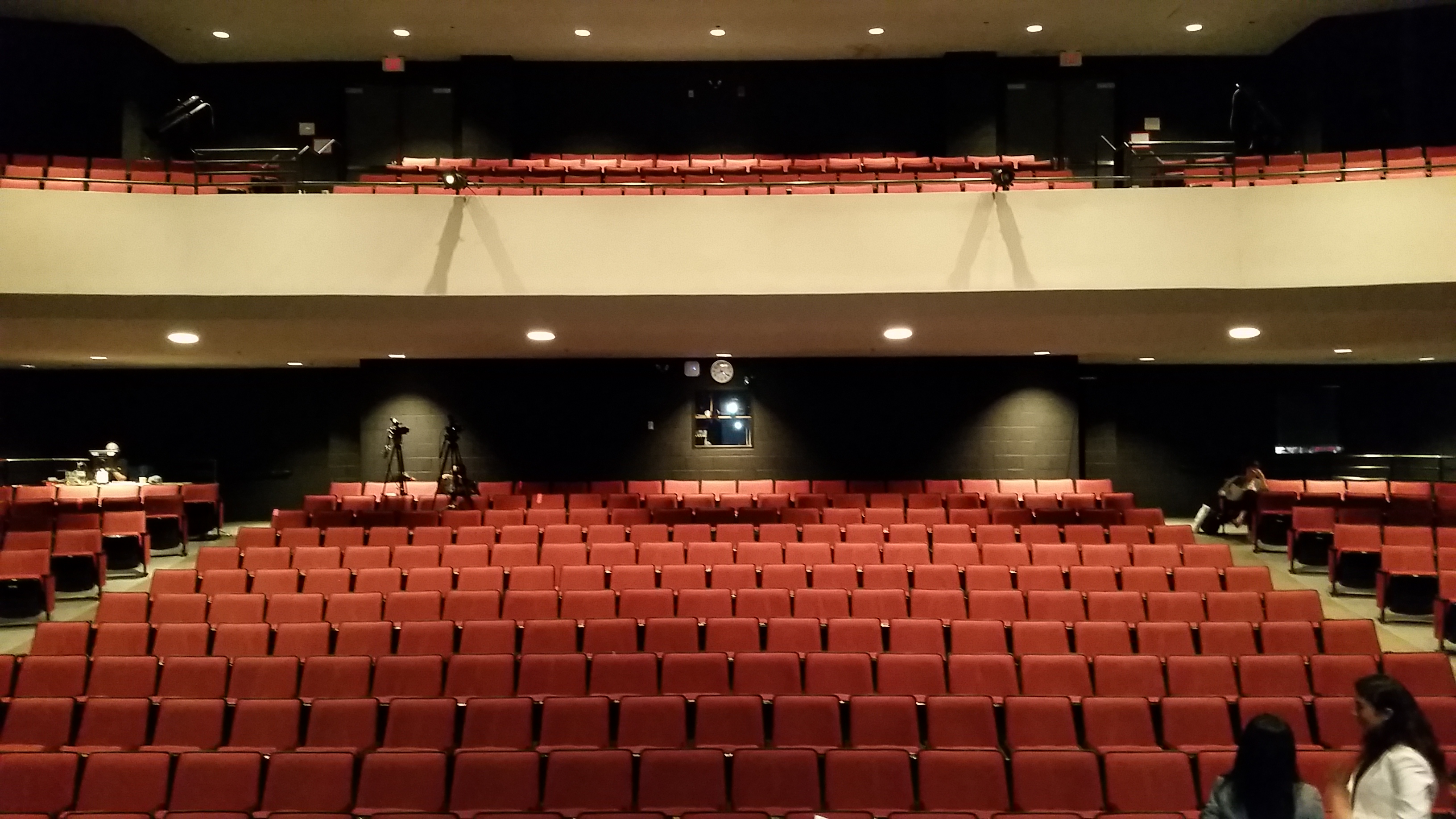
I had the opportunity to experience this basic teaching truism this past Friday in Portland, Oregon.  I had the honor to deliver the keynote address to the Portland Community College-Dual Credit Symposium.  In the audience were hundreds of high school faculty who taught high school courses that also allowed their students to earn college credit (hence, “dual credit).  College faculty (who serve as mentors and liaisons between the high schools and college) joined in the event as well.

2015-10-09 06.45.10

While my emphasis in the keynote focused on non-academic factors of student success, my underlying theme was collaboration.  I challenged the audience to identify the bright spots and not-so-bright spots of their collaborative arrangements.  In a massive program that touches the lives of thousands of students in more than fifty area high schools each year, it is critical that open lines of communication exist.  And, as I mentioned to them, this has to go beyond an occasional email blast. There has to be a concerted and sincere effort to create opportunities for communication and creation.  In such a large operation, it can become easy to focus on checking off bureaucratic checklists—and miss real opportunities to collaborate.

Tony Hsieh speaks about the importance of “encouraging collisions to maximize serendipity.” Collisions, in this metaphor, provide opportunities for personal and workplace growth and recognition. This is what our transformational leaders do.

Unfortunately, often poor managers orchestrate crashes not collisions.

Video recommendation for the week:

In the following video presentation, Hsieh explains one of his new projects that focuses on ROC—return on community.  (Hsieh speaks of collisions specifically beginning at 11 minutes into the video.)

Tony Schwartz of The Energy Project states, “Any organization that fails to build a robust learning program for its employees–not just to increase their skills but also to develop them as human beings–ought to expect that its people won’t get better at their jobs over time and may well get worse.”

And the October (2015) issue of Fast Company magazine highlighted (pp. 68-70) four apps that give the leaders yet another  opportunity to gauge the mood and connection of their employees to the workplace culture:

  • Niko Niko
  • Culture Amp
  • Round Pegg
  • Mood Ring

What is the conversation in your work space–and what are the consequences?

How does your workplace foster collisions for collaboration rather than crashes of confusion?

Make it a wonderful week—H.T.R.B. as needed.

You can find my podcast series at Growth and Resilience (http://stevepiscitelli.com/video-media/podcasts). 

Check out my website  (http://www.stevepiscitelli.com/programs.html) for programming information as well as details about upcoming webinars (http://www.stevepiscitelli.com/webinars).

My books Choices for College Success (3rd edition) and Study Skills: Do I Really Need This Stuff?  (3rd edition) are published by Pearson Education.

(c) 2015. Steve Piscitelli. All rights reserved.

Posted in collaboration, collegiality, Communication, Community, community development, Creativity, mentoring, self-efficacy, soft skills, teaching and learning, teamwork | Tagged , , , , , , | 3 Comments

(#280) Trigger Warnings


If we keep our students in protective bubble wrap while in college,
what have we prepared them for as they move into the workforce
and the rest of their lives?

One challenge (and joy) of effective classroom teaching is to set the stage for meaningful discussion about meaningful issues. Topics can range from the relevance of historical events to current news stories to the impact of pop culture trends on personal and professional development. The vigilant teacher can find relevant topics most anywhere. The effective teacher can expertly weave pertinent topics into class conversations and assignments. It helps students see the broad connections between (dry) curriculum objectives and everyday life.

As I read an article in the September 2015 issue of The Atlantic I wondered, though, if the scope of topics will become (has become) dramatically limited for teaching and learning situations.

In the “The Coddling of the American Mind”, Greg Lukianoff and Jonathan Haidt detail the steady and troubling march to sanitize college and university classroom discussions and readings with “trigger warnings.”  These are cautionary flags (red lights?) that professors at various institutions have been asked to post (or consider posting) in their syllabi if there might be words, texts, discussions or the like that might offend someone in the classroom.  In other words, if a discussion or reading might trigger a recollection of a past personal trauma in a student, the student should be given warning.  Discussions have to be safe.  Anything that could be considered a “microaggression” has to be avoided at all costs. It appears there is “a right not to be offended” by a topic, opinion or line of questioning in the teaching and learning environment.

Image: Keattikorn/FreeDigitalPhotos.net

Image: Keattikorn/FreeDigitalPhotos.net

A New York Times piece quoted one associate professor (in favor of trigger warnings) as saying, “We have students coming to us with serious issues, and we need to deal with that respectfully and seriously.”

Understood. As a classroom teacher I witnessed the burdens that so many of my students had to contend with on a daily basis.  And unless they chose to share those personal issues, they remained unknown to those in the classroom. Often students drew their own parallels and lessons between their personal issues and larger course objectives and discussions.

As I read the articles above, I wondered if instructors will be limited in their opportunities to engage their students about hot button issues.  Will a “rating” (similar to a movie) be needed on each syllabus? Each class? Every discussion topic? College in general?

Warning: While attending this college you may be exposed to views
you don’t agree with and/or that might make you feel uncomfortable
and/or that you would rather not discuss.
Feel free to opt-out as you see fit.

Is that what we want? Is that what our students need?

I remember one of my students (a Vietnam War veteran) breaking into sobs when he related what he saw in war.  When I assured him he did not have to share his experiences, he said he wanted to so that others would know about the realities of war.  He had his classmates’ attention in a way that I could never have had on that particular issue. He chose to do that–it was not a class requirement.  I wonder what the impact would have been (for him and his classmates) if he had opted out of the discussion or if he had even opted out of attending that particular class session?

And the same for other students who shared their life experiences (as they related to course material) with their classmates. These weren’t “group therapy” sessions. They were students engaged in meaningful class discussions to make meaning in their lives.

pakorn/FreeDigitalPhotos.net

pakorn/FreeDigitalPhotos.net

Should war be skirted as a classroom topic of deep conversation because it might offend or cause uneasiness? Would the following topics qualify for trigger warnings?

  • Binge drinking
  • Date rape
  • Domestic violence
  • Failure
  • Financial literacy and indebtedness
  • Gender issues
  • Goal achieving
  • Learning disabilities
  • Mental illness
  • Obesity
  • Political disagreements
  • Pre-natal care
  • Race
  • Religious beliefs
  • Slavery
  • Smoking
  • Suicide
  • Tobacco use
  • The Confederate flag
  • The Holocaust
  • Vulnerability

If someone had a traumatic memory associated with any of those does the classroom discussion have to cease or be sanitized? A teacher might not know that she has triggered some trauma.  I guess, anything can be construed as potentially traumatic to someone in the room.

Will teachers be able to encourage students to critically think about controversial or sensitive issues?  If we allow students to “opt-out” of discussions will they be able to avoid confronting confounding information that might make them question their beliefs?

What does this do to the First Amendment and a teacher’s right (and professional duty) to construct and deliver meaningful lessons?  Is it the thought police? Is this censorship by another word? Is it an example of a litigation-averse preemptive counter attack?

Video recommendation for the week:

I am aware of the need for sensitivity. For instance, I will give you a warning that the “F-Bomb” is used in the following video.  You can choose to view it or not.

But where does good taste move into the realm of incomplete teaching and learning?

And, who makes the determination if something is a trigger? The teacher? The student? The college attorney?

Shouldn’t we equip students with cognitive tools to digest, analyze, evaluate and then respond? What do we want our students to learn? Beyond content—what skill sets? As with most debates, we could raise the usual “What ifs?” on both ends of the spectrum.

When it comes to trigger warnings we need to tread carefully and thoughtfully. Maybe there could be one warning on a student’s application and acceptance letter that the chances of encountering controversial and trigger material in class discussions, assignments, and student area (student center and residential halls) discussions are very real. Discuss this in first-year orientation programs along with how to contact appropriate counseling resources. And then let them enjoy, grapple with, and learn from the educational process alongside their instructors, classmates, and advisers.

If we keep our students in protective bubble wrap while in college, what have we prepared them for as they move into the workforce and the rest of their lives?

Make it a wonderful week—H.T.R.B. as needed.

You can find my podcast series at Growth and Resilience (http://stevepiscitelli.com/video-media/podcasts). 

Check out my website  (http://www.stevepiscitelli.com/programs.html) for programming information as well as details about upcoming webinars (http://www.stevepiscitelli.com/webinars).

My books Choices for College Success (3rd edition) and Study Skills: Do I Really Need This Stuff?  (3rd edition) are published by Pearson Education.

(c) 2015. Steve Piscitelli. All rights reserved.

Posted in Life lessons | Tagged , , | 1 Comment

(#279) Do You Have the Wisdom of a 5th Grader?


If we pay attention we often can find real nuggets of wisdom
from the young people around us.

You may have heard of or even remember watching Art Linkletter’s “Kids Say the Darndest Things.” It was a feature on his House Party show.  He’d “interview” kids (generally 10 and under)—and you can imagine the genuine, authentic, unfiltered and refreshing responses Linkletter received from his “panelists.” If we pay attention we often can find real nuggets of wisdom from the young people around us. Of course, we must listen.

My wife has been experiencing a health challenge of late and to help speed her recovery a dear teacher friend of ours enlisted the help of her fifth grade class.  She and her husband delivered a bag of carefully worded and creatively decorated hand-made get well cards to Laurie last week. (Thank you Cass and Tom!) The cards, addressed to “Mrs. Laurie,” contained short messages crafted in multi-colored crayons that would make Hallmark envious.

Each card held out positive thoughts and the importance of a great attitude. One simply stated, “You will tough it!” Another, cleverly created a get well wish from the letters of “Mrs. Laurie.”  While the card was for my bride, I have to say that this young student has reminders for all of us. Soak in this 5th grader’s wisdom:

Make life count

Rock it

Stay strong

Love life

Amazing woman

U can do it

Remember

Inspire

Everyone matters

Video recommendation for the week:

As Art Linkletter discovered decades ago, kids do say the dardest things

As you look to the week ahead, perhaps you can focus on one of the above nine powerful steps for purposeful and mindful living.

Make it a wonderful week—H.T.R.B. as needed.

You can find my podcast series at Growth and Resilience (http://stevepiscitelli.com/video-media/podcasts). 

Check out my website  (http://www.stevepiscitelli.com/programs.html) for programming information as well as details about upcoming webinars (http://www.stevepiscitelli.com/webinars).

My books Choices for College Success (3rd edition) and Study Skills: Do I Really Need This Stuff?  (3rd edition) are published by Pearson Education.

(c) 2015. Steve Piscitelli. All rights reserved.


Posted in Life lessons, Reflection, resilience, self-love, vulnerability, wisdom | Tagged , , | 2 Comments

(#278) Common Goal-Achieving Challenges


Treat yourself with respect on the way to your goals.

Just about one year ago, I wrote a blog post titled “Motivation: What Gets You Going—And Keeps You Going?”  and I encouraged the readers to identify a motivational best practice that had helped them in the past—and that could be applied to a current dream.

Today, I’d like you to examine your goal achieving challenges. That is, what seems to stop you on your way from here to there?  What kills your momentum?  Take a few moments and write your top two or three goal roadblocks.

My top three goal challenges are

  1. ________________________________________________________________________
  2. ________________________________________________________________________
  3. ________________________________________________________________________
Image: Stuart Miles@ FreeDigitalPhotos.net

Image: Stuart Miles@ FreeDigitalPhotos.net

In an article for Mind Tools, Sarah Pavey outlined eight common goals-setting mistakes.  As I read her spot-on list, it was obvious (again) that goal setting, while commendable, needs to give way to goal achievement. Some of these mistakes can easily stop you before you even get started. Others can knock you off course during your journey.  Which of the following match up to your top three above?

You can sabotage yourself if your goals are:

  • Unrealistic. Is the goal realistic with your current skill set?
  • Unrealistic (part 2). Can the goal realistically be achieved within the timeframe you have stipulated?
  • Unbalanced. Do your goals give attention to just one or two areas of your multi-dimensional life (say, just work or social while ignoring physical, emotional and spiritual elements)?
  • Derailed by failure. Does a roadblock or two (or more) put you in a tailspin and move you from an achiever to a quitter?
  • Not Yours. Do you have passion for the goals you pursue—or do your goals “belong” to someone else who is telling you what you “should” do with your life?
  • Lacking Evaluation. Do you gather consistent feedback about your progress—and do you evaluate the feedback and learn from it?
  • Negatively worded. Do you focus on what you should not do or what you should eliminate rather than more positively looking at what you should do or add to your life?
  • Too many. Do you overwhelm yourself with far too many goals in far too short of a time period in far too many areas of your life?

Once you identify your challenge or challenges it’s time to take action.  One strategy is to apply my S.O.A.R. ™ model.

Identify one of the above challenges that apply to you. What one step can you take immediately to minimize or eliminate your goal challenge? Then do the following:

  1. Write the SPECIFIC step you can take. Use clear and precise language.
  2. What resources (people, things, time, money, and/or places for instance) will you need to ORGANIZE so that you can make the step above a reality?
  3. When and how will you take your ACTION?
  4. What is the REASON behind this particular goal and step? Why do you want to go in this direction?

Once you complete that, repeat steps 1 through 4 for the next challenge…and the next…and the next…until you reach your goal—while, at the same time, treating yourself with respect.

Video recommendation of the week:

Don’t let anything steal your passion. Least of all, don’t short-circuit your great intentions. Stay true to yourself.

Make it a wonderful week—H.T.R.B. as needed.

You can find my podcast series at Growth and Resilience (http://stevepiscitelli.com/video-media/podcasts). 

Check out my website  (http://www.stevepiscitelli.com/programs.html) for programming information as well as details about upcoming webinars (http://www.stevepiscitelli.com/webinars).

My books Choices for College Success (3rd edition) and Study Skills: Do I Really Need This Stuff?  (3rd edition) are published by Pearson Education.

(c) 2015. Steve Piscitelli. All rights reserved.


Posted in action, Choice, confidence, courage, Discipline, Dreams, focus, fortitude, growth, habits, life success, Passion, Personal growth, Purpose | Tagged , , , , , , | 1 Comment

(#277) Thriving in the Thin Place: Becoming Our Essential Selves


Thin places represent those spaces that help construct
(or maybe deconstruct) meaning in life.

Before recording any of my podcast episodes, I take time to help the guest and myself discover the direction we would like to see our conversation take. Last week I had that conversation with my October podcast guest.  (The episode is scheduled to be released on October 15, 2015.) During our discussion, my guest introduced me to the concept of “thin places.”

Thin places are not necessarily cardio classes or dieting seminars—though, for some, they may be.

One blogger describes thin places in this manner:

“The metaphor assumes a worldview in which heaven and earth are, in general,
separated by a considerable distance. But some places on earth seem to be thin in the sense that
the separation between heaven and earth is narrowed.”

View from my Cedar Key "office."

(Photo by Steve Piscitelli)

In a 2012 New York Times article “Where Heaven and Earth Come Closer,” Eric Weiner tells us that thin places are not necessarily connected to “religious” places (though, again, they can be). Rather, he says,

“Thin places relax us and they also transform us—or more accurately, unmask us. In thin places we become our more essential selves.” [Emphasis added]

The more I thought about it, the more I could not shake the thought of this Celtic tradition.

“Could,” I questioned myself, “my daily quest for inner peace, for resilience, for balance and well-being be my own search for thin places?” Those often elusive (almost ephemeral) spaces between what seems impossible to endure and that place of peace.

The more I thought about it, my thin places did not necessarily look the same.  An early morning gym workout can often be a place where I feel the separation between chaos and peace. The same for a bike ride on the beach.  Or a walk with my puppy, Roxie.

A few days ago, as I was attempting to work through a few discombobulations in my mind, I was particularly impatient on my walk with Roxie. I kept hurrying her along. At one point she just stopped and resisted moving any further with me. Roxie just sat there and stared at me.  In her canine way, she told me to “CHILL.”  As I thought about that moment a few hours later, it came to me that I indeed needed to catch my breath and “chill” if I wanted to handle (and thrive in) the days ahead.  For a fleeting moment, Roxie represented my thin place.

I have more to learn. At this point, thin places represent those spaces that help me construct (or maybe deconstruct) meaning in my life.  They assist in clarifying my boundaries and limits. They might not always exist in the same place. (For instance, there are times when I am on the beach and my mind is anything but restful and peaceful.) And they might just present themselves to me when and where I least expect them.

Video recommendation for the week:

As you experience your week ahead, be mindful of those thin places that will help you understand your more essential self. Those places that present a certain clarity. They might present themselves when you aren’t looking! It could be in front of a sacred shrine, in the presence of a sunrise or sweating through a yoga practice.

Or you just might find it in the face of a puppy.

Make it a wonderful week—H.T.R.B. as needed.

You can find my podcast series at Growth and Resilience (http://stevepiscitelli.com/video-media/podcasts). 

Check out my website  (http://www.stevepiscitelli.com/programs.html) for programming information as well as details about upcoming webinars (http://www.stevepiscitelli.com/webinars).

My books Choices for College Success (3rd edition) and Study Skills: Do I Really Need This Stuff?  (3rd edition) are published by Pearson Education.

(c) 2015. Steve Piscitelli. All rights reserved.


Posted in boundaries and limits, Connection-Disconnection, focus, growth, Integrity, life success, Life's purpose, Mindfulness, mindset, Passion, resilience, vulnerability, wisdom | Tagged , , , , , , , , , | 2 Comments

(#276) Mistakes, Disappointments, Curiosity and Growth


When we choose not to dare because we might “risk feeling disappointed”
we end up “choosing to live disappointed.”

Nearly thirty years ago I made a huge professional mistake.  At that time I decided to make a career move from classroom teaching to an administrative slot at a university. Within three days in the new position I knew without a doubt that I had made a colossal mistake. Within three months I resigned the position.

To some observers, it looked like a mind-numbing, stupid and personal failure.  I still remember an encounter when I returned to the classroom the following year. A “colleague” announced in the teacher’s lounge that Piscitelli just couldn’t hack it out there.

Hmm.

That would have been true if I had allowed that disappointment to become an excuse to never risk again.  If I had followed that path, that would have been a failure.

About five years later I made, what appeared to be, another professional misdirection. And again, what seemed a mistake/failure/bone-headed move proved to be anything but. Lost in the forest of doubt and regret.

Image by moggara12 @ FreeDigitalPhotos.net

Image by moggara12 @ FreeDigitalPhotos.net

Another “colossal mistake”—that ended up being one of the biggest, best, and brightest decisions I ever made.

Each of these “failures” made it possible for me to stretch and become someone better than I had been.  Without each of the two decisions (above) I doubt I would have had the opportunities to become an author, speaker, facilitator, and college professor. Each “misstep” led to a series of valuable lessons and opportunities in my life.

Not too shabby for someone who supposedly couldn’t “hack it.”

Don’t let fear of failure stop you. Don’t let the naysayers tell you what you can and cannot do.

Brené Brown, in her new book Rising Strong, reminds us that when we choose not to dare because we might “risk feeling disappointed” we end up “choosing to live disappointed.” How many people do you know who choose to “settle”? Is that the life you want?

2014-07-17 13.23.46

In the workplace, transformational leaders understand this as well. They give their people room to breathe and, yes, make mistakes—and grow. I had a coffee conversation this week with a person who appears to be a wonderfully gifted (upper) manager in her field. Unfortunately for her and her organization, she has been stymied by gate-keeper after gate-keeper.  Her transactional leader doesn’t appear to provide much in the way of trust or growth opportunities. This employee suffers, the organization suffers, and the people it serves will suffer. No doubt in my mind.

Seth Godin refers this as “Don’t touch it, you might break it.”  The great leaders encourage touching! And if it breaks, we will fix it together.


Video recommendation for the week:

Make no mistake (pun intended), each of my decisions (above) and their immediate consequences felt like the end of the world. Prime time for beating myself up.  And while I did more of that than anyone else did to me, I had to move through the disappointment. As Al Seibert said in The Resiliency Advantage, we can cope or we can crumble.”


Consider Dan Nevins.  He faced unbelievable hardships and odds. “Disappointment” really is much too mild of a descriptor for his journey. And most definitely, he is not a failure. What an inspiration!  Check out his story.

And so can you be an inspiration as you move forward.

In her book Fail, Fail Again, Fail Better, Pema Chiron reminds us that when things just don’t work for us, we “could get curious about what is going on.”  Mistakes, James Joyce said, are “the portals of discovery.

What dream or circumstance do you have that fills you with a bit (or a lot) of trepidation?  What causes the reticence? What little (or big) step can you do this week that will put you in the mindset of “What if I did this?” YES, you might fail and be disappointed. AND think of the exhilaration awaiting you with the chance and the potential for change. Either way, you learn and grow.

Put the energy vampires aside. Don’t let “perfection” and “disappointment” rule.  You have so much more to offer yourself and those around you.

Make it a wonderful week—H.T.R.B. as needed.

You can find my podcast series at Growth and Resilience(http://stevepiscitelli.com/video-media/podcasts). 

Check out my website  (http://www.stevepiscitelli.com/programs.html) for programming information as well as details about upcoming webinars (http://www.stevepiscitelli.com/webinars).

My books Choices for College Success (3rd edition) and Study Skills: Do I Really Need This Stuff?  (3rd edition) are published by Pearson Education.

(c) 2015. Steve Piscitelli. All rights reserved.


Posted in Appreciation, awareness, Being REMARKABLE, change, Choice, confidence, courage, curiosity, Energy Vampires, Grit, growth, inspiration, leadership, mentoring, Reflection, resilience, Success, vulnerability | Tagged , , , , , , , , , , , , | 3 Comments

(#275) What Do You Carry In Your Backpack?


It’s one thing to know we need to shed the extra baggage
but it is quite another thing to actually do it.

Most often I do not have any idea what my next blog will address. There isn’t any grand list of ideas and themes. Each week I remain open to what I read, hear or observe for ideas and lessons.  This week’s blog “came to me” from a local news story and an NPR interview.

Early one morning, a local Jacksonville, FL news station aired a segment about the proper use of backpacks by school kids. You know the picture: The ubiquitous overstuffed satchels into which boys and girls dutifully place everything they could conceivably need (and not need) during the day, strap it to their straining bodies, and then trudge along bent at 90 degrees to support the beast on their backs. Some may be hefting a weight that is easily 20 or 25% of their own body weight.  Too much stuff!

Ambro/FreeDigitalPhotos.net

Ambro/FreeDigitalPhotos.net

Video recommendation for the week:

Later that same day, I heard Cheryl Strayed discuss her book (and movie), Wild: Form Lost to Found on the Pacific Crest Trail.  Interestingly enough, I tuned in just as Strayed recounted a story about her monster backpack.  She had found that once she loaded it she could not lift it.  Again, like our school kids, she had jammed in way too much stuff.  Here is the story in her words on an Oprah segment:

Years ago I read an instructive book by Richard Leider titled Repacking Your Bags: Lighten Your Load for the Good Life. We often carry—just like our school kids and Strayed—far too much stuff on our backs.  It’s one thing to know we need to shed the extra baggage but it is quite another thing to actually do it.

How much stuff do you tote on your shoulders? Too much? What can you set aside?  Are you toting someone else’s stuff?  Let’s take the recommendations for a safe backpack weight as metaphors for our baggage.

  • One recommendation holds that a backpack should only be about 10% of the child’s weight.
    • While we can’t measure (on a scale) the problems, trials and tribulations we tote around on our back, if we listen to our bodies, we know when we have overtaxed ourselves. Feeling physically drained, emotionally spent, and socially isolated? These might be signals to examine the baggage. What can we jettison? Are we carrying old baggage? Have we taken on burdens from others? Who might be able to help us lighten our load?
  • There is a healthy way to pack and carry the weight.
    • Proper straps and equal weight distribution (using both shoulders) can help our backpacker sustain the strain. Is the weight distributed equally in the pack and on the shoulders? Multiple-compartment backpacks allow us the opportunity to distribute the burdens. How do we disperse the weight we carry? Where do you feel the strain—in your back, shoulders, or neck? How can you reposition? Can someone help carry the load? What assumptions do you make about the baggage? How do you know those assumptions are correct?
  • Overstuffed backpacks can lead to fatigue.
    • Just like our school kid needs to unburden herself by removing the beast from her back, we too need to set aside our baggage, if only to catch our breath and rest. Even in those times when the baggage belongs to us and we cannot get rid of it, how can we take a break? What can we do to catch our breath, gather our thoughts and allow ourselves to reconsider what we have taken on the journey? Maybe, instead of packing for a week, all we need is a lighter overnight bag. What can you safely remove? What is a non-negotiable priority that you have to take along? What is not such a priority? (Remember, if everything is a #1 priority, then nothing is #1. Be mindful about setting your priorities.)

Take a moment today and examine your “backpack.”

Make it a wonderful week—H.T.R.B. as needed.

You can find my podcast series on Growth and Resilience (http://stevepiscitelli.com/video-media/podcasts). 

Check out my website  (http://www.stevepiscitelli.com/programs.html) for programming information as well as details about upcoming webinars (http://www.stevepiscitelli.com/webinars).

My books Choices for College Success (3rd edition) and Study Skills: Do I Really Need This Stuff?  (3rd edition) are published by Pearson Education.

(c) 2015. Steve Piscitelli. All rights reserved.


Posted in Balance, Choice, courage, growth, habits, Personal growth, Personal Wellbeing, resilience, self-regulatory behavior | Tagged , , , , , | 3 Comments

(#274) Igniting Passion: Seven Superlative Student Stars


They spoke directly to the power of teaching
and the importance of relationships in life. 

This past Thursday I had the honor to deliver the keynote address for the annual faculty convocation at Northern Virginia Community College (NOVA). The organizers put together a well-orchestrated and choreographed program that included a faculty spotlights and seven student spotlights.

(NOVA. Annandale Campus)

(NOVA. Annandale Campus)

Each student developed and delivered an Ignite Session. These are rapid-fire 20-slide presentations. The slides are on auto advance, changing every 15 seconds, for a total five-minute high energy message. The umbrella topic: “Igniting My Passion for Student Success.”

While I was familiar with the format having delivered a Pecha Kucha presentation earlier this year, I did not expect the level of polish and focus on message that the NOVA students presented.

Seven presentations. Seven reminders of the power of the student-teacher relationship.

I have to give a tip of the hat to NOVA for going beyond just talking about the importance of student success. They actually gave students prime time at convocation. I’ve seen convocations where student groups (like the chorale or dance troupe) took the stage to sing or otherwise perform.  This was refreshingly different.   Forty minutes were turned over so that seven students could stand alone (one at a time) on the stage and tell their inspirational stories.

Heartfelt stories of struggle, commitment, encouragement, and passion. They spoke directly to the power of teaching—and the importance of relationships in life.  Among the lessons they emphasized:

  • It only takes one teacher to make a difference; to get a student to believe in himself/herself; to change a life. This was a recurrent theme in the student messages.
  • Struggle leads to strength. One student shared the quote “I am not what I have done. I am what I overcome.”
  • Another of the students who is a model of resilience in the face of overwhelming odds, flashed these poignant words (attributed to Hellen Keller) on the screen, “The only thing worse than being blind is having sight but no vision.”
  • We all have stories. Understand them. Share them. Learn from them. Teach from them.

The standing ovation these young scholars received at the end of their part of the program proves they ignited hearts and minds in that auditorium.

Thank you NOVA for your hospitality, but more so, thank you for sharing the collective wisdom of those Seven Superlative Student Stars.  You demonstrated the power of the inextricable bond between teaching and learning.  Thank you to the faculty and staff for continuing to nurture those connections. And, mostly, I have a debt of gratitude to the students for reminding us just how important authentic relationships can be in our community.

Video recommendation for the week:

I’ll leave you this week with a song from my first CD. Enjoy!

Make it a wonderful week—H.T.R.B. as needed.

You can find my podcast series at Growth and Resilience (http://stevepiscitelli.com/video-media/podcasts). 

Check out my website (http://www.stevepiscitelli.com/programs.html) for programming information as well as details about upcoming webinars (http://www.stevepiscitelli.com/webinars).

My books Choices for College Success (3rd edition) and Study Skills: Do I Really Need This Stuff?  (3rd edition) are published by Pearson Education.

(c) 2015. Steve Piscitelli. All rights reserved.


Posted in Appreciation, Being REMARKABLE, Gratitude, Grit, Living a remarkable life, Making a Difference, Passion, Teaching, teaching and learning, tenacity | Tagged , , , , , , , , , , , , | 1 Comment

(#273) You Got Mail!


Is email “so yesterday”?

When email was just catching on, my first semester assignment asked my students to send me an email.  Some teachers distribute index cards in class for their students to complete with information like nicknames, birthdays, career goals, interesting information/tidbits, and contact information.  I used the email assignment to accomplish a few of those tasks—and to ascertain my students comfort level with technology. Remember, this was in the early days of the Internet and email. At that time some of my students did not have personal Internet access and most of us relied on dial-up connections.  There were no smart phones (how did we ever survive?) or tablets.

Fast forward to the present. All students come in with knowledge of email and most have a smart phone or tablet closely tethered to them. They have their own email account or accounts. Once enrolled in the college or university they receive another one.  They know how to and have access—but still many colleagues lament the fact that their students do not monitor college email regularly.

digitalart@FreeDigitalPhotos.net

digitalart@FreeDigitalPhotos.net

One would think with the ever-increasing technology that “staying in touch” would not be much of an issue today.  What with texting, messaging, tweeting  emailing, and voice mailing it should be easier than ever to reach out and, if not touch someone immediately, at least poke someone to get back with you.  My college (like most) made it possible to communicate through the Learning Management System (Backboard).

Still, students were not always responsive. Why? A few thoughts.

  • Email is “so yesterday!” I found students more inclined to text, tweet, and message as opposed to email. Short, quick spurts of spontaneous (if not well-thought out) thoughts. They (especially younger students) found email archaic; something their parents and teachers use.
  • What does the college serve up as email content? Email remains one way to distribute vital information about financial aid, campus resources and college procedures. While the information (generally) was critical, the students did not find it “sexy” enough to read. Some simply did not have the discipline or understanding of the importance of this content to their progress.
  • What do the instructors serve up as email content? Again, the information can be important like test dates and homework reminders. And, again, students tend to see it as a lot of white noise.  And ignore it.  Probably not smart—but a reality to contend with none-the-less.

What to do? A few suggestions.

  •  Email is “so today.” Whatever the new technology de jour might be, email has not gone away. Many students prepare to enter the corporate world. Email (internal and external), or something similar, will be a staple of communication. Employers more and more have been calling for soft skills. The abilities to collaborate, communicate, and create rank high and often.  As mundane as this may seem, college needs to help students develop the habit of regularly checking and appropriately responding to their all correspondence. It will be very difficult to reply to the time-sensitive demand of a supervisor or team member if the inbox is never checked.  Habits will not all of a sudden start on day one of employment.  The college years can help hone those habits.
StuartMiles@FreeDigitalPhotos.net

StuartMiles@FreeDigitalPhotos.net

  • Serve up enticing or intriguing content. Let’s do a “yes, and” here. Yes, it is obvious that, procedural and deadline related emails need to be distributed. And, we can also provide enticing and quick to the point emails that will draw in the students. Make them relevant and engaging.  I used to send a timely quote that related to our class discussion that day. Sometimes I shared a link that supported what a student or group raised in class. I often shared video clips with a few questions to answer.Video recommendation for the week:
    One such activity I dubbed “Where in the World is Professor P?”  Here is an example.

    And, I often posted information about timely campus events. To get them in the habit of clicking into their inboxes regularly, I would also post extra credit opportunities via emails—and then announce them after the fact in class. Those that were email vigilant (but not obsessive) got the opportunity. Those who were a bit more lax did not.  And I also was judicious in the number of emails I sent. I did not want to “spam” my own students!

What other strategies do you use to direct attention to email?

Make it a wonderful week—H.T.R.B. as needed.

You can find my podcast series at Growth and Resilience (http://stevepiscitelli.com/video-media/podcasts). 

Check out my website (http://www.stevepiscitelli.com/programs.html) for programming information as well as details about upcoming webinars (http://www.stevepiscitelli.com/webinars).

My books Choices for College Success (3rd edition) and Study Skills: Do I Really Need This Stuff?  (3rd edition) are published by Pearson Education.

(c) 2015. Steve Piscitelli. All rights reserved.


Posted in Civility, Communication, Connection-Disconnection, Discipline, Life lessons, self-efficacy, soft skills, Student success, Success, teamwork | Tagged , , , , , , , | 1 Comment