(#332) 100 Years of Resilience


“Life is not about me, it’s about others.”
-Frances Bartlett Kinne-

It is 1917 and Oregon beats Pennsylvania (14-0) in the Rose Bowl.  German U-boats stalk international waters. The US Supreme Court upholds the 8-hour workday for railroad workers.  The United States officially enters World War I. Babe Ruth plays for the Red Sox—and pitches Boston to a victory over the New York Yankees.

And, a little girl was born to proud parents in Iowa.  She would grow into a woman whose influence, graciousness, and concern for others would leave a meaningful impact around the world.  We would come to know this young Iowa girl as Dr. Frances Bartlett Kinne.

My introduction to Dr. Kinne came when I entered Jacksonville University as a young college freshman in August of 1971. At the time, she served as the college’s Dean of Fine Arts. Little did I know the reach and powerful influence she had and would have on so many people.

Last week, I had the opportunity to catch up with this young-at-heart-and-in-mind centenarian to record a podcast conversation for The Growth and Resilience Network™.  (You can listen to the episode on November 15, 2016.)

Steve with Dr. Kinne

Steve with Dr. Kinne

Never did I think forty-five years ago that I would be sitting in her den listening and learning quite literally at the foot of a master. A master of music, education, and human relationships. And so much more.

I heard powerful wisdom humbly presented.

img_0718

She attributes her growth as an individual directly to her parents. In her autobiography Iowa Girl: The President Wears A Dress, she states,

“My parents always taught me to be independent,
and I had a general optimism about my capacity to live
unhampered
by doubt, hesitation or fear.”

A few of the lessons that jump from that quote:

  • The importance of family;
  • The significance of role models; and
  • The power of self-confidence and optimism.

Dr. Kinne’s life resonates with optimism, grit, and resilience. Her life personified a lesson from her father, “Life is a journey, not a guided tour.”  We have to seize (and many times, make) our opportunities as we move through life. Not just to add to our resume but, rather, to embrace a greater purpose beyond listing the things we accomplish.

During our conversation, she did not want to dwell on her “accomplishments.”  Rather, she told me, “My job is to help others. Life is not about me, it’s about others.”

I thought of how many people reverse that last sentence and live by “Life is not about others, it’s about me!”  You know the folks. Those who remind you at every turn just how great or renowned they are.

For Dr. Kinne, it cannot be about that. It has to be about the people in front of her. She treats them as if they are the thought leaders, the pioneers, the all-stars. She wants to help pave the way for them.  Effective teachers intuitively know this. Transformational leaders live it.  Dr. Kinne is both.

I asked her to leave our listeners with a Call-to-Action. What would she suggest we consider doing and being in order to live a life of resilience and service to others? She answered by turning the spotlight from her to me. She talked about openness and the power of thinking about others.

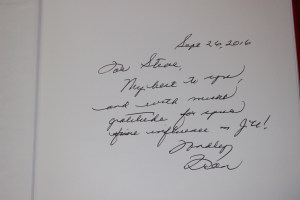
Inscription by Dr. Kinne for Steve.

Book inscription by Dr. Kinne for Steve.

When I had arrived at her home early that afternoon, I found her sitting in her parlor speaking with a former student—one of the thousands that still stay connected with this “Iowa Girl” who has made such a lasting impact on our world.

As we get ready for the day, week, and years ahead, we would all do well to remember her sage teaching (by way of her father): Life is a journey, not a guided tour. What legacy will we leave?


Video recommendation for the week:

Enjoy a little bit of the musical talent of this gifted and classically trained pianist. And mark your calendar to tune in to our podcast on November 15, 2016.


Thank you, Dr. Kinne.

Make it an inspiring week and H.T.R.B. as needed.

You can subscribe to my newsletter by clicking here.

Check out my latest podcasts at The Growth and Resilience Network™ (http://stevepiscitelli.com/podcasts).

Check out my website  (http://www.stevepiscitelli.com/programs.html) for programming information as well as details about upcoming webinars (http://www.stevepiscitelli.com/webinars).

My books Choices for College Success (3rd edition) and Study Skills: Do I Really Need This Stuff?  (3rd edition) are published by Pearson Education.

(c) 2016. Steve Piscitelli. All rights reserved.


Posted in ageing, Appreciation, authenticity, Being REMARKABLE, effective teaching, empathy, Excellence, fitness, Gratitude, legacy, Life lessons | Tagged , , , , , , , , , , , , , | 2 Comments

(#331) Quieting The Mind


My goal is to quiet the restless mind briefly now
and then build to a more sustained practice later. 

I have had an on-again/off-again affair with meditation. I’ve read about its benefits. Talked with people who have practiced and praised it for what it did for their emotional, physical and spiritual well-being. Closer to home, my bride, Laurie, meditates.

I have gone through spurts of meditating.  I have awakened at 4:10 a.m. to meditate for 20 minutes prior to going to the gym.  I’ve used tapes. I practiced while sitting and reclining. Walking in the park across from our home or on the beach provided an opportunity for moving meditation.  Most of the time I suffer from restless mind.

I’m a work in progress—and I don’t want to give up.  I keep coming back for more.

Photo (c) Steve Piscitelli

Photo (c) Steve Piscitelli

Quieting The Mind

Usually a mantra accompanies a mediation session. It helps with concentration.  Focusing on the breath and the mantra (the theory goes) will help quiet (or, at least, slow down) that restless mind. In my renewed quest to become a dedicated meditator, I have come up with my own set of words (my mantras) to use during my meditation sessions.  The list appears in the table below.

Awe Beauty Calm Delight Energy
Focus Gratitude Honor Integrity Joy
Kindness Love Music Nurture Okay
Peace Quiet Respect Source Thrive
Unflappable Vibrant Wisdom Xerophile Youthful
Zest

There’s nothing magical about the words.  I purposefully chose positive, encouraging, and emotionally energizing words.  Obviously, you could substitute any number of words. The first four (A-D) came to me one morning as I stood at the ocean’s edge at sunrise.  The list moves from the mundane to the obscure. Each works for me. Find what works for you.  (BTW: “Xerophile” refers to an organism that has adapted to dry conditions to survive.  I like the idea of adaptation in difficult circumstances. Again, use what works for you.)

One Strategy

I remembered a mediation strategy I learned years ago. Not sure who suggested it or where I found it, but it helps me quiet my mind while focusing on the positive concepts for the day.

  1. I slowly repeat each word four or five times. I typically use three or four words, no more.
  2. I then slowly spell each word by quietly saying the first letter on an exhale. The next letter on an inhale. And so on until I complete the word. I then go to the second word.
  3. When I have completed the spelling exercise, I slowly repeat the words one more time to complete my meditation.

Yes, elementary. It works for me at this phase of my practice. Perhaps it would work for those considering getting into meditation but are not sure how. I don’t worry about how long I’m meditating.  My goal is to quiet the restless mind briefly now and, then, build to a more sustained practice later.

Jill Taylor’s words (in her book My Stroke of Insight) resonated for me. While she was not specifically speaking about meditation I found the words a reminder of what meditation can do: “I welcome the reprieve that the silence brought from the constant chatter that related me to what I now perceived as the insignificant affairs of society.”


Video recommendation for the week:

Listen to Deepak Chopra and his strategies for effective meditation.


Make it an inspiring week and H.T.R.B. as needed.

You can subscribe to my newsletter by clicking here.

Check out my latest podcasts at The Growth and Resilience Network™ (http://stevepiscitelli.com/video-media/podcasts).

Check out my website  (http://www.stevepiscitelli.com/programs.html) for programming information as well as details about upcoming webinars (http://www.stevepiscitelli.com/webinars).

My books Choices for College Success (3rd edition) and Study Skills: Do I Really Need This Stuff?  (3rd edition) are published by Pearson Education.

(c) 2016. Steve Piscitelli. All rights reserved.


Posted in Life lessons | 2 Comments

(#330) I Saw Two Kids Playing


Every step of the journey does not need a checklist.

I saw two kids playing on the beach. A simple scene with important subtext. Like most children, they remind us about the importance of:

  • No checklists
    • I did not notice a clipboard with best practices for sandcastle building. No scripts. They quite literally just dug in.
  • Play
    • I don’t think these kids worried too much (at all?) about whether they moved the sand “correctly” or if the sand castle might crumble. Failure was an option, though I’m not sure they could even grasp what “failure” means.  After all, this is play. Seriously fun play.
  • Collaboration
    • At times one helped the other with a scoop of sand. Other times they just were curious about what the other was doing.

Photo and Effects by Steve Piscitelli (c)

  • Messiness
    • Sometimes they offered “help” that wasn’t appreciated. Each fussed about who could do it better.  Collaboration can be messy and communication can be strained. The parents allowed them to experiment and to “fail” (see above). No micro-managing observed. Effective leadership.
  • Confidence
    • In the adult world we use fancy sounding concepts like “self-efficacy.” These kids don’t know about that concept but I believe they live it. With each scoop of sand, there appeared another opportunity to understand that what they do will help to control they experience. After all, they were in charge of the sand excavation on that day.
  • Emotions
    • They laughed, giggled, and cried. They didn’t seem to hold grudges. Memory was short. It was time to play. So much sand to rearrange and so little time.
  • Rest
    • When he had enough of the playtime experience, the little boy climbed into his father’s arms and fell fast asleep. Recovery helps us bring our best game to the table (or in this case, to the beach sand) for the next play session.

Every step of our journey does not need a checklist. Sometimes it’s healthy and joyful to pay attention to the surroundings and let them guide our actions. It is sometime called the beginner’s mind and “In the beginner’s mind there are many possibilities, but in the expert’s there are few.”

I saw two kids playing. And I saw so much more.

Video recommendation for the week:

From the adult perspective…..

Make it an inspiring week and H.T.R.B. as needed.

You can subscribe to my newsletter by clicking here.

Check out my latest podcasts at The Growth and Resilience Network™ (http://stevepiscitelli.com/video-media/podcasts).

Check out my website  (http://www.stevepiscitelli.com/programs.html) for programming information as well as details about upcoming webinars (http://www.stevepiscitelli.com/webinars).

My books Choices for College Success (3rd edition) and Study Skills: Do I Really Need This Stuff?  (3rd edition) are published by Pearson Education.

(c) 2016. Steve Piscitelli. All rights reserved.
 

Posted in Life lessons | 1 Comment

(#329) Textured, Colored And A Bit Off-Center


By going a little off-center, we start to see things that can enhance our view.
We open ourselves up to larger possibilities and opportunities.

Over the past few months, I’ve been dabbling with photography. Having fun, getting creative, learning, and further appreciating the environment around me.  I understand more about textures and colors and the importance they play in the overall presentation of a particular photo.

Photo by Steve Piscitelli (c)

Photo by Steve Piscitelli (c)

Just this week, I shared some of my latest photos with a shutterbug friend of mine.  She tutored me about shooting a scene off-center. That is, placing the focal point of the shot to the left or right. Such a view creates a more dynamic presentation. It helps move the eye and create interest.

I shot most of my photos, interestingly, with the subject dead center in the frame. The colors and textures created interest but after a few shots, I could see what she meant. There seemed to be a sameness. Something was missing.

Photo by Steve Piscitelli (c)

Photo by Steve Piscitelli (c)

As I played with the angles and perspectives, I had an AHA moment. By shifting the focus a little this way or that, the entire scene took on a renewed perspective.  For instance, look at the photo below. With the rising sun off to the right, my eye went to a paddle board in the lower left and a ship on the horizon. Two pieces of the scene that I had earlier missed because I kept the sun dead center.

Photo by Steve Piscitelli (c)

Photo by Steve Piscitelli (c)

This got me thinking about how we can view our world.  While a centered focus helps us zero in on the big part of the picture (a goal, for instance), we might miss those things just off to the side. Maybe these items provide color or a bit more texture.  This additional information can be useful in understanding and appreciating the larger glory and story.  By going a little off-center, we start to see things that can enhance our view.  We open ourselves up to larger possibilities and opportunities.

Where can you shift your focus a bit to see a problem or a major decision from a different perspective?  What little things might you be missing because you will not move the focal point? A little this way; a little that way. A bit more texture; a different hue.  A clearer view. More mindful.

On what can you adjust your focus this week? Where can you go a bit off-center for a different—and perhaps—renewed perspective?


Video recommendation for the week:

The Heath brothers use the metaphor of shifting the spotlight to broaden the view of our world.


Make it an inspiring week and H.T.R.B. as needed.

You can subscribe to my newsletter by clicking here.

Check out my latest podcasts at The Growth and Resilience Network™ (http://stevepiscitelli.com/video-media/podcasts).

Check out my website  (http://www.stevepiscitelli.com/programs.html) for programming information as well as details about upcoming webinars (http://www.stevepiscitelli.com/webinars).

My books Choices for College Success (3rd edition) and Study Skills: Do I Really Need This Stuff?  (3rd edition) are published by Pearson Education.

(c) 2016. Steve Piscitelli. All rights reserved.

 

Posted in awareness, focus, Goals | Tagged , , , | 3 Comments

(#328) Waiting For A Life Guard?


What have you been fearful of leaping into—but would really like to experience?
What are you curious about doing or exploring?

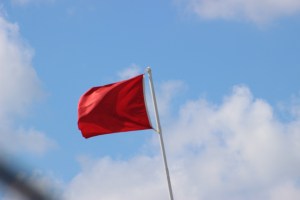
As I type this week’s blog post, Hurricane Hermine is about to make a Florida landfall.  Beaches and residents brace for the impact. In some areas, the beaches moved from red flag warnings to “closed.”  The lifeguards have left the beach.

Photo by Steve Piscitelli

Photo by Steve Piscitelli

In spite of the warnings and the dangers, a few intrepid surfers will paddle out in search of the perfect wave. The danger and risk seem secondary to the thrill, challenge, and exhilaration of catching a storm-tossed set and riding them to shore.

While I’m not recommending anything quite that dangerous for you, I do see a metaphor worth tossing out for your consideration.

Think of a time when you wanted to move into what may have seemed like dangerous waters. Perhaps you considered a career shift. Maybe you got real close to asking someone for a date. Did you want to stand up in a meeting and explain why you disagreed with a corporate initiative?

Whatever the situation you may have found yourself in, you so wanted to step out—but you didn’t dare wade into what you saw as rough and dangerous waters.  You did not risk. You played it safe and watched from the shore. Without a lifeguard in her chair for possible rescue, you decided to wait for calmer weather.

Next time you find yourself hoping to make (to you) a risky move, consider a strategy that the Heath brothers describe in their book Decisive: How to Make Better Choices in Life and Work.

Consider an “ooch.”

To “ooch” is to take small steps. Kind of like dipping your toe into the water. Rather than dive into the unknown and dangerous waters, wade in slowly.  Be wary of the rip currents. Get your footing and test your assumptions.

I encouraged my students and, now, workshop participants to practice the Two-Minute Drill.  If a goal seems too lofty or too forbidding, break it down into the smallest steps possible. What can you do in just two-minutes that will get you closer to your goal?  That is a form of toe dipping.  It keeps you moving in the direction of your goal. It gets you off the sand and into the water. And since you remain close to shore, you may not feel the need for a lifeguard.  You feel a bit surer about wading forth.

What have you been fearful of leaping into—but would really like to experience?  What are you curious about doing or exploring? How can you “ooch” this week, test the waters, make adjustments, and take a calculated risk? What can you do in two minutes to test the waters?


Video recommendation of the week:

Remember hoping to get to a goal is wonderful fuel. But you will need to do more—even if in small safe steps.


Make it an inspiring week and H.T.R.B. as needed.

You can subscribe to my newsletter by clicking here.

Check out my latest podcast (about ex-offenders and resilience).  You can find my podcast series at The Growth and Resilience Network (http://stevepiscitelli.com/video-media/podcasts).

Check out my website  (http://www.stevepiscitelli.com/programs.html) for programming information as well as details about upcoming webinars (http://www.stevepiscitelli.com/webinars).

My books Choices for College Success (3rd edition) and Study Skills: Do I Really Need This Stuff?  (3rd edition) are published by Pearson Education.

(c) 2016. Steve Piscitelli. All rights reserved.


Posted in action, Anxiety, Appropriate Behavior, assumptions, authenticity, courage, Failure, Goals, growth, habits, happiness, hope, Life lessons, Life's purpose, risk-taking, wisdom | Tagged , , , , , , , | 3 Comments

(#327) Structures for Organization: Implications for Teaching and Training


Just because it was tossed, doesn’t mean it was caught.
Just because it was talked, doesn’t mean it was taught.

How do you define “learning”? And, what causes it? How much of your schooling exposed you to a stream of firehosed arcane knowledge with little connection and relevance? Do you consider that learning?

One measure to consider is whether our thinking or behaviors have changed in a sustainable manner.  “Learning” isolated facts that are promptly lost after the test, is not learning.  That’s memorization.  Or as one teacher so aptly noted, such an exchange is nothing less than “bulimic education”—take it in; then spit it out. A tumble of facts in and a tumble of facts out.

Photo by Steve Piscitelli

Photo by Steve Piscitelli

Even engaging in a well-articulated conversation or debate has questionable learning value if there is no change in one’s mental mindset.

Whether we teach a classroom full of eager (and not so-eager students), orient new students to the university, train staff in our organization, or teach a young girl to play guitar, we look for some level of change. Some type of movement.

Calling it “teaching” does not mean the student experienced “learning.” Or as I’ve proffered on occasion, just because it was tossed, doesn’t mean it was caught.  Just because it was talked, doesn’t mean it was taught.

The inimitable Truman Capote reportedly said, “That isn’t writing; that’s typing.”

The spin for  me would be, “That’s not teaching; that’s talking.”

If you leave with the exact same mental model—no adjustments—then can we say anything was “learned”? Nothing has changed and there is no sustainable difference.

Ken Bain’s work What the Best College Teachers Do reminded me of a teaching and learning strategy I used with my history students.  Rather than bombard them with minutiae, I did my best to introduce them to “structures” of United States History.  Rather than memorize an endless array of isolated dates, battles, names, I helped them identify patterns. These patterns formed the structures of the course.  Here are five of the structures I used with my students:

  • Establishment of a national identity
  • Challenge to authority
  • Evolution of mass-based politics
  • Demand for minority rights
  • Evolution of governmental power and reach

Think of these structures as buckets into which information (the facts, events, and issues) of United States History can be placed.  These containers help the students to see patterns and evolution. This does not condone fuzzy teaching.  The students still need specifics to construct the whole from which to make sense of the world.

The flight attendant who just rolled her drink cart down the aisle and stopped at my seat (14C) has a structure. She did not spit back a memorized list of all items and where they were located on her cart to me. To be sure, she is well versed on the cart inventory. But she focuses on the pattern of what to do at each seat and how to fill each drink order. Imagine if she had no idea where anything was located on the cart. And at each seat, she rattled off her memorized list of every item on the cart.  Would you be impressed? Doubt it. You want a drink, not a recitation.

Then why are we so enamored with filling students’ minds (children and adults alike) with long lists of stuff that, by themselves do not help them? Why not help the person form meaningful and useful patterns?

What are the implications of focusing on patterns and structures for your workplace? Do you want your team members to remember isolated facts or would you rather they connect those facts in a meaningful pattern so they can be successful for your organization?

Do you want to teach facts or people?

Or as Ken Bain, so eloquently stated, “You don’t teach a class. You teach a student.”

Amen.

Make it an inspiring week and H.T.R.B. as needed.

You can subscribe to my newsletter by clicking here.

Check out my latest podcast (about ex-offenders and resilience).  You can find my podcast series at The Growth and Resilience Network (http://stevepiscitelli.com/video-media/podcasts).

Check out my website  (http://www.stevepiscitelli.com/programs.html) for programming information as well as details about upcoming webinars (http://www.stevepiscitelli.com/webinars).

My books Choices for College Success (3rd edition) and Study Skills: Do I Really Need This Stuff?  (3rd edition) are published by Pearson Education.

(c) 2016. Steve Piscitelli. All rights reserved.

Posted in effective teaching, learning, resilience, structures of learning, structures of organization, Teaching, teaching and learning | Tagged , , , , , | 2 Comments

(#326) Where Is Your Focus Space?


It seems I do some of my best thinking when I am not in my workspace.

In her book Improv Wisdom: Don’t Prepare, Just Show Up Patricia Ryan Madson suggests that we pay attention to our “hot spots.” These places feel right for us and, for whatever reason, we have a clearer view of our world.  In these spaces, we have a better than average chance of pushing distractions aside and concentrating on the important stuff in our lives.

As Madson says, we “just show up.” We don’t over prepare. We step into the space and allow our creative juices to flow.

_____________________________________

“Most men pursue pleasure with such breathless haste that they hurry past it.”
Soren Kierkegaard

_____________________________________

I think of these hot spots as unfocused spaces that allow me to focus.  That is, when I am feeling stuck (on a project, for instance) rather than force a narrowly framed decision, I find these focus spaces allow me to see broader and more creative options. I don’t force my thoughts. I allow the options to flow to me and open up a pathway for ideas to take root and begin to bloom.

Photo by Steve Piscitelli

Photo by Steve Piscitelli

When I jotted down my creative spaces I had an “aha moment.”

  • Doing yard work.
  • Drinking a cup of coffee in a cafe.
  • Having talk-time with my bride.
  • Meditating
  • Relaxing in a hotel room.
  • Sitting in my seat during a flight.
  • Waiting on a flight in the airport.
  • Walking, sitting, or biking on the beach
  • Walking with my canine companion, Roxie
  • Working in my home office
  • Working out in the gym.

With the exception of “working in my home office,” the other ten spaces actually remove me from my day-to-day work locations and routine actions. It seems I do some of my best thinking when I am not in my workspaces.  I’m not forcing myself. When I don’t force myself to focus, I seem to focus better. This sweet spot helps me stay resilient.

Video recommendation of the week:

So, maybe, if you’re feeling stuck or you’re having difficulties stimulating the creative juices, pay a visit to your non-work focus spot. Make a list of the top places where things seem to happen for you—where ideas appear and conundrums appear to become clearer.

When was the last time you visited your focus space?

Make it an inspiring week and H.T.R.B. as needed.

You can subscribe to my newsletter by clicking here.

Check out my latest podcast (about ex-offenders and resilience).  You can find my podcast series at The Growth and Resilience Network (http://stevepiscitelli.com/video-media/podcasts).

Check out my website  (http://www.stevepiscitelli.com/programs.html) for programming information as well as details about upcoming webinars (http://www.stevepiscitelli.com/webinars).

My books Choices for College Success (3rd edition) and Study Skills: Do I Really Need This Stuff?  (3rd edition) are published by Pearson Education.

(c) 2016. Steve Piscitelli. All rights reserved.

Posted in acceptance, Choice, Creativity, curiosity, Dreams, inspiration, Reflection, Reflective practice, relevance, responsibility | Tagged , , , , , , | Leave a comment

(#325) Don’t Let Anyone Steal Your Lunch Money


Don’t let anyone deny who you are.

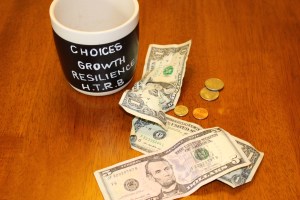
I have often joked with friends not to let anyone take their lunch money. For me, it has been an off-handed reminder to them not to let anyone take advantage of their good nature.

These past few weeks those same words have taken on a more serious challenge as I have talked with colleagues and friends who have been confronting personal and professional dilemmas.

Photo by Steve Piscitelli

Photo by Steve Piscitelli

For me, “Don’t let anyone steal your lunch money” has come to take on various meanings of self-worth:

  • “Don’t let anyone deny your story.”
  • “Don’t let anyone deny who you are.”
  • “Don’t allow anyone to diminish your worth.”
  • “Don’t diminish your own worth.”
  • “Don’t settle for someone else’s version of who you are.”
  • “Don’t deny your own story.”

Or, stated in the positive:

  • “Do remind yourself of what you add to your community.”
  • “Do remember and draw strength from those times when your grit and resilience led to personal triumphs.”
  • “Do recognize that every failure and success (so-called or real) has made you the person you are today.”
  • “Do know that while you might not ‘be a fit’ for someone else’s plan, you have a huge hand in cobbling your own plan.”
  • “Do be true to yourself so that you can be true to others.

None of this gives license for delusional self-congratulation.  We all need to engage in a regular and thorough examination of ourselves. We remain fortunate when we have mentors in our corners to urge us on and challenge us to stretch.

In addition to the outside forces for good, draw on your inner strength and mentor yourself with reflection. Draw on what you believe to be faith and the Source to help you understand your talents.

That person looking back from the mirror has a powerful story to tell. Don’t ignore it. Don’t deny it. Grow with it.

Make it an inspiring week and H.T.R.B. as needed.

You can subscribe to my newsletter by clicking here.

Check out my latest podcast (about ex-offenders and resilience).  You can find my podcast series at The Growth and Resilience Network (http://stevepiscitelli.com/video-media/podcasts).

Check out my website  (http://www.stevepiscitelli.com/programs.html) for programming information as well as details about upcoming webinars (http://www.stevepiscitelli.com/webinars).

My books Choices for College Success (3rd edition) and Study Skills: Do I Really Need This Stuff?  (3rd edition) are published by Pearson Education.

(c) 2016. Steve Piscitelli. All rights reserved.

Posted in acceptance, Appreciation, Being REMARKABLE, courage, Critical Thinking, dignity, fortitude, Gratitude, Reflection, self-love | Tagged , , , , , , , | Leave a comment

(#324) What Motivates Your Reasoning?


It can be very easy to point out the window…
The challenge is to look into the mirror.

A quote attributed to Alan Alda reminds us that our “assumptions are the windows on the world. Scrub them off every once in a while or the light won’t come in.”

Assumptions. We all make them. They can help us make sense of our world and navigate our journey.  They can also create huge obstacles, narrow-minded thinking, and fear-based decision making.

Early in their book Decisive: How to Make Better Choices in Life and Work Chip and Dan Heath outline four cognitive traps (they label them as “villains of decision making”) when it comes to decision making (and critical thinking). If we do not recognize and understand these pitfalls we undermine our abilities to make appropriate and right-minded decisions.

  1. Narrow Framing. This occurs when we look at a situation and only give ourselves limited choice options (usually just two).  Either A or B.  This one or that one. Black or white. Go or stand still.
    #My example. Listen to the political diatribes and the shrill voices of the 2016 presidential campaign. Lots of “either my way or no way.”  Not much choice other than either you are “with the team” or “against the team.”  This way is correct; that way wrong.
  2. Confirmation Bias. This happens when we lean toward or agree with only information that confirms already held personal beliefs. We tend to overlook or dismiss anything that may challenge or disprove our opinion.
    #My example. Perhaps you know folks who get their “news” from only one source or perspective. Anything else they consider suspect. Or a corporate manager or educational leader wants to move the company/college in a certain direction. She believes so strongly in the position, only evidence that supports that decision is given any real attention.

    Image: stockimages/ FreeDigitalPhotos.net

    Image: stockimages/
    FreeDigitalPhotos.net

  3. Short-term Emotion. Pressures and conflicts in the near term can cloud the long-term solution. If we make decisions based on an immediate and visceral response we may be missing the bigger picture.
    #My example. This really calls to question what we pay attention to. If we steep ourselves in nothing but fearful images (see #1) about a topic, issue, or group of people then our decision may be knee-jerk with little well-rounded information to support our position.  Would we want to make a business or financial investment or career move in this manner? (The Heath brothers present an intriguing statistic: In 2009, more than 60,000 tattoos were reversed. What was initially embraced with enthusiasm, wanes on further consideration after the fact. See page 5.)
  4. Over Confidence. Confidence and belief in self can be powerful. And it can create awful consequences if we do not step back and understand and question our assumptions about what we know and what we do not know.
    #My example. A strategy I used with my students encouraged them to move outside of their “I-know-all-about-this” mindset. I would write three columns on the board: “What I definitely know about this topic,” “What I think I know about this topic,” and “What I would like to know about this topic.”  Then we would start to support, debunk, and add to our knowledge base.  No shame in not knowing. I would think it would be more embarrassing to continually shout shrilly about a position, only to be dead wrong (see Confirmation Bias above).

When we make decisions we have to understand that cognitive traps will undermine us.  You need only look at political debates, corporate politics, community disagreements, or even your own self arguing with your own self!

Video recommendation of the week.  Julia Galef in this TEDx Talk explains the decision-making dilemma as “motivated reasoning” with an interesting metaphor.

As this week unfolds, it would do us all well to pause from time to time and analyze our decision making and critical thinking. It can be very easy to point out the window and say, “Geez, if only they knew how to critically think.”

The challenge is to look into the mirror and ask, “How am I doing with my critical thinking?

Make it an inspiring week and H.T.R.B. as needed.

You can subscribe to my newsletter by clicking here.

Check out my latest podcast (about ex-offenders and resilience).  You can find my podcast series at The Growth and Resilience Network (http://stevepiscitelli.com/video-media/podcasts).

Check out my website  (http://www.stevepiscitelli.com/programs.html) for programming information as well as details about upcoming webinars (http://www.stevepiscitelli.com/webinars).

My books Choices for College Success (3rd edition) and Study Skills: Do I Really Need This Stuff?  (3rd edition) are published by Pearson Education.

(c) 2016. Steve Piscitelli. All rights reserved.

Posted in assumptions, awareness, confirmation bias, Critical Thinking, decision making, leadership, Life lessons | Tagged , , , , , , | 1 Comment

(#323) Who Sets Your Agenda?


Why let someone else interrupt
my thought process and mindset
with what they see as something
I “need” to know “right now”
from the “world out there”?

Every cardio machine in our local gym has the ubiquitous television monitor attached to it. And every morning you will find members dutifully burning off calories, building stamina, and getting their daily agenda (in part or in full) set for them.

Maybe you know people for whom, after awakening each morning, the first exercise they get is to grab the remote and click on the morning “news.”  This assumes, of course, that they had not fallen asleep with the last thing they heard coming from the agenda of someone else’s mouth.  Perhaps they suffer from FOMO (Fear Of Missing Out). I don’t know.

A study from more than forty years ago found

In choosing and displaying news, editors, newsroom staff, and broadcasters play an important part in shaping political reality. Readers learn not only about a given issue, but also how much importance to attach to that issue from the amount of information in a news* story and its position….

Arvind Balaraman@FreeDigitalPhotos.net

Arvind Balaraman@FreeDigitalPhotos.net

[The above * added by me.  According to dictionary.com, “news” is defined as “the presentation of a report on recent or new events in a newspaper or other periodical or on radio or television.” Perhaps we should address whether the “news” is really “news.”  Other than a change in name or location, for instance, does the general presentation of the “news” change?  Look at most programming and you have some semblance of this order: “Breaking News Alert” followed by “story about death” followed by “story about destruction” followed by “story about weather catastrophe” followed by “story about crash during rush hour” followed by “story about economic calamity” followed by….

Doesn’t really sound “newsy” to me.]

It would be simplistic to state that the “news” tells us how to think.  It may not be much of a stretch, however, to say that the “news” does direct what we think about–if we allow it.  And it’s not just the network or cable news. If I were to wake up and immediately go to my social media feed, I stand the chance of my “friends” setting my agenda for the day.

The late Jim Rohn (speaker, author, trainer) said that you are the “average of the five people you spend most of your time with.” Who we hang with matters.  Matters in terms of good/poor physical health, optimistic/pessimistic outlook, hopeful/fearful about the future, and loving/hating others.  These people can, if we let them, set our agenda for the day.  They will “contribute” soon enough during the day. I make the argument to give yourself some time to think, reflect, set YOUR course, and then invite them onto YOUR agenda. Maybe create a JOMO movement (Joy Of Missing Out!).

Years ago, I decided that I would take more control of setting my daily agenda. Not just the to-do list but my mindset as well.  I don’t wish to start my day with someone squawking at me from the TV or screaming through my earbuds.  I seldom read the newspaper with my morning coffee. There will be time enough to get to my email. I am fortunate to live in a loving relationship (rather than a conflict-habituated one) that starts the day with pleasantries rather than an argument.

I still get my “news”—but remain discerning (and hopefully critical) about my sources (looking for various views).

I have eliminated just about all “news” alerts on my devices. Among the few exceptions: baseball, local weather and airline texts when I travel.  Why let someone else interrupt my thought process and mindset with what they see as something I “need” to know “right now” from the “world out there”?

Video recommendation of the week. And since it’s “news” I think I already know the categories of the most recent “Breaking News Alert!”

Yes, of course, if there is an emergency situation, I can tune it.  But if every moment of every day is an “emergency” then we might need to redefine emergency.

Even if your start time is only fifteen or thirty minutes (or five or ten) before the world starts calling you, why not take control of that little time to set your intentions for the day? Their intentions will come calling soon enough.

“Breaking News Alert!”- Start your day intentionally and make it a great one.

Make it an inspiring week and H.T.R.B. as needed.

You can subscribe to my newsletter by clicking here.

Check out my latest podcast (about ex-offenders and resilience).  You can find my podcast series at The Growth and Resilience Network (http://stevepiscitelli.com/video-media/podcasts).

Check out my website  (http://www.stevepiscitelli.com/programs.html) for programming information as well as details about upcoming webinars (http://www.stevepiscitelli.com/webinars).

My books Choices for College Success (3rd edition) and Study Skills: Do I Really Need This Stuff?  (3rd edition) are published by Pearson Education.

(c) 2016. Steve Piscitelli. All rights reserved.


Posted in awareness, Life lessons, Mindfulness, mindset | Tagged , , , | 2 Comments