(Issue #475) Purposeful Relationships Require Deliberative Efforts


Consider how you can incorporate deliberative efforts
for deeper organizational relationships—one person at a time.

I often stressed to my students that strategies for student success would prepare them for life success. My words came back to me as I have been settling in as a board member with a community group.

First, let’s look at one strategy I encouraged my students to embrace: Building authentic relationships with instructors.

Photo by (c) Steve Piscitelli

I urged them to contact their instructors as soon as possible at the beginning of the semester.  The ideal timing would see contact made prior to the semester starting; before entering the physical classroom or signing on to an online class for the first official day of class.  Such contact (by way of an office visit, email, online chat, or phone call) serves multiple purposes, For instance, it will allow the student to:

  • Establish the beginnings of an integrity-based relationship with the instructor.
  • Learn more about the course.
  • Learn more about what students need to do and have for class.
  • Ask about the top one, two, or three challenges past students have had with the class. The same for achievements.
  • Find out what resources are available to supplement the class material.
  • Help check assumptions about the professor that might have developed from past student evaluations.

That’s just a short list.

When I started my most-recent community work, the first board meeting confirmed that I had a great deal to learn about the organization.  Some things I have learned by trial and fire—going to meetings, taking part in discussions, and jumping into the program planning and delivery.  These were/are instructive, but I needed more grounding.

So, I listened to the professor whispering in my ear.

I reached out individually to each board member and set up a time to have a cup of coffee.  My purpose was to learn from people who have been doing this type of community work for many years.  I asked questions about the past, present, and future.  I learned about challenges, strengths, and weak signals for the group. And, I developed a better picture of what my space could be within the group—where and how I could serve with purpose.

Review the bulleted list above for students and apply it to community work, or a workplace team, or a new spiritual community membership, or [you fill in the blank]. By reaching out to, meeting with, and asking authentic questions of people who have a history with a group, you can:

  • Establish the beginnings of an integrity-based relationship with each member.
  • Learn more about the organizations past, present, future, strengths, challenges, and weak signals.
  • Learn more about what you need to do for the group. How can you serve best?
  • Ask about the top one, two, or three challenges each member has experienced with the organization. The same for achievements.
  • Find out about resources (available and needed) for the organization to carry out its mission.
  • Check assumptions about each member you might have formed from brief encounters in meetings.

Consider how you can incorporate deliberative efforts for deeper organizational relationships—one person at a time.


Video Recommendation for the Week

This brief video, while specifically addressing the context of campus culture, reminds us about the importance of building collaborative bridges. When we reach out, in a deliberative manner, we can learn about resources. And, after all, before we can use resources, we must know about them.



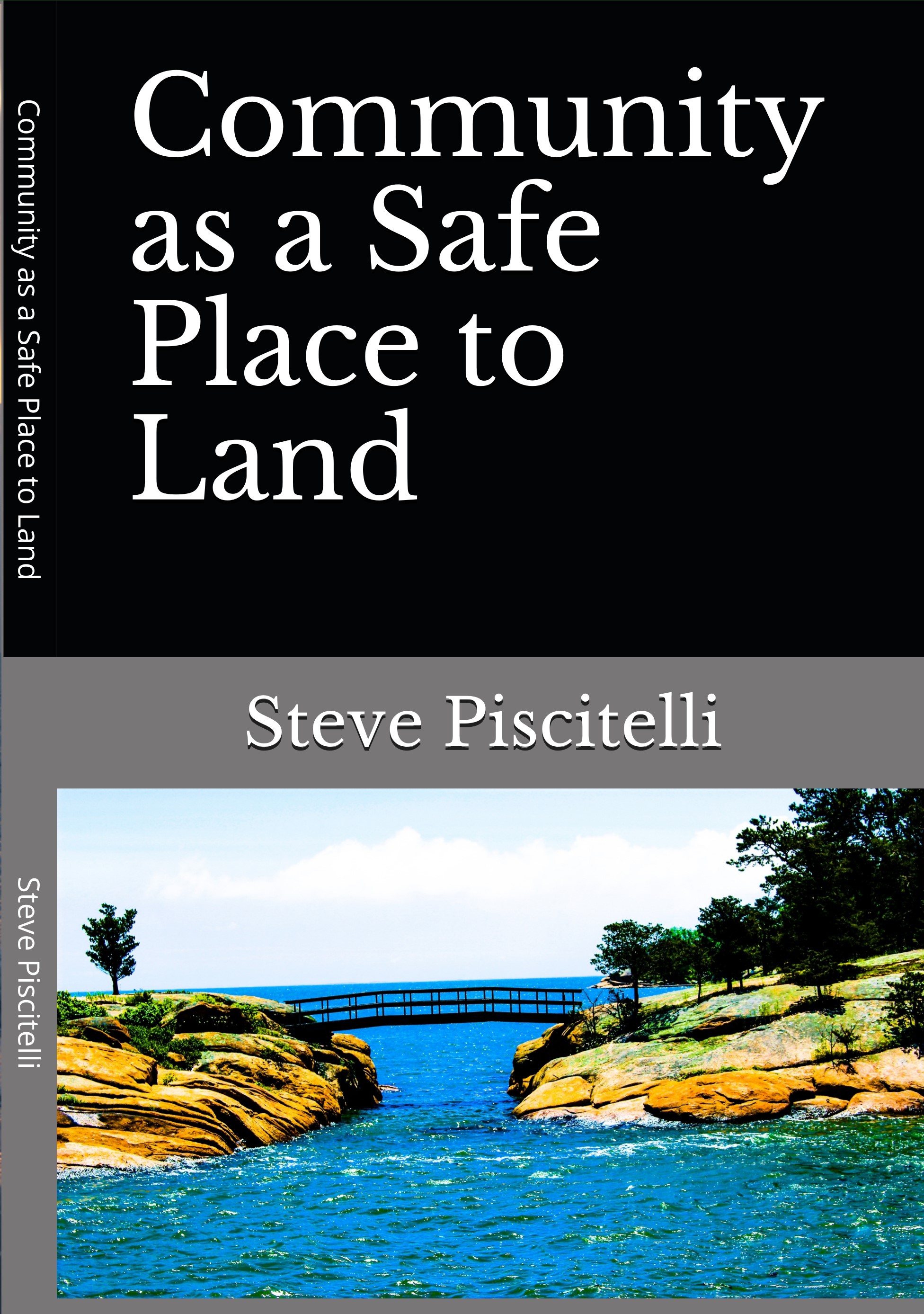
My latest book,
Community as a Safe Place to Land,

has been released! You can purchase it (print or e-book) on Amazon.
More information (including seven free podcast episodes to highlight the seven core values highlighted in the book) at www.stevepiscitelli.com.


Make it an inspiring and grateful week and H.T.R.B. as needed.

You can still order my book Stories about Teaching, Learning, and Resilience: No Need to be an Island (2017). Another university recently (May 2019) adopted it for teaching, learning, and coaching purposes. Contact me if you and your team are interested in doing the same.

Consider it for a faculty orientation or a mentoring program. The accompanying videos would serve to stimulate community-building conversations at the beginning of a meeting.

My podcasts can be found at The Growth and Resilience Network® (http://stevepiscitelli.com/media-broadcast/podcast).

You will find more about what I do at www.stevepiscitelli.com.

©2019. Steve Piscitelli
The Growth and Resilience Network®
 

Posted in assumptions, authenticity, awareness, collaboration, collegiality, Communication, Community, community development, emotional intelligence, generativity, growth, Life lessons, resilience | Tagged , , , , , | 1 Comment

(Issue #474) Live, Lose, Laugh, and Learn


Fear can lead to growth inhibiting action or inaction.

When we stretch our comfort zone and no longer sit on the sidelines weighing options ad nauseum we can set the stage for flexibility and growth.

Photo by Steve Piscitelli. ©2019

I’ve always admired true entrepreneurs—real risk takers.  While I have never done anything so chance laden, I have taken pride in pushing myself to do things without waiting until all the safety nets were in place. If I had postponed and fretted, I would not have written and recorded two music CDs (with phenomenal musicians and friends who helped me produce the projects and kept me from “hurting” myself in the studio!), twelve published books, a podcast channel, a registered trademark, and years of national speaking engagements.

Same with Roxie (B.D.E.) and our pet therapy adventures. And a host of other community enhancement activities.

Even kayaking in the ocean. I’m embarrassed to share how fearful I was when I first paddled out from shore. White knuckle kind of trepidation.  I kept forcing myself—and over time the fear turned to respect for the ocean. That helped my mindset.

Fear can lead to growth inhibiting action or inaction.

The key I found is to jump in and do it. If we don’t fail, how do we know how much more we can grow? I think of some things I have done in major presentations that did not work…fell flat.  I did not like the feeling…and I grew from each uncomfortable situation.

Where can you jump in this week?


Video Recommendation for the Week

Enjoy this repeat video of outtakes from mistake after stumble after miscue I committed. These came over a period of months as I shot more than forty videos for a book project.  If I had given up after any of these frustrating attempts, the project would have suffered.

Live, lose, laugh, and learn.


My latest book,
Community as a Safe Place to Land,

has been released! You can purchase it (print or e-book) on Amazon.
More information (including seven free podcast episodes to highlight the seven core values highlighted in the book) at www.stevepiscitelli.com.


Make it an inspiring and grateful week and H.T.R.B. as needed.

You can still order my book Stories about Teaching, Learning, and Resilience: No Need to be an Island (2017). Another university recently (May 2019) adopted it for teaching, learning, and coaching purposes. Contact me if you and your team are interested in doing the same.

Consider it for a faculty orientation or a mentoring program. The accompanying videos would serve to stimulate community-building conversations at the beginning of a meeting.

My podcasts can be found at The Growth and Resilience Network® (http://stevepiscitelli.com/media-broadcast/podcast).

You will find more about what I do at www.stevepiscitelli.com.

©2019. Steve Piscitelli
The Growth and Resilience Network®
 

Posted in Life lessons | 3 Comments

(Issue #473) Legacy


What is your hope for your community? What do you want to see, and more importantly, what will you do to make it happen? What legacy will you help build and contribute to for the coming generations?

Last week, as I sat in the front row enjoying original performances at the monthly Atlantic Beach, Florida Songwriters’ Night, I had an aha moment.

This event, and its sister event, Acoustic Night, have been operating for sixteen continuous years. About three-hundred months (when taking both events into account) of music and entertainment provided by community residents of all ages. The events provide a safe place for people to test and stretch their stage presence and musical chops, while connecting with neighbors and visitors.

That night, I thought of how the events have become mainstays in the community.  It all started with a simple thought—a hope— I had taken to a community committee I served on in 2003—and it grew. I hoped to see a live, monthly musical event for and by the community members. I was fortunate to have had a cadre of help to move the idea forward.

  • An INITIATOR. The late Commissioner Desmond Waters nominated me to the committee-the committee that would eventually move these events from thought to action.
  • A BELIEVER. The committee chair at that time, Rusty, saw merit in the idea of a music event, and helped me push forward. Mostly, he helped me massage and develop the idea and, then, moved out of the way. A true leader.
  • A SUPPORTER. The City of Atlantic Beach has provided the resources so that this event could start, develop, and mature. They still do today.
  • A COLLABORATOR. Veteran singer-songwriter-performer-friend Mike Shackelford helped me stage the first (and all future events). He took on the tasks of stage host/sound man/and musical mentor. He still serves in that capacity today.
  • An APPRECIATOR. Or, in this case, appreciators.  It’s always about the audience. If they don’t come, there is no event.

As one performer finished on this night, and Shack helped the next one get plugged in, I was grateful to have had the opportunity afforded me by Commissioner Waters.  Sixteen years later. A proud feeling for what we developed in and for the community. But there was something else that tugged at my gut.

What’s next? What do I want to see sixteen years from now? What will I do to make that happen? Who will be the initiators, believers, supporters, collaborators, and appreciators? What do I want to smile at and feel joy about for my community?

And, I leave that question for you. What is your hope for your community? What do you want to see, and more importantly, what will you do to make it happen? What legacy will you help build and contribute to for the coming generations?


Video Recommendation for the Week

In this short video clip (63 seconds) I remind an audience that HOPE is a wonderful fuel—but it is not enough.


My latest book,
Community as a Safe Place to Land,

has been released! You can purchase it (print or e-book) on Amazon.
More information (including seven free podcast episodes to highlight the seven core values highlighted in the book) at www.stevepiscitelli.com.


Make it an inspiring and grateful week and H.T.R.B. as needed.

You can still order my book Stories about Teaching, Learning, and Resilience: No Need to be an Island (2017). Another university recently (May 2019) adopted it for teaching, learning, and coaching purposes. Contact me if you and your team are interested in doing the same.

Consider it for a faculty orientation or a mentoring program. The accompanying videos would serve to stimulate community-building conversations at the beginning of a meeting.

My podcasts can be found at The Growth and Resilience Network® (http://stevepiscitelli.com/media-broadcast/podcast).

You will find more about what I do at www.stevepiscitelli.com.

©2019. Steve Piscitelli
The Growth and Resilience Network®


Posted in action, amplifying, assumptions, awareness, collaboration, Community, community development, intentionality, leadership, Life lessons, resilience | Tagged , , , , , , , , | 1 Comment

(#Issue 472) Action, Gratitude, and Community


While thinking about gratitude feels good, action creates greater benefits.

At the beginning of our monthly Beaches Watch Board of Directors meeting, we pause for a “Mission Moment.” We share how, where, or with whom we have experienced our mission come alive. Sometimes that involves a resident commenting on a past meeting or a program participant thanking us for our service to the community. There have been many mission moments for this organization over the past fifteen years.

Last month, I shared a mission moment I had while reflecting on our initiatives this year:

We do not ask, “Why isn’t our community a better place?”
Instead, we ask, “What can we do to make our community a better place?”

Action over words. Doing rather than yammering. And in the doing there is gratitude for the work, the team, the community, and the product.

Research has shown that “the practice of gratitude can lower blood pressure, improve immune function, promote happiness and well-being, and spur acts of helpfulness, generosity, and cooperation.”

Helping a community be a better place one action and one person at a time.

Video Recommendation for the Week

I first viewed and shared this gratitude video with my students six years ago. Watch the entire clip (only about 420 seconds long).  The key takeaway: While thinking about gratitude feels good, action creates greater benefits for others and ourselves.


My latest book,
Community as a Safe Place to Land,

has been released! You can purchase it (print or e-book) on Amazon.
More information (including seven free podcast episodes to highlight the seven core values highlighted in the book) at www.stevepiscitelli.com.


Make it an inspiring and grateful week and H.T.R.B. as needed.

You can still order my book Stories about Teaching, Learning, and Resilience: No Need to be an Island (2017). Another university recently (May 2019) adopted it for teaching, learning, and coaching purposes. Contact me if you and your team are interested in doing the same.

Consider it for a faculty orientation or a mentoring program. The accompanying videos would serve to stimulate community-building conversations at the beginning of a meeting.

My podcasts can be found at The Growth and Resilience Network® (http://stevepiscitelli.com/media-broadcast/podcast).

You will find more about what I do at www.stevepiscitelli.com.

©2019. Steve Piscitelli
The Growth and Resilience Network®
Posted in action, Community, Gratitude, Life lessons, resilience | Tagged , , | 4 Comments

(#Issue 471) Confronting the Bullies


What we do in these situations defines our characters,
our communities, and our destiny.

DeRay Mckesson, in On the Other Side of Freedom: The Case for Hope, reminds us of the power a bully holds when we fail to confront the bully.

  • “The bully aims to become the center of your everything.”
  • “Bullies don’t just happen, they are enabled.”
  • “Silence too easily becomes acceptance.”
  • “The bully must be confronted intentionally, his impact named and addressed.”
  • “If we don’t have a vision for our desired future, how can we plan to achieve it? … We must all imagine the block without a bully, otherwise we cannot get there.”

A few years ago, on this blog I wrote about courage. I will repeat a part of that post below as it applies to bullies, speaking out and up, paying attention, and creating a more compassionate and just future. You can read that entire blog post here.

Samuel Adams, one of the leaders for the American War for Independence said,

“If ye love wealth better than liberty, the tranquility of servitude better than the animating contest of freedom, go home from us in peace. We ask not your counsels or arms. Crouch down and lick the hands which feed you. May your chains set lightly upon you, and may posterity forget that ye were our countrymen.” 

And he went on to fight against immense odds for a cause he was willing to sacrifice his life for.

While most of us will never be in a situation like Adams, we still have every-day situations that can allow us to step up, to ignore the fear, and move forward.  Consider the following examples and how they embody courage:

  • Stepping up for someone (or yourself) who is the victim of a bully (I recently heard a young girl singing a song about how she helped a school friend back down a bully).
  • Standing up to workplace bullies even when a job (your job) might be on the line.
  • Speaking up for a just cause when you are a lone voice in the wilderness.
  • Bouncing back from a setback and continuing to move toward your goal, even as others may attempt to minimize or dismiss your efforts.
  • Befriending the unpopular kid in class or co-worker in the office.
  • Pointing out that gossiping about someone who is not present is, in fact, cowardly. And you lead the way by walking away from the gossip.

We have opportunities each day. We can ask for help. We can collaborate. We can seek the higher ground.  We can engage in little acts of courage that we may not even be aware of when we do them. And, then, there may be other opportunities that we do not take advantage of.

What we do in these situations defines our characters, our communities, and our destiny.

Make it a great week. And H.T.R.B. as needed.

Video Recommendation for the Week

Martin Luther King reminded us that “a man dies when he refuses to stand up for that which is right” in this 1965 speech excerpt.


My book,
Community as a Safe Place to Land,

has been released! At this point, you can purchase it on Amazon.
More information at www.stevepiscitelli.com.


Make it an inspiring and grateful week and H.T.R.B. as needed.

You can still order my book Stories about Teaching, Learning, and Resilience: No Need to be an Island (2017). Another university recently (February 2019) adopted it for training and coaching purposes. Contact me if you and your team are interested in doing the same.

Consider it for a faculty orientation or a mentoring program. The accompanying videos would serve to stimulate community-building conversations at the beginning of a meeting.

My podcasts can be found at The Growth and Resilience Network® (http://stevepiscitelli.com/media-broadcast/podcast).

You will find more about what I do at www.stevepiscitelli.com.

©2019. Steve Piscitelli
The Growth and Resilience Network®
Posted in Appropriate Behavior, bullies, core values, courage, Life lessons | Tagged , , , | 1 Comment

(#Issue 470) A Reminder About Noise


Are you adding to clarity or compounding the noise? How do you know?

“The trouble with a great many of us is we know so many things that ain’t so.” -Josh Billings

“It ain’t what you don’t know that gets you in trouble. It’s what you know for sure that just ain’t so.” -attributed to Mark Twain.

“It’s not that they don’t know the truth (they might, if they stopped to think about it.) It’s not that they want to know the truth, either. Information is available if they looked for it. No, they fear the truth. And being part of a mob is a good way to hide from that fear.” –Seth Godin

Photo by Steve Piscitelli.

As the call-out-culture escalates, it has become cliché to say civility has become a rare commodity in public (and even private) discourse. The changing rules of engagement seem to dictate that presenting evidence and “winning” an argument is no longer enough. The victor must destroy the adversary. Debate gives way to harangues, collective monologues, and questionable sources and conclusions.

Noise bombards us. On this blog a few years ago, I asked, “Are we listening to others or just adding to the noise?”

If, as famed architect Frank Lloyd Wright claimed, “An expert is a man who stops thinking because he knows,” then can we say the same for a person who claims one source of information as the fount of all legitimacy and contrary accounts to be illegitimate or “fake”? Has she stopped discerning because she “knows” what is legitimate and what is fake?

Are you adding to clarity or compounding the noise? How do you know?


 Video Recommendation for the Week

“You are what you see…you are what you listen to all the time….” Says author and researcher Shawn Achor.  In this clip, he suggests strategies for decreasing negative noise and increasing the positive.


My book,
Community as a Safe Place to Land,

has been released! At this point, you can purchase it on Amazon.
More information at www.stevepiscitelli.com.


Make it an inspiring and grateful week and H.T.R.B. as needed.

You can still order my book Stories about Teaching, Learning, and Resilience: No Need to be an Island (2017). Another university recently (February 2019) adopted it for training and coaching purposes. Contact me if you and your team are interested in doing the same.

Consider it for a faculty orientation or a mentoring program. The accompanying videos would serve to stimulate community-building conversations at the beginning of a meeting.

My podcasts can be found at The Growth and Resilience Network® (http://stevepiscitelli.com/media-broadcast/podcast).

You will find more about what I do at www.stevepiscitelli.com.

©2019. Steve Piscitelli
The Growth and Resilience Network®

Posted in acceptance, assumptions, awareness, bias, collaboration, collective monolgues, Communication, emotional intelligence, empathy, growth, habits, Haters, information literacy, Life lessons | Tagged , , , , , | 3 Comments

(#Issue 469) Taking a Stand


It, however, did lead to a deeper conversation with myself.
And, even if on a minute level, a deeper appreciation for people
who stand up for what they believe.

Slacktivism references a “low-cost substitute for substantive actions.”  Hitting a “like” or “heart” button. Maybe inserting a GIF. Or a tiring and impact-diluting string of # symbols and associated words.

I’ve done it. (Though, I do my best to avoid multiple distracting hashtag phrases.)  It can be a way of sharing a feeling or recognizing that someone has captured my feelings about a subject.  It might lead to a deeper dive into a subject, increased understanding, and clear vision.  Or it can just create a warm feeling without really taking a stand.

Whatever the reason or depth of “involvement” it does not replace front-line action. It does not come close to understanding or appreciating what the people involved in a movement experience or feel.  This came through to me in a jolting moment of self-awareness last week.

Outside the Southern Poverty Law Center (Montgomery, AL)

My wife and I spent a day touring various civil rights museums and locations in Montgomery, Alabama.  Every stop proved to be sobering and powerful on many levels. One of our first stops was the Southern Poverty Law Center’s Civil Rights Memorial.  Among the exhibits, we found the Wall of Tolerance.

The Wall (20 feet by 40 feet) has a constant stream of names cascading down like a waterfall.  Each  person had placed her/his name on the wall to show commitment to the following pledge:

By placing my name on the Wall of Tolerance,
I pledge to take a stand against hate, injustice and intolerance.
I will work in my daily life for justice, equality and human rights – the ideals for which the Civil Rights martyrs died.

At the base of the wall, a keyboard waited for us to type our names and add them to the wall.  So, there I was set to type my name.  For some, this may seem like a bit of slacktivism. For others, a way to show (in a small way) solidarity with a greater number of people for a greater cause. That was my thought as I stood there. I believed in the words I read.

Photo taken at the National Memorial for Peace and Justice (Montgomery, AL)

My moment of self-awareness came when I paused. My fingers poised over the keyboard but not immediately inputting my name. Not sure what was stopping me. On one level, I heard an internal voice questioning why I would want to place my name on this wall for all to see. Outside, the SPLC is constantly under guard, we were told, due to death threats.  I felt a bit of trepidation.

And then I had to talk to myself. If I felt a hesitation, what in the world did the protestors who marched in the civil rights demonstrations feel as they came face-to-face with hatred and violence? All I had to do was type my name in the comfort of a room and onto a wall with more than 500,000 other names. No threat to me. Imagine what the protestors confronted.

I typed my name.  Slacktivism for me? Maybe. It, however, did lead to a deeper conversation with myself.  And, even if on a minute level, a deeper appreciation for people who stand up for what they believe. Despite the opposition. Typing my name allowed me to show support.  Their actions displayed courage. It is up to me to show action in my day-to-day life to support the pledge.


Video Recommendation for the Week

A few years back, on a visit to Little Rock, Arkansas, I had the opportunity to speak with one of the Little Rock Nine. Minnie Jean Brown-Trickey speaks about facing a mob and its impact on her.


My book,
Community as a Safe Place to Land,

has been released! At this point, you can purchase it on Amazon.
More information at www.stevepiscitelli.com.


Make it an inspiring and grateful week and H.T.R.B. as needed.

You can still order my book Stories about Teaching, Learning, and Resilience: No Need to be an Island (2017). Another university recently (February 2019) adopted it for training and coaching purposes. Contact me if you and your team are interested in doing the same.

Consider it for a faculty orientation or a mentoring program. The accompanying videos would serve to stimulate community-building conversations at the beginning of a meeting.

My podcasts can be found at The Growth and Resilience Network® (http://stevepiscitelli.com/media-broadcast/podcast).

You will find more about what I do at www.stevepiscitelli.com.

©2019. Steve Piscitelli
The Growth and Resilience Network®

Posted in assumptions, awareness, courage, Life lessons | Tagged , , , , | 1 Comment

(Issue #468) Thank You, Mom


Shortcuts shortchange the long run.

It has been more than three decades since I have been able to share a Mother’s Day with my mom.  Like all moms, she never had an “owner’s manual” when it came to raising a child.  She learned; she intuited; she struggled; she made mistakes; and she left an indelible mark on me.

I have written on this blog a few of the many things I am grateful for in my upbringing. There is one, though, that always brings a smile to my face. I often shared it with my students. Here is the short story.

Photo by Steve Piscitelli

We lived in a small New England town. I received an even smaller weekly allowance.  If memory serves me correctly, it started at 25 cents and eventually “escalated” to about a buck a week.

In our small town was a savings and loan institution. Back in the day, this bank had accounts known as “Christmas Clubs” and “Vacation” accounts.  You’d get a coupon book that served (again, as best I can remember) as deposit slips. Fifty-two slips. A way to remember to put money away each week for the future gifts and opportunities.

My mother took me to the bank, and we “opened” one of those for me.  Each week, she expected me to (and I did) go to the bank and place 50% of my allowance in the account.  I never particularly enjoyed doing it. But I complied. At the end of the year, because of my growing discipline I had a few bucks saved.

That habit, however, had much more to do about discipline than money. The amount of money at the end of the year paled compared to the life lessons learned about goal setting, priority management, commitment, and financial planning.

My mother helped me to understand that little steps are important. In fact, over the years I came to realize a larger lesson—there are no little steps. Each step is an important step toward the larger goal. Each step helps to plant deeper roots. More than wishes. More than quick catch up. More than cramming at the end. In fact, without consistent effort over the long haul, achievement is spotty at best.

Shortcuts shortchange the long run.

For that lesson, I am forever grateful.

Photo by Steve Piscitelli. ©2019


Video Recommendation for the Week

Thank you, Mom.


My book,
Community as a Safe Place to Land,

has been released! At this point, you can purchase it on Amazon.
More information at www.stevepiscitelli.com.


Make it an inspiring and grateful week and H.T.R.B. as needed.

You can still order my book Stories about Teaching, Learning, and Resilience: No Need to be an Island (2017). Another university recently (February 2019) adopted it for training and coaching purposes. Contact me if you and your team are interested in doing the same.

Consider it for a faculty orientation or a mentoring program. The accompanying videos would serve to stimulate community-building conversations at the beginning of a meeting.

My podcasts can be found at The Growth and Resilience Network® (http://stevepiscitelli.com/media-broadcast/podcast).

You will find more about what I do at www.stevepiscitelli.com.

©2019. Steve Piscitelli
The Growth and Resilience Network®

Posted in financial literacy, Goals, Gratitude, Life lessons, Priority management, resilience | Tagged , , , , | 3 Comments

(Issue #467) Listen. Learn. Lead.


To lead, you must first listen (hear; respect; ask authentic questions).
Then learn from the exchange (willingness to change).

Two experiences. One message.

First experience. I helped organize a candidate forum for our beaches in Duval County (Florida).

The candidates shared their vision for our community. During their give and take, one spoke three words that caught my attention.  He said that as a public servant he understood the importance of communication—real dialogue. Even when disagreement presents itself, a leader must be the bigger person in the room. In short, to be effective he promised to “listen, learn, and lead.”

I thought how many times the first two steps go AWOL when managers think leading means to say what they think is the way to go, and, then, demand adherence. At times, some would-be leaders will ask inauthentic questions, with no intention of listening or learning, and then go about the plan they have already concocted in their minds.

They did not listen. Therefore, they could not learn from the people on their teams. There was no team spirit. Leadership is absent. They strained rather than built relationships.

Second experience. My wife and I attended another community event intended to promote conversation about how to talk to one another.  About 120 people attended. We broke into small moderated discussion groups and began to examine what fractures public discourse.

One commonality seemed to bridge all options (at least within my group): The importance of setting expectations for civil, respectful, and authentic conversations.

How can we influence, educate, and change (ourselves as well as others) if we engage in toxic conversations laced with personal attacks and/or inauthentic (read: leading or insulting) questions?  Posting words and emojis on social media rather than looking in the eyes of another person seeking to understand.

Which requires listening.

You don’t have to be a CEO or CFO to be a leader. You can lead your neighborhood, your congregation, your book club, your workplace team. And to lead, you must first listen (hear; respect; ask authentic questions). Then learn from the exchange (willingness to change).

You will be a more effective leader.


Video Recommendation for the Week

I recorded this video more than four years ago.  It still holds value today for leaders.


My book,
Community as a Safe Place to Land,

has been released! At this point, you can purchase it on Amazon.
More information at www.stevepiscitelli.com.


Make it an inspiring and grateful week and H.T.R.B. as needed.

You can still order my book Stories about Teaching, Learning, and Resilience: No Need to be an Island (2017). Another university recently (February 2019) adopted it for training and coaching purposes. Contact me if you and your team are interested in doing the same.

Consider it for a faculty orientation or a mentoring program. The accompanying videos would serve to stimulate community-building conversations at the beginning of a meeting.

My podcasts can be found at The Growth and Resilience Network® (http://stevepiscitelli.com/media-broadcast/podcast).

You will find more about what I do at www.stevepiscitelli.com.

©2019. Steve Piscitelli
The Growth and Resilience Network®
Posted in collegiality, Communication, Community, leadership, learning, listening | Tagged , , , , | 1 Comment

(Issue #466) Spoiled?


This week’s post comes to us from a guest first-time blogger, Roxie (BDE), my pet therapy team leader.  Enjoy her observations.


As the sun popped up over the ocean,
I thought if that is being “spoiled” then I like it.


Most mornings, after Steve and I finish our morning stretches and meditation session, we make our way to the beach for sunrise. One of the things I enjoy about these walks is meeting up with my canine buddies. Baby, Makers, Bear, Dino, Dash, Coco, Gigi, and Roscoe make up the regulars. We do the doggie handshake, jump around, and enjoy the company.  Not once have we ever exchanged a cross utterance. Civility at its best.  Steve refers to me as the Best Dog Ever but truth be told, my buds are pretty awesome themselves.

And, Steve always has a pocket full of biscuits for my buds and me. Yum!

On a recent walk, I heard one of the humans say to Steve, “…We think Roxie is the most spoiled dog on the block….”

Spoiled?

Not sure what that word means. So, as Steve and I sat on the beach, I tried to figure it out.  What would make me “spoiled”? What do the neighbors see that would lead to that conclusion?  I thought of my life and thought “spoiled” must mean:

  • Never having a cross interaction with another being.
  • Getting affectionate touches from humans.
  • Going on two or three great walks a day on the beach and in the park.
  • Visiting the local dog park and having “sleep overs” at Pooches Playhouse.
  • Being served nutritious and tasty food each day. (Yum-yum-yum!)
  • Enjoying “couch time” at night with my people.
  • Getting a treat now and then.
  • Sharing a treat with my canine buddies.
  • Having comfortable beds to rest, sleep, and dream upon.
  • Receiving consistent love and attention from Steve and Laurie.
  • Being regularly bathed and cared for.
  • Having all my shots up to date.
  • Ministering to humans at the airport and the hospital each week.
  • Reading with elementary school kids.
  • Visiting high school students to help them de-stress.
  • Having a backyard so that I can enjoy nature.
  • Sleeping as needed.
  • Following commands from my person and being respectful.
  • Bringing a smile to the faces of people who may need a healing touch.

So, does Love + Health + Discipline + Relationships + Care + Attention + Purpose = Spoiled?

As the sun popped up over the ocean, I thought if that is being “spoiled” then I like it. Yes, I guess I am spoiled, and I hope my canine buds (and their humans, too!) are “spoiled” as well.

Woof!


Video Recommendation for the Week

Perhaps Roxie is helping to heal one corner of the world. Listen to how the Reverend Elizabeth Teal explains this gift.


My book,
Community as a Safe Place to Land,

has been released! At this point, you can purchase it on Amazon. More purchasing options coming. More information at www.stevepiscitelli.com.


Make it an inspiring and grateful week and H.T.R.B. as needed.

You can still order my book Stories about Teaching, Learning, and Resilience: No Need to be an Island (2017). Another university recently (February 2019) adopted it for training and coaching purposes. Contact me if you and your team are interested in doing the same. Consider it for a faculty orientation or a mentoring program. The accompanying videos would serve to stimulate community-building conversations at the beginning of a meeting.

My podcasts can be found at The Growth and Resilience Network® (http://stevepiscitelli.com/media-broadcast/podcast).

You will find more about what I do at www.stevepiscitelli.com.

©2019. Steve Piscitelli
The Growth and Resilience Network®
 

Posted in amplifying, Appreciation, authenticity, Choice, Civility, collegiality, Communication, consideration, dignity, Discipline, Gratitude, Life lessons | Tagged , , , , , | 1 Comment