(#342) Let’s Review


This week spend some time looking in your rear view mirror. 

In a few weeks, the calendar turns to 2017.  For some, it will be “good riddance” to 2016. Others will have fond memories and gratitude of the past twelve months.  And then there will be the innumerable New Year’s Resolutions that will be broken before January turns to February.

 Photo SteSt

Photo (c) Steve Piscitelli

If you follow this blog with any regularity, you have read my thoughts about the importance of goals. I have shared strategies and urged you to stretch yourself. Above all, I encourage you to believe in who you are and who you can become.  None of us has to be a finished project. Look to the future and all it holds.  Be a cheerleader for your future—and find others who will push and pull you along toward your dreams.

This week spend some time looking in your rear view mirror.  Do you know how you have spent this year? I mean, do you really know what you have done with your time on your way to your goals?

We have often heard that “experience is the best teacher.”  In reality, “evaluated experience” will be a better teacher.  We have to take time to reflect not on just what we have done, but also on why we have done what we have done.

Photo by Steve Piscitelli

Photo (c) Steve Piscitelli

Here is an illuminating practice I started doing five years ago. During the last week of December, I conduct a 52-week review of my life.

  • I print out the previous 52 weeks of my calendar.  All my personal appointments and my professional opportunities.  Everything. I color-code my calendar appointments during the year so that I can easily see categories and projects (like: writing, program development, program rehearsal, program delivery, house projects, community connections, meetings with friends, dates with my bride, and so on). If you want to save a tree, forego the printing and review your e-calendar from your phone, tablet, or laptop. Caution: If you do this e-review, shut off your incoming messages. You really want to have undivided attention on this process. You are worth it!
  • I typically go to a local beach coffee shop, find a quiet corner, and start my 52-week review. You can do this any place. I suggest a place where you can focus and have some “you time.”
  • I make notes about which activities got most of my attention, which ones did not get much time on the calendar, and what did not appear to make it into my life.

Every time I do this, I learn something about myself.  While I know in the broad terms how I use my time, this exercise helps with specifics.  One year, I “learned” (really, became more aware of) what was NOT there on the calendar.  Or at least, what was NOT there ENOUGH times.  I found that important things like lunch with friends was not as prevalent as I had thought.  And while my wife and I spend quite a bit of time together, I felt like we could have done more special things.

Photo c) Steve Piscitelli

Photo (c) Steve Piscitelli

The exercise, in short, re-emphasizes the importance of balance and integration in life for me. It helps me clearly see where I have been on the journey for the past year. And it holds my feet to the fire. Have I been authentic to myself? What stories have I been telling myself—and what stories have I been living?

Before we can adequately plan, we need to have a firm understanding of where we have been.  We do not need to bog down in what ifs. Just an objective view of the journey so we can better prepare for the next part of the road.


Video recommendation for the week:

Sometimes goal setting can become a passive activity.  We list a number of goals and then we see what happens.  In this video, I suggest that rather than “wait for” we “work for” our goals. Start working for 2017 with your 52-week review of 2016.


Make it an inspiring week and H.T.R.B. as needed.

You can subscribe to my newsletter by clicking here.

Check out my latest podcasts at The Growth and Resilience Network™
(http://stevepiscitelli.com/media-broadcast/podcast).

Check out my website  (http://stevepiscitelli.com/programs/what-i-do) for programming information as well as details about upcoming webinars (http://stevepiscitelli.com/programs/webinars).

My books Choices for College Success (3rd edition) and Study Skills: Do I Really Need This Stuff?  (3rd edition) are published by Pearson Education.

(c) 2016. Steve Piscitelli. All rights reserved.

Posted in Appropriate Behavior, assumptions, authenticity, awareness, core values, Discipline, Dreams, Goals, Grit, Life lessons, resilience | Tagged , , , , , , , , , , , , , | 1 Comment

(#341) Drop And Leave


I have witnessed people play a disappointing game of
“drop and leave” with their goals and dreams.

Have you ever looked at your desk and wondered, “How in the world did it get in this condition?”  What with books, papers, empty cups, and last week’s mail, things tend to pile up.  Wait, what’s that over there? A half-eaten sandwich? From last week? Oh, my!  If not your desk, maybe you see your kitchen counter or the garage.

My mother gets the credit for instilling discipline early in my life.  She taught me that it would be easier to keep up—plug away—a little at a time rather than have to play an overwhelming game of catch up. You know, clean up your room each day and you will not be looking at a time-consuming unpleasant chore at the end of the week when you want to be outside playing with your friends.  Invest five minutes along the way and save an hour down the road. (Thanks, Mom!)

When we drop and leave now, we can end up with one hell of a mess that just compounds. We eventually have to return later and pick it all up.

Photo (c) Steve Piscitelli.

Photo (c) Steve Piscitelli.

I ask that you consider applying the same discipline to your dreams.  Last week, this blog proposed when it comes to our goals and dreams what we accomplish rests with us. Don’t beat yourself up if you come up short. Understand why, and just keep making forward movement.

I have seen people, though, end up playing a disappointing game of “drop and leave” with their goals and dreams.

“Oh, I didn’t get to the gym this week—or last week, or the week before—but I’ll get there.” Or, “I know we need to meet with a financial adviser for our retirement plans. But, heck, we got lots of time.  We’ll get it done soon enough.”

Hmm.

Last week, I also suggested that you list a personal goal for each of my Five Fs (fitness, family, faith, finances, and function). Did you do it? Or did you say, “I’ll leave it be for now and get to it tomorrow.” Tomorrow becomes next week. Next week turns into next year. And so on.

Great intentions end up in overwhelming piles that we may never get to in a timely fashion, if at all.  Are you dropping and leaving until tomorrow?

Whether you call it procrastination, postponing, ignoring, or dropping and leaving, remember today is the tomorrow you created yesterday.

How does it look to you?


Video recommendation for the week:

This short video, while “old,” still packs a powerfully simple message.  What do you do or not do about getting your stuff done?


Make it an inspiring week and H.T.R.B. as needed.

You can subscribe to my newsletter by clicking here.

Check out my latest podcasts at The Growth and Resilience Network™
(http://stevepiscitelli.com/media-broadcast/podcast).

Check out my website  (http://stevepiscitelli.com/programs/what-i-do) for programming information as well as details about upcoming webinars (http://stevepiscitelli.com/programs/webinars).

My books Choices for College Success (3rd edition) and Study Skills: Do I Really Need This Stuff?  (3rd edition) are published by Pearson Education.

(c) 2016. Steve Piscitelli. All rights reserved.

Posted in accountability, assumptions, awareness, Balance, Being REMARKABLE, core values, decision making, Discipline, Excuses, Failure, fortitude, Goals, Grit, Life lessons, Procrastination, reslience | Tagged , , , , , , , , | Leave a comment

(#340) It’s Up To You


Treat your dreams like your property.
If you don’t protect them from theft and damage, who will?

I recently reacquainted myself with a bit of Casey Stengel wisdom. Stengel reportedly pointed across the field and said,

See that fellow over there? He’s twenty-years old and in ten years, he’ll be a star.
And, see that other fellow over there? He’s also twenty-years old. In ten years, he’ll be thirty.

Absolutely love that! And it speaks to what we do or do not do in our lives.  We all have dreams of one kind or another. They probably involve one of what I call the Five Fs: fitness, family, faith, finances, and function.

Do you know people who, rather than dreams, have fantasies?  They can articulate a wonderful story about where they want to be in a year, five years, or so.  When it comes to action, though, there is an obvious lack.   A company with a great mission statement on the wall needs to have complementary movement. Or else we just have meaningless words. Same for personal goals.  Don’t let anyone steal or derail your goals–and don’t do it to yourself. Treat your dreams like your property. If you don’t protect them from theft and damage, who will?

Photo (c) Steve Piscitelli

Photo (c) Steve Piscitelli

Last week at the gym, someone asked me about my experiences with shoulder surgery. (I’ve had rotator cuff surgery on both shoulders.) This particular person keeps himself in top-notch shape. He has a disciplined workout regimen.  Somewhere along the way, however, he has injured his shoulder to the point that he is in 24/7 discomfort and/or outright pain. He shared that he needed to do something—perhaps shoulder surgery.

“How long did it take you to recover?” he asked from his pigeon position on the mat.

“About four months to get back into my gym routine. And about 12 months for what I call a full recovery,” I shared.

He grimaced, as he was not sure he wanted to wait that long for a recovery.

If he does not do the surgery (or some other meaningful and healthy intervention) in four months he won’t have any relief. If he works with a healthcare professional, he has a better chance of feeling better.  In either case, he will be four months older. One scenario has him in pain (still). The other, sees him with a chance for being pain-free. His choice.

And, see that other fellow over there? He’s also twenty-years old.
In ten years, he’ll be thirty.

I remember years ago a fifty-something year old man asking what it would take to become a schoolteacher.  By the end of the conversation, he said that if he went back to school to pursue his dream, in the four or five years it would take to get his degree he would be nearly 60 years old.

“Hmm,” I asked, “how old will you be in four or five years if you don’t go for the degree?”

And, see that other fellow over there? He’s also twenty-years old.
In ten years, he’ll be thirty.

Take a little time today for yourself.  List one dream you have for each of the Five Fs? When do you want to reach each of those dreams? Start your action (even if very small steps) today.

Don’t beat yourself up if you come up short. Keep making forward movement.

It’s up to you.

And remember Stengel’s words.


Video recommendation for the week:

Pay attention to your vocabulary—especially what you use when talking to yourself.  Enjoy this short clip from a talk I delivered in Portland, Oregon in 2015.  Note: I present three de-motivating words. There is a fourth to add to the list: “later.”  It (“later”) has the potential to kill your movement forward.


Make it an inspiring week and H.T.R.B. as needed.

You can subscribe to my newsletter by clicking here.

Check out my latest podcasts at The Growth and Resilience Network™
(http://stevepiscitelli.com/media-broadcast/podcast).

Check out my website  (http://stevepiscitelli.com/programs/what-i-do) for programming information as well as details about upcoming webinars (http://stevepiscitelli.com/programs/webinars).

My books Choices for College Success (3rd edition) and Study Skills: Do I Really Need This Stuff?  (3rd edition) are published by Pearson Education.

(c) 2016. Steve Piscitelli. All rights reserved.

Posted in Appropriate Behavior, awareness, Balance, Being REMARKABLE, Choice, creating your future, Dreams, Goals, Grit, Life lessons, Mindfulness, Motivation | Tagged , , , , , , , , | 2 Comments

(#339) Learning From The Low Vibrations


At times, we find ourselves caught up in the low-vibrations of negativity and defeatism.
Draw on the strength within, around, and above.

Nine words. As I read my editor’s comments and reread my entire manuscript, nine of my words jumped from the page.

This particular part of my soon-to-be-released book about teaching, learning, and resilience, encourages readers to reflect on their personal and/or professional journey and think of:

  1. The challenges (and maybe even hardships) they have encountered, experienced, and endured.
  2. Their mistakes, miscues, and meanderings.
  3. Their accomplishments, achievements, and attainments.
Photo by Steve Piscitelli

Photo by Steve Piscitelli

Regardless of your particular calling, take a moment today and do the same for yourself. Your journey holds power.  At times, we find ourselves caught up in the low-vibrations of negativity and defeatism. Some of that comes from those around us; some originates within ourselves. We make mistakes, lose direction, and maybe, worse yet, abandon hope for our dreams.  We doubt our movement forward.

A friend of mine shared her insight about those low vibrations: they can cause a lot of unwanted and non-productive noise in our lives. If we let them. The first step out of that noise is to do what my friend did—become aware of the noise and its source.  Then, do something to eliminate (or, at least muffle) the noise.

Milton Berle reportedly said, “If opportunity doesn’t knock, build a door.”  Well, in your case, if the path ahead is not clear, maybe it’s time to create the path.

Photo (c) Steve Piscitelli

Photo (c) Steve Piscitelli

As you consider your week ahead and your movement forward on your continuous (and eventful) journey, ask yourself what you can learn from all of those moments you have encountered, experienced, and endured. You may feel like you have accumulated more mistakes, miscues, and meanderings than you would like to remember. All encounters (the low vibrations included), however, have helped make you who you are. And have contributed to your accomplishments, achievements, and attainments.

All of us have so much within ourselves to move to our next level. Whatever and wherever that may be. Draw on the strength within, around, and above.


Video/song recommendation for the week:

Josh Groban and “You Raise Me Up.”


Make it an inspiring week and H.T.R.B. as needed.

You can subscribe to my newsletter by clicking here.

Check out my latest podcasts at The Growth and Resilience Network™
(http://stevepiscitelli.com/media-broadcast/podcast).

Check out my website  (http://stevepiscitelli.com/programs/what-i-do) for programming information as well as details about upcoming webinars (http://stevepiscitelli.com/programs/webinars).

My books Choices for College Success (3rd edition) and Study Skills: Do I Really Need This Stuff?  (3rd edition) are published by Pearson Education.

(c) 2016. Steve Piscitelli. All rights reserved.
Posted in Appreciation, authenticity, confidence, courage, Failure, Goals, hope, Life lessons, listening, mindset, Motivation, Passion | Tagged , , , , , , , | 1 Comment

(#338) Do Not Underestimate The Power Of “Place”


How would you feel if you found out you could never come back to your “place”?

On our sunrise beach walks, Roxie (The Wonder Pup) and I invariably connect with a few Atlantic Beach neighbors on the morning sands.  We exchange pleasantries. Roxie gets her ears scratched. And we all enjoy the dawning of the day.  It’s a peaceful and consistent time.

Photo (c) Steve Piscitelli

Photo (c) Steve Piscitelli

A few days ago, we stopped to say hello to one of the beach morning crew.  When I asked how she was doing, her eyes immediately filled with tears.

She shared that she and her family would have to relocate by year’s end.  She waved her arm toward the ocean and softly said that she loved where she lived and would miss it—a lot. Just the thought of leaving this peaceful and energizing place moved her emotionally.

Her reaction reminded me of the power of place in our lives.  Place, for me, represents where we feel at home; where we enjoy a sense of security, vitality, and connection.  At times, we might take the place (or places) in our lives for granted. We get caught up in the busy-ness of life and forget to simply be for a few moments and enjoy the environment that can be life sustaining.

With that in mind, mentally take note of the top-five places in your life. Perhaps you think of the backyard fire pit, the park, your road bike, the volleyball court, a formal structure of worship, your mediation room, your office, the gym, or just about any place that brings you a sense of peace.  A place that you love to be.  For some, the place may not be geographic as it is located within.

Photo (c) Steve Piscitelli

Photo (c) Steve Piscitelli

Consider what connects this particular place to your inner self?  When was the last time you were in this happy place? When will you go back? When you are in your place, do you savor the moment and disconnect from “life out there” while you reconnect with yourself? How would you feel if you found out you could never come back to your place?

Perhaps you already understand the power of place. If so, do you have a friend who is encountering a challenging time and could benefit from connection or reconnection with a special location?

When we are able to be with people we love, pursuing a purpose we love, in a place we love, we have found a sweet spot. A place of solace that allows us time to breathe.


Video/song recommendation for the week:

Jimmy Buffet reminds us of the power of place with his song “Tin Cup Chalice.” Oh, “I wanna be there.”


Make it an inspiring week and H.T.R.B. as needed.

You can subscribe to my newsletter by clicking here.

Check out my latest podcasts at The Growth and Resilience Network™
(http://stevepiscitelli.com/media-broadcast/podcast).

Check out my website  (http://stevepiscitelli.com/programs/what-i-do) for programming information as well as details about upcoming webinars (http://stevepiscitelli.com/programs/webinars).

My books Choices for College Success (3rd edition) and Study Skills: Do I Really Need This Stuff?  (3rd edition) are published by Pearson Education.

(c) 2016. Steve Piscitelli. All rights reserved.

Posted in Balance, Find Your Happy Place, fitness, fortitude, Gratitude, happiness, Life lessons, resilience | Tagged , , , , | 1 Comment

(#337) Don’t Be Defined By Your Past


Do we need to have a life-altering event to find peace?
How do you find your place of peace? Have you found it?

What if you could start over?   What if you woke up one morning and your world were different—very different? More to the point, what if your view of your world changed? Does it sound like the day after Election Day?  Well, not in this case.

Jill Bolte Taylor’s reality changed the morning she had her stroke.  While her initial reactions included fear, uncertainty, and anxiety, she eventually came to embrace the “new” Jill.  She tells a powerful story of determination and resilience in My Stroke of Insight.  A Harvard-trained brain scientist, she takes the reader on a fascinating journey from the day she had her stroke to the recovery of full physical and cognitive functions eight years later.

Taylor believed she was “fortunate” to have had stroke injury to her brain’s left hemisphere. As she explains it, we need our right and left hemispheres—but one seems to take over. In Taylor’s case, it had been the overly critical, egocentric, analytical, judgmental, and driving force of the left hemisphere. The left side gets credit for focusing on the past and the future.  At times, we find ourselves in “loops” perseverating on what already occurred or what might happen.  Taylor says this “brain chatter” ends up getting in the way of us enjoying—noticing?—the present.

Photo (c) Steve Piscitelli

Photo (c) Steve Piscitelli

Post-stroke, Taylor found that due to the left-side damage she was more present-centered and focused. She is now more discerning about those never-ending loops of chatter. Her newly heightened awareness allows her to step back from constant self-talk and question assumptions she would have made in her pre-stroke life.

Do you find yourself in these merciless loops of chatter?  Do you commit “assumicide”?  Worry? Anxiety? Narrow framing? Projections?

The takeaway for me (like it was for Taylor) transcended her physiological experiences.  It was more about how she not only “recovered” but also actually evolved into a “new” life.  It took her eight years to recover her physical and cognitive functions completely. But the concept of “recovery” often connotes that one regains what has been lost. In her case, recovery required focus on what she could do and wished to do differently—not what she could not do any longer.

Taylor said that during her recovery, “I needed people to love me—not for the person I had been, but for whom I might now become.”  Her support network became critically significant as she redefined herself. Each day she took new steps toward that new her.

Photo (c) Steve Piscitelli

Photo (c) Steve Piscitelli

Who belongs to your support system and encourages you when you feel the need to redefine or reinvent yourself?  Do we need to have a life-altering event (like Taylor’s) to find peace? How do you find your place of peace? Have you found it?

Or as Taylor quotes in her book, “Peacefulness should be the place we begin rather than the place we try to achieve.” (149)

Maybe Einstein had a point when he said, “I must be willing to give up what I am in order to become what I will be.”

Who have you been? Who are you now?  Who do you want to be?

Perhaps the answers will provide you with a personal stroke of insight.


Video recommendation for the week:


Make it an inspiring week and H.T.R.B. as needed.

You can subscribe to my newsletter by clicking here.

Check out my latest podcasts at The Growth and Resilience Network™
(http://stevepiscitelli.com/media-broadcast/podcast).

Check out my website  (http://stevepiscitelli.com/programs/what-i-do) for programming information as well as details about upcoming webinars (http://stevepiscitelli.com/programs/webinars).

My books Choices for College Success (3rd edition) and Study Skills: Do I Really Need This Stuff?  (3rd edition) are published by Pearson Education.

(c) 2016. Steve Piscitelli. All rights reserved.

Posted in Life lessons | 3 Comments

(336) Wellbeing Is A Skill: From Balance To Integration


Wellbeing does not just happen.
It requires thought, planning, and follow-through.
Workplace leaders have to be role models.

Is it possible that your workplace is killing you? Thought-provoking research published in the Graduate School of Sanford Business examines that questionAccording to the report, common workplace stressors include:

  • “No insurance
  • Shift work
  • Long hours
  • Job insecurity
  • Work-family conflict
  • Low job control
  • High job demands
  • Low social support
  • Organizational injustice.”

Just the perception of an unjust work environment can lead to 50% higher physician diagnosed illnesses.  50%! Can you say, “toxic workplaces”?  Again, look at the Sanford report. Draw your conclusions.

Bottom line: It makes little difference what giveaways are on the table at the most recent “wellness” fair or open enrollment meeting.  If the above stressors exist in your workplace, the research predicts dismal consequences.  If words don’t match actions, we end up with stories we tell vs. the stories we live. Disconnections abound.

Photo (c) Steve Piscitelli

Photo (c) Steve Piscitelli

If your workplace has a “wellness” initiative, is the focus too narrow? According to a paper (“Creating an Engaged Culture through Wellbeing”) from Virgin Pulse, wellness programs need to focus on more than physical health (diet, weight, and exercise, for instance).  Other dimensions of health exist and need to be in the mix. Rather than (what can become) a one-dimensional “wellness” initiative, focus on the more multi-dimensional concept of “wellbeing.”

In 2008, Pearson Education published and released my book Rhythms of College Success.

rhythms

I used the image of a six-string guitar as a metaphor for the theme of the book: balance and wellbeing.  Each string represented one of the six dimensions of life.  My description, in part, read:

“…Visualize a six-string guitar. The guitar will be able to make sweet music with properly tuned strings.
If one of the six strings falls out of tune or breaks,

the guitar can still be played but the song will not be as pleasing.” (p. 18)

(I still use this image in the 3rd edition titled Choices for College Success.)

The farsighted work environment pays attention to the interplay of these multiple dimensions and to significance of both individual habits and organizational culture.  Reference the workplace stressors listed above.

Wellbeing, also, goes beyond the oft-cited goal of “work-life balance.”  What I have been hearing and reading emphasizes “work-life integration or blend.”  An article in Fortune pushes for this.  Work, after all, is a part of life.  The concept of “integration” allows for more emphasis on flexibility of when we work, play, and create family time. And with flexibility comes responsibility. This requires the skill to set boundaries and limits so that the integration is a healthy blend.

Organizations may wish to examine the dynamic of work-life integration and place it within their wellbeing programs. Wellbeing does not just happen. It requires thought, planning, and follow-through.  Management practices need to foster this sense of wellbeing. Leadership needs to model behavior such as providing clear and appropriate feedback, autonomy within one’s job sphere and encouragement to set challenging and clearly articulated goals. (See my post that references Daniel Pink’s work on motivation.)

And leadership (true and caring leadership) needs to pay attention to the workplace stressors that may undermine individual wellbeing.


Video recommendation for the week:


Make it an inspiring week and H.T.R.B. as needed.

You can subscribe to my newsletter by clicking here.

Check out my latest podcasts at The Growth and Resilience Network™ (http://stevepiscitelli.com/media-broadcast/podcast).

Check out my website  (http://stevepiscitelli.com/programs/what-i-do) for programming information as well as details about upcoming webinars (http://stevepiscitelli.com/programs/webinars).

My books Choices for College Success (3rd edition) and Study Skills: Do I Really Need This Stuff?  (3rd edition) are published by Pearson Education.

(c) 2016. Steve Piscitelli. All rights reserved.


Posted in Life lessons | 2 Comments

(#335) Politics, Anxiety And A Few Coping Strategies


How and with whom can you share love and goodness this week?

In a recent survey by the American Psychological Association 52% of respondents identified the 2016 presidential election as “a very or somewhat significant source of stress” in their lives.  Stress and strain typically accompany everyday life and its pressures. Nothing new about that. It has been around since our ancestors hunted saber tooth tigers.

But this election cycle seems to have people wound a little tighter than usual. Anxiety appears to be heightened. Politics aside, what can we learn, for our own emotional well-being, from the 2016 election? As the Chinese character below indicates, crisis (perceived or real) can be a time of opportunity.

[Source unknown]

[Source unknown]

Robinson Meyer, in an article in The Atlantic, turned to clinicians and asked their advice about strategies to combat election-induced anxieties. First, he found that most of this political anxiety did not qualify as clinical anxiety–the sort that requires a visit to a therapist. None-the-less, the anxiety could not just be waived away with the flick of a hand or a shrug of the shoulder.  A few of the coping strategies Meyer summarized included:

  • Self-compassion. Don’t beat yourself up about feeling concerned. Identify, accept, and attempt to understand the feelings.
  • Consider the outcome (Productive worry). Meyer repeats an oft-stated axiom that we are wired to worry. (Again, kind of like our ancestral cave people who always had an eye over their collective shoulders for lurking danger.) We attempt to identify threats and prepare for them. This can lead to adaptive behavior that helps us function in a positive and proactive manner.  We take appropriate action. The flip side is unproductive worry. This is when we cannot turn off the thought process. We obsess. We ruminate. We can’t find an “off-switch.”  We can’t sleep. We end up in an unending loop of catastrophizing. This may be a sign to seek professional help.
  • Focus on the now. Or as Meyer states, focus on the immediacy of something you are doing to get you away from the election worry cycle. Meditation. Yard work. Yoga. Music. Journaling. The day I wrote this post, I went for an early afternoon swim at the gym. While focusing on the immediacy of my stroke, breathing, and turns, the world outside of the pool was far away.
  • Talk about your worries. Tap into your support network. Get your fears out. Listen to yourself talk about them. Sort through them. See self-compassion above.

Eileen Crawford, a Licensed Mental Health Counselor headquartered in Celebration, Florida, reminded me that “the root of anxiety is fear of loss of control over events or people around us.” Below (an excerpt from her blog post soon after the Pulse shooting in Orlando of July 2016), you will find a few of her suggested strategies:

“…. It is especially important to seek out and grow the good and set boundaries and limits around your exposure to the bad. Here are three things you can do:

  • Turn off the T.V. and put down your cell phone. Be mindful of the inundation of news coverage coming from all directions. Find out what you need to know, and then take a break – as long and as often as you need to.
  • Increase time spent on pursuits that relax and rejuvenate you. Your mind and heart need a break – give them one.
  • Spend time with people you love, trust and enjoy. Show them your appreciation and gratitude, and share times with them that affirm life. 

When the world becomes nonsensical, lifting each other up with love and goodness is all that makes sense.”

Consider her urging to establish and communicate clear boundaries and limits.  Review yours and make sure you and those around you understand them. Don’t torture yourself with an endless barrage of news (cable, network, social media, colleagues, family) that continually distresses you.

As for love and goodness, how and with whom can you share love and goodness this week? You never know whom you will help.  It could even be yourself.


Video recommendation for the week:

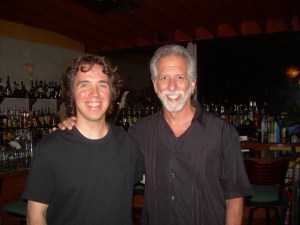
Blow up the TV and throw away the papers? Maybe singer-songwriter John Prine had an anxiety-reducing strategy figured out years ago.  Time to go back and give a listen.    A personal side note:  The lead guitar in this clip is Jason Wilbur. I had the wonderful opportunity a few years back to participate in a guitar training session with him and then listen to his mastery later that evening in a concert here at the beach. He graciously posed with me that evening.

Jason Wilbur and Steve Piscitelli

Jason Wilbur and Steve Piscitelli


Make it an inspiring week and H.T.R.B. as needed.

You can subscribe to my newsletter by clicking here.

Check out my latest podcasts at The Growth and Resilience Network™
(http://stevepiscitelli.com/media-broadcast/podcast).

Check out my website  (http://stevepiscitelli.com/programs/what-i-do) for programming information as well as details about upcoming webinars (http://stevepiscitelli.com/programs/webinars).

My books Choices for College Success (3rd edition) and Study Skills: Do I Really Need This Stuff?  (3rd edition) are published by Pearson Education.

(c) 2016. Steve Piscitelli. All rights reserved.


Posted in Anxiety, Appropriate Behavior, assumptions, authenticity, awareness, Balance, Critical Thinking, focus, fortitude, health, hope, Life lessons, Mindfulness, mindset, Personal growth, Personal Wellbeing, resilience, responsibility | Tagged , , , , , , , | 2 Comments

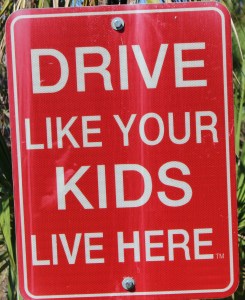
(#334) Drive Like Your Kids Live Here


When we attempt to connect with people, we need to make it relevant to them.
We need to connect to their stories.

I often encourage audiences to consider their job performance from the perspective of whom they serve.  If I am speaking to teachers, I want them to think about the impact their teaching has on their students.  I encourage corporate audiences to envision the service or product they provide for their customers.  And while this image of service delivery can help get a conversation started about effective relationships, it lacks a certain urgency.  It can end up being a rather academic exercise of “us” providing for “them.”  Disembodied. Devoid of emotional connection.

To get a bit more “buy-in” to the exercise, I have asked faculty to consider their children (or partner, or grandmother, or some other person close to them) sitting in their classrooms and in the classes of their colleagues.  Once they have that image, then I ask them about job performance.  Are they satisfied with the level of competence, energy, and passion that their loved one receives in that setting?

It’s the same question but with a tad more relevance.

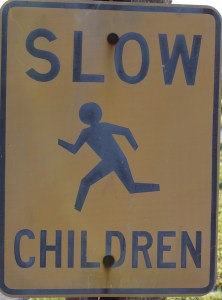
You have seen signs like this before:

Photo by Steve Piscitelli

Photo by Steve Piscitelli

Photo by Steve Piscitelli

Photo by Steve Piscitelli

Even as you ease off the accelerator, do you feel a connection to the “children” the sign references? Maybe.

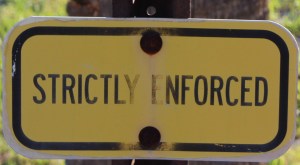
I recently spied this sign as I walked around the sleepy community of Cedar Key, Florida:

Photo by Steve Piscitelli

Photo by Steve Piscitelli

Now that caught my attention. Why? Because that sign makes an emotional connection. It has a better chance of being relevant to the drivers (the “audience” in this case) passing by. For parents, they can see the faces of their own offspring.

That sign reminded me that when we attempt to connect with people, we need to make it relevant to them.  We need to connect to their stories. Think of politicians (those you support and those you do not) with large followings. Chances are great that they establish an emotional association with the people in front of them. Some use that for good and some for ill. But all make the message meaningful.

What can you do this week—for a positive purpose—to help your audiences feel the message you have for them? In fact, how will you go beyond mere understanding to emotional connection?  How can you make it personal? How will you remain relevant?

Check out my latest published article released this week by NISOD (College of Education, University of Texas). I propose thirteen questions to consider for faculty development. For my corporate readers, substitute your job title (and those of your followers) wherever you see “faculty.”  Keep the conversation practical, purposeful, and personal.


Video recommendation for the week:


Make it an inspiring week and H.T.R.B. as needed.

You can subscribe to my newsletter by clicking here.

Check out my latest podcasts at The Growth and Resilience Network™ (http://stevepiscitelli.com/podcasts).

Check out my website  (http://www.stevepiscitelli.com/programs.html) for programming information as well as details about upcoming webinars (http://www.stevepiscitelli.com/webinars).

My books Choices for College Success (3rd edition) and Study Skills: Do I Really Need This Stuff?  (3rd edition) are published by Pearson Education.

(c) 2016. Steve Piscitelli. All rights reserved.
The Growth and Resilience Network (TM)


Posted in Life lessons | 2 Comments

(#333) Questioning Risk


It’s OK to go into uncharted and murky waters.
Diving in headfirst is optional.

When you think of the concept of “risk,” what comes to mind?  For some it may be bold and reckless venturing into the future. It could mean mortgaging the house, quitting a career, or some other such huge leap into a perilous adventure. You know, I’m all in or standing on the sidelines; no half-way; dive in the deep end; all or nothing.

In the October 2016 issue of Inc. Magazine, Jason Fried, distinguishes between “taking a risk—and putting yourself at risk.”

Photo (c) Steve Piscitelli

Photo (c) Steve Piscitelli

Fried suggests we examine the questions we ask ourselves when it comes to taking a risk. In his words: “Figure out where the bet falls on the risk spectrum, along with the consequences, if doesn’t work.”

As I write this week’s blog post, we are preparing here in Florida for yet another hurricane. We spent the day securing the house and packing for our evacuation in the morning from the island. We’ve monitored Hurricane Matthew as it makes its way through the Caribbean, Bahamas, and heads toward Florida’s east coast.

Should we stay? Should we go? Do we put ourselves at risk? I’ve heard some folks today say that they will just ride this storm out.  They will “risk” that the storm will not come ashore. All or nothing.

Coincidentally, Fried’s business strategy fits (at least metaphorically) our evacuation situation.  The questions about risk become more nuanced.  Rather than ask, simply, whether we should stay or go, other questions present themselves:

  • What are potential risks and benefits if we stay—to our dog, ourselves, and to our property (like cars)?
  • If we stay, can we do anything to stop the storm from damaging our property (beyond our already completed preparations)? For instance, if there is a storm surge that reaches the front door, what can we do at that point? Or a tree that falls through the roof.  Could we do anything about that? [I have added the photo below after completing the blog post. This is the house directly behind our house.]

    Photo (c) Steve Piscitelli

    Photo (c) Steve Piscitelli

  • What if we decide too late to leave—and the authorities shut the bridges thereby halting any chance of evacuation?
  • What do we risk if we do evacuate? What do we lose by leaving our property for two days (or more)?
  • What happens if we decide to stay and the storm takes a turn putting us in the cross hairs of a direct hit with a five to ten foot storm surge? What are the consequences of that?
  • If we had children, would we ask different questions?

Whether you face a storm-related evacuation from your home, a business dilemma, an investment decision, a health concern, or a relationship conundrum, consider the spectrum. The situation (more-than-likely) will require more than either-or decision-making.

Believe in yourself.  It’s OK to go into uncharted and murky waters. Diving in headfirst is optional.


Recommended Video for the Week:

Rocky reminded us to believe in ourselves.


Make it an inspiring week and H.T.R.B. as needed.

You can subscribe to my newsletter by clicking here.

Check out my latest podcasts at The Growth and Resilience Network™ (http://stevepiscitelli.com/podcasts).

Check out my website  (http://www.stevepiscitelli.com/programs.html) for programming information as well as details about upcoming webinars (http://www.stevepiscitelli.com/webinars).

My books Choices for College Success (3rd edition) and Study Skills: Do I Really Need This Stuff?  (3rd edition) are published by Pearson Education.

(c) 2016. Steve Piscitelli. All rights reserved.


Posted in awareness, Critical Thinking, decision making, Life lessons, risk-taking | Tagged , , | 1 Comment