(#131) One Penny at a Time


Whether it’s wealth-building or a weight-loss program
or writing your first book have a plan,
take specific steps each day, and remember that you will
realize your dreams one step at a time.

As cliché as it might sound, it is good to remind ourselves that slow and steady wins the race.  Perhaps you know folks (I know I do) who, rather than do things in a steady methodological manner, jump in with both feet and attempt to complete a big project all at once. Like the person who wants to lose weight and decides she will drop 50 pounds by the end of the month. Or the couch potato who swears he will start his exercise regimen today with a 2 hour workout five days a week.  Or the student who takes too many classes in one semester because he wants that degree NOW! Or the person who makes a resolution to write that book that has always been inside her. She will have it done within three months she says.  By the end of that time, she has come up with a title and nothing more. (But it is a killer title, right?)

The point is whatever our goals maybe we have to take action one step at a time. I am proponent of establishing huge outrageous goals. We need to stretch ourselves.  Otherwise we stand the chance of settling or short-changing ourselves with less than we are capable of attaining.  But we have to go about it in a smart way. At the very least, start slow and remain steady.

digitalart/
freedigitalphotos.net

So how do you lose 50 pounds? One pound (one ounce) at a time.  How do you build an exercise routine?  Ten minutes at a time might be a good jumping off point.  How do you get out of debt?  One payment at a time. How about that book?  One page at a time.  Small victories can provide huge psychological advantages.

I used this premise with my students this week as we dove into the topic of financial literacy with a little exercise I first heard about back in my college days.  I start the class by walking around the room and ceremoniously placing one penny in front of each student.  As I move from student to student I tell them today is the day they begin building their wealth.  “How do you build wealth?” I ask them.  “One penny at a time.”

We then engage in a little arithmetic. Here is how I set it up with my students.

“Ok, scholars, you have a penny in front of you. I want you to envision your bedroom at home.  Picture a small plate or tray or jar where you will place this penny tonight.  You got that in your mind’s eye?  Now, tomorrow night go back to the container and double the penny. That is, you know have two pennies.  The following night, double it again to four cents.  And I want you to continue doing this for 30 days.  How much money will you have at the end of 30 days?”

The student responses this week ranged from 65 cents to “about $3,000.”  I then placed the following table on the screen.

As you can see the doubling exercise will yield more than $5,300,000!  And if you start the actual doubling on day one (just one day earlier) your final tally exceeds $10 million.  (See the video at the end of this post.)

I have added a twist that I believe delivers the real lesson. Yes, one penny can bring about great results, but we could become quickly overwhelmed and defeated if we look at the $5 million dollar figure and conclude, “There is no way I can have that much money in 30 days. Why even bother starting?” Just like the person who says, “There is no way I can lose fifty pounds in thirty days” and gives up on his diet. But think of what you can do if you break that larger goal down to manageable targets.

So, using the table above, I ask the students, to look at day seven on the table. “How many of you think you could find an extra 64 cents at the end of a week?” Every hand goes up.  “OK,” I continue, “Look at day number 10. How many of you think you could find an extra $5.12 in a week and a half?”  Again, hands shoot up.

The challenge I give them is to find a day on that table that they believe is doable.  Set that as a goal.  “By the time next Wednesday arrives I will have $5.12 in my penny plate. This will be extra money. This will be money with which I will start my wealth building program.”  Then once they get to the $5.12 I tell them to begin again for another 10 days and another $5.12.

And then I issue one more challenge.  “If you can do the 10-day goal, stretch to the 11-day goal.  Keep pushing your limits—slowly and steadily.”

Whether it’s wealth-building or a weight-loss program or writing your first book, or completing a college degree have a plan, take specific steady action each day, and remember that you will realize your dreams one step at a time.
Enjoy your week—and H.T.R.B.as needed!

REGISTER NOW for my November 28, 2012 P.D.Q. Webinar “Year in Review: Get Ready for Your Best Year Ever!” Click here or paste this link into your web browser: https://attendee.gotowebinar.com/register/2425700017577251072

Thank you for taking the time to read my blog post. Please pass it (and any of the archived posts on this site) along to friends and colleagues. You can also follow me on Twitter, LinkedIn, and Facebook. If you get a chance, visit my Facebook page and join in–or start–a conversation (www.facebook.com/stevepiscitelli). Also, if you have suggestions for future posts, leave a comment. Have a wonderful week!

©2012. Steve Piscitelli.

Posted in financial literacy, Goals | Tagged , , , , , | 9 Comments

(#130) Making Your Life Work!


When it comes to New Year’s Resolutions we find lots of
big intentions—but minimal action.

I recently heard that most New Year’s resolutions don’t even make it a full month before they are forgotten or broken.  Time Magazine says the top ten broken resolutions are:

Lose Weight and Get Fit

Quit Smoking

Learn Something New

Eat Healthier and Diet

Get Out of Debt and Save Money

Spend More Time with Family

Travel to New Places

Be Less Stressed

Volunteer

Drink Less

sattva/FreeDigitalPhotos.net

I can tell you from experience that I observe the first one on that list every year.  Going to the gym is part of my DNA.  I have developed a faithful habit.  It is almost cliché to watch the gym membership swell the first week of January. Like clockwork, new faces appear on the cross-trainers, stationary bikes, and exercise mats.  That lasts, on average, until the about the beginning of February.  And then the only things to navigate are the broken promises people have made to themselves.

Why does this happen and what can be done about it?

I have found two broad reasons for broken goals: (1) People overwhelm themselves with huge goals on which they quickly burn themselves out; and (2) People lack discipline to follow-through actions.

Big intentions—minimal action.

Is there hope?  If you lack discipline and the work ethic to make your dreams come true, there is not much that I or anyone else can do for you.  The lack of action will create its own reality.  But there are a number of strategies that we can all use to help us identify our goals, take action, and enjoy the reality we want to create.

On November 28, 2012 I will conduct a webinar titled Year in Review: Getting Ready for the Best Year Ever.  We will consider strategies to address these questions:

  • Where have you been?  What did you do and not do this year—and why?
  • What has worked for you? For what do you need to show gratitude?
  • How have the six dimensions of your life shaped 2012—and how do you want them to shape your 2013?
  • What is your line in the sand when it comes to the goals you establish?  That is, at what point do you say, “This is so important that nothing will get in my way”?
  • Who are your mentors?
  • What is holding you back?

For many of us, we just have to get out of the weeds. Slow down; recognize what is working and what is not; and take action. If you are paralyzed by fear, insecurities, or a lack of knowledge, it may be time to sit back and take stock.


Video recommendation for the week:

As radio personality Mel Robbins reminds us in the video below, before we can do something larger we have to slow down and take control of our lives.


Finally, don’t hope you will get to your goals. Hope is not a strategy.  Make a specific plan. Take disciplined action. Enjoy the journey. Your small and consistent choices will create your larger life.

Enjoy your week—and H.T.R.B.as needed!

REGISTER NOW for my November 28, 2012 P.D.Q. Webinar “Year in Review: Get Ready for Your Best Year Ever!” Click here or paste this link into your web browser: https://attendee.gotowebinar.com/register/2425700017577251072

Thank you for taking the time to read my blog post. Please pass it (and any of the archived posts on this site) along to friends and colleagues. You can also follow me on Twitter, LinkedIn, and Facebook. If you get a chance, visit my Facebook page and join in–or start–a conversation (www.facebook.com/stevepiscitelli). Also, if you have suggestions for future posts, leave a comment. Have a wonderful week!

©2012. Steve Piscitelli.



Posted in Goals | Tagged , , , , , | 8 Comments

(#129) Identify What You Can Influence


Today, you have the ability to have a positive impact
on your little area of the world.  Tomorrow, broaden that circle.

One of my students, during an in-class post-election discussion, said that he was disappointed at the level of nastiness that took control of the political campaigns. “What can we do about that?” he asked. 

Indeed, what can we do?  The short answer from my perspective is that we may not be able to affect the national discourse directly BUT we can have influence on our little sphere of the world.  For instance, I have five classes per

Archipoch/
freedigitalphotos.net

week. I meet each class two times.  I have the unique opportunity to influence my students in a positive way.  How? Not by proselytizing. In 31 years of teaching I have never used the classroom as a bully pulpit for my political beliefs.  One of the best compliments I have ever received from students is when they come to me at the end of an election or the end of a school year and say, “You know we still don’t know who you favor.”  Good!  They don’t pay tuition money to hear me pontificate about who should win elections.

My responsibility is to put facts, questions, scenarios, assumptions, and competing opinions in front of them and give them the tools to make their own decisions—and in that way they can influence their spheres of the world.

At times the workplace can throw ugliness our way. For the last six months or so, my college has been embroiled in a lot of negative press about the management of the institution.  It is distressing to read one negative news report after another.  What can I do? I can influence my little area of the college. Focus on the good I can do in the classroom each day.  Even when management will not listen to faculty, I can still have a positive impact on the students who choose to be with me each day. 


Video recommendation of the week:

They watch me for what I do. Does it match what I say?


We ALL have an influence on our environment.  If we feel like all is lost it may help to focus on the smallest piece of that environment. A dear friend and colleague (one of the few managers I have seen lately who really has leadership skills—and strives to use them for good) shared with me that when she is feeling lost, or when the world seems to be throwing too many things at her, she stops. And then she focuses on the smallest area she still has control over. Maybe it is her heart, her pulse, or her mind.  When she feels in control there, she then gradually and surely widens her circle of influence. 

What is your circle of influence?  What can you do to continue to make a difference? When someone like my student asks, “What can we do about that?” you have the ability to have a positive impact on your little area of the world today.  Tomorrow, broaden that circle.  Think of the good you will do as you influence those around you to make the world a better place. One person, one situation, one day, and one word at a time.

Enjoy your week—and H.T.R.B.as needed!

REGISTER NOW for my November 28, 2012 P.D.Q. Webinar “Year in Review: Get Ready for Your Best Year Ever!” Click here or paste this link into your web browser: https://attendee.gotowebinar.com/register/2425700017577251072

Thank you for taking the time to read my blog post. Please pass it (and any of the archived posts on this site) along to friends and colleagues. You can also follow me on Twitter, LinkedIn, and Facebook. If you get a chance, visit my Facebook page and join in–or start–a conversation (www.facebook.com/stevepiscitelli). Also, if you have suggestions for future posts, leave a comment. Have a wonderful week!

©2012. Steve Piscitelli.

Posted in Civility, influence, Integrity | Tagged , , , | 1 Comment

(#128) What is Your Brand?


When it comes to branding ourselves obvious
characteristics present themselves: How we dress;
how we smile (or don’t); how we speak; how we
look someone in the eye (or don’t).

More than a decade ago I read a book by Tom Peters titled Reinventing Yourself: The Brand You 50. The basic premise of the book–one that still has relevance today–is that we are all a package. The manner in which we take care of that package brands us–just as assuredly as a major corporation brands itself.  Peters said, “What you value is unmistakably reflected in (1) precisely how you spend your time, (2) the nature of each contribution at each meeting, (3) who exactly you hang with.”


Video recommendation for the week:

Guy Kawasaki talks about “The Pillars of Enchantment”: Likeability, Trustworthiness, and a Great Cause.  They, too, will speak to your brand.


When it comes to branding ourselves obvious characteristics present themselves: How we dress; how we smile (or don’t); how we speak; how we look someone in the eye (or don’t); how and when we deliver what we promise.  For this blog, let’s exam a series of questions to help us (you and me) review the brand we are developing.    Let’s use Peters’ categories above to shape our analysis:

1. Precisely how do you spend your time?

  • Do your actions move you toward your goals–and with integrity?
  • Does what you do mirror what you say is important?
  • Do you invest your time in what makes a difference in the world around you?
  • What kind of legacy are you building with your life?

2. What is the nature of your contributions at each meeting you attend?

  • If you sat across the table from yourself at meetings (dinners, parties, get-togethers) what would you see and hear you saying? And, would you like this?
  • Do you, in fact, contribute or do you wait for others to do the work?
  • Are you saying and doing the “safe” things–never venturing out of “the box”?
  • Are you trustworthy?

3. Who exactly do you hang with–that is, with whom do you spend the majority of your time?

  • Do you have mentors to help you stretch and grow?
  • Do you mentor those whom you can help to stretch and grow?
  • Is your time filled with energy vampires who violate your boundaries?
  • Do you trust the people with whom you hang?

In the final analysis you will want to ask yourself, “Am I happy with my brand? If am, then what can I do to maintain the integrity of my brand? If I am not, what can I do to change, improve, or tweak my brand?”

Each of the above reflects choices we make and do.

Enjoy your week—and H.T.R.B.as needed!

REGISTER NOW for my November 28, 2012 P.D.Q. Webinar “Year in Review: Get Ready for Your Best Year Ever!” Click here or paste this link into your web browser: https://attendee.gotowebinar.com/register/2425700017577251072

Thank you for taking the time to read my blog post. Please pass it (and any of the archived posts on this site) along to friends and colleagues. You can also follow me on Twitter, LinkedIn, and Facebook. If you get a chance, visit my Facebook page and join in–or start–a conversation (www.facebook.com/stevepiscitelli). Also, if you have suggestions for future posts, leave a comment. Have a wonderful week!

© 2012. Steve Piscitelli.

Posted in Being REMARKABLE, branding, Discipline | Tagged , , , , , | 1 Comment

(#127) Recognizing the Good Things in Life


Why not recognize the good things that happen
around us, show gratitude, and encourage those
behaviors? Maybe in our own small way we can help
create an environment of remarkable consistency and growth.

This past Tuesday, my wife and I met up with some old friends from our college days for a nice dinner at Sliders, a favorite local restaurant. Great food, wonderful conversation, and luscious ocean breezes reminded me of the simple and good things in life that are easy to take for granted.

The most remarkable moment of the night, though, occurred when I received the bill for dinner. I did a quick look of the bill, checked the arithmetic, and then added 20% for the waitress. She had provided wonderful service: smiling, timely, and with personality. I placed the cash inside the folder with the receipt and gave it her.

Stuart Miles/
FreeDigitalPhotos.net

A few moments later, she returned and quietly pointed out to me that an 18% gratuity had already been added to the bill. (I had missed that. So much for my arithmetic and reading skills!) She then returned the tip I had left for her. In all my years of dining out, this has NEVER happened to me. Yes, I have made this same mistake a few other times–leaving a tip on top of one that had been added by the establishment. NEVER had a waiter or waitress returned my money–or even asked me if I meant to leave the extra money. So, with a pleasantly-shocked look on my face, I handed our waitress $10 and told her how much I appreciated her integrity. She refused to take the money. Again, a pleasant surprise.

Before we left the restaurant, I walked inside and motioned to our waitress and asked to speak to the manager. I could see this look of “OMG! What did I do wrong?” There were also two other wait staff listening from the side–wondering what was going to happen. When I told the manager how impressive our waitress was and what she did with my over tipping, everyone in earshot smiled. I then put the ten dollar bill in her hand and told her she earned it.

So why do I tell the story? Well, I am quick to complain about poor service and what seems to be the “new normal” of redundant mediocrity (See (#103) Someone Will Help You—I Guess; (#74) Redundant Mediocrity). I think it is just as important to celebrate those instances when someone does the right thing. Some readers might scoff and say that it is sad when we have to compliment what should be done anyway. Maybe they have a point.


Video recommendation for the week:

But why not recognize the good things that happen around us, show gratitude, and encourage those behaviors? Maybe in our own small way we can help create an environment of remarkable consistency and growth.


As Gandhi said, “Be the change you wish to see in the world.”

Enjoy your week—and H.T.R.B.as needed!

REGISTER NOW for my November 28, 2012 P.D.Q. Webinar “Year in Review: Get Ready for Your Best Year Ever!” Click here or paste this link into your web browser: https://attendee.gotowebinar.com/register/2425700017577251072

Thank you for taking the time to read my blog post. Please share it (and any of the archived posts on this site) with friends and colleagues. You can also follow me on Twitter, LinkedIn, and Facebook. If you get a chance, visit my Facebook page and join in–or start–a conversation (www.facebook.com/stevepiscitelli). Also, if you have suggestions for future posts, leave a comment. Have a wonderful week!

© 2012. Steve Piscitelli.

Posted in Gratitude, Integrity | Tagged , , , | 1 Comment

(#126) Have You Looked at Your BUT Lately?


The first step is to recognize (be aware of) which BUT is taking control.
Then make the decision to kiss your BUT goodbye!

I have written on this blog before about excuses and how they can derail our plans and dreams (#107 If You Don’t Want a Target on Your BUTT, Put a Target on Your BUT!; #28 Ustabees, Liketodos, and Willtodos; #16 How Big Is Your BUT?).  Today I want to focus on specific BUTs. Here are ten BUTs that have the potential to keep your life in neutral–or maybe slip into reverse.  Some overlap. Maybe one or two creep into your life more times than you would like to admit. 

The first step is to recognize (be aware of) which BUT is taking control.  Then make the decision to kiss your BUT goodbye! 

The Top Ten Big BUTs

  • The Fearful BUT. This looms large for many people.  It can be paralyzing.  The fear factors can be many.  The economy, opinions of people, lack of confidence, and lack of support (financial, social, or occupational) can cause fear to raise its head. 
  • The Fatal Resignation BUT. This BUT plays out for people who have convinced themselves that their life “is what it is” and nothing will ever change.  To make a change would require rewriting their autobiography–and they are quite comfortable with their autobiography, thank you! 
  • The Whiny BUT.  This can end up being a close cousin to the Fatal Resignation BUT.  “I would do it BUT, you don’t understand what I go through.” Or “Easy for you to do what you want. I would too BUT everyone is against me.”  Yes, we don’t live in another person’s skin. And yes, we don’t know what they have to live with. And no, this does not make light of difficult situations.  The point is, if all we do is whine about the adversity we face nothing will change.
  • The Self-Serving BUTThis person will move forward BUT only if you do something for him. Action is predicated on what the payback will be. 
  • The Time BUT.  I lot of my students DO have a lot on their plates.  Between child care, transportation

    Keattikorn
    FreeDigitalPhotos.net

    challenges, work, relationship issues, and adjusting to college expectations, they can easily fall into this trap. “I would work with a tutor in the Success Center BUT I just don’t have the time.”  The problem, though, is not time. It is priority management.  Don’t blame time. Review your priorities.

  • The Blaming BUT. We have all heard this cognitive trap. “It’s not my fault!  I would have been on time BUT the traffic on that bridge is always backed up.”  Really? If it is always backed up, then why don’t you leave earlier? “I would BUT I can’t get up in time.”  Why don’t you go to bed earlier? “I have tried BUT you just don’t understand!” (See Whiny BUT and/or Fatalistic Resignation BUT above.)
  • The Rationalizing BUT.  This person has a reason why she is not doing what she knows she needs to do–or what she says she would like to do.  Her intentions might be great.  She has difficulty translating intentions into action.  “I know I should lose ten pounds BUT I am under a lot of stress now. I’ll do it later.” This person is always waiting for the perfect situation to present itself.   (See Fear BUT, Time BUT, and Money BUT.)
  • The Lying BUT. This person has no intention of moving forward or changing or doing what he says he will do.  He can use any of the other nine BUTs on this list as a way to cover his true intentions.
  • The Money BUT. This can be closely tied with the Rationalizing BUT.  “I would start my exercise program today BUT I don’t have the money for gym membership.” Maybe you could just begin walking around the neighborhood? “I would BUT I need a good pair of walking shoes.”  (See Rationalizing BUT.)
  • The Lazy BUT.  This is pretty basic.  Pick any of the BUTs above, strip away the reasoning and get to the core: This person is not motivated to change. The couch is comfortable. The jeans are not that tight.  I don’t like my job BUT it is just too much trouble to go back to school or look for other employment.

Video recommendation for the week:

Wayne Dyer speaks of “mind viruses.”  The BUTs above can become mind viruses. They can infect our thoughts and translate into action–or more pointedly, they will lead to INACTION.


Which BUTs are affecting your life, your progress, and your dreams?  What can you do about that today?

Enjoy your week—and H.T.R.B.as needed!
REGISTER NOW for my November 28, 2012 P.D.Q. Webinar “Year in Review: Get Ready for Your Best Year Ever!” Click here or paste this link into your web browser: https://attendee.gotowebinar.com/register/2425700017577251072

Thank you for taking the time to read my blog post. Please pass it (and any of the archived posts on this site) along to friends and colleagues. You can also follow me on Twitter, LinkedIn, and Facebook. If you get a chance, visit my Facebook page and join in–or start–a conversation (www.facebook.com/stevepiscitelli). Also, if you have suggestions for future posts, leave a comment. Have a wonderful week!

© 2012. Steve Piscitelli.


Posted in Excuses | Tagged , , , , | 1 Comment

(#125) What’s Important?


Are we living a life that makes us unrecognizable to those
who love us–and maybe even unrecognizable to ourselves?

For their midterm exam, my student success classes wrote about their dreams and the actions they have taken this semester to get closer to their dreams.  It‘s a great exercise for them and I always love reading their thoughts.  For some of my students it’s one of the rare moments someone has asked (and listened to) them about their dreams. For others, it allows them to articulate their progress.  For all, they get to reflect on their journey.

dan/FreeDigitalPhotos.net

As I read their essays this weekend, they reminded me of the important things in life--and how it is easy to lose one’s way.  One of my students wrote: I am leaving behind a life of self-doubt, self hate, confusion and under achievement. One doesn’t realize the impact that living a life of selfishness does to those that care. Our lives have somewhat of a domino effect on those around us…

While a few students go through the motions with the exam (simply write to fulfill a course assignment), most, like the student above, take the opportunity to look at their lives and talk about what is important to them. 

Coincidentally, my wife and I watched The Preacher’s Wife this weekend. Maybe it was my students’ papers. Maybe it is the ongoing litany of events affecting my college. Maybe I was ready for a reminder message. Whatever the reason, there were a couple of lines in the movie that stood out to me.

“I don’t even know who you are anymore.” (The preacher’s wife to the preacher)

 “Look at the real price before you close the deal…listen to your heart.” (Dudley the Angel)

digitalart/
FreeDigitalPhotos.net

For me the take away is–once again–to be true to ourselves in whatever we do. Do not betray who we really are–for any reason. Are we living a life that makes us unrecognizable to those who love us–and maybe even unrecognizable to ourselves? We have to maintain our integrity regardless of those around us who push their agendas at the expense of our well-being and the expense of the well-being of our greater community.

When I speak to audiences, I like to end with a call to action.  Something that requires them to apply what we have examined in the program.   So, here is your (and my) call to action:  Ask–and remind–yourself what is important in your life. Do your actions each day reflect what is important? Perhaps it is remaining in touch with people who mean what they say.  Or hugging someone a little longer. Or your family, your country, and your God. Have you taken a specific step toward your dream? Do you still have a dream? What one thing can you do today that will reinforce what is important in your life? Repeat tomorrow.


Video recommendation for the week:

And, as my students remind me, believe in your dreams.  Don’t let anyone take them from you


Enjoy your week—and H.T.R.B.as needed!

REGISTER NOW for my November 28, 2012 P.D.Q. Webinar “Year in Review: Get Ready for Your Best Year Ever!”  Click here  or paste this link into your web browser: https://attendee.gotowebinar.com/register/2425700017577251072

Thank you for taking the time to read my blog post. Please pass it (and any of the archived posts on this site) along to friends and colleagues. You can also follow me on Twitter, LinkedIn, and Facebook. If you get a chance, visit my Facebook page and join in–or start–a conversation (www.facebook.com/stevepiscitelli). Also, if you have suggestions for future posts, leave a comment. Have a wonderful week!

© 2012. Steve Piscitelli.

Posted in priorities | Tagged , , , , , | 3 Comments

(#124) When a Culture of Yes is Really a Culture of No


 “It is possible to build a culture around
innovation, leadership, and optimism…”
Eric Schmidt

“Rather than nurture the people on their bus,
weak leaders throw them under the bus.”
Steve Piscitelli


Video recommendation for the week:

In a 2008 talk to the Economist Club of Washington, Google CEO Eric Schmidt spoke about the benefits of establishing a “culture of yes.”   Such a culture fosters innovation at all levels by encouraging and listening to divergent thinking. (I have included the video of his talk here.  Fast forward to the 26:00 mark in the video to hear his remarks about fostering a real “culture of yes.”)


Mike Myatt in an article for Forbes.com says, “The word no ends discussions, stifles creativity, kills innovation, impedes learning, and gates initiative. Put simply, the word no advances nothing, grows nothing, builds nothing and incentivizes nothing.”

Makes sense. A leader who has created a “culture of yes” wants “people on the bus” who challenge assumptions–even disagree with the boss.  Such a leader creates a culture based on trust and mutual respect.

One of the best leaders I have ever had the opportunity to work with was Veronica Valentine.  (Please notice that I said “work with” not “work under” or “work for.”)  She was one of my principals during my life as a high school teacher at Stanton College Preparatory School.  She had a simple rule: “It’s ok to disagree. Just have an alternative, a solution, or something other than just a complaint.” Dr. Valentine taught me to think through my thoughts and move in a positive direction.  She set a high bar that very few of my future supervisors have ever come close to.  She, in short, had created a “culture of yes.”  She encouraged and earnestly listened to counter points.   And we did OK in that culture. Stanton was a national model school.

pakorn/FreeDigitalPhotos.net

Unfortunately, what I have come to witness time and again over my more than four decades in the workplace are so-called leaders who have such weak skill sets that they can only rule by fiat and threats.  Rather than nurture the people on their bus, they “throw them under the bus.” They have bastardized the culture of yes to one that is a “culture of yes people.”  They want no argument or disagreement. In fact, to ever say anything counter to these so-called leaders is tantamount to job suicide. As everyone around the leadership table meekly nods their collective heads yes, the boss has implemented a “culture of no.” No innovation. No individuality. No disagreement.  No lasting advancement. No soul. A “culture of no” takes a stranglehold.

A short drive down the road from the “culture of no” you will find the “mantra of can’t.”  When people are fearful of incurring the ire of the so-called leader, they will default to “can’t” when a new idea is floated. Oh sure, there will be plenty of “reasons”–but the biggest reason is that people have come to fear for their jobs. Or they become so focused on upward mobility they forget about what is really important. I have witnessed far too often that when the day comes that the so-called leader casts them aside, they wake up one morning with no job–and a damaged soul.

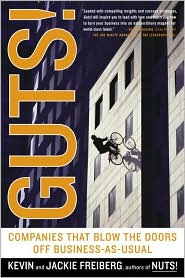
In their book Guts! Companies that Blow the Doors off Business-as-Usual, Kevin and Jackie Freiberg emphasize the point that “gutsy leaders have dismantled fear-based management and replaced it with heart, soul, discipline, loyalty, humor–and long-term record profits.”   One of the strategies they suggest is to start a meeting with the question, “What are the 25 dumbest things we do around here.”

Those that create a “culture of no,” however, don’t want to hear about the dumb things they have created with their hubris. Anyone who dares to point out that the emperor has no clothes is made an example of. That sound you hear? Why it’s the bus rolling over another poor soul who dared disagree or offer another perspective. Eventually, the “safe” mode for more and more direct reports is to quietly nod acquiescence.  And the organization slowly slithers into a soul sucking purgatory.

So-called leaders who nurture blind adherence either don’t have a clear vision or lack leadership talent or both.  Eventually they will only be able to attract and hire people who will be shaped and controlled.

The Freibergs remind us that “great people hire great people. Idiots hire idiots.”

Enjoy your week—and H.T.R.B.as needed!

REGISTER NOW for my October 12, 2012 P.D.Q. Webinar “Social Media with Purpose: Tips from a Non-Techie!”  Click here  or paste this link into your web browser:https://attendee.gotowebinar.com/register/2376790441069310976

Thank you for taking the time to read my blog post. Please pass it (and any of the archived posts on this site) along to friends and colleagues. You can also follow me on Twitter, LinkedIn, and Facebook. If you get a chance, visit my Facebook page and join in–or start–a conversation (www.facebook.com/stevepiscitelli). Also, if you have suggestions for future posts, leave a comment. Have a wonderful week!

© 2012. Steve Piscitelli.


Posted in Integrity, leadership | Tagged , , , , | 12 Comments

(#123) How Do I Measure Up?


 Relevance, engagement, and passion. Our students deserve it.
Our community deserves it.

Knowing my passion for any information about student success, my campus reference librarian frequently sends me emails about books, articles, and videos that come across her desktop. This past week she held a book for me by Richard J. Light:  Making the Most of College: Students Speak Their Minds (Harvard University Press, 2001).

Light gathered his findings from over a decade of interviews with Harvard seniors. One of the questions he examined was “What are effective ways for faculty members and campus leaders to translate good intentions into practice?”

While his research group may be narrow (Harvard seniors) I found his findings to be broadly applicable.  Even though I teach at an open-admissions college on an urban campus with (typically) small classes, I found myself rating how I measure up to the findings.  Even if a certain category (like teaching in large lecture halls) did not directly apply to my setting, I still found a takeaway.   For the teachers who follow this blog, use the items below as a way to self-assess.  Perhaps these thoughts would provide for an interesting teaching circle with colleagues.  For readers who are not teachers but know teachers, share this blog post with them.  And finally, if you are not a classroom teacher, very possibly you are still a “teacher.”  If you train staff, lead a community group, or coach a youth baseball team, you have the opportunity to engage and help develop people.  There may be a nugget or two for you below.

For brevity sake, I have excerpted a few of the major sub-headings from two of Light’s chapters. 

Chapter 4: The Most Effective Classes

  • Outstanding small classes.  Light found that small classes had a strong correlation with student engagement. Class sizes are typically set by institutional policy.  But while I do not set class size, I do have to measure myself when it comes to how I present my material to my students. I have small classes–and that gives me a responsibility to bring enhanced engagement to them each day.
  • Powerful homework assignments. Light found students who worked in groups outside of the classroom “benefited enormously.” It encouraged connections and focused discussion. As a teacher, what do I do to encourage these conversations?
  • Courses that emphasize writing.  This section reminded me of a student I had about fifteen years ago in anIntroduction to Education section. She regularly railed against my writing requirements–and my meticulous red marks “all over her paper.”  Her constant refrain back then was “This isn’t an English class!”  I have run into her a number of times over the years–and she never fails to mention that she learned more in my non-English class about writing than in any other class.  She remains appreciative that she can express herself in a meaningful manner.
  • The One-Minute Paper. This simple method has been around for years.  Attributed to Patricia Cross, the

    DaniloRizzuti/FreeDigitalPhotos.net

    One-Minute Paper is just what it states. Students write a brief (one-minute) explanation about the big picture of what the classroom instructor just covered.  It provides excellent feedback for the instructor at, say, the end of a lesson. The process moves away from drowning in detail and focusing on the overarching theme. In short, did the students get what I hoped they would?    It reminds me of the old adage: Just because I taught it doesn’t mean it was learned!

Chapter 6: Faculty Who Make a Difference

  • Connecting academic ideas with student’s lives.  This can be reduced to one word: Relevance!  Show students how your curriculum relates to their lives.  If I cannot show a relationship to their betterment, then why in the world am I wasting their time?
  • Encouraging students to disagree with the professor.  In my history classes, I establish the “rule” that I wantstudents to question the textbook and question me.  Don’t assume the front of the room is infallible.  Along with the questioning, though, comes a responsibility that if they disagree they need to present support and at least the beginnings of a reasoned argument.  In short, their supported opinions matter! This can connect nicely with the item above about powerful homework assignments.
  • Not being predictable. When professors have chosen an ideological position and rigidly hold to it, students can sense predictability.  Yes, predictability is important in certain areas like timely feedback.  But it can also lessen a teacher’s impact–and maybe even minimize discussion and exploration.  In Light’s words: “As soon as students know how such a professor feels about one or two issues, they can predict with near perfect certainty how that professor will feel about dozens of other issues…They say it suggests the professor isn’t rigorously evaluating each issue independently, on its own merits.” The teacher may be guilty of confirmation bias (my words, not Light’s). I love to take counter positions to any side of an issue. Many times, I will even disagree with myself in class as way to stimulate conversation.  I want them to think about their views.  It’s not important for students to know where I stand on a political issue for instance.  My job, I believe, is for them to understand where they stand.
  • Integrating ideas from other disciplines. This helps students see broader perspectives of issues. For instance, in my history classes we are constantly looking at how historical events from the 1800s have relevance to cultural trends in the 21st century. We bring in politics, economics, education, and community building to name a few. It makes for vibrant and relevant conversations.

Video recommendation for the week:

Finally, enjoy this video I shared on this blog a year or so ago.  It relates the story of a visionary elementary school teacher.  Light’s book above looks at college.  Both reinforce the need for relevance, engagement, and passion for teaching. Our students deserve it. Our community deserves it.


Enjoy your week—and H.T.R.B.as needed!

REGISTER NOW for my October 12, 2012 P.D.Q. Webinar “Social Media with Purpose: Tips from a Non-Techie!”  Click here  or paste this link into your web browser:https://attendee.gotowebinar.com/register/2376790441069310976

Thank you for taking the time to read my blog post. Please pass it (and any of the archived posts on this site) along to friends and colleagues. You can also follow me on Twitter, LinkedIn, and Facebook. If you get a chance, visit my Facebook page and join in–or start–a conversation (www.facebook.com/stevepiscitelli). Also, if you have suggestions for future posts, leave a comment. Have a wonderful week!

© 2012. Steve Piscitelli.

Posted in effective teaching | Tagged | 3 Comments

(#122) What Is Your Story?


What are you leaving behind? What are you building each day?
It’s one thing to be successful. But are you significant?

Over the course of my teaching career, I have found it interesting and helpful to know a little about my students as the individuals they are.   What makes them tick? What excites them? What goals drive them? What obstacles stand in their way?  More times than not, my students share insights that make me stop, dig a little deeper, and re-evaluate my life.

Many of my students have tough lives with lots of challenges due to choices they have made and/or circumstances they find themselves confronting.  Some resign themselves to a life of mediocrity or worse. Others will do anything ethical they can to take control of their destiny and move forward.  Such was the student sitting in my office last week.  She is one of those students who stands out in a positive way.  Articulate, intelligent, engaging, and collaborative with her peers. 

digitalart/FreeDigitalPhotos.net

My student has had to confront difficult circumstances–yet she is positive and keeps moving forward. I asked her about her motivation to persist.  Why was she moving forward while others seem to give up?    She shared that at one point in her early life her mother told her, “You are my story.”  In other words, the daughter was her mother’s legacy.  The way the daughter turned out would reflect upon the mother.  The daughter hears that voice–and moves toward her dreams.

“You are my story.”

Four powerful words.  That made me think about my story.  What am I leaving behind–and what am I building each day?  The material possessions will fade. But the relationships, the connections, the words, and the actions–they will remain. It’s one thing to be successful. But will my life be one of significance?

How about you?


Video recommendation of the week:

What is your story? What is your significance?


Enjoy your week—and H.T.R.B.as needed!

REGISTER NOW for my October 12, 2012 P.D.Q. Webinar “Social Media with Purpose: Tips from a Non-Techie!”  Click here  or paste this link into your web browser:https://attendee.gotowebinar.com/register/2376790441069310976

Thank you for taking the time to read my blog post. Please pass it (and any of the archived posts on this site) along to friends and colleagues. You can also follow me on Twitter, LinkedIn, and Facebook. If you get a chance, visit my Facebook page and join in–or start–a conversation (www.facebook.com/stevepiscitelli). Also, if you have suggestions for future posts, leave a comment. Have a wonderful week!

(C) 2012. Steve Piscitelli.

Posted in Purpose, Relationship, wisdom | 12 Comments