(#141) Reimagining Education for Students and Their Communities


We need a fresh set of eyes on how to make education work
for the benefit of the students and the communities in which they live.

Arthur Levine and Diane R. Dean’s study of college students over a six-year period (2006-2011) begins with these words:

 “This is a portrait of a generation on a tightrope.
Today’s college students are struggling to maintain their balance
as they attempt to cross the gulf between their dreams and the
diminished realities of the world in which they live.”

More specifically, Generation on a Tightrope: A Portrait of Today’s Student looked at college students born in 1990, the world they were born into, and the challenges for them, their teachers, and their employers.

9780470376294_cover.indd

Levine and Dean found that these students have come into a world that is fundamentally different from their predecessors in higher education.  Their research found (among other things) that these students are:

  • Truly the digital natives.  Like my generation was “born into” the world of television (we did not know a world without T.V.), this group grew up the Internet world (they do not know a world that is not “connected.”)
  • More isolated in spite of their constant connectivity. They have 24/7 contact but lack interpersonal skills.
  • The most diverse in the history of higher education. Ironically, while this cohort is “global in orientation…they have little knowledge about the world” beyond them.
  • “More immature, dependent, coddled, and entitled.” This is the generation whose parents did not ever want them to skin their knees. They do not know how to fail—and learn from that.
  • Growing up in a world of profound and unrelenting change–more so than ever before in history.
  • A generation that makes for difficult employees.  As the authors state, “they want the keys to the kingdom” the first day on the job.

Levine and Dean call for education reform to “meet the students where they are…All education is essentially remedial, teaching students what they do not know.”  Since students learn at different rates, tying education to a specified amount of seat time is antiquated and counterproductive according to the authors. They argue that education should present them with a variety of methods to learn.

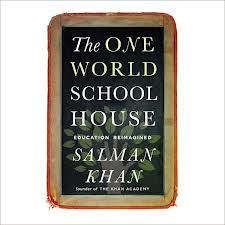
This reminded me of another book I recently completed: The One World Schoolhouse: Education Reimagined by Salman Khan. Starting with tutoring his cousin—and no grand plans beyond that—the Khan Academy has emerged as an international force in education beyond the classroom.  In fact, he has extended the classroom.  His more than 3,900 videos allow for a flipping of the classroom. That is, teachers using this method (Khan Academy or some other video source) assign the video “lectures” for homework and then use class time for what had been traditional homework to move students toward 100% mastery.

khan

In his book and talks, Khan makes a reasoned argument that we do not help students when we move them along once they have achieved only 70% or 80% command of a subject. (Do you want a doctor that was 70% proficient in his studies?)  That creates “Swiss Cheese Gaps” that will hinder the students later in their education and lives. The flipping process allows teachers to become coaches in a self-paced learning model.  Khan maintains that the traditional metric of student-to-teacher ratio is not productive.


Video recommendation for the week:

Instead, we should be looking at “student-to-valuable-time-with-the-teacher ratio.”


There are questions about flipping the classroom. While, it is important to meet the students where they are, it is as important to understand that many students (at least in my 31 years of experience) are not sure where they are. They do not know the questions to ask. Many lack the curiosity needed to explore a subject. (You could make the argument that our education system has beaten the curiosity out of many.)  Levine and Dean found that the students in their research disliked ambiguity—they wanted to know what the right answer was so they could move forward (and receive an award, too, for doing what they were expected to do!). This creates challenges as flipping requires the student to dive in, experiment, fail, and learn. A certain amount of “stick-to-itiveness” is required.

In his book, Khan emphasizes that the classroom teacher is as important as ever in the newly reimagined education model. What we need is a fresh set of eyes on how to make this work for the benefit of the students and the communities in which they live.

Enjoy your week—and H.T.R.B. as needed!

Slots are now available for my February 13 webinar, Retention and Persistence: Why Do Students Stay and Why Do They Leave Our Institutions?  Check my website for registration information. 


Thank you for taking the time to read my blog post. Please share it (and any of the archived posts on this site) along to friends and colleagues. You can also follow me on Twitter, LinkedIn, and Facebook. If you get a chance, visit my Facebook page and join in–or start–a conversation (www.facebook.com/stevepiscitelli).  Also, if you have suggestions for future posts, leave a comment. Make it a wonderful week!

©2013. Steve Piscitelli.

Posted in effective teaching | Tagged , , , , | 2 Comments

(#140) Do You Want the News to Establish Your Mindset?


Do you want a news commentator or weather personality
establishing your mindset for the day?

One night this past week, after I shut down my computer I decided to catch the evening news before I went to bed. All I really wanted to see was the weather report for the coming day.  What I got was a reminder of why I don’t like ending or beginning my day with the news.

Image: renjith krishnan/FreeDigitalPhotos.net

Image: renjith krishnan/
FreeDigitalPhotos.net

On this particular night, the first five stories addressed:

  1. Tax dollar boondoggle.
  2. Soaring food prices.
  3. Child molestation.
  4. Murder
  5. Sex offenders.

All of that came in the first seven or so minutes.  When I asked a local news reporter why this is the case, he told me that is what “sells.”  Hmm. Are you buying?

Most weekday mornings you will find me in the gym at 5:00 a.m. I warm up on one of the cross trainers.  Each machine has its own television screen. I watch people stumble in and the first thing they do is turn on the news. Their first bit of mental stimulation for the day is pretty much what the evening news offered the previous day. The order might change, but you will get political turmoil, economic woes, rape, murder, and war.


As Don Henley sang in the ‘80s, people seem to love dirty laundry.


Even the weather seems to take on a histrionic flavor.  Rather than just a report and forecast, we hear about the approaching storms and the devastation they will likely bring or have brought—sometimes for the entire 24/7 cycle.  I’m not saying to ignore well-intentioned storm warnings. The danger can enter when we choose a steady diet of reports, photos, and video about death and destruction over and over and over.

Do you want a news commentator or weather personality establishing your mindset for the day?

I am not advocating a “put-your-head-in-the-sand-and-ignore-the-news” approach to life.  I want to be informed. However, I have decided to make better choices about when, where, and for how long I will dine on the events of the day.  I would rather start my day with physical exercise and some inspirational reading or writing.

My morning strategy includes:

  • Gratitude. Before I set my feet on the floor I thank God for my talents and affirm I will use them for good today.
  • Physical conditioning. I spend about 45 minutes to an hour in the gym.
  • Mental conditioning. I read something inspiring.  This could be a journal article or the latest book I have just purchased. No email yet! There will be plenty of time for that kind of reading.
  • Diet.  A healthy breakfast is last on my list before I head out the door.

Your schedule might be crammed with getting kids to school, working two jobs, or helping an ill family member. I would encourage you to re-evaluate how you start the day. Even if you can carve out fifteen minutes, it will be a positive start for your day. You’re worth it! Moreover, it will give you a better view of the day in front of you.

The world is still out there.  There is important news to read and view. And you will get to it with a much better mindset.


Video recommendation for the week:

For this week’s video, I will repeat one I shot at the end of 2011.  I present a graphic demonstration about the importance of choosing well when it comes to what we put into our minds each day.


Enjoy your week—and H.T.R.B. as needed!

Slots are now available for my February 13 webinar, Retention and Persistence: Why Do Students Stay and Why Do They Leave Our Institutions?  Check my website for registration information. 

 Thank you for taking the time to read my blog post. Please share it (and any of the archived posts on this site) along to friends and colleagues. You can also follow me on Twitter, LinkedIn, and Facebook. If you get a chance, visit my Facebook page and join in–or start–a conversation (www.facebook.com/stevepiscitelli).  Also, if you have suggestions for future posts, leave a comment. Make it a wonderful week!

©2013. Steve Piscitelli.


Posted in Balance, Mindfulness | Tagged , , , | 9 Comments

(#139) Using Technology with a Purpose


There are 257 million mobile subscribers in the United States.
Of that number, about 128 million are smart phone users.
Think of the possibilities!

Two things happened in class this week that reaffirmed the potential for the smart use of smart phones

First, one of my students came to my campus office early Thursday morning.  He told me that even though he would purchase his textbook after class that day, he did have the homework for the day. He then told me that he had “snapped” the assignment from a classmate.

Snapped the assignment?  Huh?

Image: posterize/FreeDigitalPhotos.net

Image: posterize/
FreeDigitalPhotos.net

What he did was to take a photo (a snapshot for us oldsters) of the textbook exercise using his smart phone.  Rather than make the over-used excuse of “I don’t have a book yet” he was proactive with his technology and completed his work. Obviously, this is NOT an advisable strategy on a few levels (copying copyrighted material; nothing takes the place of one’s own book to use). But, I had to smile at this student’s resourcefulness for this one-time action.

The second instance of using technology for a purpose in the classroom happened later in one of my history classes.  The students had worked in groups that morning analyzing primary source documents from the early U.S. colonial period.  As they shared their conclusions with the class, I wrote their key terms and findings on the board. When we were done, I took out my smart phone and told the students I wanted to preserve their great work for the day. I then took a photo of my notes on the classroom board and suggested they might want to do the same. What a great way, I suggested, to augment their class notes.  Immediately, about five or six students did the same. It could well have been an ah-ha moment for those students; a way to use technology in their classes to help them improve note-taking and collect material for their portfolios. See photo below of one section of those board notes.

2013-01-17 12.17.05

By themselves, these two examples are not earth moving.  They do show, though, what we can do with these little hand-held computers more and more of us have in our pockets.

One report (Pew And Nielsen Say Smartphones Now 50 Percent, When Will ComScore Join The Club?) estimates that there are 257 million mobile subscribers in the United States. Of that number, about 128 million are smart phone users.

At times, it can be easy—almost cliché—to badmouth social media and technology.  Anecdotes and reports abound about behavior ranging from inappropriate to ridiculous. We all have a story or two (or more) to share about boorish behavior enhanced by social media.


Video recommendation for the week:

And perhaps this video parody has a few kernels of truth to it. But think of the possibilities we have not even explored yet with technology in the classroom!


Enjoy your week—and H.T.R.B. as needed!

My first 2013 webinar, Priority Management: Do the Right Stuff at the Right Time, is scheduled for January 23, 2013 at 3:00 p.m. Click here  for registration information. Check my website for information on future PDQ Webinars. 

 Thank you for taking the time to read my blog post. Please share it (and any of the archived posts on this site) along to friends and colleagues. You can also follow me on Twitter, LinkedIn, and Facebook. If you get a chance, visit my Facebook page and join in–or start–a conversation (www.facebook.com/stevepiscitelli).  Also, if you have suggestions for future posts, leave a comment. Make it a wonderful week!

©2013. Steve Piscitelli.

Posted in Social Media, technology | Tagged , , , , | 7 Comments

(#138) Do You Need To Catch Up With Yourself?


Their intentions may be wonderful but
their execution is less than satisfactory.

Years ago a student of mine made a simple yet profound observation. This student had the habit of postponing assignments. He was a huge procrastinator.  Quickly, his backlog of overdue items had become overwhelming.  Shaking his head during a tutoring session, he looked at me and said, “You know, it’s much easier to maintain than it is to catch up.”

Often I will hear colleagues and friends say something like, “This weekend is my weekend to catch up on all that has backed up over the past few weeks/months.”

The current issue of Success Magazine (February 2013) includes an article titled “The Perils of Procrastination.”  The author, Stephanie Dolgoff, maintains that about 20% of all adults are dye-in-the-wool procrastinators.  Whatever their intentions, these people have a huge reality gap “between what they fully intend to do and doing it, in all facets of their lives: at work, relationships, even activities they love.”

photostock/FreeDigitalPhotos.net

photostock/
FreeDigitalPhotos.net

The procrastinators never seem to catch up. When they do catch up in one area, another area—and generally, a person or team—loses out. Do you remember the Peanuts cartoon strip? One character—Pig Pen—was followed by a constant cloud of dust.  Procrastinators seem to move in their own cloud of dust, always moving toward the last minute when something just “has to be” finished or turned in or examined.

In the workplace, procrastinators can be deadly presenting stressful situations and missed opportunities for their teams. Dolgoff cites research by Timothy Pychyl, Ph.D., who concludes “there are secondhand effects of procrastination. You’re bringing down team members, creating stress for them, and poisoning the work atmosphere.”

I appreciate that some procrastinators have great intentions.  They have—what they think to be—a vast storehouse of energy, talent, creativity, and wherewithal to begin and complete an abundance of projects. They seldom if ever say “no!” They can do it all.

Or so they think.

Their intentions may be wonderful but their execution is less than satisfactory mostly because they are unable or unwilling to give the proper attention to what they have committed to do.  Moreover, in our new normal of continuous partial attention those of us looking to have things completed on time as promised—and in good order—shake our heads and wonder if we are just too “retentive.”


Video recommendation for the week:

So how do we work with the folks who seem to bring Napoleon Hill’s axiom to life: “Procrastination is the bad habit of putting off until the day after tomorrow what should have been done the day before yesterday”?


One thing that does not work is to simply say, “Stop it!” It takes some introspection on the part of the procrastinator. And he or she must be willing to want to change.  If you are a procrastinator (or work or live with one), here are a few basic strategies:

  • Review your goals. Are all your actions and commitments getting you to those goals?  What about your inactions?
  • If you are saying “yes” to please people think of this.  By over committing and not delivering a quality, on-time product or service you are pleasing no one—least of all the people to whom you made the commitment.
  • Break big projects into small, non-threatening, pieces. Take one step at a time.
  • Ask a mentor for help. This assumes that you see that you are truly a procrastinator. If you are unsure, ask those with whom you live or work.
  • Note the circumstances when you procrastinate. What commonalities are present?
  • If you are the one who has to deal with the procrastinator, let him or her know how the behavior is affecting you or your team.
  • Breathe deeply. Slow down.

Yamas_Niyama_FrontCover72dpi_200

Deborah Adele in her book The Yamas & Niyamas: Exploring Yoga’s Ethical Practice writes about the practice of purity in life. She says it requires us to “slow down and do one thing at a time.”

We often enter an experience with the clutter of scattered thoughts
and leave the experience with even more cluttered thoughts. It is like
we are living on the leftovers of where we have been or the preparations
of where we are going. Because we have not taken the time to ‘catch up’
with ourselves, we are everywhere but the present moment.

Take sometime today and catch up with yourself. You and those around you will benefit.

Enjoy your week—and H.T.R.B. as needed!

My first 2013 webinar, Priority Management: Doing the Right Stuff at the Right Time, is scheduled for January 23, 2013 at 3:00 p.m. Click here  for registration information. Check my website for the information on future PDQ Webinars. 

 Thank you for taking the time to read my blog post. Please share it (and any of the archived posts on this site) along to friends and colleagues. You can also follow me on Twitter, LinkedIn, and Facebook. If you get a chance, visit my Facebook page and join in–or start–a conversation (www.facebook.com/stevepiscitelli).  Also, if you have suggestions for future posts, leave a comment. Make it a wonderful week!

©2013. Steve Piscitelli.


Posted in Procrastination | Tagged , , | 6 Comments

(#137) I’m Glad My Mother Taught Me To …


A few weeks ago, I stumbled upon a file folder
I had forgotten about.
The label on the folder simply said “My Mother.” 

When we consider our parents, teachers, friends, neighbors, spiritual leaders, mentors, and even total strangers with whom we interact, it is obvious that we do not live in a vacuum.  Each leaves an imprint. Each creates an impression and we take a little away from each encounter.

Of all of the influences in our lives, each of us has a person or two (or more) who stand out above all others. To these people we are grateful for their lessons.

A few weeks ago, I stumbled upon a file folder I had forgotten about.  The label on the folder simply said “My Mother.”  Inside I found notes from a little exercise I did with my students more than four years ago.  I asked them to think about the significant people in their lives.   I had asked them to complete this sentence: “I am glad my mother taught me to….” I do remember, as I think back, that I gave them the option to substitute another person for “mother” if it were more appropriate in their lives. Some substituted “father” or “grandmother” or “girlfriend.”

ID-10064002

renjith krishnan/
FreeDigitalPhotos.net

I transcribed and categorized my students’ comments. Here is a sampling from more than four single-spaced pages of notes:

I’m glad my mother taught me to …

  • Be strong and believe in myself
  • Be chivalrous and respectful
  • Survive
  • Control my anger
  • Worship God
  • Speak properly in public
  • Respect myself and others
  • Look both ways before crossing the street
  • Not be a follower
  • Follow the Golden Rule
  • Do my best at everything
  • Not leave things to the last minute
  • Persevere
  • Have manners
  • Bring a pen to class
  • Take my schoolwork seriously
  • Be independent
  • Be honest
  • Manage my finances
  • Pray

I found it interesting—but not surprising—that most of their comments fit into the “civility” category. Others like “persistence” and “independence” appeared often.

How would you complete the sentence: “I am glad my mother taught me to…”?

At the time my students were writing their thoughts, I jotted down my own responses to the prompt. These included:

  • Be a gentleman
  • Write thank you notes
  • Put things back where I found them
  • Get an education
  • Not build debt
  • Not smack my gum like a cow chewing cud
  • Be punctual
  • Do homework as soon as I got home from school
  • Save money
  • Get a job
  • Do a good job every day

It’s your turn.  To whom are you grateful for a life lesson? What did he/she/they teach you? Why not thank those people today?


Video recommendation for the week:

Thanks, Mom!


Enjoy your week—and H.T.R.B. as needed!

I will announce details for my 2013 webinar series on Monday, January 7, 2013.  The theme for the year is THE YEAR OF THE DREAM! Check my website for the most up-to-date information.  The first webinar, Priority Management: Doing the Right Stuff at the Right Time, is scheduled for January 23, 2013 at 3:00 p.m. Click here  for registration information.

Thank you for taking the time to read my blog post. Please pass it (and any of the archived posts on this site) along to friends and colleagues. You can also follow me on Twitter, LinkedIn, and Facebook. If you get a chance, visit my Facebook page and join in–or start–a conversation (www.facebook.com/stevepiscitelli). Also, if you have suggestions for future posts, leave a comment. Have a wonderful week!

©2013. Steve Piscitelli.

Posted in Gratitude, Life lessons | Tagged , , , , | 7 Comments

(#136) A Blogger’s Retrospective: 2012 in Review


 Consider this a look back as we move toward the New Year.
Perhaps a nugget or two will provide inspiration.
Thank you for your continued support and comments.

In May of 2010 I made the decision to begin my first blog. I had 3 goals:

  • Experience a new (for me) aspect of social media
  • Develop and flesh out new ideas
  • Provide something of value—not just another cyber rant.

I believe I have accomplished the first and the second. It is up to you whether I have accomplished the third. My blog posts contain videos, book recommendations and summaries, questions to ponder, and always a takeaway to apply immediately to life.  I have stayed true to my commitment to publish one blog post per week. This post marks the 136th consecutive week.

This year saw nearly 7,000 views of my weekly blog posts. Thank you for reading, commenting, and sharing.  I would love to hear what you found of value on this blog. And, please feel free to share any ideas you have for future posts.

For this last-of-the-year post, I have returned to each of the previous 51 posts I have made to this blog in 2012—and provided a statement about each. I have linked each title to the actual blog should you want to read it or re-read it.

Consider this a look back as we move toward the New Year. Perhaps a nugget or two will provide inspiration. Thank you for your continued support and comments.


Video recommendation for the week:

All the best to you and your family and your friends as you enjoy a wonderful 2013!  May you give and receive heartfelt hugs along the way!


84.  Your Small Choices Create Your Larger Life.  *Our life is made up of little choices we make each day of our lives. While each choice on its own may appear small, they add up—they compound over time to create who we are. There is a wonderful video demonstration that accompanies this blog post.

85.  Study Skills: Do I Really Need This Stuff?. *Study skills are really life skills.

86.  A Model for Critical Thinking *Critical thinkers recognize assumptions and avoid confirmation bias.

87.  Priority Management: Are You Doing the Right Things—Or Are You Just Doing Stuff? *We cannot stop time, create time, or control time. But we all can effectively manage our priorities.

88.  Information Literacy: Not All Information is Created Equally *What we have to remember is that the explosion of information does not necessarily equate to an explosion of credible knowledge.

89.  Set Your Goals and S.O.A.R. * You can write the most specific and realistic and timely goal you can think of—but it will be useless (a fantasy) without ACTION. You have to put the “do” behind the “want to.”

90.  Using Learning Preferences to Make Connections * Know your learning style—and make it work for you.

91.  Success Strategies for the Classroom—and the Business World * Here are success strategies that pertain to the business world as much as they do to our classrooms. Learn them. Internalize them. Grow with them

92.  Making Connections in the Classroom and the Boardroom* Research tells us that as students build connections (relationships) between what they learn in class, read in their books, and experience in their lives, they will improve their learning.

93.  SQ4R: Strategic Reading Strategies for the Classroom and Beyond *Reading remains a crucial skill. In fact, being able to read well is perhaps even more important today than it was in the past.

94.  A Good Memory Makes Connections *If I had to give just one tip for improving memory it would be to find connections—make the material (whatever it might be) relevant to your life.

95.  Test-Prep: Connecting Classroom Success to Career Success and Life Success*When you effectively use test-preparation strategies, you are not only getting ready for the exam at hand, you are building life-long skills. Relevant and connected.

96.  Is Civility Part of Your D.N.A.? *Civility does not mean we all agree. It does mean, though, that we accept each other’s humanity and dignity as a person.

97.  Study Skills: A Baker’s Dozen*This is an overview of the twelve topics above.  While ambition and potential are important characteristics, they are useless without initiative. Our life is the sum of the many small choices we make and do each day. Make each day count.

98.  Fitness: A Better Version of Me * When it comes to your health be “responsibly selfish!”
Treat yourself with respect.

99.   [dreams]  * “I never got this far in my dream.”

100.  Milestones: Endpoints or Checkpoints? * Milestones remind me of the possibilities in life.

Photo: Maureen Buik

Photo: Maureen Buik

101. Ayekoo! *I commend these students for a job well done! They have inspired me.

102.  What is the Purpose of Education? * Craftsmen would not continue to use tired and worn out tools that keep them from creating a master product. Why would I do less for my students?

103. Someone Will Help You—I Guess * Big box stores were out hustled and out managed by a
small operation that was happy to see me and quick to
provide a service.

104.  Baby Boomers Reminisce: Then But Not Now * I asked the Baby Boomers to chime in about what existed “then but not now.”

105.  Building a Community: The Power of Reflection * There is a basic need to be heard, to be listened to, to share, and to build a community.

106. A Memo to My Future Me* Take a moment and write to yourself today.
What do you want your “future me” to look like, act like, feel like?

107. If You Don’t Want a Target on Your BUTT, Put a Target on Your BUT! * Excuses can rob us of our dreams and put us on a fast path to irrelevancy.

108. Lifelong Learning *As John Dewy reminded us, “Education is not preparation for life; education is life itself.”

109. Striving for the WOW Factor! Tips for Presenters* I am always striving for the WOW factor!
The people with whom I work deserve that.

110. Integrity or Adding to the Illusion? * Is integrity an all or nothing proposition? How do you measure integrity? Is it on a scale? Can you have it some days and lack it on others?

111.  Why Do You Do What You Do? * Are we just muddling through life in a job, for instance, or do we wake up each morning passionate about the calling that has beckoned us?

112. Creating Experiences * Think of the coming weeks and months. What experiences (small or big) have you planned that will create wonderful memories for you and those you love?

113. Creativity Takes Work * Creativity also embraces all the disappointments and frustrations
on the road to a new way of doing things. They are part of the process.

114.  What You SAY and What You DO * Where is your line in the sand? What will you definitely not negotiate away—and what things will you or do you decide are not values to you?

115. Purpose and Passion * Our paycheck may not come from a calling but then not every calling is defined by a paycheck.

116. Simple Strategies for Adjustment and Transition to the College Culture* We can get much more from life if we pay attention to our priorities…the choices belong to us.

117. Say What You Mean. Mean What You Say. Do What You Say.*A simplified version of a Ralph Waldo Emerson quote might guide us the best, “What you do speaks so loudly that I cannot hear what you say.”

2012-06-07_18-44-55_36

Photo: Laurie Piscitelli

118. You Never Know Who is in the Audience. * We just never know the impact we have. And, we need to remind ourselves of the impact others have on our lives.

119. You Might Have to Slow Down to Go Faster. * At times we have to turn off the thinking and let the ideas come and go; let them mix with the experiences.

120. Are You Intentional About Your Growth? * While I cannot control or manage the ticking of the clock, I can manage my choices. I manage my priorities and, thus, I manage my life.

121.  Living With Purpose: Are You Betraying Yourself? * If what we do does not align with our purpose (what makes us feel whole or complete or meaningful)then we need to pause and ask ourselves some questions.

122. What’s Your Story?* What are you leaving behind? What are you building each day?
It’s one thing to be successful. But are you significant?

123.  How Do I Measure Up?* Relevance, engagement, and passion. Our students deserve it.
Our community deserves it.

124. When a Culture of Yes is Really a Culture of No  *  Rather than nurture the people on their bus, weak leaders throw them under the bus

125. What’s Important?  *  Are we living a life that makes us unrecognizable to those
who love us–and maybe even unrecognizable to ourselves?

126. Have You Looked at Your BUT Lately? * The first step is to recognize (be aware) of which BUT is taking control. Then make the decision to kiss your BUT goodbye!

127. Recognizing the Good Things in Life * Why not recognize the good things that happen around us, show gratitude, and encourage those behaviors? Maybe in our own small way we can help
create an environment of remarkable consistency and growth.

128. What is Your Brand? * When it comes to branding ourselves obvious characteristics present themselves: How we dress; how we smile (or don’t); how we speak; how we look someone in the eye (or don’t).

129. Identify What You Can Influence * Today, you have the ability to have a positive impact
on your little area of the world. Tomorrow, broaden that circle.

130.  Making Your Life Work! * When it comes to New Year’s Resolutions we find lots of
big intentions—but minimal action.

131. Penny at a Time * Whether it’s wealth-building or a weight-loss program or writing your first book have a plan, take specific steps each day, and remember that you will realize your dreams one step at a time.

132. Relevance, Relationships, and Rainbows * As a teacher I can excite, energize, and educate.
But can anyone really motivate another person?

133. Advice from My Scholars: How to Succeed in Life * Advice from my students to entering first-year college students.

134. Marshmallows, Teaching and Learning* This exercise allowed them to collaborate, actively search for, and apply (critically think about) concepts and principles in an engaging and memorable manner.

135.  2012: The Year of Gratitude* Silent gratitude isn’t very much use to anyone. Read a summary of a year-long gratitude project.

136. A Blogger’s Retrospective: 2012 in Review*Here it is. The annual review of the year’s titles for this blog.

Enjoy your week—and H.T.R.B. as needed!

Details for my 2013 webinar series have been announced.  The theme for the coming year is THE YEAR OF THE DREAM! Check my website for the most up-to-date information.  The first webinar, Priority Management: Doing the Right Stuff at the Right Time, is scheduled for January 23, 2013 at 3:00 p.m. Click here  for registration information.

Thank you for taking the time to read my blog post. Please share it (and any of the archived posts on this site) along to friends and colleagues. You can also follow me on Twitter, LinkedIn, and Facebook. If you get a chance, visit my Facebook page and join in–or start–a conversation (www.facebook.com/stevepiscitelli). Also, if you have suggestions for future posts, leave a comment. Have a wonderful week!

©2012. Steve Piscitelli.

 

Posted in Balance, Blogging, Goals, Gratitude, influence, lessons reaffirmed, priorities, Purpose, retrospective, Year in review | Tagged , , , , | 4 Comments

(#135) 2012: The Year of Gratitude


Silent gratitude isn’t very much use to anyone.

-Gertrude Stein-

About a year ago I read The Compound Effect by Darren Hardy. One of the many life success strategies Hardy described was a gratitude journal (of daily entries) he had written for his wife.  At the end of the year, he presented her with this heart-felt expression of love and appreciation.

That gave me an idea. But instead of one journal of 365 entries for one person, I decided to handwrite a Thank You note of gratitude each day to a different person—and then mail it or hand deliver it to him/her.  2012 would be The Year of Gratitude.

Stuart Miles/FreeDigitalPhotos.net

Stuart Miles/
FreeDigitalPhotos.net

I committed myself to writing at least 366 notes in 2012.  As I write this blog post I have not missed a day.  By December 31, 2012 I will have addressed and delivered notes to nearly 400 people (a few days saw more than one person get a note; a couple notes went to entire teams like the custodians on my campus).

By the end of the year, I will have written notes to folks like long-time friends, neighbors, musicians, national celebrities, colleagues, wait staff and service personnel in restaurants and hotels down the street and around the nation, former students, military, journalists, policemen, city leaders, secretaries, cashiers, doctors, family members, a broker , the ladies in the deli department at the grocery store, campus security officers, fellow “gym rats,” lawyers, an insurance agent, and a bagger at the grocery store . In each note, I taped the following:

  Silent gratitude isn’t very much use to anyone.

               -Gertrude Stein-

One of my goals for 2012 focuses on the good—the great—people that make up my life. I have made a commitment to reach out and say “THANK YOU” to people like you who have “done good” for the world around us. I have promised myself to send at least one “THANK YOU” card per day for the entire year of 2012.  That will be 366 notes of gratitude! (It’s a leap year.  J) You will find a more personal hand-written expression in the card that comes with this note. Know that you are appreciated and loved—and that you have made this world a much better place. “THANK YOU!”                                   -Steve Piscitelli

I then wrote a few personal reflections as to specific traits that the person had—and how that person made a difference in our world.

This was how I finished most of my days. Before turning out the light I pulled out a card and spent 3 or 4 minutes writing the note for the next day.

I tell you this not to pat myself on the back but, rather, to share my gratitude for being able to do this.  Here are the lessons from this exercise:

  • It proved to be a very positive way to end each day.  For the few minutes I wrote the note, no matter how ugly the day may have been (in my perception) I found it very difficult to be upset or angry as I wrote a note of appreciation to someone.
  • People really do appreciate being appreciated! I received many, many, many notes of gratitude for my notes of gratitude.  (Please note, that was never my intent.  I believe it was Leo Buscaglia who said something to the effect of “If you give a gift expecting something in return, then it was never a gift. It was merely a loan.”) The return gratitude notes, however, made me feel good.
  • There were people I missed (I am sure). That is not a reflection on them—just on me for missing them. This is another reminder that in reality I have much to be grateful for in my life. The exercise reminded me of so many good people around me.
  • Probably the most gratifying part of this process was hearing people tell me that my note spurred them to adopt a similar goal in their lives.  It felt like a pay-it-forward movement was developing.

I know it probably sounds “so very 1960s” of me but wouldn’t it be a much better world if we could reach out more—without manipulation, without exploitation, without an expectation for personal gain—to people around us.


Video recommendation for the week:

Reach out instead of lash out. The following clip speaks of small expressions of gratitude creating a movement.


I am grateful that you take time to read my blog, share it, and perhaps even act on the messages.

Next week I will post my annual “A Blogger’s Retrospective” in which I will provide a quick summary of and link to each of my 2012 blog posts.

I appreciate you.

Enjoy your week—and H.T.R.B.as needed!

Details for my 2013 webinar series will be announced in the very near future.  The theme for the coming year is THE YEAR OF THE DREAM! Check my website for the most up-to-date information.  Thank you for your support. If you would like to view a quick video of about THE YEAR OF THE DREAM, click here.

Thank you for taking the time to read my blog post. Please pass it (and any of the archived posts on this site) along to friends and colleagues. You can also follow me on Twitter, LinkedIn, and Facebook. If you get a chance, visit my Facebook page and join in–or start–a conversation (www.facebook.com/stevepiscitelli). Also, if you have suggestions for future posts, leave a comment. Have a wonderful week!

©2012. Steve Piscitelli.

 

Posted in Appreciation, Civility, Gratitude, Life's purpose, little pleasures, Making a Difference, Mindfulness, Words and Action | Tagged , , , , , | 5 Comments

(#134) Marshmallows, Teaching and Learning


This exercise allowed them to collaborate, actively search for,
and apply (critically think about) concepts and principles
in an engaging and memorable manner. 

About a year ago I learned of the “Marshmallow Challenge.”  The video at the end of this blog post will give you a quick visual overview of the project.  Here is the short story—and how I help my students to relate and apply the challenge to the major concepts of their semester’s work.

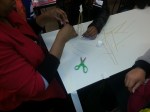
On the last day of the semester as my students enter the room, I randomly direct them into groups (the goal being four per group).  Each group receives the following:

  • 20 sticks of uncooked spaghetti
  • 1 yard of string
  • 1 yard of masking tape
  • 1 scissors
  • 1 regular-sized marshmallow

2012-12-13 11.12.25

Their task is to build the tallest free-standing structure they can using only the materials I provide. They can cut the string and tape; they can break the spaghetti; they can use the tabletop; and the whole unaltered marshmallow has to be on the top of their structure.  They have 18 minutes to complete the task.  To keep time, I use an online stopwatch and project it on the screen (http://www.online-stopwatch.com/).

2012-05-03 09.08.30

You can create an 18-minute music soundtrack if you would like.  (I have done the activity with and without music.)  Music or not, the noise level will increase rapidly as the groups get into this activity quickly and passionately. Last summer I did the challenge with 85 college faculty members in a training session I facilitated.  They were every bit as passionate as the students!

When teams complete their structure I measure and record the height.  This semester the tallest came in at 23.00 inches.

2012-12-11 09.27.26

Invariably, structures collapse and are rebuilt. Laughter and camaraderie always ensue.

My twist on the challenge is to ask the students to reflect on the course concepts the exercise reinforced.  Their insights always impress me.  With this simple 18-minute exercise they apply some of the major concepts from their semester’s worth of learning.  Pretty cool.

My student success classes connected the exercise to the significance of:

Pre-planning Communication Collaboration Creativity
Reflection Leadership Collective monologues Assumptions
Compromise Kinesthetic style Priorities Unequal resources
Quick doesn’t equal  quality Group dynamics Energy vampires Excuses
Failure can lead to progress Focusing on your base Balance Civility

And I do this in my United States History classes as well as in my student success classes.  My history students made these metaphorical connections:

Our nation needs a strong foundation Our nation collapsed during the Civil War
Our nation rebuilt after the Civil War Settlers had limited resources to survive
Diversity of skills and ideas = success Leaders accept input
Listening is important Assumptions can lead to problems/divisions
A nation must pay attention to the basics Build a nation one piece/step at a time
Government can become top heavy Capitalism is about competition
Marshmallow = government that holds people together Spaghetti = the people who support the government
All parts require interdependence Collaboration needed to build a nation

I could have conducted a review lecture about the main concepts. I could have handed them a piece of paper with the concepts listed.  I could have even made them take a paper and pencil test.  This activity allowed them to collaborate, actively search for, and apply (critically think about) concepts and principles in an engaging and memorable manner.  Practical. Engaging. Reflective.  Consolidating. Validating.


Video recommendation for the week:


Enjoy your week—and H.T.R.B.as needed!

My 2013 webinar series will be announced in the very near future.  The theme for the coming year is THE YEAR OF THE DREAM! Check my website for the most up-to-date information.  Thank you for your support.

Thank you for taking the time to read my blog post. Please pass it (and any of the archived posts on this site) along to friends and colleagues. You can also follow me on Twitter, LinkedIn, and Facebook. If you get a chance, visit my Facebook page and join in–or start–a conversation (www.facebook.com/stevepiscitelli). Also, if you have suggestions for future posts, leave a comment. Have a wonderful week!

©2012. Steve Piscitelli.
Posted in collaboration, Creativity, Critical Thinking, effective teaching, Student success, Teaching | Tagged , , , , , , | 6 Comments

(#133) Advice from My Scholars: How to Succeed in Life


The choices we make and do will create our lives.

During the final class meeting before exam week begins I ask my students for feedback.  In this case, I ask them to consider advice they would like to pass along to first-year college students.  Most of my students are in their first or second college semesters.  While many are between 18 and 25 years of age, a good number are in their 30s, 40s, 50s and beyond.  Interestingly, the advice transcends calendar years.  It is amazing what 15 weeks of college expectations and discipline will do to one’s outlook on life. And I never get tired of being a part of this growth each semester.

Research indicates that many of our entering students are woefully prepared for the college experience.

Source: knewton.com via Steve on Pinterest

Today I will share my students’ thoughts with you about succeeding in college. While this list can easily be labeled “College Readiness Advice,” I would encourage you to see how their advice easily can be applied to our own lives—in business, at home, and in our communities.  So, here, in no particular order (other than the order they spoke in class), is the considered wisdom from a few of my fall semester students.

  • Don’t take energy vampires on your journey.
  • You have been given a gift from God—use it wisely.
  • Forget about Plan A and Plan B. You better have a Plan C!
  • Success leads to confidence.
  • Use the college resources for your benefit.
  • Life happens.
  • You need specific actions if you want to get to your dreams.
  • Small steps keep it manageable.
  • This student success course was about building discipline.
  • Discipline allows me to get to higher levels in life.
  • Attend and be part of each class and day.
  • Develop your “live” social network.
  • Don’t eat cafeteria food. [!]
  • I don’t need anyone else’s drama.
  • If you don’t want to be here [college] don’t waste your time and money.
  • Be thankful for not only yours but also the motivation, dedication and inspiration you get from your classmates.  [One of my students actually wrote a love letter to the class and read it from the front of the room!]
  • Pay attention to details.
  • Don’t just read about strategies—apply them often.
  • Ask questions.
  • Be timely.
  • Online classes take discipline.
  • Make sound decisions.
  • Surround yourself with people who love you.
  • If you daydream rather than plan—you will get nowhere.
  • Give it all you got.
  • Research your options.
  • Seek out nutritious people.
  • Surround yourself with people who want to better themselves.
  • Be about what God has called you to do.
  • Never give up.

Video recommendation for the week:

Prepare. Qualify. Finish.


My short takeaway on what my students said: The choices we make and do will create our lives.

Share this list with a student, colleague, friend or family member.  And feel free to share your success strategies.

Enjoy your week—and H.T.R.B.as needed!

My 2013 webinar series will be announced in the very near future.  The theme for the coming year is THE YEAR OF THE DREAM! Check my website for the most up-to-date information.  Thank you for your support.

Thank you for taking the time to read my blog post. Please pass it (and any of the archived posts on this site) along to friends and colleagues. You can also follow me on Twitter, LinkedIn, and Facebook. If you get a chance, visit my Facebook page and join in–or start–a conversation (www.facebook.com/stevepiscitelli). Also, if you have suggestions for future posts, leave a comment. Have a wonderful week!

©2012. Steve Piscitelli.

Posted in Discipline, Dreams, Student advice, Student success, Success | Tagged , , , , , , | 15 Comments

(#132) Relevance, Relationships, and Rainbows


As a teacher I can excite, energize, and educate.
But can anyone really motivate another person?

I have been preparing for a webinar I will be facilitating for Innovative Educators (January 29, 2013) on the topic of student motivation.  Even though I have been teaching for more than 30 years, this remains a challenging topic.  As a teacher I can excite, energize, and educate. But can anyone really motivate another person?

I have NEVER felt comfortable when someone has called me a “motivational speaker.” I feel that on a good day I am a momentary motivator.  My hope is to be able to inspire people with a word, a phrase, a song, a video, or actions that will touch their hearts and motivate them to go forward in their lives.

Photo by Steve Piscitelli

But if the listeners do not internalize my extrinsic exhortations I’m not sure how much “motivating” I have done.

Daniel Pink (see TED video below) tells us when people desire to do things because those things matter to them, that is a sign that they have become intrinsically motivated.  Something external may have caused the initial movement but in order to maintain that trajectory, the person has to take ownership and believe he or she can make a difference in whatever is at hand.

Pink asserts that people are most motivated when they have autonomy (control over what they are doing), mastery (the desire to get better at what matters to them), and purpose (the recognition that what we do matters on a larger scale).


Video recommendation for the week:


My friend and colleague Professor Emeritus Joe Cuseo has written that students have a better chance of success when they have (among other traits) a sense of purpose, self-efficacy, and active involvement in what is at hand in their education.  Effective teachers (in the classroom, in the workplace, and at home) provide engaging opportunities for students to discover that their studies have purpose and that their individual efforts affect their success.  Do you see the connection to Pink’s thesis?

For me, I like to distill it to 3Rs: Relevance, Relationships, and Rainbows.

  • Relevance.  Demonstrate for students that what they are learning in the classroom has relevance to their lives—personal and future careers. If there is no relevance, then why are we wasting a portion of their lives dumping the data in their heads? That is not education—and it definitely is not motivational.
  • Relationships. Our culture has become obsessed with instantaneous communication.  Smart phones, tablets, laptops, and mp3 players keep us technologically tethered.  We have “friends” we have never met—and probably never will or care to.  What is missing in all of this? Good ol’ fashioned “connections”—real relationships. Please do not misread this as a Luddite’s slam on social media. I am as technological tethered as many. But our success—and that of our students, colleagues, and family members—will not be measured by the size of our “friend” list. Rather, we need true connections—meaningful connections to other people and to a greater purpose.

James Barker/
FreeDigitalPhotos.net

  • Rainbows. Each semester my goal is to help my students articulate their dreams and the specific steps they need to take to move toward those dreams.  When they can see their own brightly colored rainbow, then their own purpose comes into clearer focus.  Now that is motivation!

As you look toward the New Year, may your rainbows be bright, meaningful, and fulfilling.  Make 2013 your  year of the rainbow. Make it the  year your dreams come true!

Enjoy your week—and H.T.R.B.as needed!

My 2013 webinar series will be announced in the very near future.  The theme for the coming year is THE YEAR OF THE DREAM! Check my website for the most up-to-date information.  Thank you for your support.

Thank you for taking the time to read my blog post. Please pass it (and any of the archived posts on this site) along to friends and colleagues. You can also follow me on Twitter, LinkedIn, and Facebook. If you get a chance, visit my Facebook page and join in–or start–a conversation (www.facebook.com/stevepiscitelli). Also, if you have suggestions for future posts, leave a comment. Have a wonderful week!

©2012. Steve Piscitelli.

Posted in Motivation | Tagged , , , , , | 6 Comments