I know that when I put the audience first, I succeeded.
This past week, a community committee on which I serve asked me to share ideas about presentation skills. Specifically, strategies to help speakers connect with an audience.
We’ve all been in meetings, workshops, and/or conferences that had potential but ended up falling short due to a poor presentation. The speaker may have been well-meaning, likeable, and armed with research but did not connect with the audience. It happens. You walk out of the room saying, “That was the longest 20-minutes of my life!”
Photo by Steve Piscitelli
Whether you are a seasoned presenter or getting ready for your first public appearance, I offer the following suggestions. Some, depending on the context for the talk, may not be appropriate. All are worth consideration. You probably can add additional strategies.
Start by remembering the Six Ps:
Proper
Preparation
Prevents
Pathetically
Poor
Presentations
A few specifics:
Every presentation is about the audience—not the presenter. (Check out this podcast.)
Your message has to resonate with the audience. See the above point.
Know your purpose for the presentation. See the above two points.
Tell an appropriate and relevant story to engage the audience.
For F2F presentations, move as appropriate. Avoid standing in one spot. If you can, get out from behind the podium. (When I delivered a college commencement address, I not only left the podium, but I also left the stage and walked to floor so I could be with the graduates. They were the audience. There was a brief few seconds when the microphone failed—but it came back!)
Your presentation needs a Beginning—Middle—End.
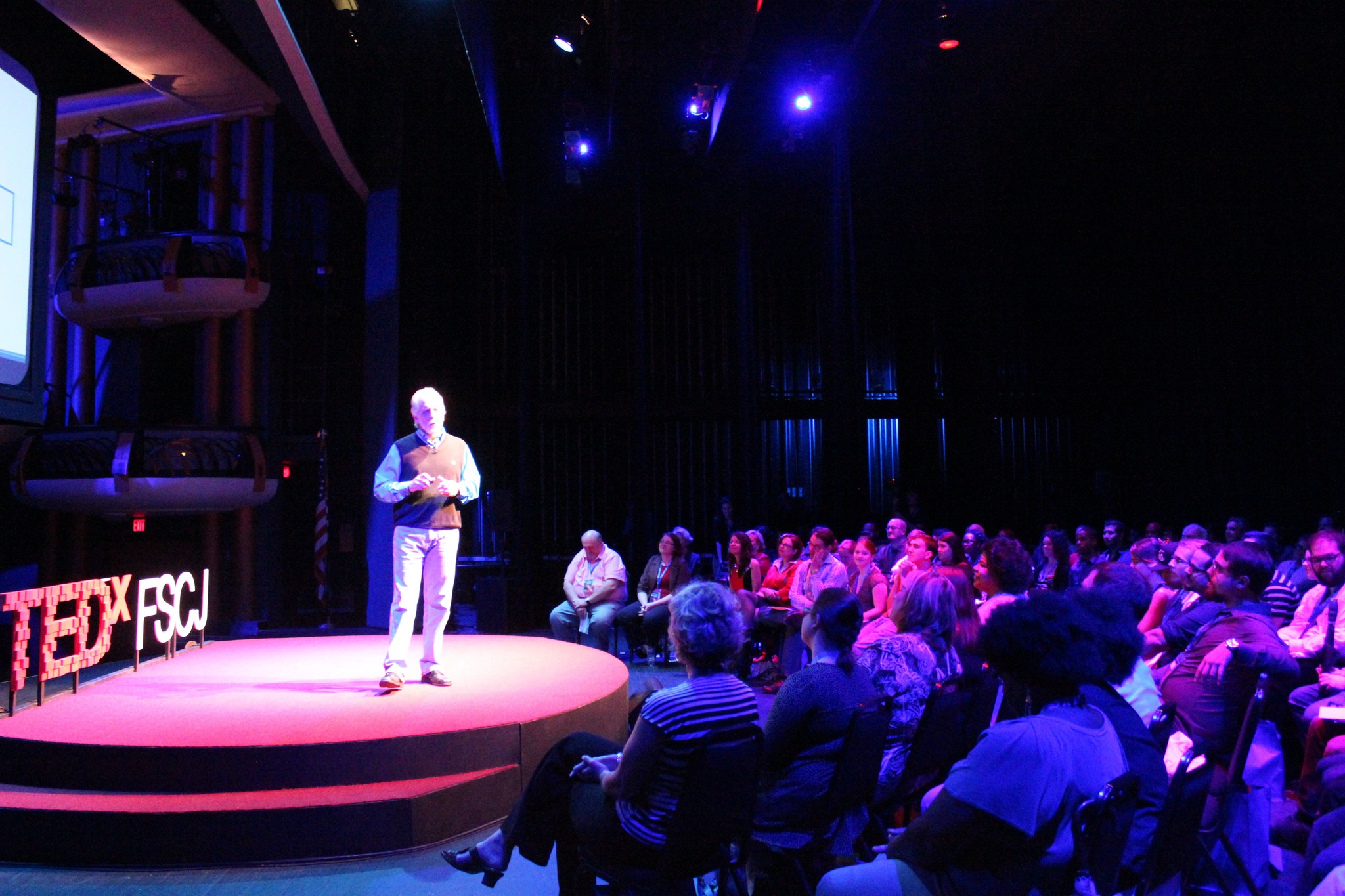
TEDx in Jacksonville, Florida. 2014.
Modulate your voice throughout the presentation. Create excitement with your voice, your message, and your medium.
Encourage audience participation as appropriate.
Avoid S.A.O.D.: Severe Acronym Overload Disorder. (Thanks to Don McMillian for this acronym about acronyms!).
Develop a handout for your audience. Maybe even give them “homework”—A Call-to-Action—to apply what you have presented.
If using PowerPoint or Keynote:
The slides augment your presentation. They should not be your presentation. Consider them background to support the strong, riveting, and resonating message you are delivering.
Consider the 10-20-30 “principle” as a guide: 10 Slides for a 20-Minute presentation using nothing smaller than 30 Point Size Font. If nothing else, it will remind you of the importance of brevity on the screen.
Use images, photos, video and/or music when appropriate. Mix it up!
Assume your audience can read. Don’t read the screen. (For visually impaired audience members, perhaps a program recording would be in order.)
Do not talk to the screen. Make eye contact with the audience. See point above. (When using a virtual platform look directly into the camera as much as possible and appropriate.)
Avoid (too much) slide animation. Don’t get the audience dizzy.
Pay attention to color schemes and templates. Keep it simple and practical.
Rehearse your timing prior to the presentation.
Unless you’re pitching technology, remember that technology is the method not the outcome.
While I have always done my best to adhere to these (and more), there were times, unfortunately, when I failed my audience. When I forgot my mission or got too involved in the technology, medium, or ego, the end result was lacking.
When I put the audience first, I succeeded. Whether I was presenting to 10 people (workshop setting), 1,000 people (conference auditorium) or 8,000 people (college commencement) these pointers provided a touchstone for me. Hopefully they will be useful to others.
Prepare and deliver with enthusiasm and your audience just might walk away saying, “WOW! I want more of that!”
My latest book can be found in eBook ($2.99) and paperback ($9.99) format. Click here.
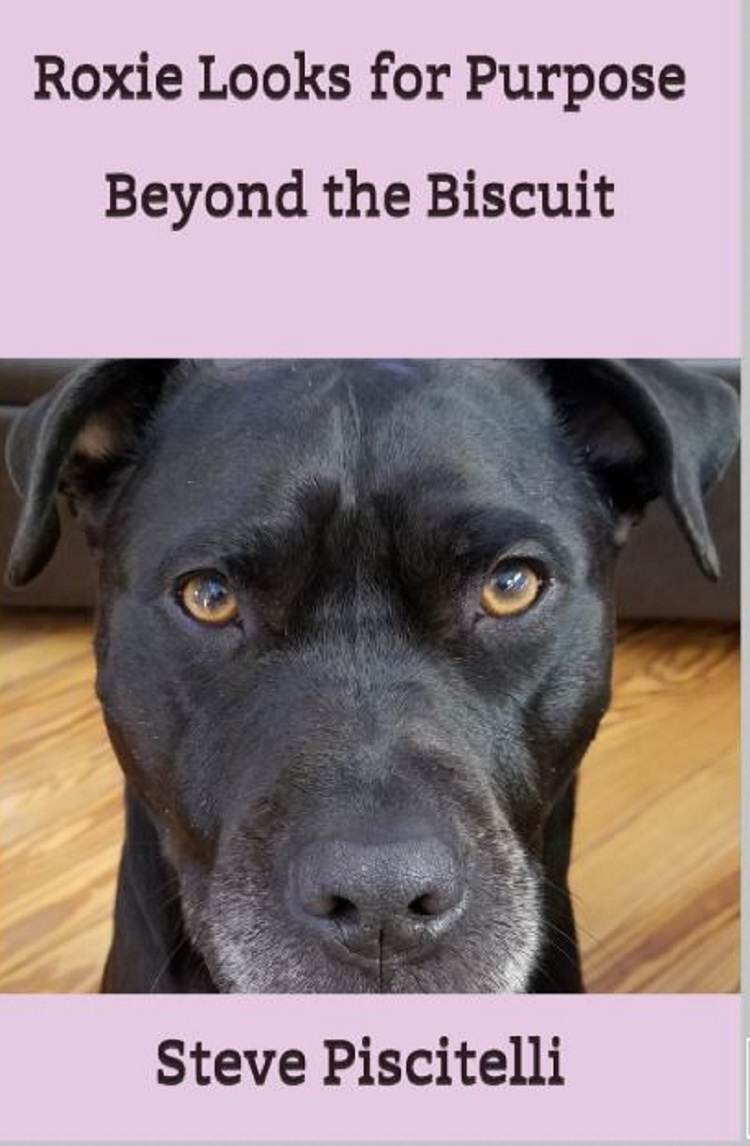
Roxie Looks for Purpose Beyond the Biscuit.
Well, my dog Roxie gets top billing on the author page for this work. Without her, there would be no story.
Click here for more information about the book. In the meantime, check out her blog.
And you can still order:
Community as a Safe Place to Land(2019, print and e-book). Available on Amazon. More information (including seven free podcast episodes that spotlight the seven core values highlighted in the book) at the above link.
Stories about Teaching: No Need to be an Island(2017,print and e-book). Available on Amazon. One college’s new faculty onboarding program uses the scenarios in this book. Contact me if you and your team are interested in doing the same. The accompanying videos (see the link above) would serve to stimulate community-building conversations at the beginning of a meeting.
Recognizing the talent in yourself to help another find the talent within them. What a way to celebrate and give back.
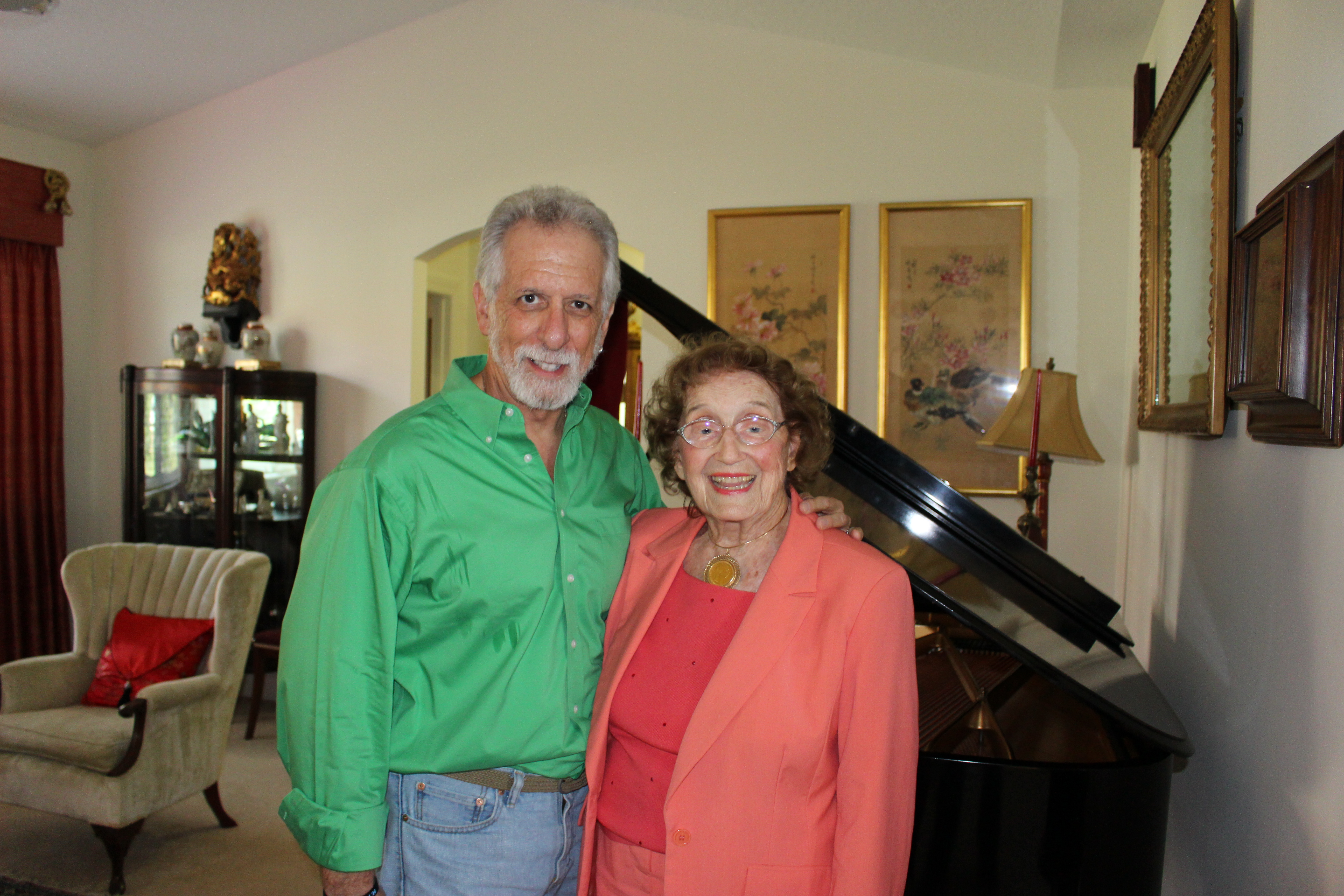
Four years ago, I had the opportunity to sit down with a legend when Dr. Frances Bartlett Kinne gave me the opportunity to record a podcast about her lifetime of lessons, growth, resilience, and compassion. A follow-up blog post captured her mantra: “Life is not about me. It’s about others.”
She was in her 100th year when we talked that day. She made her transition from this life in 2020 at the age of 102.
If you want to capture the essence of Dr. Kinne’s legacy, visit “The Kinne Legacy Exhibition” on the Jacksonville University campus. It runs through July 16, 2021. Every photo (including her cutting down the net after a basketball victory) captures her effervescent smile. A smile that magnified her life’s mission to help people find the good in themselves.
The longer version of the quote above captures a critical life value.
Life isn’t about me. I’m here to help people. If you can’t get to them, you can’t help them. It’s what keeps me going even today.*
And her optimism and determination shine through in such guiding principles as:
Please join me in justifying, each day, the space we take up on this planet, and in celebrating life, the greatest gift of all.*
There are two ways to live your life. One is as though nothing is a miracle. The other is as though everything is a miracle.*
My latest book, Roxie Looks for Purpose Beyond the Biscuit, can be found in eBook ($2.99) and paperback ($9.99) format. Click here.
Well, my dog Roxie gets top billing on the author page for this work. Without her, there would be no story.
Click here for more information about the book. In the meantime, check out her blog.
And you can still order:
Community as a Safe Place to Land(2019, print and e-book). Available on Amazon. More information (including seven free podcast episodes that spotlight the seven core values highlighted in the book) at the above link.
Stories about Teaching: No Need to be an Island(2017,print and e-book). Available on Amazon. One college’s new faculty onboarding program uses the scenarios in this book. Contact me if you and your team are interested in doing the same. The accompanying videos (see the link above) would serve to stimulate community-building conversations at the beginning of a meeting.
NOTE: You can find more information about the purpose of this page here.
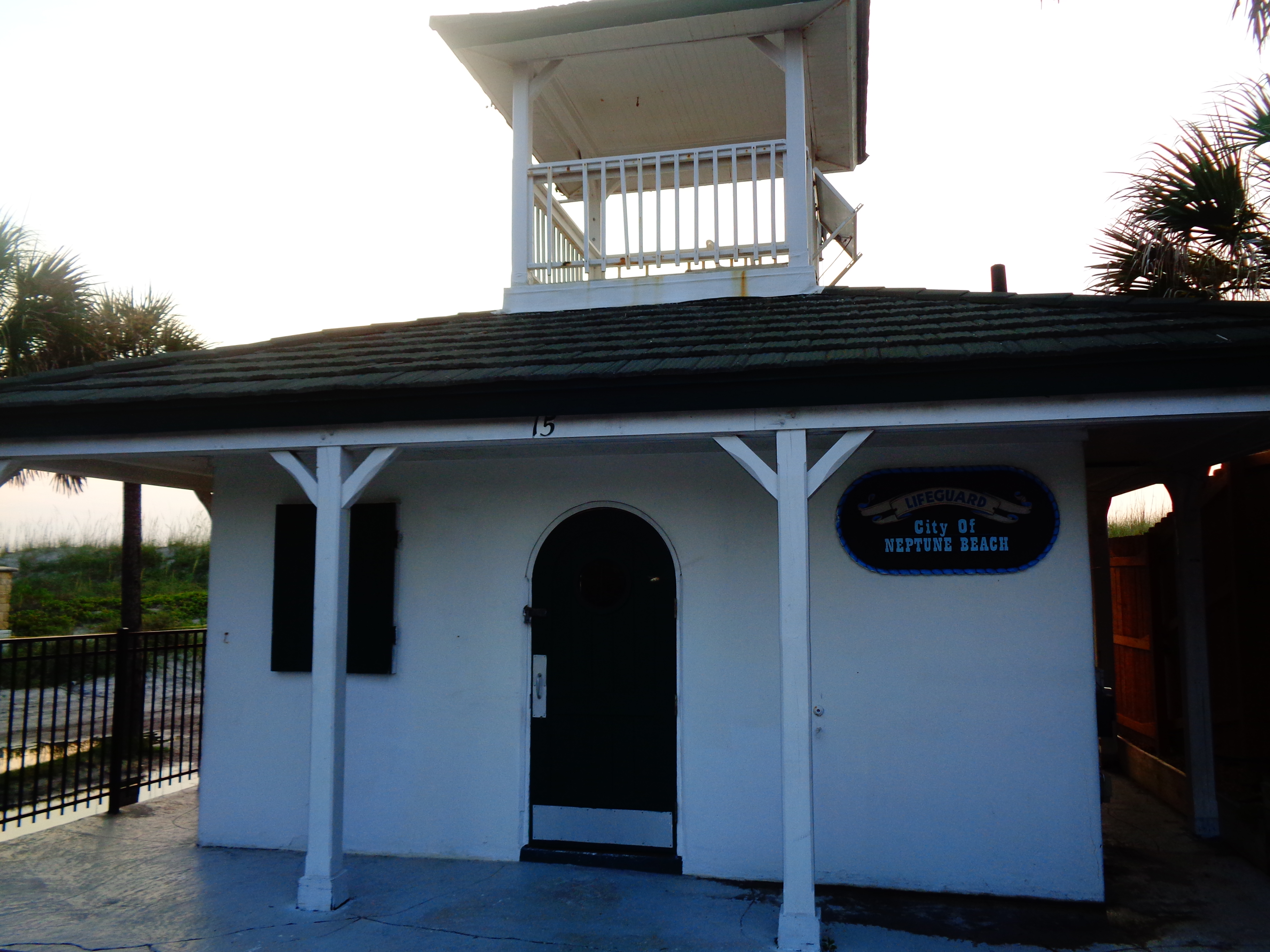
The public elementary schools pictured below have helped build a sense of community at our beaches. Note: Atlantic Beach Elementary (ABE) was built during the Great Depression (1939). I chose these three since they are named for their respective beach communities. Also adding to community character (but not pictured below): General Joseph Finegan Elementary School (name change to Anchor Academy in near future), Mayport Elementary School, San Pablo Elementary School, and Seabreeze Elementary School.
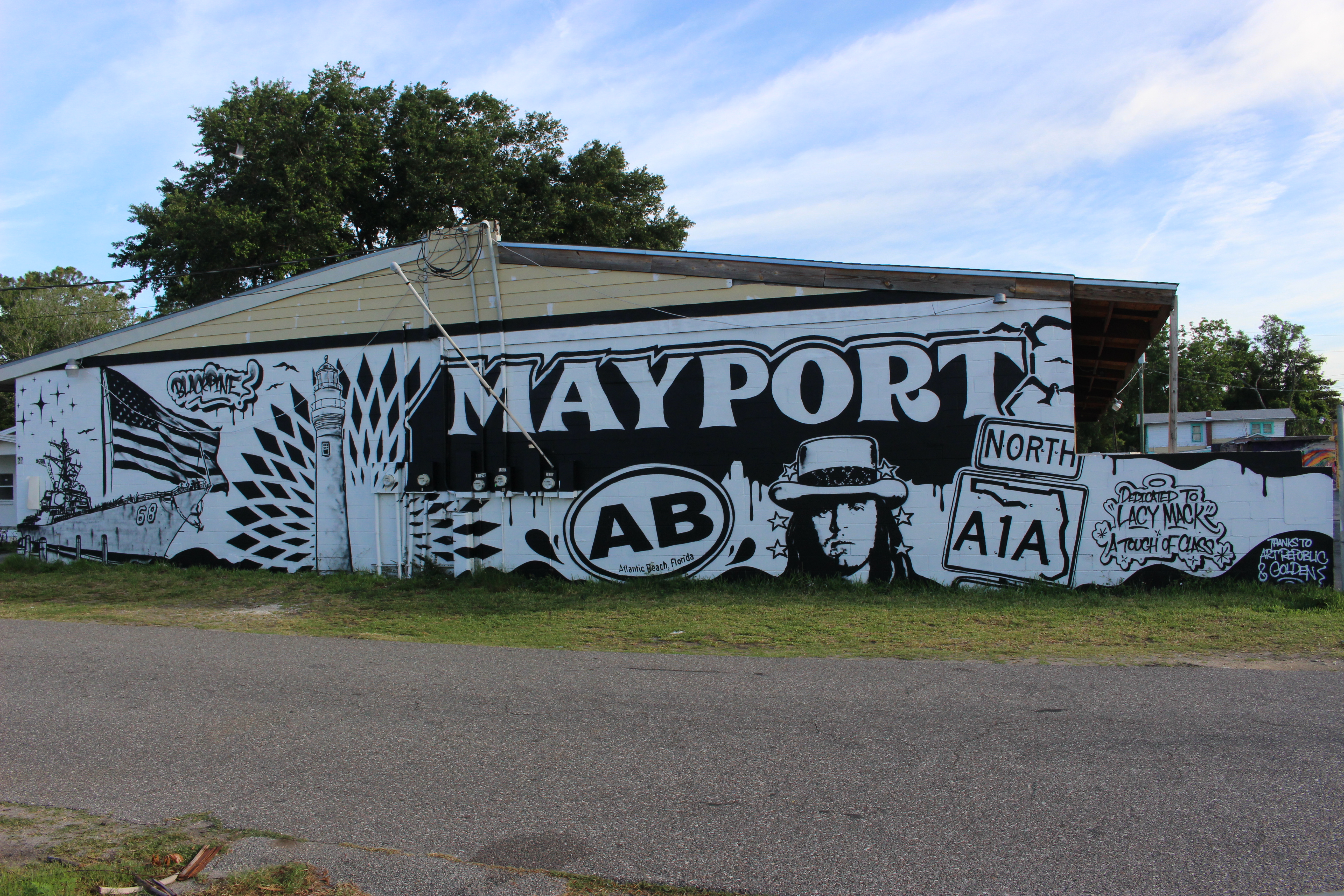
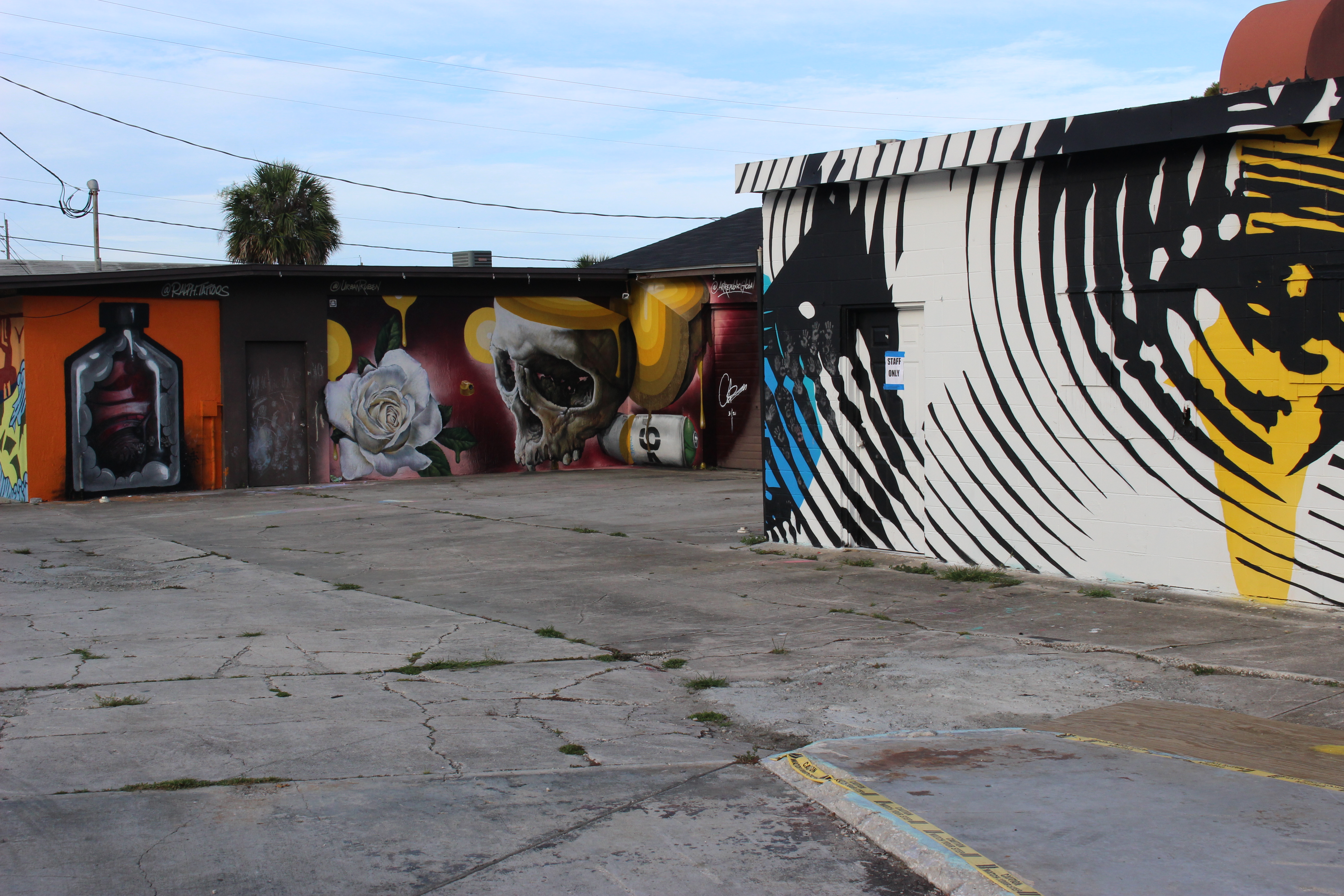
Atlantic Beach, FL initiated a murals project in 2021. You can read about it here. A few of the pieces of the artwork appear on this page. All photos taken by Steve Piscitelli (The Growth and Resilience Network®).
More information about the purpose of this page found here.
Or maybe we chose—and choose—to imagine that what we heard and saw would be a passing thing with no immediate consequences.
A few months before his murder in 1980, John Lennon entered the studio to record “Nobody Told Me.” It would remain an incomplete project until Yoko Ono released the finalized version in 1983.
Well, everybody’s talking and no one says a word Everybody’s making love and no one really cares There’s Nazis in the bathroom just below the stairs Always something happening and nothing going on…
…Nobody told me there’d be days like these Strange days indeed Strange days indeed…
Got me thinking about the public discourse over the past few years. As the volume increased and more people felt an obligation to post every thought (critically analyzed or not) that crossed their minds, perhaps you heard something like, “I never saw that coming from her.” Or “Nobody would have thought he would act like that.”
Maybe as John pondered, everyone’s been talking and no one’s listening to the words.
Maybe we weren’t paying attention or chose not to confront what we heard and saw from friends, family, or colleagues. It would pass; that’s not really them.
Or was it?
“Still” you say, “nobody told me it would be like this. Never saw it coming.” After all, we wanted to…
Consider another classic in which Lennon addresses the concept of karma. While often thought of as something we gather for a later life by our actions in this life, the former Beatle said,
“Everybody was going on about karma, especially in the ’60s but it occurred to me that karma is instant, as well as it influences your past life or your future life. There really is a reaction to what you do now. That’s what people ought to be concerned about….”
What we have lived we will experience in this life. We need, Lennon believed, to come to terms with that because
…Instant karma’s gonna get you Gonna knock you off your feet Better recognize your brothers Everyone you meet…
Why in the world are we here? Surely not to live in pain and fear…
And maybe, nobody told us that. Or we chose to ignore it.
Or maybe we chose—and choose—to imagine that what we heard and saw would be a passing thing.
My latest book, Roxie Looks for Purpose Beyond the Biscuit, can be found in eBook ($2.99) and paperback ($9.99) format. Click here.
My dog Roxie gets top billing on the author page for this work. Without her, there would be no story.
Click here for more information about the book. In the meantime, check out her blog.
And you can still order:
Community as a Safe Place to Land(2019, print and e-book). Available on Amazon. More information (including seven free podcast episodes that spotlight the seven core values highlighted in the book) at the above link.
Stories about Teaching: No Need to be an Island (2017, print and e-book). Available on Amazon. One college’s new faculty onboarding program uses the scenarios in this book. Contact me if you and your team are interested in doing the same. The accompanying videos (see the link above) would serve to stimulate community-building conversations at the beginning of a meeting.
As you look at the titles and snippets below, has the past informed the present? What have we learned and what do we still need to master—or at least face?
On May 31, 2010, I sat in an Austin hotel room and composed my first blog post. At the time I used the Blogger platform. (A few months later, I switched my content to WordPress.)
Eleven years later and nearly 100,000 views, it’s time for a look back at the topics from each anniversary year. Have issues changed? Have we learned lessons? Has the past informed the present? Let’s see:
*The title captures the essence. A community requires conversation, reflection, respect, listening, and sharing. Again, thoughts from almost a decade ago ring true (maybe truer) today.
*The five traits I describe for effective leaders still hold today. Look at this quick video I filmed on the banks of Town Lake in the heart of Austin, Texas.
*Self-aware people reflect on their actions, understand how those actions affect themselves and others, and assume responsibility for their choices. I’m thinking we might need to review this idea once again.
*While some might find resilience to be one of those over-used words, the concept remains a healthy reminder for a meaningful and healthy life. Check out the 10 Tips to remain resilient/build resilience at the end of the post. Perhaps, in 2021, we may find these of particular importance.
*This post grew from a workshop I facilitated. In the workshop and the post, I encourage those who have thought about writing and speaking to go a step further. Four key questions help people understand quality speaking and writing does not belong to an elite group. The questions might hold relevance for anyone who decides to share information.
*We have heard how “it takes a village” to raise a community. What happens if the village is broken? This post comes from my book Community as a Safe Place to Land. It highlights the need for a village to find its voice and then use its voice. Look at the influential events of 2020, you may be able to see some parallels.
*This excerpt from the post could have been written today: “As the call-out-culture escalates, it has become cliché to say civility has become a rare commodity in public (and even private) discourse. The changing rules of engagement seem to dictate that presenting evidence and ‘winning’ an argument are no longer enough. The victor must destroy the adversary. Debate gives way to harangues, collective monologues, and questionable sources and conclusions.” Will we still be writing this eleven years from today?
*“Helping one person may not change the world, but it could change the world for that one person.” (attribution unknown). A common theme said in different ways over eleven years.
As you look at the above titles and snippets, has the past informed the present? What have we learned ad what do we still need to master—or at least face?
Video recommendation for the Week:
One of my most memorable invitations to speak in the last eleven years came from Sitting Bull College on the Standing Rock Reservation (North Dakota). At the end of my presentation, the college representatives presented me with a Star Quilt. Here is a quick explanation:
My latest book can be found in eBook ($2.99) and paperback ($9.99) format. Click here.
Roxie Looks for Purpose Beyond the Biscuit.
My dog Roxie gets top billing on the author page for this work. Without her, there would be no story.
Click here for more information about the book. In the meantime, check out her blog.
And you can still order:
Community as a Safe Place to Land(2019, print and e-book). Available on Amazon. More information (including seven free podcast episodes that spotlight the seven core values highlighted in the book) at the above link.
Stories about Teaching: No Need to be an Island(2017,print and e-book). Available on Amazon. One college’s new faculty onboarding program uses the scenarios in this book. Contact me if you and your team are interested in doing the same. The accompanying videos (see the link above) would serve to stimulate community-building conversations at the beginning of a meeting.
One of the first steps in critical thinking requires we recognize assumptions. When we read, see, or hear something, before we draw a conclusion do we evaluate the information? Or do we jump to a conclusion based on what we thought we saw/heard or what we hoped we saw/heard?
If we do not take time—an extra step or two—to separate fact from fiction, we can find ourselves embarrassed or worse.
I used a baseball video clip in some of my critical thinking programs to highlight that what we know we saw, we may not have seen at all. Click on the link below. Did you see what you thought you saw?
My latest book can be found in eBook ($2.99) and paperback ($9.99) format. Click here.
Roxie Looks for Purpose Beyond the Biscuit.
Well, actually, my dog Roxie gets top billing on the author page for this work. Without her, there would be no story.
Click here for more information about the book. In the meantime, check out her blog.
And you can still order:
Community as a Safe Place to Land(2019, print and e-book). Available on Amazon. More information (including seven free podcast episodes that spotlight the seven core values highlighted in the book) at the above link.
Stories about Teaching: No Need to be an Island(2017,print and e-book). Available on Amazon. One college’s new faculty onboarding program uses the scenarios in this book. Contact me if you and your team are interested in doing the same. The accompanying videos (see the link above) would serve to stimulate community-building conversations at the beginning of a meeting.
What do you have on your “To-Don’t” list? What would you like to add?
One of the most significant signals Roxie and I learned as we navigated Canine Good Citizen class consists of two words: Leave It!
It is a cue for Roxie to step away from—to avoid—something of potential danger, harm, or mischief.
At times, I find I need to remind myself to “Leave It!” You know, things like over-thinking an issue or experience. Or do I really need that unhealthy item on the menu? Or, well, you get the idea.
I have found that so many, if not all, of those “Leave It!” moments can also be classified as items I need to place on my “To-Don’t” list. We all have “To-Do” lists. Those endless projects and tasks that fill up our days. While some rise to useful and goal-connected, others can lead us down a path of worry, anxiety, fretting, and injury. The things we need to not do.
A “To-Don’t” list could have things like:
Don’t bench press that extra 45 pounds to impress someone in the gym
My latest book can be found in eBook ($2.99) and paperback ($9.99) format. Click here.
Roxie Looks for Purpose Beyond the Biscuit.
Well, actually, my dog Roxie gets top billing on the author page for this work. Without her, there would be no story.
Click here for more information about the book. In the meantime, check out her blog.
And you can still order:
Community as a Safe Place to Land(2019, print and e-book). Available on Amazon. More information (including seven free podcast episodes that spotlight the seven core values highlighted in the book) at the above link.
Stories about Teaching: No Need to be an Island(2017,print and e-book). Available on Amazon. One college’s new faculty onboarding program uses the scenarios in this book. Contact me if you and your team are interested in doing the same. The accompanying videos (see the link above) would serve to stimulate community-building conversations at the beginning of a meeting.
A functioning community moves beyond listing and reciting core values. It shares and lives those values. And, it provides a safe place for its members to explore, stretch, learn, fail, and grow.
Steve is not a life coach and does not provide legal advice. He facilitates conversations and helps raise and confront important questions about what we do, why we do it, and how we do it.