#111 Why Do You Do What You Do?


Are we just muddling through life in a job, for instance, or do we wake up each morning passionate about the calling that has beckoned us?

I have been preparing for three upcoming presentations.  Each will require, in part, that participants examine their purpose in life. Why do they do what they do—at work, at home, in the community, and in relationships? 

One question I pose is this: When you awaken in the morning and place your feet on the floor, why will you be doing what you will be doing today?  Besides earning a buck, why will you be going to your job today? Why will you be doing the volunteer work you will be doing? In short, what inspires you to do what you do?

Jim Collins defines purpose as “the set of fundamental reasons for a company’s existences beyond just making money…it guides and inspires…it is enduring….”  One activity that he writes about is illustrative and will help all of us dig a little deeper into our purpose.  It is the “Five Whys.”  Here is what you do.

  • Focus on one aspect of your life—business, relationship, or community service for instance. It can even be a small piece of one of those larger dimensions of your life.
  • Write a one sentence statement that captures your purpose—a statement that captures why you do what you do.
  • Then ask yourself about what you just wrote as your purpose: “Why is this important?” Write your answer.
  • Then ask yourself, “Why is this important?” four more times (for a total of five).
  • By time you answer the 5th question you have drilled down a little deeper—closer to the core of why you are doing what you are doing.
  • Any insights? Are you satisfied with the answers?  Do you need to make adjustments?

Here is an example I have used in faculty development.  You can easily substitute a methodology or strategy that is appropriate to your line of work.

Statement:  My purpose as a teacher is to actively engage (with questions, activities, problems, and controversy) my students in each class lesson.

  1. Why is it important to use this strategy?

}  Requires on-task participation.

  1. Why is it important for students to participate on task?

}  Encourages active learning.

  1. Why is it important to encourage active learning?

}  Helps make personal connections to the content.

  1. Why is it important to establish personal connection?

}  Establishes relevance, curiosity, and excitement.

  1. Why is it important to establish relevance, curiosity, and excitement?

}  Creates a love for learning and a love for a life calling

I can now start with the answer to the last “why” and begin the process again: Why is it important to create a love for learning and a love for a life calling?
This process can help us get beyond platitudes and glittering generalities. It will help us drill down on the reason we do what we do.  Are we just muddling through life in a job, for instance, or do we wake up each morning passionate about the calling that has beckoned us?  The “Five Whys” can help give us that clarity.


Video recommendation for the week:

Enjoy this TED video about how Salman Khan focused on his purpose—and in the process has helped millions of students stay actively engaged in their lessons.


Enjoy your week—and H.T.R.B. as needed!

REGISTER NOW for my July 10, 2012 Quick Hits Webinar “P.R.I.D.E.: Five Choices for Life Success.”Click hereor paste this link into your web browser:https://attendee.gotowebinar.com/9q49d/register/1988162557099051008

Thank you for taking the time to read my blog post. Please pass it (and any of the archived posts on this site) along to friends and colleagues. You can also follow me on Twitter, LinkedIn, and Facebook. If you get a chance, visit my Facebook page and join in–or start–a conversation (www.facebook.com/stevepiscitelli). Also, if you have suggestions for future posts, leave a comment. Have a wonderful week!
 

Posted in Life's purpose, Passion | 2 Comments

#110 Integrity or Adding to the Illusion?


Is integrity an all or nothing proposition?
How do you measure integrity? Is it on a scale?
Can you have it some days and lack it on others?

For this week’s blog post I have more questions than answers or suggestions for you. The topic is integrity.  We hear people question it and yearn for it.  People speak of academic integrity, leadership integrity, relationship integrity, and political integrity.

I have generally described integrity as acting responsibly, respectfully, and honestly toward others and towards yourself.   To me, the short definition is that someone does what he or she is supposed to do.  To use a metaphor: When we say a bridge has structural integrity, we mean that it will hold the weight of the cars traveling across it. The bridge will do what it was built to do.

But is integrity an all or nothing proposition? How do you measure integrity? Is it on a scale? Can you have it some days and lack it on others?  One day I asked one of my classes if they had integrity. One of my students said that he had it “most of the time.”  Is it a non-absolute trait? Is it relative to the situation or people in front of us?  Can you have a lapse of integrity in one situation and still have integrity in the rest of your life? Does integrity mean you never make a decision that lacks responsibility, respect, or honesty?  Is integrity used simply to denigrate what or whom one does not like?

Last week I had the pleasure to work with the good folks at Edison State College in Ft. Myers. We invested two days exploring activities, strategies, and models that help foster effective teaching and learning.  One of our topics was academic integrity. 

I shared with the group a recent article in the Chronicle of Higher Education that explained how students are using online collaboration to cheat on quizzes.  The article reported the rationale of one student: “Although the syllabus clearly forbids academic dishonesty, Mr. Smith [one of the cheating students] argues that the university has put so little into the security of the course that it can’t be very serious about whether the online students are learning anything.”

Hmm. So, if a teacher/school does not have adequate measures in place to stop or deter cheating does that give a free pass to the students?  Can the students cheat—and still not violate academic integrity? Are we missing a bigger issue here?

Last week, I saw a play in a New York Yankee-Cleveland Indian baseball game. The Yankee leftfielder dove into the stands to catch a foul ball. Unbelievable catch!  Or was it?  Instant replay showed that he never caught the ball. When he extracted himself from the seats, he held his glove closed and ran to the dugout (as if he had caught the final out of the inning).  The umpire called the batter out.


Video recommendation for the week:

Did the baseball player lack integrity? In an interview later, the player responded to a question by asking what was he supposed to do, return to left field? What do you think?


I asked two young friends what they thought. One said that since baseball has established that the umpire makes the calls, and that both teams have agreed to abide by good and bad calls, then it is not a lack of integrity on the ballplayer’s part. It is the responsibility of the ump to get it right. It is not the responsibility of the player to help the ump.  The other friend said that was a good point but the player had “added to the illusion” of catching the out.  By keeping the glove closed (and even tapping it) the player added to the thought that he had caught the ball.  He embellished. (Thank you, Evan and Corey, for the insights.)

What is integrity?  Is integrity an illusion? I would love to read your thoughts.

Enjoy your week—and H.T.R.B. as needed!

REGISTER NOW for my July 10, 2012 Quick Hits Webinar “P.R.I.D.E.: Five Choices for Life Success.”Click here or paste this link into your web browser:https://attendee.gotowebinar.com/9q49d/register/1988162557099051008

Thank you for taking the time to read my blog post. Please pass it (and any of the archived posts on this site) along to friends and colleagues. You can also follow me on Twitter, LinkedIn, and Facebook. If you get a chance, visit my Facebook page and join in–or start–a conversation (www.facebook.com/stevepiscitelli). Also, if you have suggestions for future posts, leave a comment. Have a wonderful week!


Posted in Integrity | 3 Comments

#109 Striving for the WOW Factor! Tips for Presenters


I am always striving for the WOW factor!
The people with whom I work deserve that.

This weekend I invested hours preparing for a number of programs I will be fortunate to facilitate in the next few weeks. As I was pulling my presentations together, I reminded myself of something I read twenty or so years ago. A musician followed a particular routine prior to each of his concerts.  During the sound check he would walk into the audience and sit in different seats around the arena.  He wanted to see the stage from the concert goers’ perspective. He did not want to lose sight of their view or their expectations.

That struck a chord in me (pun intended).  Whether I am working with a class of twenty-five students, facilitating a workshop with fifty teachers, or keynoting for five-hundred people I have to provide them with value.  In short, I cannot waste their time.

In an earlier post on this blog (#36 How to Make Ideas Stick)  I passed along six points about making ideas sticky.  Today, consider what I have found to be the “have-to-haves” for a presentation.  Whether you are the person in front of the room or the person hiring the person in front of the room, I present two illustrative checklists as reminders that presenters/facilitators/trainers/teachers don’t ever want to waste the audience’s time.

Here is a shortlist of what NOT to do.  The INEFFECTIVE presenter will

*Talk to the screen

*Read the screen

*Kill the audience with too much of anything (PowerPoint, video, jokes, music, or sound effects)

*Lack voice modulation

*Show a lack of respect for the audience by not being prepared

*Brag about himself/herself

*Insult the intelligence or ability of the audience

*Show a lack of understanding about what the audience needs

*Leave people muttering to themselves, “That was the longest 60 minutes of my life!”


Video recommendation for the week:

Enjoy this spot-on (and funny) video about one example of what not to do. Following the video (below) I have a more extensive list of what to effective presenters do.


Let’s finish with the positive.  Here is a shortlist of what (generally speaking) the EFFECTIVE presenter will do.

Understand the session is about the audience NOT about the presenter

Connect/resonate/engage with the audience

Know his/her purpose for standing in front of the audience

Have a quality message and delivery style

Rehearse before appearing before the audience

Have practical material that can be applied by the audience—NOW!

Have material that is applicable to the audience

Create an energy for the room

Be enthusiastic

Know when and when not to use humor

Consider using a variety of delivery styles

Have a beginning, middle, and end

Use multi-media (as appropriate)

Encourage audience participation

Recognize people in the audience

Leave people exclaiming, “WOW! Can we do this again?”

I am always striving for the WOW factor!  The people with whom I work deserve that.

Enjoy your week—and H.T.R.B. as needed!

REGISTER NOW for my July 10, 2012 Quick Hits Webinar “P.R.I.D.E.: Five Choices for Life Success.” Click here or paste this link into your web browser: https://attendee.gotowebinar.com/9q49d/register/1988162557099051008

Thank you for taking the time to read my blog post. Please pass it (and any of the archived posts on this site) along to friends and colleagues. You can also follow me on Twitter, LinkedIn, and Facebook. If you get a chance, visit my Facebook page and join in–or start–a conversation (www.facebook.com/stevepiscitelli). Also, if you have suggestions for future posts, leave a comment. Have a wonderful week!

Posted in remarkable presentations | 3 Comments

#108 Lifelong Learning


Education is not preparation for life; education is life itself.
– John Dewey

[See below for information about my new webinar series.]

Teaching provides an environment that constantly motivates me to learn. Every day—and I mean EVERY day—I learn something new.  Whether I have picked up a new book, a more effective strategy, or a better way to connect with the people in my world, I go to bed a different (and hopefully, a better) person.  That is powerful!

John Dewey reminded us that “education is not preparation for life; education is life itself.”  How very true.

What do you do to for your lifelong learning?  From whom do you draw new insights?  Do you continually question your assumptions about politics, career, community, and world events?

I have the good fortune and great opportunity to work with people all around this great nation of ours. From small workshops, to large keynotes, to multi-day training programs, I get to share ideas about academic, career, and life success strategies.

I am pleased to announce that I am taking this to a new level. On July 10 of this year, I will begin hosting my own monthly series of webinars.  I have (and still do) present webinars for other organizations. This will be, however, my first step into organizing, hosting, and delivering the webinars on my own. I could not be more excited. If even in a small way, this virtual platform will allow me to have an impact on a larger audience’s lifelong learning journey.

Except for a few final details, the first of the webinars is set.  Here is the information. I will post updates on my website (www.stevepiscitelli.com) and my social medial sites.  Mark your calendar now…and pass along the information.  I look forward to working with you.

TITLE: “P.R.I.D.E: Five Choices for Life Success”

DATE: Tuesday, July 10, 2012.

TIME: Start: 12:00 noon (ET). Finish: 12:30 p.m. (ET).

FREE WEBINAR! This is the first webinar in my “Quick Hits” series—and I am offering it FREE to the first 100 people who register.  (There is a limit of only 100 people for this webinar. So everyone gets in free!)

ABOUT THE SERIES. My “Quick Hits” monthly webinar series will provide professional and personal development strategies that are practical and time-efficient. The webinars will be presented in 30-minute segments designed to provide strategies you can immediately use, and will include a call to action for you to implement what you have learned in the webinar. These webinars will help you put dreams into action so they can become reality.

THIS WEBINAR. “P.R.I.D.E: Five Choices for Life Success” will present a five-step model that has the potential to change lives. Examine what you can do to ignite or fan the flames of passion while living a life of balance and wellness. This engaging, energizing, and entertaining session will demonstrate how THE FIVE CHOICES place the power of action and change in your hands. Do you want a life of redundant mediocrity or remarkable consistency and growth? The choice is in your hands and in your hearts.

Participants in this webinar will:

1. Recognize if their priorities align with their actions–and if not, what to do.

2. Use a simple strategy to activate a positive habit (and leave procrastination in their past).

3. Examine how purpose and integrity reflect their six dimensions of well-being.

4. Establish a three-point action plan to apply any of the strategies learned in the webinar.  

HOW TO REGISTER. Click here or paste this link into your browser: https://attendee.gotowebinar.com/9q49d/register/1988162557099051008

REMEMBER: This first “Quick Hits” webinar is free. Reserve your spot today. A great way to invest in yourself!

FUTURE WEBINAR TOPICS WILL INCLUDE:

  • Reflective Practice in the Workplace
  • Eight Simple Steps for Classroom Success
  • Excuses Hold Us Back:  How Big is Your BUT?
  • What Can I Do About the Energy Vampires in My Life?
  • Social Media 101: Advice from a Non-Techie
  • How to Keep Your Presentations from Sucking the Air Out of the Room!

I hope you can join us.  Until next week, let me leave with a video about the importance of lifelong learning. 


Video recommendation for the week:

A few words about the importance of life-long learning–and its connection to passion.


Choose Well–Live Well–Be Well!

Enjoy your week—and H.T.R.B. as needed!

Thank you for taking the time to read my blog post. Please pass it (and any of the archived posts on this site) along to friends and colleagues. You can also follow me on Twitter, LinkedIn, and Facebook. If you get a chance, visit my Facebook page and join in–or start–a conversation (www.facebook.com/stevepiscitelli). Also, if you have suggestions for future posts, leave a comment. Have a wonderful week!

© 2012. Steve Piscitelli and Steve Piscitelli’s Blog.


Posted in lifelong learning | 1 Comment

(#107) If You Don’t Want a Target on Your BUTT, Put a Target on Your BUT!


#107

Excuses can rob us of our dreams and put us on a fast path to irrelevancy.

Anytime I receive an invitation to speak I go through a mental checklist about the engagement.  Before I accept I want to make sure I am a good fit for the organization bringing me in.  One of my checklist items is “credibility.” That is, will I have “believability” to the audience in front of me?  Do I have experiences that will allow the audience to trust me?

Later this week I will be speaking to an association of retirees.  My first thought upon receiving the invitation to speak went directly to the issue of credibility.  While I might be creeping ever closer to the nebulous “retirement age,” I am NOT there yet.  So what could I speak about that would strike a chord with people who ARE retired?  In other words, what could I say that would be believable and have a message worthy of their time? I have settled on the premise that we (retirees and non-retirees) all have something to contribute to our communities. In short, we have to remain vital.

Even though retirees may not report to an office, they still have a wealth of wisdom and experiences to offer those in their lives.  A few months ago I was reading an article about young and fiery CEOs and COOs.  One of these managers relayed how her older workers (not retirees yet) were having difficulty with the change in the organization. She told one in particular that he was “no longer the target market.”

Wow!  On one level I do understand what the CEO was saying.  But that quote stayed with me.  I want retirees to understand that they are vital if they choose to be.  A friend of mine who is retiring this year told me that he will miss the collegial conversations that he has had for 40 years. I heard a bit of wistfulness in his voice.  My thought is what will be the replacement?  How will my friend remain vital?


Video recommendation for the week:

In the 1970s, John Prine wrote and recorded a powerful song about growing old—and not staying vital.  “Hello in There” is haunting.


One of my songs, “Welcome to Boomerville,” has the following line in the chorus: “We may look old but we’re not over the hill.”  And while some might no longer consider us the “target” audience, we can move that target. Whether we are retired or just starting out on our career, we have the power to set our target. 

One of my programs, “How Big is Your BUT?” addresses the issue of excuses and how they can rob us of our dreams and put us on a fast path to irrelevancy. We end up, in a way, setting ourselves up for failure. If not failure, then we simple “settle” for something less than we can be.  Keep making excuses, and there will be a target on our “two-T” BUTT—and we will be ignored.

So, that will be the thrust of my talk. No matter your age or experiences, focus on your dreams and then take action.  Set your target—don’t become someone else’s target.  Don’t let your BUTs (your excuses) put a target on your BUTT.

Enjoy your week—and H.T.R.B. as needed!

Thank you for taking the time to read my blog post. Please pass it (and any of the archived posts on this site) along to friends and colleagues. You can also follow me on Twitter, LinkedIn, and Facebook. If you get a chance, visit my Facebook page and join in–or start–a conversation (www.facebook.com/stevepiscitelli). Also, if you have suggestions for future posts, leave a comment. Have a wonderful week!

© 2012. Steve Piscitelli and Steve Piscitelli’s Blog.

[Note: Image of target above by gameana/feedigitalphots.net]


Posted in Dreams, Excuses, wisdom | 4 Comments

A Memo to My Future Me


#106

Take a moment and write to yourself today.
What do you want your “future me” to look like, act like, feel like?

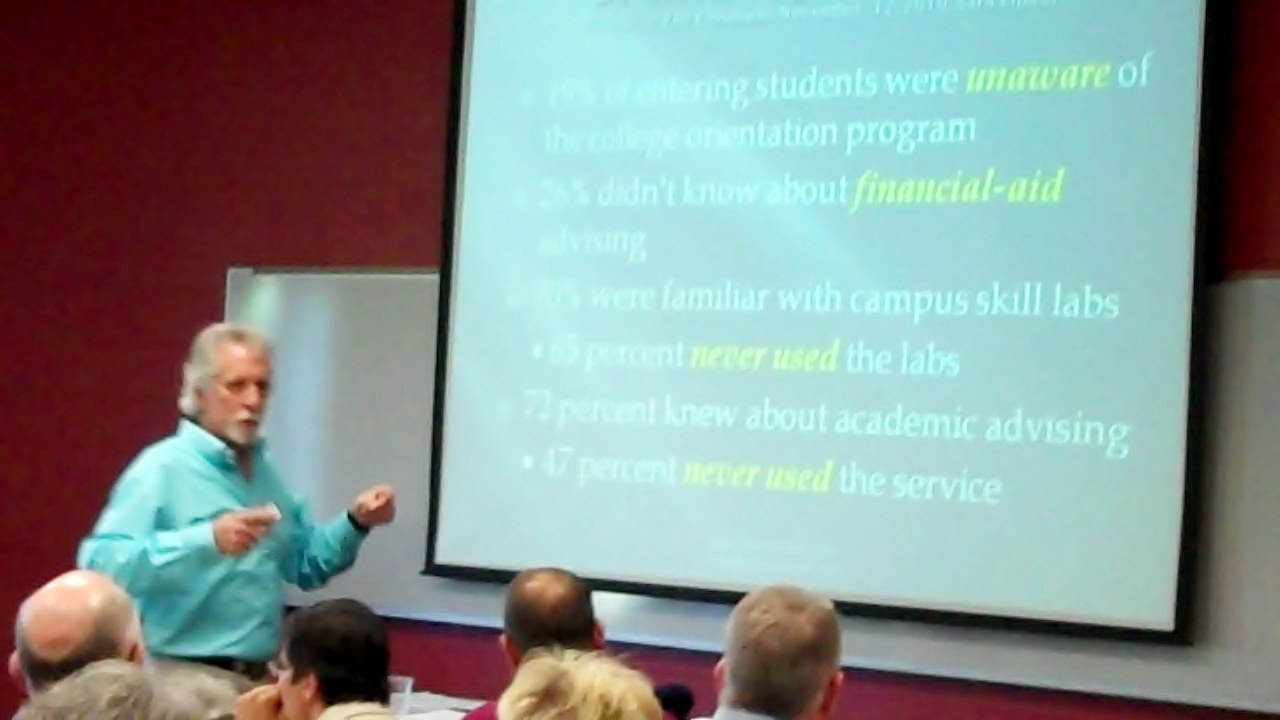
Have you ever been to a great conference or workshop and come away energized and ready to explore new ideas and implement new strategies?  As I travel the nation, I have found that most people have great intentions to apply what they learn. The rub comes when they leave the meeting and return to their normal rhythms of daily activity.  Life has a way of intruding. And all of those good intentions end up piled in the corner of the office…lost.

To combat that loss of momentum, I use the following strategy. It has powerful implications for teachers, managers, and leaders.

 At the beginning of many of my programs, I distribute a form titled “A Memo to Myself.”  Each workshop participant is encouraged to fill in his/her name in the “TO” line. The “FROM” line is already completed with the word “Me.” The “SUBJECT” line is filled in with the word “Reminder.”  The person completing the form writes in the date. The rest of the form has space for ten items. 

My instructions are simple: During the workshop, write any thoughts, strategies, ideas, books, people, research, or anything else that you would like to follow-up on after the workshop.

At the conclusion of the workshop, the participants place the memo in a self-addressed envelope and hand it to me.  Two or three weeks into the future, I mail the envelope back to them.  It becomes a reminder…a wake-up call if you will…to put their intentions into action.

A colleague and business partner of mine (Amy Baldwin) introduced me to a digital form of my “memo” activity.  The site www.futureme.org presents this challenge/opportunity:

Send your future self some words of inspiration. Or maybe give ’em swift kick in the pants. Or just share some thoughts on where you’ll or what you’ll be up to in a year, three years…more? And then we’ll do some time travel magic and deliver the letter to you. FutureYou, that is. Getting a surprise from the past is actually kind of an amazing thing….

So, here is my challenge to you today. Whether you use my “analog version” (i.e., written format) of the memo to yourself or the digital future me version, take a moment and write to yourself.  You can address a goal for yourself, your family, your wealth-management plan, your community, or your favorite sports team.  Then send it to yourself.

I plan on introducing this to my students the first day of the semester and ask them to email themselves four months in the future (end of the semester).  They will then be able to compare their dreams with their reality. 

What do you want to say to your “future me”? What do you want your “future me” to look like, act like, feel like?  Have fun with this.

Enjoy your week—and H.T.R.B. as needed!

Thank you for taking the time to read my blog post. Please pass it (and any of the archived posts on this site) along to friends and colleagues. You can also follow me on Twitter, LinkedIn, and Facebook. If you get a chance, visit my Facebook page and join in–or start–a conversation (www.facebook.com/stevepiscitelli). Also, if you have suggestions for future posts, leave a comment. Have a wonderful week!
© 2012. Steve Piscitelli and Steve Piscitelli’s Blog.


Posted in Goals | 5 Comments

(#105) Building a Community: The Power of Reflection


#105

There is a basic need to be heard, to be listened to, to share, and to build a community.

This past week I had a wonderful opportunity to reflect on the power of reflection.  My dear colleague, Amy Baldwin (www.itsinthesyllabus.com) and I developed and hosted a retreat for Arkansas college and university educators.  Our mission was simple (yet not easy): to build a teaching community for student success (www.educationalfrontiersgroup.com).  For the better part of three days we all shared strategies aimed at improving teaching and learning.

But that is not the purpose of this post.  I would rather concentrate on two take-aways for me that went far beyond any teaching strategy: (1) the power of reflection and (2) the power of community.

After more than 30 years in the classroom, I have come to the (sad) realization that my career field does not give itself enough reflective time.  It is very easy to get caught up in fire hosing information—and then assessing the nature or consequences of that fire-hosed information. In my experience, we just don’t give ourselves (or our students) the luxury (necessity) of reflective practice.  Too much emphasis on what came through the fire hose (the “content”)—and not much time given to the fire hose itself (the educator).  A consequence of this short-sightedness is that we end up in “silos” teaching content (or some, maybe, “teaching to a test/rubric/assessment”) and spend little time considering what we do, how we do it, or with whom we do it with.

While Amy and I provided the scaffolding for the retreat, the Arkansas educators began the wonderful process of building a teaching community for their own reflective practice. For many, this represented the continuation of a journey they previously started. For others, it was a new venture. What we did was provide a venue for the reflection to occur. The participants did the rest.  Consider the following:

  • Separation. We held the retreat at the Winthrop Rockefeller Institute in Morrilton, Arkansas (http://www.livethelegacy.org/).  This bucolic location gave the participants time away from (separation from) the distractions of daily life.  This allowed them to focus on their craft, their colleagues, and themselves.
  • Connection (1).  The retreat had built-in time for participants to work with coaches to reflect on material (e.g., engagement strategies, assessment strategies, and social media strategies) presented by experts in the field of teaching and learning.  While the coaches facilitated the discussions in small sessions, it was the participants who led the discussions. As one of the coaches, I was energized by the level of conversation—and the genuine and authentic desire each of these educators had to raise their game (and their programs and institutions) to a new level.
  • Connection (2). Beyond the content, was the one-on-one personal connection I witnessed.  Consider:  Monday was the full-day of retreat activities.  The agenda began with a 7:00 a.m. breakfast and concluded with an evening social that ended at 10:00 p.m. In between there were a few breaks and on an hour-and-a-half break before dinner. Other than that, these folks were working—and working at building a community.  They talked; they shared; they sang (one participant brought a couple of guitars).  But mostly they built a community.

When I got home from the retreat (back in Florida) I was effusive about what transpired at the retreat to a friend. She asked, “Were they hippie-types like you?”  She was smiling when she said it and meant no disrespect at all. But isn’t it telling that when people get down to the business of building relationships (as the Arkansas educators were doing) the immediate connection is  to something other than “business” and “bottom line”? (Side bar: My friend LOVED what we did at the retreat. She UNDERSTOOD the need and the importance of this type of activity.) 

But, to me, this is the bottom line. It is activities just like this that improve the bottom line of a school or corporation.  For instance, one group from Henderson State University shared a “LipDub” YouTube video that their students had created.  I learned about this video sitting on a patio late at night when one Henderson State person, who could not contain her enthusiasm and pride, whipped out her iPad and shared the video.  The video itself is a testament to the student community at HSU. But the manner in which I found out about it was a testament to the community we were developing in rural Arkansas.


The point? There is a basic need to be heard, to be listened to, to share, and to build a community. At least that is my take on this side of 59 years of life.  What we did on the side of Petit Jean Mountain needs to be replicated in teaching communities, corporate communities, and neighborhoods.  Amy and I are not the first to do this. I sure hope we are not the last.

When will you start to reflect and build community? And if you have begun—when will you share the spirit?

Enjoy your week—and H.T.R.B. as needed!

Thank you for taking the time to read my blog post. Please pass it (and any of the archived posts on this site) along to friends and colleagues. You can also follow me on Twitter, LinkedIn, and Facebook. If you get a chance, visit my Facebook page and join in–or start–a conversation (www.facebook.com/stevepiscitelli). Also, if you have suggestions for future posts, leave a comment. Have a wonderful week!

© 2012. Steve Piscitelli and Steve Piscitelli’s Blog.


Posted in Community | 4 Comments

(#104) Baby Boomers Reminisce: Then But Not Now


I asked the Baby Boomers to chime in about what existed “then but not now.”

One evening my wife and I, as we listened to a 60s music channel, reminisced about things that existed when we were growing up–but we don’t see much (if at all) now. Well, we quickly developed quite a list. Things like: 1 rotary dial phone (attached to the wall!) for the entire house; bread boxes; 30 minutes of nightly news—and that was it; there was a 154-game baseball season and a 14-game NFL season.

I decided to throw the question to my Facebook page. I asked the Baby Boomers to chime in about what existed “then but not now.”  I have broadly categorized and posted many of those comments below.  Have fun with the list…feel free to add more of your own.

Technology

  • TV aerials on the outside of many homes
  • The word “aerial”
  • Reel-to-reel tape player
  • Super 8 camera and projector, slide projector and screen
  • Spare change for a pay phone
  • Long distance phone calls being kept short because they were a very big deal and expensive
  • Black and white westerns on TV
  • The peacock that appeared right before a TV program that was about to be broadcast “in living color”
  • AM radio—only
  • 9-volt transistor radios
  • Party lines

Music and Entertainment

  • Black and white TV with 4 channels plus about 100 UHF channels with nothing on them but static
  • Cars without AC
  • Single blade razors that sucked
  • Paper maps in your car
  • 33—LPs
  • Big colorful 33 rpm album covers that opened up like some kind of Christmas gift!
  • 45 records—with those plastic inserts so you could play them on a record player spindle
  • Record players—non-stereo
  • Record player needles
  • Records
  • Scratched records
  • Bandstand and Sooooooooouuuuuuuuuuuul Train

Video recommendation for the week:

Enjoy this musical flashback (or, for the younger readers, musical history lesson).


Sports

  • No pitch counts
  • Goalies without facemasks
  • Place kickers in football who kicked head-on with their toes
  • Sneaking a transistor radio to school to hear the opening-day game of the baseball season
  • The Yankees ALWAYS won
  • Only 4 bowl games at the end of the college football season
  • Million dollar contracts? Are you kidding me?

Pop-Culture

  • Tricycles for kids called “big wheels”
  • Candy cigarettes
  • Comics. Lots of them
  • Saturday morning cartoons
  • Lunch boxes
  • Captain Kangaroo
  • Tom Terrific
  • Real Army Navy stores with authentic military items from WWII
  • The little “seal of good standards” emblem you’d see at the end of the credits on a black and white TV show
  • Drive-in movies and drive-in liquor stores
  • EVERYONE watching Ed Sullivan on Sunday nights
  • Wedding registries just for china, crystal and silver
  • No “Save-the-Date” cards for up-coming weddings
  • No limos and beach houses attached to Prom
  • You borrowed Dad’s car for the prom and drank Boone’s Farm in the parking lot before going in
  • No ATMs
  • The phrase “standard shift” for a car with a manual transmission
  • MPH not MPG

Consumerism

  • Milk delivery and milk boxes by the back door
  • Coffee came in one flavor—and that flavor was strong NOT bold
  • What is a credit card?
  • Returnable soda bottles
  • $4 pretty much filled your tank—not just a gallon
  • Bottled water? Drink it from the tap
  • Corner drug stores with a soda fountain
  • Really good stereos and TVs came in furniture cabinets

Life-style

  • Walking home from school for lunch—and then returning back to school again
  • Fathers who were all veterans of a foreign war
  • “Clean your plate because children are starving in China!”
  • Percolating coffee pots.
  • Litter everywhere along highways (thank you Lady Bird)
  • Dressing up to fly and getting to peek into the cockpit to chat with the pilot before or after your flight
  • Everyone had tickets printed on cardstock
  • No TSA
  • Meals for everyone on planes
  • Suitcases you had to carry, not roll
  • Just about everybody CHECKED their baggage—at no extra charge
  • No in-flight Wi-Fi
  • Home delivery for big cans of “Charles Chips” – yes, potato chips!
  • Front bench seats in cars
  • Accountability
  • Catching fire flies in a jar
  • Sadie Hawkins dances

Health

  • Small pox
  • Small pox vaccine scars
  • Chicken pox
  • Freaking everyone smoked wherever they liked including planes, restaurants and offices
  • DDT and everything that goes with it
  • Cigarette commercials and billboards

Government

  • No Clean Water Act. No Endangered Species Act. No Clean Air Act. No meaningful pollution control for cars or industry
  • Second-class education for minority students
  • Jim Crow
  • A woman was NOT your boss at work
  • Little to no accommodation for disabled persons
  • A draft
  • The Vietnam War

School-aged stuff

  • High school students with after school jobs
  • We got paid 50 cents an hour to babysit
  • School dances
  • Boards and chalk dust
  • You went to the library to find books and do research
  • You probably had an encyclopedia set in your house
  • Portable Royal typewriters

What’s on your list of “then but not now”?

Enjoy your week—and H.T.R.B. as needed!

Thank you for taking the time to read my blog post. Please pass it (and any of the archived posts on this site) along to friends and colleagues. You can also follow me on Twitter, LinkedIn, and Facebook. If you get a chance, visit my Facebook page and join in–or start–a conversation (www.facebook.com/stevepiscitelli). Also, if you have suggestions for future posts, leave a comment. Have a wonderful week!
© 2012. Steve Piscitelli and Steve Piscitelli’s Blog.


Posted in Nostalgia | 7 Comments

(#103) Someone Will Help You—I Guess


#103

Big box stores were out hustled and out managed  by a
small operation that was happy to see me and quick to
provide a service.

Back in October of 2011, I wrote the following words on this blog:

Have you encountered a new normal when it comes to service and
work ethic? I call this new normal
Redundant Mediocrity. This refers
to those actions that are barely acceptable—and yet repeat themselves
time and again. Perhaps you have seen them in stores, restaurants, traffic, the office, or even in personal relationships.
(Blog #74: Redundant Mediocrity)

[Image below by David Castillo Dominici/FreeDigitalPhotos.net]

This new normal presented itself again this week.  I went to the local office supply store  of a national chain for a minor duplicating department job (about five minutes total). When I approached the counter, the store employee was helping one person and one other person was in front of me.  I smiled at the employee.  I received no acknowledgement.  After a couple of moments of waiting, the employee said in our general direction, “Someone will help you—I guess.”

Huh?

There were only 2 or 3 other customers in the entire store.  Five minutes later. I left.

Clarifying comments.  I am a rewards member at this store. I have done business with them for a number of years and have had positive experiences in the past. But over the past year or so my wife and I have noticed how the service in this particular store has slowly less acceptable.  Maybe we were just unlucky. Maybe every other customer experience is a great one there.  Maybe every other store is phenomenal.  Not for us. And definitely not for me on this day.

Next stop, national chain big box store #2 right down the road.  I entered that store and was the ONLY customer in the store (at least from what I could see). Two employees directed me to the duplicating department. Again, there was NO one at the counter.  I started with, “I hope you are better than big box #1.”  She assured me she would be.  I explained the brief task. The young lady was very nice.  She quoted me a price for what I needed that was more than double her competitor’s.  I drew a breath and thought “Let’s just get this done.”  She then told me that there would be a 40 minute wait!

Remember there was NO one in the store. True, she was working on a duplicating project. But she did not make any effort to call the manager or the other employee in the store so that someone could do my five-minute job.  I left.

With my tail between my legs, I returned to big box #1.  The employee was still working—which meant no acknowledgement again.  I approached her, said hello, and explained what I needed. “Sure, I can do it if you leave it and come back.”  Remember five minutes. I left—but did not leave the project. Again, the manager or some other store employee was nowhere to be seen in this less than busy store.

On the way home I decided to stop in at a local “mom-and-pop” copy shop.  Here is what I experienced:

  • The store has been in the family since 1994.
  • The lady at the front desk, V, greeted me with a smile and asked me to wait when I first entered.  “Oh, boy,” I thought, “again!”  However, she hastened to add that there was an elderly lady sitting in her car. This employer was bringing the customer her change and purchase—to her car.  Wow! Remember at the big box I did not even get a hello! These people are walking to the parking lot to assist. Impressive.
  • There were only two employees in the shop. One, Steve, gladly did my job (in about five minutes, thank you!).  While waiting, I asked V about a duplicating project I had to have completed—and was going to bring to the big box store next week. She quoted me a price—a price that was cheaper than the two big box stores.  I then asked her about business cards. Again a great price.  I am in the market for a QR Code.  Voila!  This little shop can do that as well.

Sure the big box stores have more selection. Big box stores (at least the two I visited) were out hustled (and it did not take much) and out managed (again, they set a low bar) by a small operation that was happy to see me and quick to provide a service.  In the long run, I am grateful that I had the experiences I did. Copy-Graphics has earned a new customer.


Video recommendation for the week:

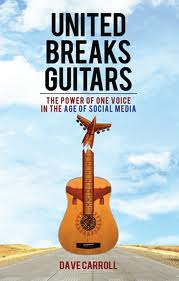
I will leave you with a video from Dave Carroll. He had a terrible experience with United Airlines (broken guitar). Rather than get angry, he took to social media. His video United Breaks Guitars went viral (nearly 12 million views). He wrote two more songs and produced two more videos; has written a book; and his first video is used for customer service by some companies now.  I can recommend two more stores that may want to spend some time watching it!


Enjoy your week—and H.T.R.B. as needed!

Thank you for taking the time to read my blog post. Please pass it (and any of the archived posts on this site) along to friends and colleagues. You can also follow me on Twitter, LinkedIn, and Facebook. If you get a chance, visit my Facebook page and join in–or start–a conversation (www.facebook.com/stevepiscitelli). Also, if you have suggestions for future posts, leave a comment. Have a wonderful week!

© 2012. Steve Piscitelli and Steve Piscitelli’s Blog.

Posted in redundant mediocrity, Uncategorized | 2 Comments

(#102) What is the Purpose of Education?


Craftsmen would not continue to use tired and worn out tools that keep them from creating a master product. Why would I do less for my students?

Another semester has ended. One of the rhythms that I love about teaching is that every four months I get to start again.  I have the opportunity to review and reflect upon what I have done and what I have accomplished. I give myself the opportunity to tweak, toss and create for an even better teaching and learning experience the next semester.

On a more philosophical level, I go back to simple questions:  Why do I do what I do? Why do I use the activities I use? Why do I teach the concepts I teach? Why do I use certain sequencing in class? Why do I use particular assessments and not others?  Craftsmen would not continue to use tired and worn out tools that keep them from creating a master product. Why would I do less for my students?

(Image at left: kookkai_nik/freedigitalphotos.net)

In short: What is my purpose in the classroom?

A couple of weeks ago (April 24, 2012) I posted the following question to my social media sites:

Is the purpose of higher education to prepare the student for employment or to prepare a better human being?

Here are some of the responses I received. While I have edited for brevity, I have done my best to maintain the integrity of the post:

  • I believe both, but it’s more to prepare a better human being; education just helps the process.
  • Better human beings definitely make better employees.
  • Employment. It’s up to the student to become a better human being.
  • ABC’s and 123’s. The state cannot teach morality. Whose moral code would they teach?
    • [Side note: I never mentioned whether the question pertained to public, private, or both types of schools.]
  • My Dad told me when I went off to college that what he wanted for me from college was to learn how to think… the hows and whys of the flow human existence and the Universe around us. This, I think, makes for individuals more prepared to understand themselves and the world. Employment skills can be learned later.
  • If we’re preparing for employment, why are vocational education types getting dropped from schools?
  • I think there must be a balance- some preparation for life and employment can be a part of life.  And certainly education should have a moral component. As a dramatic example, you must teach morals when you teach nuclear chemistry. But I think when education is performed in a proper manner it does help make a better human being.
  • A better human being—one who responds to nuance, expresses her ideas clearly in written form, cares about the world around her and has some idea of how it works, and thinks critically would make a pretty good employee.
  • Higher education should continue to build on skills previously learned, taking students beyond job training, which can be done anywhere, to a higher level of thinking, reasoning and analyzing; opening them up to considering how the world actually works, and what their place is in it.
  • This is a question that has been on my mind for a while…I wouldn’t trade my college experience for anything. It totally shaped the better person I am today. But I also believe that my experiences on the job would have done the same thing.
  • Education used to be for a better human being. But now a day it’s for employment. If there is no food on the table, people can’t decide what kind of a person they want to be. It’s like a dream to them.
  • Not sure it’s an either or kind of question really.
  • I hope it would be to turn out better human beings, rather than for gratification, privilege or hubris.

I loved reading the responses. In truth, I created a bit of a false (or contrived) dichotomy with my question.  I think it is difficult to separate the two: employment skills + a better human being.  Many of the so-called “soft skills” of education can make for a valued employee/citizen.  Critical thinking skills cut across all fields.  Civility must be practiced in all careers and in our communities. Information literacy is a practical and valuable skill in the workplace and at home.  And the person who can creatively confront a rapidly changing world will see opportunities where others see roadblocks. (An argument can be made that there is a difference in purpose when a student reaches graduate school.)


Video recommendation for the week:


You all have given me more to think about in my chosen career. Thanks!

Enjoy your week—and H.T.R.B. as needed!

Thank you for taking the time to read my blog post. Please pass it (and any of the archived posts on this site) along to friends and colleagues. You can also follow me on Twitter, LinkedIn, and Facebook. If you get a chance, visit my Facebook page and join in–or start–a conversation (www.facebook.com/stevepiscitelli). Also, if you have suggestions for future posts, leave a comment. Have a wonderful week!

© 2012. Steve Piscitelli and Steve Piscitelli’s Blog.


Posted in Education | 3 Comments