
(#81) Psychic Wages and Passion


Questions were asked; minds were stretched;
and the real world came to campus.

During my undergraduate college years, a sociology professor (Norman Pollock) introduced me to the concept of “psychic wages.” These are non-monetary benefits we derive from an action. Rather than a financial payoff, a psychic wage rewards us emotionally.  While teaching has its share of challenges, it provides such “wages” on a fairly regular basis.  It’s one of our perks; it fuels the professional passion. This week I was fortunate to enjoy “payment” on three different occasions.

Three former students came to my classes to share experiences about college majors and careers.  Actually, they “came” via Skype.  With the help of technology in my Florida State College at Jacksonville classroom, Kim, Rochelle, and Jessica appeared on the big screen.  Students listened to their wisdom and strategies. Questions were asked; minds were stretched; and the real world came to campus.
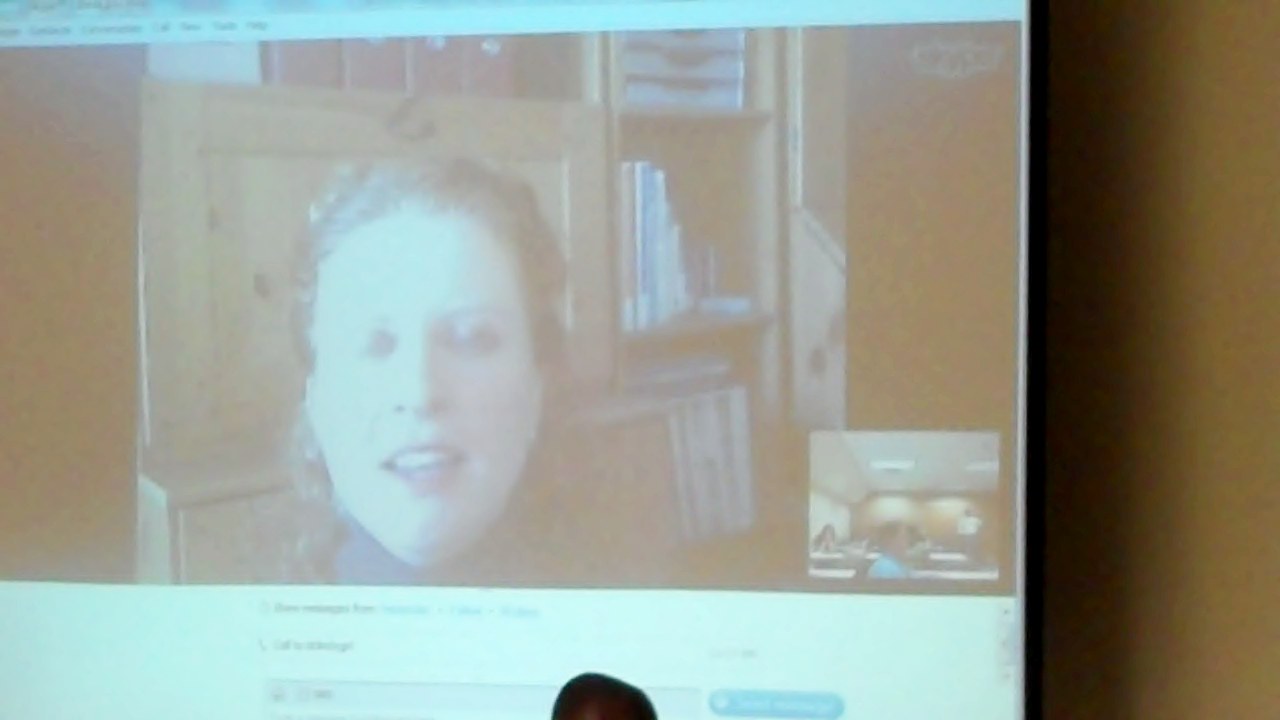
Kim and Rochelle were students of mine at Stanton College Preparatory School back in the 1980s. Kim was a precocious ninth-grade economics and government student who had a passion for ballet dancing.  Rochelle livened up my sociology and psychology classes during her junior year of high school.  She was (and still is) intellectually sharp and possessed a quick wit.  She kept me on my toes! Jessica, following a stint with the Marines, was a student of mine at then Florida Community College at Jacksonville.  (We shared the stage one night when she got the opportunity to question CNN’s Roland Martin who was appearing in a lecture series.)
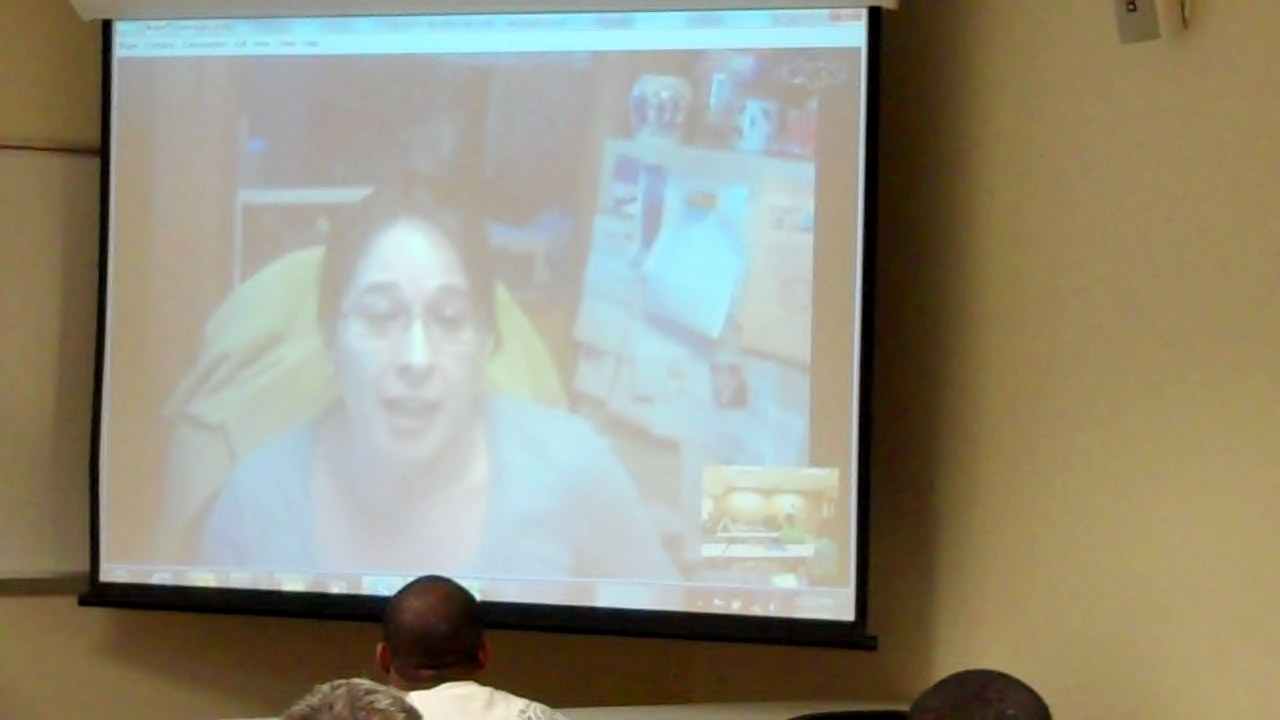
Kim told the students how and why she went from being a globe-trotting engineer for nearly a dozen years to a business owner.  Rochelle shared a similar tale of being trained in wildlife ecology—and then years later taking a different road into the business world.  Jessica, currently a student at the University of Maryland spoke of how she chose UM for her studies—and lessons she has learned navigating a four-year university.

Interestingly (but not surprisingly), the three ladies in their own way repeated a theme: the need to identify and nurture your passion in life and for life. They spoke with sincerity; with credibility; and the belief that we can all find our own voice in this world. We just have to listen to ourselves.

Here are a couple of takeaways from my virtual time with three powerful young ladies:

  • Job from heaven v. job from hell.  List three things from past jobs you really loved. Now, list three things from past jobs you really hated. Use these lists to help hone in on what you would like to do with your life.
  • Entrepreneurs are risk-takers—but smart risk-takers.  Have (at the least) 6 to 8 months worth of living expenses salted away when you decide to take the step away from a day-job/regular paying job to pursue your passion. Passion is good…but so are food, clothing, and shelter!
  • Travel is a great teacher. If you can, experience the world before you experience college.  Get some “real life” under your belt. You might discover new life directions.
  • Get your priorities straight. Know why you attend college….focus on that.
  • Don’t procrastinate.  If you do, that 200-page reading load you have this week will quickly turn to 400 pages next week.  Yuck!
  • Have a passion for your major.
  • The dollars might draw someone to a major or career—but if passion is not present, the dollars will soon become meaningless.  Can you pay the bills utilizing your skills and talents?
  • Stay balanced in your life.  Take time to relax and recharge.

Listening to these sage adults was gratifying. They made a difference in our lives for the few minutes they came into the classroom.  I was proud to know them.

Kim, Rochelle, and Jessica, thank you for working with my students—and thank you for the psychic wages you passed along to me.  I am richer for it!  Love to you.

Enjoy your week—and H.T.R.B. as needed!

Thank you for taking the time to read my blog post.  Please pass it (and any of the archived posts on this site) along to friends and colleagues. You can also follow me on Twitter, LinkedIn, and Facebook. If you get a chance, visit my Facebook page (www.facebook.com/stevepiscitelli) and click on the “LIKE” button.  Also, if you have suggestions for future posts, leave a comment.  Have a wonderful week!

© 2011. Steve Piscitelli and Steve Piscitelli’s Blog.

Posted in Passion | 1 Comment

(#80) Philosophical Differences or Ideological Inflexibility?


Once we commit to an ideological road it becomes increasingly difficult
to consider counter arguments or even think about compromise.


Doris Kearns Goodwin’s masterful volume Team of Rivals: The Political Genius of Abraham Lincoln is more than a history book. Lincoln, through Goodwin, teaches us life lessons about humility, preparation, collaboration, and compromise.  Our 16
th President came to the White House arguably under the most severe conditions of any president.  By time he was inaugurated, seven states had already seceded from the nation. Four more would leave within the next two months.  It was the beginning of a tragic four years of horrific bloodletting.

As I read the political debates of the Civil War era, the similarities with our political environment today did not escape me.  In fact, to call them “debates” is a misnomer.  They were then (and are now) more like collective monologues.  Many people talking (nay, yelling) with increasing volume—but not many people listening.  The results in the mid-19th century were catastrophic.  Political agendas trumped rational discourse.

Bill Clinton, in his just-released book Back to Work: Why We Need Smart Government for a Strong Economy, speaks to this divide:

You can have a philosophy that tends to be liberal or conservative but still be open to evidence, experience, and argument. That enables people with honest differences to find practical, principled compromise. On the other hand, fervent insistence on an ideology makes evidence, experience, and argument irrelevant…Respectful arguments are a waste of time. Compromise a weakness. (p. 28)

In short, Clinton reminds us that once we commit to an ideological road it becomes increasingly difficult to consider counter arguments or even think about compromise. Lines are drawn. Entrenchment becomes the accepted rule. Gridlock occurs. A scorched-earth policy ensues.

In critical thinking we talk about the “mind trap” of confirmation bias. Simply put, when we only look for or accept evidence that confirms what we believe we commit an error in judgment.  It can shut down honest debate; it can stall progress; it can derail personal, political, and professional relationships.  Just look at what has been happening in Washington, D.C.—and beyond.

I would venture to say we are all guilty of confirmation bias from time to time.  Clinton’s subtitle speaks to his bias: Government can and should be part of the solution to our economic problems.  I would venture to say that some reading this post, when they saw the name of our 42nd President had a knee-jerk response (good or bad).  Based on a personal or political ideology they immediately applauded the idea or snarled at it just as readily. Confirmation bias was probably at work.

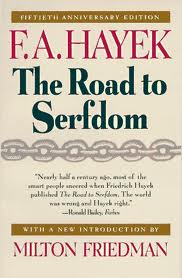
Another book I am also reading at this time is F.A. Hayek’s Road to Serfdom. This 1944 economic classic has been referenced by conservatives to support antigovernment arguments. Collectivism hurts (destroys?) individualism.  Put Hayek beside Clinton and you have two different philosophies. Can they both bring something to the table? I think so.  But we can’t learn from both if we turn one away simply because “that’s not what I think!” Ideologies can shut down movement.

As you move through your coming week, why not make (or renew) a commitment to yourself to challenge any ideological beliefs you might hold. Identify a confirmation bias when it presents itself. Find something that a philosophical opponent believes. Search for truth, common ground (even if small), and listen. Your beliefs may become stronger—or possibly you will find a nugget of truth or reason and come away with a bit of a different world view.  

Enjoy your week—and H.T.R.B. as needed!

Thank you for taking the time to read my blog post.  Please pass it (and any of the archived posts on this site) along to friends and colleagues. You can also follow me on Twitter, LinkedIn, and Facebook. If you get a chance, visit my Facebook page (www.facebook.com/stevepiscitelli) and click on the “LIKE” button.  Also, if you have suggestions for future posts, leave a comment.  Have a wonderful week!

© 2011. Steve Piscitelli and Steve Piscitelli’s Blog.

 

Posted in ideologies | 2 Comments

(#79) Warholism: What Would We Have Done?


What if back in the day (some 40 or 50 years ago), instead of pay phones and film-loaded cameras we had the social media tools of today available in our dorm rooms and fraternity houses? Consider how the landscape would’ve changed for many of us. 

I previously have written on this blog about the power of social media.  While I still have so much to learn, I find that the opportunities to communicate, connect, collaborate, create, critically think, and foster change grow daily.  But alas, with the beauty come a few warts. 

Have you heard the term “Warholism” as it applies to social media?  In short, it is the desire—and the seemingly endless chase—for fame, no matter how fleeting.  It’s about looking for that 15 minutes of fame. Tina Wells (Success Magazine, December 2011, page 13) cautions that this will “eventually lead to the Facebook Effect, which occurs when millennials expose too much of their personal lives in the public domain and come to regret these decisions later in life.”

Horror stories of this over-exposure have almost become cliché.   Laura A. Stokowski, in her article “Social Media and Nurses: Promising or Perilous” (http://www.medscape.com/viewarticle/753317?src=mp&spon=24) writes about the problems some nurses and nursing students have understanding how basic privacy issues can affect their patients as well as their own careers.  Consider these ill-advised choices made by “heavy users” of social media (as described by Stokowski):

  • An RN posted to her social networking site at the same time she was dispensing medication. Result? The nurse was fired.
  • Nurses took photos of another nurse removing a sliver in an empty operating room. Then they posted the photos. Result? Disciplinary action.
  • One nursing student had posted a photo of herself—with a tray of placenta and holding an umbilical cord. In the photo, the student’s hospital badge could be seen. Result?  This so-called “Placenta incident” led to the dismissal of four student nurses from the nursing program.

While such incidents can become illustrative of the minefields in the social media landscape, they also can create a self-righteous indignation. With questions like, “How could they do such a thing?” Or “We are doomed if these are the types of decisions our young adults are making!”

 Which got me to thinking, “What would we have done?”  In this case, the “we” is my generation of college students.  For anyone who went to college in the 1970s (or 1960s for that matter), consider the consequences if social media existed then as it does today.  Conjure up that image and you might experience a little shudder up and down your spine!  We may hear our contemporaries beat their chests and proclaim, “No way would I do that! I was much more discrete!”

Really?

What if back in the day (some 40 or 50 years ago), instead of pay phones and film-loaded cameras we had the social media tools of today available in our dorm rooms and fraternity houses? Consider how the landscape would’ve changed for many of us.  Can we honestly say photos or videos would not have been posted from the Friday night fraternity-sorority mixer? Or that discretion would have ruled during the pledge initiation ceremony? Or that no one would have even thought of filming your roommate engaging in a competition of who could do the most shots of beer/whisky in a short period of time? Or how about the obligatory photo of the same friend passed out after said competitive event? Or….you fill in the blank. (Image at left by Pixomar / FreeDigitalPhotos.net)

Hmm.

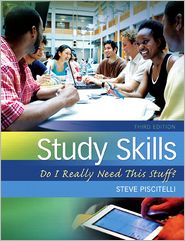
In my forthcoming book (Study Skills: Do I Really Need This Stuff, 3rd ed., Pearson Education), I state,

No longer do we have to wait passively for the news to reach us; we (all of us) now can be the producers. In short, social media is the phenomena that allows for consumer-generated media. It has fundamentally transformed the way we live, relate with friends and family, conduct business, and go to school…. There is absolutely no question that social media has revolutionized our world. As with any game-changing technology, life will never be the same.     

Social media IS a game-changer for all of us.  In more than one way.

Enjoy your week—and H.T.R.B. as needed!

[Thank you for taking the time to read my blog post.  Please pass it (and any of the archived posts on this site) along to friends and colleagues. You can also follow me on Twitter, LinkedIn, and Facebook. If you get a chance, visit my Facebook page (www.facebook.com/stevepiscitelli) and click on the “LIKE” button.  Also, if you have suggestions for future posts, leave a comment.  Have a wonderful week!]

© 2011. Steve Piscitelli and Steve Piscitelli’s Blog.
Posted in Uncategorized | 1 Comment

(#78) Where is Your Get Up and Do?


Dreams are fantasies if we do not put action to them. Dreams—Action—Reality.

I am approaching the end of another semester. With it comes a lot of typical happenings such as:

  • Final exams to grade,
  • Grades to post,
  • Next semester syllabi to prepare, and
  • Students looking for that last extra credit opportunity. Why? Because they have procrastinated!

The end of the semester also is a great time for reflection on opportunities seized and opportunities lost.  In the simplest terms, the semester began almost 16 weeks ago.  What my students and I did back in August has created what we experience today.  As I wrote last year, our today is the tomorrow we created yesterday. Here are some random thoughts on procrastination and ways to beat it.

  • Procrastination is a killer. It kills action. It counters motivation. It derails intentions. And it will destroy dreams.  So, what can we do about it? One thing we can do is pay attention to the fifth word of the preceding line: “do.”  It is that simple. Dreams are fantasies if we do not put action to them.  Dreams—Action—Reality.
  • I have written on this blog about the power of both the words we use and the excuses we make.  Yes, events happen to us for which we did not plan. Harold S. Kushner has written about When Bad Things Happen to Good People.  We might not have control over all those external events that have an internal impact—but we do have control over how we respond (rather than react). And we have the power to make sure we do not cause the bad things to happen to ourselves.
  • Last week I did an activity in class in which students could win a dime every time they finished a particular task. One student scoffed, “Only a dime?”  “Well,” I said, “how does a person lose 50 pounds? One pound at a time. How does someone save $1,000? One dime at a time.” Procrastinate on saving the dime, and we will have a more difficult time seeing the $1,000.
  • At the end of June I had shoulder surgery.  In spite of the worst pain I ever remember enduring, I have absolutely no regrets about the surgery.  I am five months out from the surgery. I have been disciplined in my rehab and I now have more use from my shoulder than pre-surgery. If I had procrastinated on the surgery because of inconvenience, potential pain, or fear of the unknown, you know what? I’d still be 5 months from the end of June—but not one step closer to rehabilitation. I made the decision to do the surgery and then I made the decision to do the rehab needed. You can do the same.
  • Shawn Achor reminded me of the concept of “activation energy.”  It is what we need to either start a new habit or break an old habit.  This weekend I shared a strategy with a group in Kansas City. I call it “The Two Minute Drill.”  When you feel stymied or overwhelmed by something you need to or want to do, find two minutes (120 seconds) to take a small step toward the goal.  Tomorrow, do it again.  The next day, do the drill in the morning and then do it again in the afternoon. Keep taking small steps until they add up to something bigger.  Remember that pound and that dime mentioned above.

I will leave you with an instructive video about procrastination.  It reminds us that while the doing is important, simply doing a lot of stuff is not sufficient. We have to do stuff that has a purpose and moves us toward our dreams. We have to do stuff that matters.


Video recommendation for the week:

But first we have to get up and do!


Enjoy your week—and H.T.R.B. as needed!

[Thank you for taking the time to read my blog post.  Please pass it (and any of the archived posts on this site) along to friends and colleagues. You can also follow me on Twitter, LinkedIn, and Facebook. If you get a chance, visit my Facebook page (www.facebook.com/stevepiscitelli) and click on the “LIKE” button.  Also, if you have suggestions for future posts, leave a comment.  Have a wonderful week!]

© 2011. Steve Piscitelli and Steve Piscitelli’s Blog.

 

Posted in Procrastination | 3 Comments

(#77) A Code for Life


Ruiz’s The Four Agreements reminded me
of the elegance of simplicity—and the power of integrity.


I am in the author’s equivalent of a jockey’s homestretch.  The page proofs for my new book (
Study Skills: Do I Really Need This Stuff? 3rd edition, Pearson Education) are nearly complete; I have submitted the last chapter of the Instructor’s Manual; and my nights and weekends will soon be mine again!  Well, for a little while at least. 

In any event, as I was completing this weekend’s writing session, I came across a book I read a number of years ago. Don Miguel Ruiz’s The Four Agreements reminded me of the elegance of simplicity—and the power of integrity.  And as I re-read this code for life, I was reminded of the work I still need to do.  

Perhaps the agreements will provide a bit of grounding as you experience the week ahead.

1st Agreement: Be impeccable with your word: Speak with integrity

  • This agreement tells us to speak honestly about others and about ourselves.  Words are powerful tools that should be used for good purposes, not ill.

2nd Agreement: Take nothing personally

  • While others’ words and actions may be hurtful, those words are a reflection of them. Their judgments may simply identify them as people who need to judge others.  In his book There Is a Spiritual Solution to Every Problem, Wayne Dyer states, “When you judge another person you do not define them.  You merely define yourself as someone who needs to judge.”  (New York: Harper Collins/Quill edition, 2003, 133). Ask yourself when someone judges you harshly, “Is this person speaking with integrity?”

3rd Agreement: Don’t make assumptions: Communicate clearly

  • You may think that your words convey one message but the people listening may hear something different in your words.  Express yourself responsibly so that your words are clearly understood. Do not assume others know what you mean.

4th Agreement: Perform to your best ability—always

  • You have experienced difficult situations in your life. And you will, no doubt, encounter trying circumstances as you progress toward your goals and dreams.  No matter the circumstances, never do less than you are able to do.  Again, Wayne Dyer states, “True nobility isn’t about being better than someone else.  It’s about being better than you used to be.”


Video recommendation for the week:

Click here for a video presentation of The Four Agreements.


Enjoy your week—and H.T.R.B. as needed!

[Thank you for taking the time to read my blog post.  Please pass it (and any of the archived posts on this site) along to friends and colleagues. You can also follow me on Twitter, LinkedIn, and Facebook. If you get a chance, visit my Facebook page (www.facebook.com/stevepiscitelli) and click on the “LIKE” button.  Also, if you have suggestions for future posts, leave a comment.  Have a wonderful week!]

© 2011. Steve Piscitelli and Steve Piscitelli’s Blog.


Posted in Integrity | 3 Comments

(#76) Building Transformative Relationships


And as I read the book, it occurred to me that we can apply
Kawasaki’s principles just as readily to the classroom as to the marketplace;
just as effectively to personal relationships as to corporate politics.


This weekend—in between grading essays and plugging away at a writing project—I made time to read Guy Kawasaki’s Enchantment: The Art of Changing Hearts, Minds, and Action (Portfolio/Penguin, 2011). Kawasaki, who describes himself as the “former chief evangelist for Apple,” offers strategies on how to enchant people with a product, service, or organization.

His strategies go beyond gimmicky techniques. At the heart of the enchantment process is building transformative relationships.  And as I moved through the book, it occurred to me that we can apply Kawasaki’s principles just as readily to the classroom as to the marketplace; just as effectively to personal relationships as to corporate politics.  Here are a few points from the book that stood out to me.

 1. Be likable, trustworthy, and passionate about a good cause.

  • This is a powerful triumvirate for the classroom instructor. “Likable” in this case is all about respecting your audience; speaking with them.  It’s not as trite as saying “I want to be liked.” I wrote a blog post earlier this year (The Student Perspective: What Do Effective Teachers Do?) in which I reported on an informal study I did of my students. Their number one characteristic of an effective teacher?  It was all about passion for the class—hands down.

2.       When getting ready to launch a product, conduct a “premortem.”  That is, brainstorm all the potential roadblocks and pitfalls.

  • I find this helpful when I am planning a new activity or lesson. Whether I am preparing for a class of 30 or an audience of 500, I anticipate the results.  (Sometimes I am more effective than others!)

3.       Practice the Japanese principle of kanso.

  • Simply put, kanso is the ability to eliminate clutter and reduce things to their simplest state. At times we get too complicate in education. If we can remember to cut to the chase, we will be much more effective.

4.       Become an advocatus diaboli—or a devil’s advocate.

  • This will serve you when developing a new activity, lesson, or approach. It can be powerful when attempting to work through bureaucratic jargon and meaningless wheel spinning. We need to be advocates for our students and our colleagues.

5.       Recognize and eliminate “bull shiitake”!

  • See numbers 1, 2, 3, and 4 above.

Video recommendation for the week:

Kawasaki outlines the principles.


Who will you enchant this week?

Enjoy your week—and H.T.R.B. as needed!

[Thank you for taking the time to read my blog post.  Please pass it (and any of the archived posts on this site) along to friends and colleagues. You can also follow me on Twitter, LinkedIn, and Facebook. If you get a chance, visit my Facebook page (www.facebook.com/stevepiscitelli) and click on the “LIKE” button.  Also, if you have suggestions for future posts, leave a comment.  Have a wonderful week!]

© 2011. Steve Piscitelli and Steve Piscitelli’s Blog.


Posted in Relationship | 2 Comments

(#75) An Awareness of Civility


What is civility if not a constant awareness that
no human encounter is without consequence.
-P.M. Forni-


Nearly a decade ago, P.M. Forni released a powerful volume titled Choosing Civility: The Twenty-Five Rules of Considerate Conduct.  The chapters, while short (usually about five or six pages in length), make for excellent reminders and guideposts for a society that at times seems to be enamored by boorish behavior –the more boorish the better for some.

On the whole, I have wonderful students.  Young and old, they want a better life for themselves and their families. They have dreams and they are moving toward those dreams. I am glad—and fortunate—to be able to work beside them each day I am on campus. 

Forni’s book, however, came to mind this past week as I digested a few more servings of what has come to be a regular diet of rude behavior in our college classrooms. While they might represent the minority, they are becoming more frequent.  These are just three instances that come to mind.

  • One colleague (in another state) related this incident. She had a student who was regularly making inappropriate comments in class. This colleague—who happens to be one of the least confrontational people I know—quietly took the student aside and asked what was going on. The student snapped that “all of my professors are a#@holes!”  That would also include my colleague of course.
  • One student who missed about 50% of the semester (absences) returned to class.  When told by the professor that he had reached the limit on his absences, the student responded with, “A family member died.”  (When asked if a family member had passed away a few weeks ago when the student missed two weeks of class. “No,” was the asnwer.) Before coming back into class, this student asked the professor if he could turn in late work. He “really wanted” to do well.  Within 5 minutes of the class start, the student’s  head was on the desktop–and asleep.
  • One woman announced to her professor in class that he would just “have to wait” for her to turn in a paper.

For those who do not teach in a classroom day after day, the above might sound rather trite and inconsequential. So, let’s put them in more of a corporate, non-school context. 

  • An employee is saying inappropriate things in the workplace. The supervisor speaks privately to the employee to see what can be done.  The employee rudely states, “All of the supervisors here—including you—are a#@holes!”
  • An employee misses 50% of his work days during the past two months. He has not called in. He has not completed work that he had been assigned. Upon his return to the office, he goes to his desk—puts his head down and falls asleep.
  • The boss asks an employee to turn in her quarterly report.  She tells him—in front of the office staff—that he will just have to wait.

Hmm.

Forni finishes his book with the following quote:

What is civility if not a constant awareness that no
human encounter is without consequence? What is it
if not sharing with intention the best that is in us?
Sharing it again, and again, adding brightness to the day.

Enjoy your week—and bring brightness to those with whom you share the world.

[Thank you for taking the time to read my blog post.  Please pass it (and any of the archived posts on this site) along to friends and colleagues. You can also follow me on Twitter, LinkedIn, and Facebook. If you get a chance, visit my Facebook page (www.facebook.com/stevepiscitelli) and click on the “LIKE” button.  Also, if you have suggestions for future posts, leave a comment.  Have a wonderful week!]

© 2011. Steve Piscitelli and Steve Piscitelli’s Blog.
 

Posted in Civility | 2 Comments

(#74) Redundant Mediocrity


Nowadays, the bar has been set so very low for what
passes as “excellent” that we may have forgotten what
true excellence really is.

In past blog posts I have written about the importance of an attitude of gratitude (https://stevepiscitelli.wordpress.com/category/gratitude/).  There are so many good things that occur each day. Even as the stock market tumbles, Europe struggles with its financial crisis, good hardworking people cope with the realities of long-term unemployment, and political discourse gets louder and more bellicose, we all have great things in our lives to sustain us and carry us forward.  I get that. Really, I do.

Today, however, I want to say a few words about a less than positive condition that appears with appalling regularity in our world. While this post may appear negative (and perhaps it is), I will finish with a positive note and suggestion. So, please read on.

Have you encountered a new normal when it comes to service and work ethic? I call this new normal Redundant Mediocrity. This refers to those actions that are barely acceptable—and yet repeat themselves time and again. Perhaps you have seen them in stores, restaurants, traffic, the office, or even in personal relationships.  Here are just a few examples of Redundant Mediocrity:

  • Sitting in a restaurant. It’s not busy—at all. Five minutes after you sit down, no one has greeted you. To be sure you have been seen—just not acknowledged as a human being by the three servers who have walked by your table.  Poor service becomes a tolerated norm.  Redundant Mediocrity.
  • The cashier collecting money at the airport parking garage mumbles almost inaudibly as you hand over your money. Your change is plopped in your hand with a crumpled receipt.  No smile.  That grunt you heard from her might have been a thank you—but you cannot really tell as she has slammed shut her window. Redundant Mediocrity.
  • You set up an appointment with a company to get an estimate for repair work at your house. The contractor is a “no show”—and does not call to cancel or reschedule.  Worse yet, when you call back, your call is not returned. Redundant Mediocrity.
  • Have you ever called a doctor’s office and when the phone was answered you heard, “Hi, can you hold please?”  Nine minutes and thirty-nine seconds later you’re still on hold. No one has checked back with you.  This actually happened to me last week.  I know the time because my cell phone keeps track (—like it is mocking me!) I hung up and called back. The monotone voice on the other end said once again, “Hi, can you hold please?”  I said, “No.” Sometimes I am a quicker study than other times!  Redundant Mediocrity.
  • Going to the gym has great benefits. But if I continue to do the same routines, I find a certain hum-drum feeling taking hold. I can easily become complacent and give myself feel-good words like, “Well at least you’re here.”  Reality: If I am there day after day but not pushing myself, I have settled for Redundant Mediocrity.
  • When asked what they will do to improve their scores on the next test, many students will perfunctorily state, “I will study harder.”  Generally, that means the students will do what they did that brought about poor grades—but will do more of it!  Does not make much sense, does it? Redundant Mediocrity.
  • Another meeting with the same agenda. The names may have changed—but the mind-numbing regularity of people droning on with few listening while others check their text messages or Facebook accounts is another example of Redundant Mediocrity.

And the list can go on ad nauseam. We see examples everywhere.  It can be depressing.  Redundant Mediocrity.

But there is hope.  I call it Remarkable Consistency!  Let’s change our attitudes and behaviors. Let’s not accept mediocrity.  And let’s recognize and celebrate Remarkable Consistency!  Here are a few examples that give me hope:

  • I get to the gym at 5:00 a.m. to begin each day on a healthy note before heading off to campus. Every morning, Deb is there to open the doors. Never misses; always timely.  Remarkable Consistency
  • As I mentioned above, I can find myself going into a rut at the gym. I need to stir it up for maximum benefit. One of the 5:00 a.m. crowd is David. He is the hardest working man in the gym. Inspiring workouts and great attitude. Remarkable Consistency
  • On campus each morning, Sabrina welcomes her customers in the cafeteria with a wonderful smile and warm hello.  Remarkable Consistency
  • One of favorite my gathering spots at the beach is Ragtime. The food is consistently good. The service—well they make people feel welcomed.  Like the old television show Cheers, everyone knows your name. Remarkable Consistency
  • My wife is the most supportive person I know. Warm, caring, thoughtful, and empowering. Remarkable Consistency

Nowadays, the bar has been set so very low for what passes as “excellent” that we may have forgotten what true excellence really is. As you go about your week make a promise to identify and eliminate Redundant Mediocrity and empower yourself and those around you with Remarkable Consistency

[Images above: Ambro / FreeDigitalPhotos.net]

Enjoy your week!

[Thank you for taking the time to read my blog post.  Please pass it (and any of the archived posts on this site) along to friends and colleagues. You can also follow me on Twitter, LinkedIn, and Facebook. If you get a chance, visit my Facebook page (www.facebook.com/stevepiscitelli) and click on the “LIKE” button.  Also, if you have suggestions for future posts, leave a comment.  Have a wonderful week!]

© 2011. Steve Piscitelli and Steve Piscitelli’s Blog.


Posted in redundant mediocrity | 7 Comments

(#73) Going for the Goal


Sometimes mentors can help us…And while they are of
incalculable value, there is another resource that sometimes
gets ignored.  You!

For their midterm review, my students examined their goals and their actions to get to those goals.  I find reading their reflections to be one of the more energizing times of the semester.  To be sure, some students just go through the motions writing a number of clichés.  The vast majority, though, look at this exercise as a welcomed time to reflect on what is important to them—and what they need to do to get closer to the dreams they have. 

I encourage my students (and the audiences I work with around the nation) to put their dreams into action if they want them to become reality. In fact, a lack of action will create its own reality.  (See my blog post “What We Say, We Become” https://stevepiscitelli.wordpress.com/category/words-and-action/.)   Saying it and reading it does not necessarily make it a reality.

Sometimes mentors can help us translate thoughts to action.  These wise folks can be powerfully motivating forces in our lives.  They can guide, shape, cajole, and nurture us on our way to our dreams.  And while they are of incalculable value, there is another resource that sometimes gets ignored.  You!

In this month’s issue of Success magazine, Darren Hardy (the publisher) makes the point that

Today there are more teachers, preachers, coaches, consultants,
mentors and “experts” at your disposal than ever. But the most overlooked,
underutilized and divinely powerful resource of them all is you—your own
inner voice, intuition and instinct.


Video recommendation for the week:

Stedman Graham reminds us to focus on our identity. Don’t let others define us.


You don’t need a midterm examination to reflect on your goals, your actions to get to your goals, and who you are.

Give yourself the luxury of doing that self review right now.  Look at what you are doing—or not doing—and make the adjustments you need to make.

Enjoy your week!

[Thank you for taking the time to read my blog post.  Please pass it (and any of the archived posts on this site) along to friends and colleagues. You can also follow me on Twitter, LinkedIn, and Facebook. If you get a chance, visit my Facebook page (www.facebook.com/stevepiscitelli) and click on the “LIKE” button.  Also, if you have suggestions for future posts, leave a comment.  Have a wonderful week!]

© 2011. Steve Piscitelli and Steve Piscitelli’s Blog.

Posted in Dreams | 1 Comment

(#72) My Forever Friend


Who are the people who are there for you—and you for them?
Who are your forever friends?


On Thursday and Friday of this past week I attended memorial services for a college friend who had suddenly died. Warren Mack will be missed dearly by his friends and family. I know my wife and I will miss seeing him in the park or on the beach with his dogs. He never missed an opportunity to stop and chat. He always asked about us and our dog, Buddy.  Even when he wasn’t feeling well, Warren found a way to smile. Whether he was talking about his beloved Baltimore Orioles, his pups, or life at the beach, he knew how to connect.  That is what authentic people can do…they connect with those around him.

Two dear friends of Warren spoke at his Friday memorial service. Both spoke about what it meant to “be a friend.” One said that Warren wanted to be everyone’s friend. That was Warren. He enjoyed life; he enjoyed those around him.

The second, Joy, read a short piece that had the tag line of “my forever friend” running through it. I had not heard it before, and truth be told, I do not remember anything from the reading except the words “my forever friend.”

A quick Internet search turned up a wonderfully beautiful song by Charlie Landsborough with the chorus of

He’s my forever friend
My leave-me-never friend
From darkest night to rainbow’s end
He’s my forever friend

Another poem (unknown author) shares the same sentiment

When I think of all the times we’ve shared
from the silly to the sad.
You’ve been the greatest friend to me
through good times and through bad.
We love to get crazy from time to time,
that’s what friends are supposed to do.
But when times get rough
there is never a doubt that I can count on you.
We have the kind of friendship
that endures ’til the very end.
Because I can’t imagine my life without you-
My Best and Forever Friend

These words made me think about the power of friends; the power of connection.  Even George Bailey (It’s a Wonderful Life) reminds us that “No man is a failure who has friends.”  Well, Warren had his friends; still does. And we will miss him.

Who are the people who are there for you—and you for them? Who are your forever friends? Have you told them lately?

Enjoy your week!

[Thank you for taking the time to read my blog post.  Please pass it (and any of the archived posts on this site) along to friends and colleagues. You can also follow me on Twitter, LinkedIn, and Facebook. If you get a chance, visit my Facebook page (www.facebook.com/stevepiscitelli) and click on the “LIKE” button.  Also, if you have suggestions for future posts, leave a comment.  Have a wonderful week!]

© 2011. Steve Piscitelli and Steve Piscitelli’s Blog.


Posted in Friendship | 18 Comments