(#71) Hit The Reset Button


There are no guarantees.  H.T.R.B. is no cure-all.
But what is the alternative?  The button will not only get
YOU moving in a positive direction,
it will have a beneficial effect on those around you.


It happened again. One of my students reminded me of the obvious.  She had had a particularly challenging morning last week.  At one point she felt herself about to lose emotional control. Rather than lash out, rather than have a meltdown, she stopped, turned around, and walked away from the latest of a long line of stressors.  She found a quiet spot; she sat down; and then, as she told me, “I hit the reset button.”

After a few reflective moments, she collected her thoughts and made her way to class to face the day—with a smile on her face.

I thought about those times when I’ve felt like the world was a crushing boulder sitting on my chest.  More times than I would like to remember, I let emotion take over in those situations. When I reacted rather than responded to a stressor, the result was ALWAYS less than optimal. Those who know me well realize that I tend to get, shall we say, “passionate” about things. There have been many times when I have wished I, too, had hit the reset button.

(Image by: watcharakan)


While we may not always have the opportunity to find, at the needed time, a quiet place to just “be,” the advice is worth heeding.  

Stop. Be. Reset.

Here are a couple of examples of when that reset button can come in handy. I’m sure you could name many more when it would be in everyone’s best interest to H.T.R.B. (Hit The Reset Button).

  • Feeling overwhelmed by the day-after-day onslaught of grim economic news?
    • H.T.R.B.–Put yourself on a “news fast.”  Limit your intake.
  • Drained by energy vampires?
  • Working too many hours?
    • H.T.R.B.—Understand why you are doing this?  If the overtime is self-imposed, understand why you put yourself (and your loved ones) through a hellish schedule. Where can you make changes? What is truly valuable—your time, your health, or money?  It’s your call.
  • Bored with routine?
    • H.T.R.B.—Best you can, stir things up! Sleep on the opposite side of the bed. Find a new route to drive to work. Do a different routine at the gym. Rearrange your work space or work duties.
  • Taking people around you for granted?
      • H.T.R.B.—Just stop it!  These are the folks who sustain you.   Make time for them. Bob Newhart reminds us of this very simple strategy. 

    Video recommendation for the week:

    Just stop it?


    A friend of ours recently passed on. I can’t help but think what might have changed if he had hit his reset button. There are no guarantees.  H.T.R.B. is no cure-all. But what is the alternative?  I think it was Wayne Dyer who suggested that, when we feel pain, we stop and remind ourselves that we can have this (pain) or we can have peace.  You see, the button will not only get YOU moving in a positive direction, it will have a beneficial effect on those around you. They will be able to enjoy you for the gifts you have to offer each day.   (Image by: scottchan)

    When do you H.T.R.B.?

    Enjoy your week!

    [Thank you for taking the time to read my blog post.  Please pass it (and any of the archived posts on this site) along to friends and colleagues. You can also follow me on Twitter, LinkedIn, and Facebook. If you get a chance, visit my Facebook page (www.facebook.com/stevepiscitelli) and click on the “LIKE” button.  Also, if you have suggestions for future posts, leave a comment.  Have a wonderful week!]

    © 2011. Steve Piscitelli and Steve Piscitelli’s Blog.


Posted in Balance | 88 Comments

(#70) Blogging with a Purpose


If you want your blog to be meaningful,
write about your passion.
Write from your heart.

This past week the adviser for Florida State College at Jacksonville newspaper  (The Campus Voice http://www.campusvoiceonline.com/) asked me to write a column for the next issue.  He suggested I write about my objectives for blogging.  In short, why do I do it?

Blogging is a form of social media that has become part of our culture; it is a way to share opinions, shape thoughts, report news, and build networks. Like it or not it has become a fixture. According to author and social media expert Erik Qualman, there are 200,000,000 blogs in the world.

Some blog posts are little more than what you might find on an editorial page in the local newspaper. Others are carefully researched and crafted to present a particular point of view.  You will find some that are rants and raves—little more than rambling diatribes of the writer.  Bloggers can present their opinions as proven fact—whether or not they are in fact true.  Traditional publishing (especially scholarly journals and textbooks) requires that other professionals in the field review a manuscript for credibility and accuracy. There is no such requirement for a blog. While a professional review does not automatically make a source “good,” know that a blogger can immediately post any material that he or she wishes–with or without supporting evidence.

A jaded view of blogs can be found in one 15 second piece of dialogue on the television show NCIS.  Agent Leroy Jethro Gibbs is interviewing a suspect. At one point the young lady said that someone had trashed her on a blog.  

Gibbs: A blog?
Young lady: Yeah, a blog?
Gibbs: What’s a blog?
Young lady: You know…a blog!
Gibbs: No, I don’t know.
Young lady: It’s something a loser puts online so everyone can read it!”

The good news is that blogs can serve a wonderfully useful purpose. A blogger does not have to be synonymous with a loser or egomaniac.   

If you start a blog, have a reason—a goal. Why do you want to blog? Is it to change opinions of others? Or do you want to educate people about a cause near and dear to your heart? I know some folks who use their blogs as an outlet for their creative writing.  Some people have a theme or themes they write about regularly.

When I started blogging I had three objectives in mind.

1st. Share Ideas. I generally write about two themes:  Student Success and Personal Wellbeing.  I want to share meaningful thoughts, reflections, research, and strategies that will have an impact.  I am passionate about these topics—and have experience and research to complement the passion.  If you want your blog to be meaningful, write about your passion.  Write from your heart.

2nd. Develop discipline. The blog has become a discipline tool for me. When I started in the spring of 2010, I made a commitment to post a blog every week (on Sunday).  This forces me to set aside time to practice the craft of writing. This post marks the 70th consecutive week I have met my self-imposed deadline.  I preach to my students that writing is a habit worth cultivating.  I want to follow and model that advice as well.

3rd. Stimulate creativity.  There is something about the blog that keeps me fresh; keeps ideas flowing.  Starting on Wednesday or Thursday of each week, I begin to brainstorm topics for the week. Some weeks are easier than others as the ideas just come. Other weeks I have “creativity block”—which is really what writer’s block comes down to in my opinion.  The writing process has helped me create and/or flesh out ideas for programs and the classroom.

What do you have to share with the world?  When will you start?

Enjoy your week!

[Thank you for taking the time to read my blog post.  Please pass it (and any of the archived posts on this site) along to friends and colleagues. You can also follow me on Twitter, LinkedIn, and Facebook. If you get a chance, visit my Facebook page (www.facebook.com/stevepiscitelli) and click on the “LIKE” button.  Also, if you have suggestions for future posts, leave a comment.  Have a wonderful week!]

© 2011. Steve Piscitelli and Steve Piscitelli’s Blog.
 

Posted in Blogging | 3 Comments

(#69) Dreams–Revisited


Goals are like fires.
They go out if unattended.

During a writing session this weekend, I re-acquainted myself with some old strategies that can help us stay focused on our goals—help us turn our dreams into reality.  I have written about some of these on this blog before (https://stevepiscitelli.wordpress.com/category/words-and-action/; https://stevepiscitelli.wordpress.com/category/creating-your-future/; https://stevepiscitelli.wordpress.com/category/dreams/).

So, with a “pardon me for  the redundancy” and a “tip of the cap to tried-and-true practices” here are some simple yet powerful strategies to move you toward your goals. Goals are like fires. They will go out if unattended.

  • Attribution Theory.  When something happens (or does not happen) consider four explanations:
    • Effort. I put forth the needed effort—or—I did not put forth the needed effort.
    • Ability. I have the ability/skill level to achieve the desired end—or—I do not have the ability/skill level to achieve the desired end.
    • Task difficulty. The task was easy—or—the task was difficult.
    • Luck. I was unlucky—or luck had nothing to do with it.
  • P-A-I.Potential is the ability to do something. Ambition is the desire. Initiative is the drive.  Potential and ambition are great—but without initiative, you won’t get far.
  • Is this goal right for me?List one of your goals; something that you desire to achieve.  Then ask yourself, “Is this goal—this dream—right for me?”  In short, know why you are driving toward a goal.  Does it fit with who you are as a person? Do you want it (whatever the “it” is) for the right reasons? (Image above by jscreationzs)
  • S.M.A.R.T. This acronym has been around for a long time. It simply means your goals should be
    • Specific.
    • Measurable.
    • Action-oriented
    • Realistic
    • Timely.

Video recommendation for the week

Dream Big. Enjoy the message and enjoy the music video by Ryan Shupe and the RubberBand.


“Destiny is not matter of chance. It is a matter of choice.
It is not a thing to be waited for. It is a thing to be achieved.”

William Jennings Bryan (politician, lawyer, and presidential candidate in 1896)

 Enjoy your week!

[Thank you for taking the time to read my blog post.  Please pass it (and any of the archived posts on this site) along to friends and colleagues. You can also follow me on Twitter, LinkedIn, and Facebook. If you get a chance, visit my Facebook page (www.facebook.com/stevepiscitelli) and click on the “LIKE” button.  Also, if you have suggestions for future posts, leave a comment.  Have a wonderful week!]

© 2011. Steve Piscitelli and Steve Piscitelli’s Blog.
 

Posted in Dreams | 14 Comments

(#68) I Know…But…!


It’s not about you….it is ALWAYS about the audience.
If you do not connect; if you do not involve; you do not
get your message across. Ever.

Jethro Leroy Gibbs (NCIS) would head slap me. I, however, will chance it and say I’m sorry. I’m sorry but I have to repeat a theme from a few earlier posts this year. Blame it on the meetings I endured these past few weeks.  Blame it on pure dreadful delivery. Blame it on the oft-repeated phrase of “I know…but….”

I have written about effective meetings and effective teaching.  I will not repeat those posts here. But if nothing else, these dreadful meetings provided inspiration for today’s post.

If you have a presentation to make, please do NOT do these things.  I place them in the category of “I know…but…” Why? Because that is a clue that you should start heading for the door when you hear a speaker say this. In fact, don’t walk…run for your car.

  • I know I should use the microphone but let me know if you can’t hear me.” Come on, now. If you know anyone in the audience might have a problem hearing you, why would you not help them out and use the microphone. I carry my own wireless lapel mic with me if I think there might be a problem.  Think about it.  If your message is that good (and it should be if you are in front of the audience) then why wouldn’t you want everyone to hear you?
  • I know that you cannot read this PowerPoint slide from the back of the room but let me show it anyway.” Say what?  You know we cannot read the slide because you have put so much on the slide that all of the words are in 10 or 12 point size. No one other than you (maybe?) can read it.  Why are you, then, killing us in the audience with something we cannot read!  Come on. Think! Be creative and summarize.  If you are tempted to say “Oh, but I could not do that. The slide just has too much good information on it!”  Remember: We CANNOT read it!
  • I know this is too much information for you to digest during this presentation but it’s just all so important.” Really?  It’s so important that you will bombard us with so much we will not remember anything. Really?  It reminds me of something I heard long ago: Because it was taught does not mean it was learned.”  I will go a step further.  Most ineffective presentations do not teach a thing.  They just spray us with information.

If you have a presentation coming up, remember the audience when you rehearse the presentation. (You do rehearse? Right? )

It’s not about you….it is ALWAYS about the audience. If you do not connect; if you do not involve; then, you do not get your message across. Ever.


Enjoy your week!

[Thank you for taking the time to read my blog post.  Please pass it (and any of the archived posts on this site) along to friends and colleagues. You can also follow me on Twitter, LinkedIn, and Facebook. If you get a chance, visit my Facebook page (www.facebook.com/stevepiscitelli) and click on the “LIKE” button.  Also, if you have suggestions for future posts, leave a comment.  Have a wonderful week!]

© 2011. Steve Piscitelli and Steve Piscitelli’s Blog.

 

Posted in effective meetings | 2 Comments

(#67) Sage Suggestions for Students


There is a saying that “All of us are better than one of us.”  I have written on this blog before about the power of social media . It allows us to share ideas, tips, and strategies—instantly. Think of it as “collaboration in the cloud.”

This past week as I was getting ready for a presentation for students at the University of North Florida, I posted the following on Facebook:  “What advice would you share with the students?”  I received so many heart-felt suggestions I would like to pass them along to you, as I did with the students this past Friday.  As you read the synopsis of a few of these sage suggestions for students, see if you can identify a common theme.

Jodi: “… follow their hearts. Do what you love. Think about … what you can contribute to this world and do so with all your heart.”

Susan: “I think students often choose their careers based on salary… and then find themselves working 60 hour weeks with no time for themselves or their families, with disastrous results.”

Jeff: “…take [their education] seriously and nurture it so that it grows to be something that serves them well.”

Karen: “…Prepare your mind (open it!) to receive an EDUCATION….”

Kieve: “…like what you do… enjoy the challenges/opportunities that life gives you (every challenge IS an opportunity).”

Maureen:  “…learn to be self sufficient so that you will always be able to offer something to your fellow humans.”

Kim: “…create a ‘job from heaven’ description, and use that to guide you…create a ‘job from hell’ description, which is just as useful in deciding what you DON’T want to do….”

Shawn: “…please be sure you don’t make the trade off to get paid well for doing something you hate….”

Maria: “Choose work you love and you will never work a day in your life.” Confucius.

William: “…never let your bad habits interfere with your good ones.”

Krissy: “…if you follow all of this advice and find that you are still not happy, don’t be afraid to explore something new. Never stop learning!”

David: “……”Live your passion.” Joseph Campbell

Robb: “”There are two GREAT DAYS in our lives…the day we are born and the day we discover why.” J.C. Maxwell

As I read the posts, one word kept popping up in my mind. Passion. I have written of that in past posts; the need to match talents and passion in order to create that remarkable life you (we) are all capable of creating.  As Dan reminded us in one of the posts, life is fleeting.

So why not embrace the passion, take action, and make a difference.

Enjoy your week!

[Thank you for taking the time to read my blog post.  Please pass it (and any of the archived posts on this site) along to friends and colleagues. You can also follow me on Twitter, LinkedIn, and Facebook. If you get a chance, visit my Facebook page (www.facebook.com/stevepiscitelli) and click on the “LIKE” button.  Also, if you have suggestions for future posts, leave a comment.  Have a wonderful week!]

© 2011. Steve Piscitelli and Steve Piscitelli’s Blog.


Posted in Passion | 7 Comments

(#66) Thirty Years. A New Semester. Some Enduring Lessons.


One of the perks of teaching is that every semester we (faculty and students) get to start fresh. Regardless of what happened last term, we can craft a new direction.  It’s almost like an academic mulligan.

When we kick off the fall term tomorrow morning (August 29, 2011) at Florida State College at Jacksonville it will mark the beginning of my 30th year as a classroom teacher.   That’s a lot of syllabi, tests, graded essays, and faculty meetings. But more than that, the years have provided me with enduring professional and personal relationships.  The profession has allowed me—nay, required me—to be a constant student. At the end of the spring semester, I mentioned to one of my classes, “I think I am starting to get the hang of this teaching thing!”  If nothing else, I have become a student of student success.

One thing I know is that when it comes to student success there is no magic bullet, no easy formula, and for goodness sake, there is no standardized test that will foster it or measure it. 

As we begin this new semester, I want to share a couple of thoughts I shared with the faculty and administration of Ferris State University (Big Raids, Michigan) last week at their retention summit. (NOTE: Ferris State has developed a wonderfully collaborative initiative to examine and increase retention and graduation rates. They could become a model.) I will share this information with my students as well this week.  When it comes to persistence to graduation (“stick-to-itiveness”), the data are interesting. For instance, CCSSEE (Community College Survey of Student Engagement) 2008 found reasons that students dropped out of college (that is, did not persist in their studies) included

  • Financial issues (45%)
  • Conflicts with full-time employment (38%)
  • Care for dependents (29%)
  • Academic issues (19%)

Being successful in college obviously requires academic rigor. That goes (or should go) without saying.  But there are so many other factors that our students must face. (At the Ferris summit, a student panel shared many of the same factors that CCSSE found.)  

A colleague from many years ago told me, “Steve, we teach so much more than our content areas.” 

How true.

For instance, our students need to know their national history. But more than that, they need to know how to apply history to current political debates. They need to know how to identify assumptions and confirmation bias—separate fact from fiction. That will help them much more than being able to regurgitate dates, battles, and names.

They need to know basic information about financial literacy.

They need to practice basic civility—and know how to apply this in the world beyond the campus. (Wouldn’t it be nice if our political leaders and talking heads would help by modeling such civility? Ah…the topic for a future blog post.)

They need to know that time management is a myth.  They need to learn how to manage their priorities

They need to know how to be curious. Embrace change. Live with an open mind. (NOTE: Image to the left is a creation of “digitalart.”)

They need to know how to identify and use the resources that their colleges and universities provide for them.  I think it would be safe to say that they will never again be in one location that offers so many resources for their success.

They need to know that their success is in their hands and a reflection of the choices they make. Their today is the tomorrow they created yesterday. (See my blog post “Today-Tomorrow-Yesterday.”)

They need to be confident that the teachers they have will do all they can to guide, demonstrate, and model behaviors that will help them achieve their dreams.

And the above is just a partial list. You could identify more.

I look forward to the beginning of another semester in the classroom. I look forward to growing a lot more. And I am appreciative of the opportunity to work with a new group of students and to be a part of (if even in a small way) their journey.

Best wishes to all for an energizing and passionate semester.

[Thank you for taking the time to read my blog post.  Please pass it (and any of the archived posts on this site) along to friends and colleagues. You can also follow me on Twitter, LinkedIn, and Facebook. If you get a chance, visit my Facebook page (www.facebook.com/stevepiscitelli) and click on the “LIKE” button.  Also, if you have suggestions for future posts, leave a comment.  Have a wonderful week!]

© 2011. Steve Piscitelli and Steve Piscitelli’s Blog.

 

Posted in Student success | 2 Comments

(#65) Lessons from Buddy (My Dog)


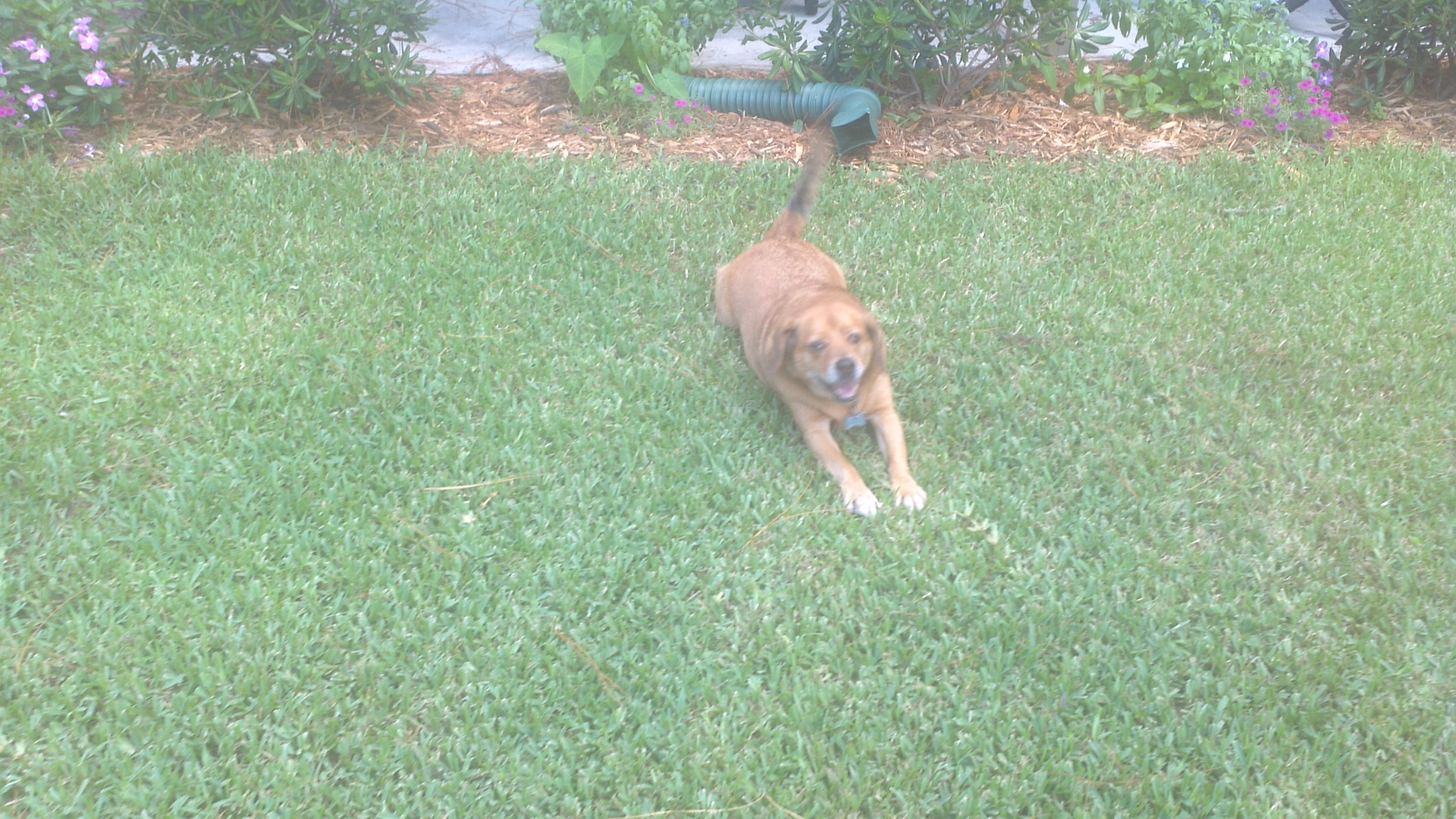
The next time life seems to be going a little too fast or you are feeling more battered than your congressional representative, consider the following wisdom from an eleven year old.  In this case, the pre-adolescent aged being is our dog, Buddy.  A spry beagle mix that some might say he is “chubby,” Buddy doesn’t say much. He lets his actions speak for himself.

So, here are Buddy’s twelve strategies for a carefree enjoyable life.

1. Treat each experience as the first.  Don’t take a day or an experience for granted. Each moment is a gift—even the ones that try our souls. For Buddy, each sunrise is the first one he has ever seen; each walk in the park has new wonders to offer for the first time—again.

2. Explore often. Buddy doesn’t wait for things to show up in front of him; he constantly wants to go off the traveled path and find something new. (One day we found him heading to McDonald’s for, we think, a Big Mac.)  Explore your backyard, your neighborhood. Discover what has been in front of you for years.

3. Be curious. If you are going to be an explorer, you have to have a sense of curiosity. Buddy is never too busy to inspect a tree, a turtle, or a horseshoe crab. Ask questions; make a new friend; ask someone to show how to do something you have wanted to do for awhile.

4. Smile, greet, repeat.  Buddy has never met any being he hasn’t liked.  Never a growl or a sneer. Just a wag of the tail and a doggie handshake. No pretenses; just a “glad-to-meet-you-have-a-nice-day” greeting and parting.  No long-winded posturing.  The next meeting might just be two minutes down the beach but Buddy repeats the process….gladly.  Think about that as you meet people during the day. Is it so hard to smile, say something pleasant–and then repeat?

5. Don’t miss a meal—or a snack.  Buddy has mastered this lesson. He loves his food…our food…anyone’s food.  Now, he is mannerly and won’t take it off your plate. But when invited he savors what he has before him. (OK. He devours it!  But he does love every morsel.)  I once heard the late Leo Buscaglia (author, speaker, professor) say that he remembered how meal time was a celebration for the family. Are we savoring our meals or do we wolf them down so we can move on to something else? 

6. Bark as needed. Buddy, as even-tempered as he is, needs to exercise his bark from time to time.  Yes, he loves to meet and greet (see #4 above), but he will let you know if you have trespassed and messed with his good graces.  Remember, Buddy does not bite—he barks. And since he does not do it often, when he does, we pay attention.  At times a well-placed bark can help us, too. Don’t let people disrespect you.  Use your bark judiciously; don’t hit; let people know your boundaries and their limits. (See my blog post “Know Your Boundaries—Know Your Limits”.)

7. Pull at the leash.  We have a leash law in Atlantic Beach. Truth be told, law or not, we would have Mr. Buddy on a leash. Otherwise he would be NTG (nose-to-ground) and gone!  He has learned to walk well on a leash; but he always tugs just a little bit.  And I respect that. Have you ever felt restricted by rules that did not seem to fit who you were?  A little tug at the collar let’s you know you’re alive.  Buddy is never ugly about it. He just lets us know when he needs a little extra room to explore (see #2 above).

8. Nap as needed. I have heard people say that dogs sleep about twenty hours a day.  That might be a little on the light side for Buddy.  He loves his shut-eye time.  Research studies have shown that napping can have a powerful regenerative affect on bodies and minds.  My musician friends have sworn by a power nap of thirty minutes or so each day. Buddy is the master of the power nap.  When was the last nap you took?

9. Enjoy a massage.  Buddy loves to have his tummy scratched and rubbed—by anybody. While I would not advise that you roll over on your back and beg your boss for a tummy rub, maybe a therapeutic massage would be just the thing to relax yourself, soothe your muscles, and drain away the stress.

10. Unconditionally love.  Buddy doesn’t set conditions for us. He doesn’t keep score.  Each time we walk in the house, the tail wags, the eyes brighten, and he runs to us.  (See #1 above). Love those around you. Yes, they may infuriate you; but did you ever think about how infuriating you might be? And they still love you.

11. Hold no grudges.  This connects with #10 above.  Even though I might have a bad day, and might not give him the attention he deserves, Buddy forgives readily.  I don’t think it is in his character to hold a grudge.  How often do we humans waste time ruminating on the past?  We live in the present as we move to our future.

12. Licks of love.  OK, I can hear you snickering.  But Buddy is the master of licks of love.  He will kiss anyone at anytime.  (He is an Italian dog…I am convinced.) If he could hug, I know he would do that, too.  No agendas; no manipulation. Just a genuine embrace. How many people long for one—but have no one to share a heartfelt hug? 

Buddy wishes you all a great week!

[Thank you for taking the time to read my blog post.  Please pass it (and any of the archived posts on this site) along to friends and colleagues. You can also follow me on Twitter, LinkedIn, and Facebook. If you get a chance, visit my Facebook page (www.facebook.com/stevepiscitelli) and click on the “LIKE” button.  Also, if you have suggestions for future posts, leave a comment.  Have a wonderful week!]

© 2011. Steve Piscitelli and Steve Piscitelli’s Blog.


Posted in wisdom | 6 Comments

(#64) Two Generations of Teachers Make a Difference for Our World


Last night I helped a long-time colleague celebrate her retirement. After 40+ years in the classroom, Meg “Mama” Hawley has filed her last lesson plan, graded the last essay, and attended her last faculty meeting.  She now gets to create the next phase of her life.

Meg made a difference—a huge difference—in the lives of thousands of students. Her kind nurturing (and reality-based) ways enabled students to develop intellectually, socially, and emotionally. Always ready with a smile and a word or two of wisdom, “Mama” was a rock in the lives of many.   

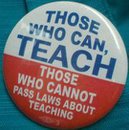
In a time when teachers are vilified by those who have little (if any) idea what they really do each day in the classroom, Meg proved that “those who can, teach.”  She will be missed in the classroom.

Unless someone like you cares a whole awful lot,
nothing is going to get better. It’s not. ~Dr. Seuss

And while it can be easy and cliché to lament the passing of a generation from our classrooms, we have to be ever mindful of the rising of a powerful and hopeful new generation.

At the same celebration of Meg’s accomplishments, I had the pleasure to re-connect with a former student of mine, Brian Heggood.  Brian excelled as a student—and always displayed an authentically kind spirit. Since those days of his Calvin and Hobbes t-shirts in an Advanced Placement United States History class at Stanton College Preparatory School (Jacksonville, Florida), Brian has grown into an inspirational teacher of history (of all things ) at his alma mater. His wife, Sheila, teaches at Stanton as well.

Brian and Sheila exude a passion for teaching that is gratifying and encouraging to witness. They spoke of the coming school year with excitement. Sharing ideas about developing a learning community across disciplines, they can’t wait to dive back into another year.  This is the rising generation of teachers; a generation that will serve our community well.  Again, while there is denigration of our teachers in public discourse, please know there are those out there who are doing remarkable things each day.  In small, incremental steps they are making a difference in our world. 

And I don’t believe Brian and Sheila are anomalies. Countless teachers across this great nation toil for the love of their students and the love of their craft each day. They work, in some cases, against incomprehensible socio-economic and political odds.  Our teachers have no control over which students walk into their classrooms. They have no control over the conditions from which these students come from and return to each day. But they DO lead the classroom environment and the overall education experience these students have each day.

Meg, thanks for the years, the wisdom, the love, the nurturing, and the laughter.  Brian and Sheila, thanks for being our light for the future.  Above all, thanks to you and your colleagues for making a difference in our world.

Act as if what you do makes a difference. It does. ~William James

[Thank you for taking the time to read my blog post.  Please pass it (and any of the archived posts on this site) along to friends and colleagues. You can also follow me on Twitter, LinkedIn, and Facebook. If you get a chance, visit my Facebook page (www.facebook.com/stevepiscitelli) and click on the “LIKE” button.  Also, if you have suggestions for future posts, leave a comment.  Have a wonderful week!]

© 2011. Steve Piscitelli and Steve Piscitelli’s Blog.


Posted in Appreciation | 4 Comments

(#63) The Power of Social Media


It has become a cliché to say that social media has changed the way we stay in touch with friends, family, and business associates.  Whether in the form of Facebook, Twitter, LinkedIn, YouTube, Hootsuite, Google Docs, or some other form of networking, social media has transformed our education, business, and personal worlds.

While I have described myself as a “recovering luddite,” I also have come to embrace and enjoy the possibilities of social media.  I understand (at least on a small level) the power these tools have for our classrooms, our businesses, and our philanthropy.  And I have come to understand, that social media can have a wonderful effect on our ability to communicate effectively. Really!  Take a recently-released book for example.

Aaker and Smith’s book The Dragonfly Effect: Quick, Effective, and Powerful Ways to Use Social Media to Drive Social Change (Jossey-Bass, 2010) not only provides evidence and strategies to harness social media’s power—it is a reminder of how to effectively communicate a message—and get people to take action for positive purposes in our world. Here, in an abbreviated form, is their four-point plan. Aaker and Smith refer to it as Focus + Get –which is the Dragonfly Effect (p. 9).

1. Focus on a single goal. Make sure it is measurable and concrete.
2. G
rab Attention quickly.  Make your effort or cause stand out from the crowd.
3. Engage your audience (readers, viewers, and listeners) with an emotional and authentic story.  You want your audience to care about your goal.
4. Take Action now!  Your message has to get people off the couch; you want them as active teammates.

The four steps are about clear, focused, and powerful communication. They are about making an audience care about your cause.  They are NOT about manipulation.  They ARE about connection.
The more I travel, the more I hear people talk about the power of social media.  They want to know how to do use it for good; how to separate the trivial from the meaningful.  Toward that end, on September 20 (4:00 p.m. to 5:30 p.m. Eastern Time) I will co-facilitate a national webinar on social media in the classroom. “When You Can’t Beat ‘Em, Friend ‘Em: Using Social Media and New Technology to Galvanize Your Class” will examine the question, “How can we make social media a meaningful part of the educational experience?” I will be joined by my colleague, co-author, and good friend, Professor Amy Baldwin from Pulaski Technical College in Arkansas.  More information can be found at: http://www.innovativeeducators.org/product_p/461.htm.

Enjoy your week!

 [Thank you for taking the time to read my blog post.  Please pass it (and any of the archived posts on this site) along to friends and colleagues. You can also follow me on Twitter, LinkedIn, and Facebook. If you get a chance, visit my Facebook page and click on the “LIKE” button.  Also, if you have suggestions for future posts, leave a comment.  Have a wonderful week!]

© 2011. Steve Piscitelli and Steve Piscitelli’s Blog.
 

Posted in Social Media | 1 Comment

(#62) Are You A Critical Thinker?


If you have been anywhere near a television, Internet video, or newspaper you have been inundated with stories about the debt ceiling and our national debt.  Lots of talk, yelling, and finger pointing.  And while the economics, the politics, and the humanity of the issue are critically important to our nation, I would like to use this issue as a jumping off point to a broader–and dare I say–more important topic:  Critical Thinking.

Critical thinking is constantly called for (in schools, in the workplace, in relationships) but I wonder how critically our thought processes really are. What passes for critical thought many times is little more than narrow agendas that are presented with little or no objective information.  Lots of assumptions; minimal fact.  And it is not just politics.

We see it (or the lack of it) in doctors’ offices, restaurants, the college campus, and government offices.  While we hear that employers want employees who can critically think, at times I wonder if they really do. That is, is there lip service for critical thought–while at the same time demanding that employees stick to a pre-arranged script? Are workers encouraged and rewarded for critically thinking–or are they chastised for thinking on their own?

Social media requires critical thinking.  For instance, should you post that photo or not?

Studies like the “Skills and Abilities for the 21st Century: A Workforce Readiness Initiative” (http://www.coedu.usf.edu/zalaquett/workforce/sa.htm) remind us that the workplace requires workers to communicate appropriately, plan efficiently, and effectively problem solve.  In short, our students need to be prepared to critically think–not simply spit back isolated facts.

Listen to debates about standardized testing. No matter where you stand on the issue, ask yourself if the tests further critical thinking.  If they do, how do you know? If they don’t, how do you know that?


Video recommendation for the week:

Was George Carlin right? How do you know?


Let’s look at five simple steps for the critical thinker. 

1. Stop, Breathe, Think.  How many times have you had a problem in front of you–and you immediately dove into the problem solving mode?  Do you measure first–or cut first?  Obviously, some situations require quick response.  But we will do much better if we stop, take a breath or two, and then think about the situation at hand.  Get rid of the chatter in your mind; focus; begin to engage in purposeful prioritization.

2. Determine Fact Or Fiction.  Do you remember the old adage, “When you assume, you make and ass of u and me”? Listen for assumptions that are passed off as fact by others and yourself. Many times what you hear will be little more than personal opinion that is not substantiated by research.  Something known as confirmation bias also comes into play.  That is, we tend to accept only the information that confirms our existing bias.  If we are not aware of this stage, critical thinking can become derailed before it even leaves the station. Don’t be side tracked by distractions.

  • ·         Example.  You read a news story about a government official traveling to another city to gather information about the local transit system and downtown revitalization.   Do you stop and examine the benefit of such travel, or does the default position become “All government travel is wasteful; nothing more than taxpayer-funded junkets”? My wife and I recently returned from Denver and Boulder.  We were amazed at the vibrant downtown areas in both cities. We could not have understood this energy by viewing video or reading reports.  Hands-on experience was needed.  When we read about an official traveling, we need to check our assumptions against reality.

3. Examine Of What You Have. In this step we move beyond examining fact or fiction. We need to make sure we have all the information need to make a well-informed decision.  Are we making a judgment on one or two pieces of information, or do we have lots of information–that we agree with? Are we only looking at information that confirms our biases (see step #2 above)? Are we willing to entertain ideas that differ from our deeply-held beliefs?  What else and who else do we need to consult? What obstacles are holding you back? This takes mindful persistence and concentration.  Avoid relying on a 30-second sound bite as your basis for decision making.

4. Make A Decision.  Once you have separated fact from fiction and have objectively analyzed and evaluated the information presented, you are in a better position to make a decision about what you have before you.  If you think about it, this is what learning is all about (or, at least, should be).  We have an experience or gain some knowledge and draw a conclusion based on the experience or knowledge. Perhaps what we have learned reinforces our behavior, or maybe we change how we act. In either case, we have made an evaluation that to act or not act a certain way works or does not work for us. We have given the situation critical thought.

5. Plan Your Next Step. Now that you have objectively viewed the information and challenged your own biases and prejudices, you can establish a more reasoned plan. Depending on the situation, you may move into a brainstorming session to problem solve. Or, perhaps you decide that a creativity workshop will help you break through old barriers.

Here are a couple resources you might find helpful:

  • ·         “Critical Thinkers: Think Like a Pro at Work, Home, and Play” http://critical-thinkers.com/category/critical-thinking-primer/  
  • ·         “Critical Thinking: Today’s Number One Skill”

     [Thank you for taking the time to read my blog post.  Please pass it (and any of the archived posts on this site) along to friends and colleagues. You can also follow me on Twitter, LinkedIn, and Facebook. If you get a chance, visit my Facebook page and click on the “LIKE” button.  Also, if you have suggestions for future posts, leave a comment.  Have a wonderful week!]

    © 2011. Steve Piscitelli and Steve Piscitelli’s Blog.


Posted in Critical Thinking | 3 Comments