#51 Rethinking Pomp and Circumstance


It is the season for graduates to proudly strut their stuff across the stage as they collect their hard-earned diplomas. Gowns flow; mortarboards perch precariously on heads; the band plays; and family, friends, and faculty look on. A guest speaker sends the graduates into their new world with words of wisdom. One by one, the names of graduates are called. Each one gets his or her time to walk across the stage and shake the hands of perhaps the college the president, a board member, or the commencement speaker. An official photographer captures the moment for posterity. The final graduate draws a large applause and the band strikes up the recessional and the gathered participants march with dignity to the exits.

It is a time-honored tradition–and it might have meet its end.

I pose the question: Is it time to reconsider the tradition? That is, should we consider replacing the ceremony with a more meaningful ritual–one that would truly have pomp and circumstance?

I am not an anti-traditionalist. Truth be told, what is passing for commencement ceremonies is doing little to honor the tradition. I raise the question after having sat through nearly 30 graduation ceremonies as a faculty member. I AM very happy for the students. I AM glad to be a part of this very special day. It IS an honor.

But what I have been witnessing over the years is a very slow degradation of the ceremony–and the creep to the mundane has turned to a sprint. Today, from my perspective, the ceremony seems to be done simply because–well, simply because that is way it has always been done. Perhaps the colleges and universities have become complacent in their planning. Perhaps it is a reflection of a cultural shift. I am not sure. But I can say as an interested participant, the ceremony lacks pomp and there is not much circumstance.

A recent graduation ceremony was illustrative. The assembled family and friends were rightfully proud of their graduates. But there wasn’t much consideration given for other graduates. Noise makers and screams more suited for a wrestling match or football game bounced around the arena. Most distressing was something I never had witnessed in previous ceremonies–at least not to this degree. Graduates were leaving en masse after they received their diplomas. Some returned to their seats, pulled out their cell phones, looked around the room for family and friends, texted something, and then got up and left–as fellow students were moving toward the stage. Others walked across the stage and then right out the exit. Still others decided to leave but rather than making a quiet exit to the rear, actually walked toward the stage–passing graduates still waiting in line for their diplomas–and exited to the side of the commencement stage!

So what is going on here? Consider:

• Faculty are constantly accused of doing the same thing (methodologically speaking) year after year. Some critics claim teachers do not understand how the “new” student learns. But those planning graduation seem to be doing the same thing year after year. Are they assessing the ceremony and audience needs?

• There is research that suggests that within 10 to 15 minutes of a lecture’s beginning most people have tuned out. (See John Medina’s book Brain Rules.) Having said that, what is a graduation but one long lecture?

A recent ceremony stretched out nearly three hours! I am not sure how many of the graduates felt particularly “special.” By the end of the ceremony, a bare handful of students and audience remained. There were probably more faculty remaining than new graduates.

No, we cannot control everything a person/crowd does. If someone wants to exhibit boorish behavior, he or she will find a way. But what we could do is make the ceremony so riveting–so compelling–that very few would even consider interrupting it or leaving early.

Rather than kill the ceremony–which one can argue has already been done in one way or another–let’s rework it so that it is truly a special day. Maybe that means going smaller. Maybe the venues need to change. Since colleges and universities have jumped aboard the virtual classroom bandwagon, maybe we should consider a virtual graduation. Maybe it means making the event an EVENT!


Video recommendation for the week:

Elgar’s “Pomp and Circumstance” can bring chills to an audience–but what about adding a respectful twist. Give a listen to another version of the time-honored graduation song. Kind of Jimi Hendrix meets graduation…kind of…


I’m just saying….we need to look at some other options. Put it all on the table and consider what is best for the dignity of the event–and consider the most appropriate way to honor our students. I am sure they deserve that.
© Steve Piscitelli and Steve Piscitelli’s Blog, 2011.

Posted in graduation | 4 Comments

#50 We Need More John Hunters


A few random thoughts about teaching…

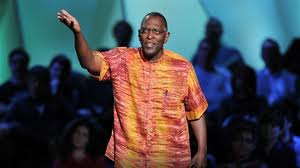
A friend and colleague shared an inspirational TED video with me a few days ago. (Thanks, Sande!) In this presentation, John Hunter explains the 4th Grade World Peace Game that he developed.  It is a simulation of fifty interlocking world crises that the students have to solve with their critical thinking and creative problem solving skills.   It is a moving testimonial of what can be done when we move away from bubble sheet tests and focus on interactive activities that allow students freedom to explore.    One gets the impression that the “game” is more than a “game” for John Hunter and his students.  It is not play time–but real-world time.  Students are engaged and learning.

As I watched the video, my mind brought me back to the 1980s and early 1990s when I taught middle school and high school at Stanton College Preparatory School in Jacksonville, Florida (http://www.stantoncollegeprep.org/central/). In many respects, I was extremely fortunate. I got to teach in a wonderful school born from the minds of people like Carole Walker (first principal for the school–and my first principal as a school teacher) who were not fearful to experiment, to be innovative, and to let their teachers use class time as laboratory time.  To be sure, we had educational expectations–but we had lots of latitude. 

And I had the greatest students I could have ever imagined.

When I taught 7th grade geography, we had a Model United Nations. One year I had 300 students representing virtually every country of the world—and they had to solve a global problem. Their solution had to be within the context of the socio-political environment of “their” nation. We learned about culture, history, politics, negotiations, critical thinking, and collaboration.  When I taught 9th grade, we did a Mock Trial in my American Government classes. Students had roles of drug dealers, informants, police, judges, attorneys, and jurors. As John Hunter says, the students rose to the challenges and responded well.  

We–my students and me–were not hamstrung by prescriptive tests and forced timelines. We experimented; we had fun; we had standards; and we worked.  It was a day that teachers were allowed to teach; they had lots of latitude.  A lot of the good fortune we had was due, no doubt, to the students I had. Even as 7th and 9th graders they had maturity far beyond their years.  Their parents were involved and supportive.

Set aside some time and view the video.  This is what education should be.  We need more John Hunters—and the resources that support them!


© Steve Piscitelli and Steve Piscitelli’s Blog, 2011.
 

Posted in Teaching | 4 Comments

#49 Education and Politics: Problems or Solutions?


First, the good news: This past Friday I had the opportunity to volunteer at the annual Atlantic Beach (Florida) Elementary School Dolphin Dash.  In my elementary school days this would have been called a “field day.”  Specifically for ABE, it is a day when all grade levels (pre-K through 5th grade) participate in a presidential fitness activity–a run around the school track. However, it is so much more. It is a day of community pride and just old fashion fun–with a direct connection to the development of the total child. The day starts with each class marching around the school track holding signs that identify (with pride) their teacher and class.  Members of the United States Navy are on hand with not only a color guard, but also young men and women who run with the students throughout the day.  Parents and neighbors volunteer their time.  The parent-teacher-student organization for the school is the best when it comes to commitment for their children and community. About the only thing this event is missing is a fly over by some Navy planes!

The best part–at least for me–is to watch these students run and have fun. The younger ones run two laps (1/8 mile); the older students circle the track eight times for a mile.  As you would expect, some of the boys and girls are real athletes and competitors. (I think the fastest mile this year was around 6:30–by a 5th grader!)  And, as you would expect, some huff and puff their way around the track.  No matter if a student finishes first or last, the crowd is cheering wildly and appreciatively; friends find friends and run with them, constantly encouraging them along the way.  Confidence, collaboration, community, and commitment are evident.  This is where the foundation for later education has its beginning. A community comes together to support young people for a heart-healthy and emotionally-satisfying activity. There is so much more to school than the 3Rs. We all have six dimensions to our life (social, occupational, spiritual, physical, intellectual, emotional). ABE understands this and nurtures more than the love for textbooks. (By the way, this is an “A” school when it comes to its scores.)

The challenging news:  When I observe such events, it is hard to understand the vilification of teachers that has recently been playing out in the public forum.  I know that a fun-filled field day of activities does not make Johnny a good reader.  That is obvious.  God–and anyone who has been paying attention–knows we have some serious educational issues that must be addressed.  Everybody seems to have an opinion on what makes for an effective school system.  (I wrote two blog posts on the topic of effective teaching.  Go to my posts of January 9, 2011 and January 16, 2011 if you are interested.)  Unfortunately, the folks who make the laws governing our schools may not have the best seat in the educational house to pass judgment.  Let me address just one oft-debated panacea: standardized testing.  As I said on January 9:

Somewhere between “We will measure you based on scores and grades” and “There is NO way to measure effectiveness” there lies the truth. Is is difficult? You bet….if it was easy, it would have been done years ago.  Unfortunately, we have non-teachers telling us what teaching is. Or people who have long since been removed from classroom teaching and see our
students as data points on an Excel spreadsheet. They miss the fact that our students have whole lives.

There continues to be a huge push for standardized testing. (In Florida, we have the FCAT.) That may address a piece of the overall problems facing us.  However, I can tell you from experience that bubble testing will not solve the issues.  Take writing for instance. I have witnessed–first-hand–a continual challenge when it comes to applying basic grammatical skills. This is nothing new. In fact, I was inspired back in 2007 by one particularly “challenging” batches of essays to write my song “I Buy Me A Verb?” The writing problem is not getting better.  From my perspective college students still mightily struggle with basic writing skills.  We can argue all day whose fault it is. But–again from my perspective–this basic communication skill deficit is not being solved by bubble testing.

Problems or Solution:   We hear “education politicians” scream their agendas at us.  The teachers are blamed for everything but tsunamis and acid rain. The answers seem to involve more prescription and less professional teacher judgment. More bubble testing and less real survival skills.  And still, the problems persist.  Maybe we are focusing on the wrong things. If all we see are problems–rather than solutions–we might end up with more problems.


Video recommendation for the week:

I will leave with a great video that speaks for itself.  (Thanks to a colleague for sharing this. Thanks, Jeff!) Let’s focus on solutions; not bromides and political sound bites. Our kids need it. Our society needs it. 


© Steve Piscitelli and Steve Piscitelli’s Blog, 2011.

Posted in effective teaching, Uncategorized | 2 Comments

#48 Remembering Dezmond Waters


On Friday, April 15, 2011, Atlantic Beach, Florida lost its number one ambassador.  Dezmond Waters, in what he said and did, reminded us of the need to appreciate what we have. We live in a time when so many people seem caught up in immediate gratification and the what’s-in-it-for-me mentality.   In some ways, Dezmond was a throwback to a time when family, integrity, and community stood out as the measure of a person.  Rather than live a life of what is in it for me, Dezmond constantly looked at what was in it for the world around him.

I first met Dezmond years ago when his daughter, Blythe, was a student of mine. I came to know the family over the years and was always impressed with their closeness, intellect, and good humor.

In 1997, my wife and I moved to Atlantic Beach–and I came to know Dezmond in a different light. He served as one of our city commissioners for this beachside community. After attending a few commission meetings and talking with Dezmond privately, it became abundantly clear that he cared for his community.  Read that as he CARED for his COMMUNITY.  Write it big; say it loud. Dezmond was a “homer” when it came to Atlantic Beach.

In the fall of 2002, Dezmond nominated me to serve on Atlantic Beach’s Cultural Arts and Recreation Advisory Committee. He believed I would be a good fit and have something to offer.  As he did during his years a teacher, he saw something, reached out, and mentored.  I served on the committee for 3+ years and helped to develop our community’s Acoustic Night and Songwriters’ Night. These monthly events allow people of all abilities to showcase their musical and lyrical talents. They have become premier events that have gained a following and acclaim in our area. I have been the fortunate recipient of many accolades because I “started” the events.  Truth be told, if Dezmond did not appoint me that committee, many people would still be sitting in the living rooms singing to their dogs.  Another legacy of Dezmond Waters.

One of Dezmond’s former high school students wrote in the online guest book at www.jacksonville.com:

Mr. Waters truly showed me as one of his history and Latin students at Sandalwood  High School how to marvel at what your own back door has to offer….He had true impact on my life then and now the one I spend with my family.

Dezmond Waters left a lasting impact–a huge legacy–for his students and his community. I am glad to have known him.  And while words such as mine can ring with cliché and sentimentality, I can only hope that, when the final tally is made, that I will have made even a fraction of the impact he made.
Thanks Dezmond. You did make a difference for a community.

                                             (c) 2011. Steve Piscitelli and Steve Piscitelli’s Blog

[Beach photo by Maureen Buik.]

Posted in Making a Difference | 8 Comments

#47 Passion, Talent, Money


Have you ever been involved in a project that had spurts and sputters along the way? One marked by flurries of creativity mixed with periods of inactivity. One that was at once exhilarating and maddening.  And have you ever had to grapple with the decision of whether to stay with the task in which you have invested a lot of resources (time, ego, and money), or move on?

While such decisions can be confusing and gut wrenching, two pieces of advice may help you find clarity.

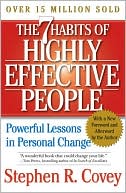
 The first is what one of my mentors told me: At some point in a business relationship, the time may come to make the decision for “no deal.”  If what is on the table does not satisfy both parties, then both parties walk away amicably. Stephen Covey refers to this as Win-Win-Or No Deal in his book The Seven Habits of Highly Effective People.

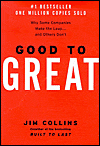
Jim Collins offers sage advice in his book Good to Great: Why Some Companies Make the Leap…and Others Don’t. In it, he introduces the Hedgehog Concept and its three interconnected questions:

  1. What are you passionate about? This means you really love to do the work and enjoy the process of the work or project at hand. Collins puts forth this test: “I look forward to getting up and throwing myself into my daily work, and I really believe in what I’m doing.”
  2. What can you be the best in the world at? In other words, what do I have a God-given talent to do? Again, Collins’ words: “I feel that I was just born to be doing this.” The other side is to understand what you cannot be the best at.
  3. What drives your economic engine? This means what you do brings economic rewards. “I get paid to do this?” Collins says you might ask yourself, “What is going to give me the highest rate of return on my efforts?”

Video recommendation for the week:

If you would like to hear Jim Collins himself describe the Hedgehog Concept click here.


When confronted with hard decisions to pursue a project, stay with a project, or move away from a project, you might find this three-question exercise clarifying. Only you can answer if you should invest energies in a pursuit that would detract from your personal and business goals. Perhaps asking yourself if the endeavor will enhance the quality of life will help you sort it all out.

If you make a lot of money doing things at which you could never be the best,
you’ll only build a successful company, not a great one. If you become the best
at something, you’ll never remain on top if you don’t have intrinsic passion for
what you are doing. Finally, you can be passionate all you want, but if you can’t
be the best at it or it doesn’t make economic sense, then you might have a lot of
fun, but you won’t produce great results. (Collins, page 97)

While Good to Great tells the story of successful (and not so successful) companies, consider applying the same rubric to your personal life. The intersection of the three circles is the sweet spot.

© Steve Piscitelli and Steve Piscitelli’s Blog, 2011.

 

Posted in Passion | 2 Comments

#46 Little Pleasures and Great Treasures


Recently, as I readied myself for a program in another state–and yet one more trek through airports and all that means nowadays–I found myself concentrating on the downside of my travels. The hotels, the airport lines, airport food, flight delays, time away from home. It is easy to be caught up in the “problems” and “challenges” we face.  Reality for me is that I really don’t have many trials and tribulations. Yes, there are issues with which to deal; but when I look at the news each day…well, I don’t have a lot to complain about.  Sure there are irritations and, at times, major setbacks. But I have a lot to be grateful for in life.. 

And there are so many people, places, and experiences that add up to a great life for all of us; some that we may take for granted.  For some of you, it may be your children, your spouse or partner, your community work, or your health.

So, today, let’s turn our thoughts not to the travails but, rather, to the little pleasures of life–those experiences that are too often overlooked.  Here is a very short list of little pleasures, that, when considered as a whole, add up to a large experience.

  • A sunrise walk on the beach.  
  • Any time on the beach.
  • A morning jog.
  • A dinner with friends.
  • An evening listening to friends perform their music.
  • The beginning of a new writing project.
  • Completing a writing project.
  • A day working in the yard with my wife.
  • Any time with my wife.
  • A walk with my dog.
  • The eyes of students when they have an “aha” moment.
  • The early-morning quiet.
  • The sound of music.
  • A massage.
  • A Yankees’ win.
  • Blues music.
  • Playing my guitar.
  • Creating a new program.
  • This weekly blog.
  • Little kids dancing to music.
  • A bicycle ride.
  • A Dunkin’ Donuts’ iced coffee.
  • Seeing my wife in the morning.
  • Seeing my wife at night.

And the list can and does go on and on. Many little things that add up to a great ride. In the long run, these little pleasures make for great treasures.

What are your little pleasures?

                                            
© Steve Piscitelli and Steve Piscitelli’s Blog, 2011.
Posted in little pleasures | 11 Comments

#45 Mickey Mantle, Jamaica, and a Leisurely Read


In my line of work, I am always reading. Whether preparing for a presentation, finding new material for my students, or researching for a writing project. I review various books, magazines, blogs, and web articles most every day. This is one of the many benefits of my career—I am always learning.

The downside, though, is that I do very little leisurely reading. I seldom make time for reading what one might call enjoyment. You know, reading simply for pleasure; not for professional purposes. No pen in hand to underline important passages or concepts. This past week proved different.

My wife and I spent a week in Jamaica celebrating our 35th anniversary. We totally disconnected from our usual world. No cell phone, no email, no computer, no newspapers, no television news, no business or work-related projects. A total mind enema. We dedicated the week to ourselves; recharge time. And among the things I chose to do was read purely for leisure. The book: Jane Leavy’s The Last Boy: Mickey Mantle and the End of America’s Childhood (Harper Collins, 2010).

Having seen “The Mick” play during his career, I was particularly pulled to the book. Leavy meticulously researched this Yankee icon. The result is a riveting journey from Mantle’s rise as DiMaggio’s heir apparent to his many health and personal tribulations. As with many of our sports heroes and celebrities, Mantle was a gifted man tormented by many personal demons. Leavy said of her work,

So how do you write about a man you want to love the way you did as a child but whose actions were often unlovable?… This is my attempt to understand the person he was and, given who he was, to understand his paradoxical hold on a generation of baseball fans, including myself, who revered The Mick despite himself, who were seduced by that lopsided, bucktoothed grin.

Leavy did not disappoint. The book is a wonderful read. It was Mick and me on a Jamaican beach. A rare treat to read for no other reason than enjoyment.


Video recommendation for the week:

Enjoy Mickey Mantle Day.


Aside from the book and the joy of reading, this experience reminded me of an idea I had a few years ago for an article. As I was walked the beach one summer day, I did notice the ubiquitous paperbacks. People everywhere with their books folded back; engaged in the written word. I thought it would be interesting to ask these leisure readers two questions: 1. What are you reading? 2. What drew you to that particular book?

So with the Jamaican breezes a memory and the Mick still fresh in my mind, I’ll toss the questions to you: 1. What leisure books do you have on your short list for summer reading? 2. What about the books (or authors) have attracted you to those books?

Posted in Reading | 1 Comment

#44 Saluting Spring!


Spring is here. The days are brighter and sunnier. Everything looks greener. Breathe in deeply and enjoy the wonders around us.


Video recommendation for the week:

Rather than post a lot of words this week, let me post one music video that has energy and brightness. Sing, dance, be merry!


Happy Spring 2012!

Posted in Saluting Spring | 1 Comment

#43 What We Say, We Become


On August 22, 2010 I posted a blog titled “Are there words we should NEVER say–and who makes that decision.”  The point of the post was to examine hurtful words–and whether or not there was a line that should be drawn.

Today, I would like to examine words again–not hateful words towards others but, rather, words that can rob us of our own passion. Buddha is credited with the quote of “What we think, we become.”  Taking it a step further, I maintain what we say, we become.   Allow me to offer exhibits A, B, C, and D.

A.      Try and But. The first week of a new semester, I challenge my students to eliminate these words from their vocabularies. The intent of the exercise is to heighten awareness of how these words can serve as demotivators.  They really are excuse laden.  Why say you are going to “try” and do something?  Why say you “tried” to do something? The reality is that you either did it–or you did not.  Why minimize the effort (or lack of effort) with, “Well, I tried?”  Same for “but.”  It is a huge eraser for everything that comes before it in the sentence.  “Yes, I promised to exercise BUT I ran out of time.” Again, you did it or you did not.  We have to face up to that fact–and then figure out a way to do what we need or promise to do. Yoda told us, “Do or do not. There is no try.”


Video recommendation for the week:


B.      You. This is one of the most abused pronouns in our language.  OK…this is a pet peeve…but I believe it has real implications. Listen to interviews of people who have just accomplished or failed at an act. Here is what we often hear: “When you find yourself facing those odds, you freeze and you are not able to perform.” OR “You don’t know where you find the strength to accomplish that. You are glad you find it!” Why not own the statement and action and say, “When I found myself facing those odds, I froze and I was not able to perform.” OR “I don’t know where I found the strength to accomplish that. I am glad I found it!”

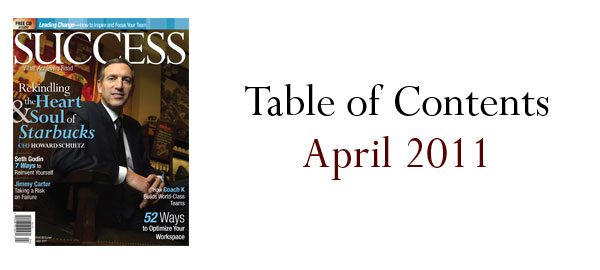
C.      Can’t or Won’t.  I found this reminder in this month’s edition of Success Magazine.  Many times we hear things like “I can’t lose weight” or “I can’t find time to exercise” or  “I can’t find time to fix the lawnmower.”  The reality is closer  to “I won’t lose weight” or “I won’t find time to exercise” or  “I won’t find time to fix the lawnmower.”  Yes, sometimes there are circumstances that stymie us; they don’t, however, have to derail us.  Why not reframe the situation? For instance, the chances of me every playing guitar like Eric Clapton are slim. But is that the real issue? The larger issue is that I want to play guitar better. And if I really want that end, all I have to do is practice. If I won’t practice, I won’t get better. Pretty straight forward.  If I am not getting what I want, I need to look myself in the mirror and speak the truth to me.

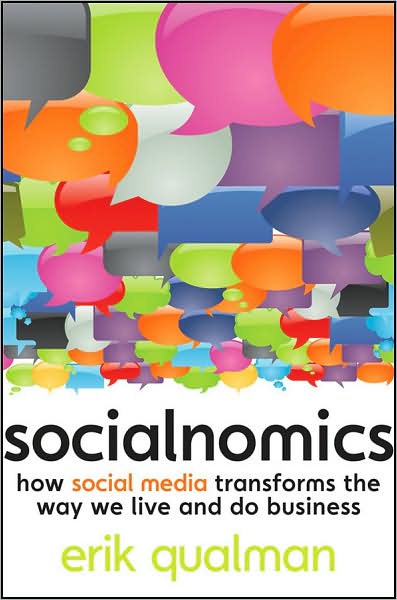
 D.      Would you say the words to your mother? Social media has transformed our lives. Facebook has 500 million users and Twitter has now reached one billion tweets per week.  Unfortunately, with all those status updates and tweets examples abound of poor word choice and judgment.  Consider what just happened with Chrysler. As Erik Qualman explains it on the Socialnomics site (http://www.socialnomics.net/2011/03/14/chrysler-fires-agency-over-f-tweet/), Chrysler hired a company to help with advertising and marketing. Part of the new campaign was establishing a Twitter account for the car giant. One of the marketing agency’s employees mistakenly posted a tweet on the Chrysler Twitter feed; he thought he was tweeting on his personal account. Unfortunately, he dropped the F-bomb in the tweet. His employer dropped him from employment–and Chrysler dropped the company. Oops!

With so many words uttered each day, we may forget that what we say does have an impact. On others and on our own growth and wellbeing.

Here’s to a week filled with more “dos” fewer “don’ts;” more “I” less “you;” a focus on “can” instead of “can’t;” and words mom will be proud of.

© Steve Piscitelli and Steve Piscitelli’s Blog, 2011.


Posted in Words and Action | 7 Comments

#42 Guns in the Classroom


Sometimes we just have to shake our heads and ask, “Huh?” Such is the case with one of the bills being considered by the 2011 version of the Florida Legislature.

Current Florida law makes it illegal to carry a gun into any elementary school, secondary school, and college or university facility.  The current session of the Florida legislature is considering legislation that will make it permissible to carry a concealed weapon on to a college or university campus.  As I read the bills (SB 234 and HB 517), colleges and universities will be removed from the prohibition listing in the law. If a person has a concealed gun permit, he/she will be allowed to bring a weapon right into the classroom, cafeteria–and I would assume–residence hall, library, and courtyard. And it would be with the blessing of our lawmakers.

The rationale I have heard most is that this new law (if it is passed by the legislature and signed by the governor) would be a deterrent for “another campus shooting” happening. Allowing people to carry on campus will, according to this logic, reduce chances of gun violence on campus.  

Interestingly, the above bills still expressly prohibit anyone from bringing a weapon into a meeting of the legislature (and that continued prohibition is a GOOD thing). But why is it the legislators protect themselves from concealed weapons–but not faculty, staff, and students?

With the gun violence we have seen recently and with public civility continuing to disintegrate, one would think we would want to do all we can to keep guns OUT of colleges and universities–not “deleting provisions relating to prohibitions on concealed carry” on campus.

As a Florida citizen it concerns me. As a faculty member this concerns me. If I were a parent with a son or daughter in, or considering attending, Florida’s colleges and universities, I would be very concerned as well. Let’s encourage our children and students to bring books, laptops, diverse ideas, and civil discourse to our colleges and universities.

The full text of SB 234 and HB 517 can be found online at http://myfloridahouse.gov/ and http://www.flsenate.gov/.

(C) 2011. Steve Piscitelli and Steve Piscitelli’s Blog

Posted in Education, Integrity, Words and Action | 1 Comment