
(#91) Success Strategies for the Classroom—and the Business World


Every so often we all can find wisdom in reminders of past lessons. Think of the following checklist as providing basic strategies that will move you toward a more active and successful life in school—and beyond.

As a professor, I am responsible for creating well-thought out lessons that engage and challenge my students. The students have the responsibility to be active participants in the classroom.  Jackson Browne sings in one of his songs about the power of his audiences:

People you’ve got the power over what we do You can sit there and wait Or you can pull us through Come along, sing the song You know you can’t go wrong… (“The Load Out/Stay”)

For me that rings true.  This semester I have five classes that have energy. The collective personalities of each class runs high with enthusiasm and curiosity. The students (most of them) show excitement for the material and their classmates. In short, they “can pull us through” to great heights.  I would like to think I have something to do with that energy. I do know that occasionally I get one of those classes in which the students do “sit there and wait.” And, I guess, I have something to do with that as well. I have commented elsewhere on this blog about effective teaching. (See: Lessons from “Larry Crowne”, Teaching: Creating An Experience, Education and Politics: Problems or Solutions?, What Do Effective Teachers Do?, and The Student Perspective: What Do Effective Teachers Do?)  For this week’s post, though, I will focus on the other side of the room—the student side.  AND I will make a connection outside of the classroom—to the business world.

Here are success strategies that pertain to the business world as much as they do to our classrooms.  Learn them. Internalize them.  Grow with them. (Study Skills: Do I Really Need This Stuff, 3rd edition, Piscitelli, 154-155)

I like to tell my students that not only do you need to be there in class, you need to be there in class. That is, your attention, your thoughts, and your head, need to be focused on the class lesson. The student’s physical presence is important as it allows you to hear explanations, ask questions, and add to the class discussions. Every so often we all can find wisdom in reminders of past lessons. Think of the following checklist as providing basic strategies that will move you toward a more active and successful life in school—and beyond.


Video recommendation for the week:


1.   Do you show up? Pretty basic, isn’t it? It is difficult to meet instructor expectations if you are sitting in the student lounge during class time or asleep in your bed. How do you know what your boss or client wants or expects if you don’t attend the latest strategy briefing.

2.   Do you bring all you need? This is not the time to be without paper, pen, textbook, laptop, quarterly report, or any other tool that may help you with your studies.  

3.   Do you arrive on time? Again, pretty basic!  Punctuality is important. Many instructors orchestrate each moment of class.

4.   Do you sit where you will benefit the most? To minimize distractions, you may wish to sit close to where the instructor or speaker is standing. Unless you have been given explicit permission to access your social graph, this is not the time to text message and, for goodness sake, don’t put your head down for a quick nap. (The snoring will annoy the person next to you.)

5.   Do you carry your passion with you? Be excited! Practice your active listening skills. Listen intently; ask questions; be involved.

6.  Do you remain actively engaged? The class period and business meetings generally have a recognized starting and ending time. Think of a movie. If you come in late or leave early you will miss critical scenes that will hinder your understanding of the entire film.

 7.   Do you review your notes as soon as possible? If you have the time, complete this review before you leave the room. Remain in your seat for a few moments and quickly determine whether you have any questions or confusion about the day’s material. Or find a quiet place as soon as possible to complete your review.”

  8.  Do you act with civility?   Finally, remind yourself about civility. Develop an appropriate civil relationship with professors, supervisors, colleagues. This includes polite behavior in class (turn off the cell phone; listen to the person speaking. REALLY listen!)  Communicate and connect with your classmates, professors, supervisors, and co-workers.
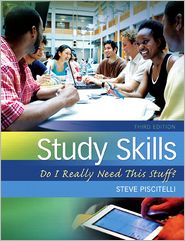
For more on classroom success strategies, see my book Study Skills: Do I Really Need This Stuff? 3rd edition (Pearson Education). Please visit my website (www.stevepiscitelli.com), contact me at steve@stevepiscitelli.com, or visit Pearson EducationAmazon and Barnes and Noble.

Enjoy your week—and H.T.R.B. as needed!

Thank you for taking the time to read my blog post. Please pass it (and any of the archived posts on this site) along to friends and colleagues. You can also follow me on Twitter, LinkedIn, and Facebook. If you get a chance, visit my Facebook page (www.facebook.com/stevepiscitelli) and click on the “LIKE” button. Also, if you have suggestions for future posts, leave a comment. Have a wonderful week!

© 2012. Steve Piscitelli and Steve Piscitelli’s Blog.

Posted in Study Skills | 5 Comments

(#90) Using Learning Preferences to Make Connections


It’s one thing to understand what your preference for learning is. It is quite another, to do something with that knowledge. Remember, knowledge is NOT power. The APPLICATION of knowledge brings you POWER.

When we speak of style, we generally refer to a particular way people dress, talk, walk, or carry themselves.  In education, we speak about another type of style—learning style.  Simply put, this refers to the factors that affect how a person learns.


Video recommendation for the week:


Even more specifically, it is helpful for students to understand their individual learning preferences—or how they best process (take in and put out) information.  One recognized and highly-respected learning preference inventory is the VARK (Version 7.1. © 2010. Neil D. Fleming and C. Bonwell, www.vark-learn.com).  It recognizes four preferences. Your style might show a clear preference for one over the other three. Or you may be “multi-modal” and readily draw on more than one preference.  A brief summary of each preference looks like this:

  1.  Visual.  Seeing something helps you best process the information before you.  In a classroom situation (or business meeting), you would more readily attend to visual stimuli. Seeing diagrams, photos, or videos helps you understand the presentation.
  2. Aural (or auditory).  Auditory learners lean on their sense of hearing to process information. They can listen to and grasp the meaning of a lecture, for instance.  These folks might even be able to listen to directions and be able to follow them without having to put pen to paper.
  3. Read-write. These learners are comfortable reading and writing during the learning process. Blogs, books, magazines, and essays can help them understand a new concept or issue in class. As the label implies, they learn best by reading, taking notes and writing summaries.
  4. Kinesthetic. These students might get more from a lesson if they are able to move about and sense the lesson at hand. Field trips may work better for them than reading a textbook chapter. Building a model will be more helpful than seeing a picture of one.

It’s one thing to understand what your preference for learning is. It is quite another, to do something with that knowledge. Remember, knowledge is NOT power. The APPLICATION of knowledge brings you POWER.  Here are a couple of quick points to keep in mind to help you use your knowledge of learning preferences. (Piscitelli, p. 136, 2013)

If you show a preference for visual learning:

  • Ask yourself, “How can I use visual aids to help me understand my class work (or on-the-job project)?” A few suggestions include:
    • If available, use the visual aids on the textbook’s online Web site.
    • Perhaps your instructors (or meeting organizers) have posted PowerPoint presentations or outlines on their Web sites; if so print them.
    • Change your note-taking strategy to include drawings, diagrams, and flow charts
    • Find online videos (like the ones with this blog) to help you understand a concept or an issue.

If you show a preference for auditory (aural) learning:

  • Ask yourself, “How can I use verbal clues to help me understand my class work (or on-the-job project)?” A few suggestions include:
    • Tape record yourself (or the presentation)—and play it back.
    • When available, use audio notes for text books.
    • Listen to books on disc to “read” inspirational material.
    • Download a podcast to your smart phone or other digital devices.


If you show a preference for read-write learning:

  • Ask yourself, “How can I use print material and my writing skills to help me understand my class work (or on-the-job project)?” A few suggestions include:
    • Read textbook introductions, key terms, learning outcomes, and summaries to help focus your thoughts.
    • If there are activities in your book (or job manual), write the answers, read your answers, and reflect on your answers.
    • In meetings, take notes.

 If you show a preference for kinesthetic learning:

  • Ask yourself, “How can I use movement to help me understand my class work (or on-the-job project)?” A few suggestions include:
      • When possible construct a model of your class material or work project.
      • If it helps, move around (pace) while learning new concepts.
      • Get up from your work area at regular intervals for a stretch break.


    For teachers and trainers: Last week in class, when we were discussing learning style and preference, one of my students had a revelation. (I love it when that happens!) She said, “You do that! You use all of those.”  Well, maybe not as often as I should, but I consciously strive to address multiple learning preferences in every lesson and keynote presentation I deliver. My thought is that I will at least have a better than average chance of capturing the attention of the people in front of me if I am able to draw on each of the four different preferences.  Think about that the next time you have to get a point across in a class presentation or make a pitch to a client. If you prepare and present for all learning preferences you will create more opportunity for getting your point across—and your audience will more enthusiastically embrace you and your message.

    Once you understand how you learn and what you can do with your particular learning preference you will have increased your chances to master tasks in front of you.

    For more on learning styles and learning preferences, see my book Study Skills: Do I Really Need This Stuff? 3rd edition (Pearson Education). Please visit my website (www.stevepiscitelli.com), contact me at steve@stevepiscitelli.com, or visit Pearson EducationAmazon and Barnes and Noble.

    Enjoy your week—and H.T.R.B. as needed!

    Thank you for taking the time to read my blog post. Please pass it (and any of the archived posts on this site) along to friends and colleagues. You can also follow me on Twitter, LinkedIn, and Facebook. If you get a chance, visit my Facebook page (www.facebook.com/stevepiscitelli) and click on the “LIKE” button. Also, if you have suggestions for future posts, leave a comment. Have a wonderful week!

    © 2012. Steve Piscitelli and Steve Piscitelli’s Blog.


Posted in Learning Styles | 1 Comment

(#89) Set Your Goals and S.O.A.R.


You can write the most specific and realistic and timely goal you can think of—but it will be useless (a fantasy) without ACTION.  You have to put the “do” behind the “want to do.”


Video recommendation for the week:


When I moved to Florida as an eighteen year-old college student I dreamed of one day living at the beach. It took me about 26 years to realize that dream.  As a first-year college student I can tell you with certainty that I had no plan of how I would come to live at the beach.  I did not have any specific steps mapped out. I didn’t even have a specific date.  For me it was pretty nebulous: “Someday I will live at the beach.”  But over the years, the dream became more focused in my mind; I developed a plan; I took action; and now I am living the dream I dreamed as that young college student.

So why do I tell you this? Because even though all of us have dreams, haven’t you noticed that some of us reach those dreams and some of us never do? For me, it all comes down to four simple steps.  Think of the acronym S.O.A.R.

  • Specific. You need to be specific about your direction.  “I want to lose weight” is a noble start—but what does it mean? It lacks specificity. How much weight will you lose? How will you do it? By when will you lose the excess baggage? Perhaps you have heard someone say “I want better grades” or “I will study harder.”  Again, nice start—but what does it mean.  Be focused and flexible (you never know when detours, obstacles or bumps in the road will appear) but be specific about your direction.
  • Organize. Identify the resources you will need. Will you need time, money, education, mentorship, or practice?  Find them.
  • Action.  You can write the most specific and realistic and timely goal you can think of—but it will be useless (a fantasy) without ACTION.  You have to put the “do” behind the “want to do.” The last verse of my song Dreams goes like this:

    So will you dare to dream
Or chose to cry?
Live for your life
Or just sit by?
You gotta take action
And do what you love
It may be no further
Than a couple of your dreams

 There is no substitute for taking action now—and doing it often.  If need be, find a mentor, find a coach, find someone who will push you forward.  Just keep moving forward.

  • Reason. Know why you are doing what you are doing. Why is the goal important?  If you ever think of giving up, remember the reason you established your goal. Is it strong enough to keep you moving forward?  Why do you want to lose weight? “I want to be healthy.” Again, a great start—but vague.  “I want to drop two inches from my waist…I want to get into the old pair of jeans…I want to be able to run three miles again.” Your answer to “Why?” reflects your motivation. What is driving you to the goal?  Again, be specific.

 Best wishes as you turn your dreams into reality!

For more on motivation and goal setting, see my book Study Skills: Do I Really Need This Stuff? 3rd edition (Pearson Education). Please visit my website (www.stevepiscitelli.com), contact me at steve@stevepiscitelli.com, or visit Pearson EducationAmazon and Barnes and Noble.

Enjoy your week—and H.T.R.B. as needed!

Thank you for taking the time to read my blog post. Please pass it (and any of the archived posts on this site) along to friends and colleagues. You can also follow me on Twitter, LinkedIn, and Facebook. If you get a chance, visit my Facebook page (www.facebook.com/stevepiscitelli) and click on the “LIKE” button. Also, if you have suggestions for future posts, leave a comment. Have a wonderful week!

© 2012. Steve Piscitelli and Steve Piscitelli’s Blog.
 

Posted in Dreams, Goals | 1 Comment

(#88) Information Literacy: Not All Information is Created Equally


What we have to remember is that the explosion of information
does not necessarily equate to an explosion of credible knowledge.


Video recommendation for the week:


Maybe it is the heat of the political campaign season. The ads, debates, robocalls, and the talking (screaming?) heads on television have reinforced the importance of being information literate.   I am again reminded that study skills go beyond the classroom. They are life skills.  If we are not able to distinguish fact from fiction in what we hear, see, and read then we are in for a long political season.

Information literacy concerns itself with locating, evaluating, and using information in an effective and efficient manner.  “Information” can come in text, video, photos, recorded interviews, or music.


Video recommendation #2 for the week:

Up until a few short years ago, the ground zero for finding information was your local library.  Whether you were looking for a newly-released book, doing research for history class, searching for a video, or wanting to scan the local newspaper, the library represented THE place to satisfy your research needs.  You might even have found a small coffee shop nearby. Kind of a one-stop-intellectual opportunity.


Today we live in an age that allows us to get information instantaneously from virtually anywhere in the world. As of 2003, the World Wide Web (www) contained seventeen times the volume of information found in print collections in the Library of Congress. (Qualman 2010)

What we have to remember is that the explosion of information does not necessarily equate to an explosion of credible knowledge.

There are four components of information literacy—and due to the availability of SO MUCH information, it is even more imperative to understand and adhere to these four steps of becoming information literate.

  1. Understand what information we need.
  2. Know where to find the information we need.
  3. Evaluate the information we find (is it “good” or “bad”?).
  4. Organize and use the information in a logical and appropriate manner.

To sum it up: “Today’s complex informational system creates challenges. The key is to know not just where to look for information but also how to separate the good from the bad, the informative from the misleading.” (Piscitelli, 71)

Bonus Section: What is Your Digital Tattoo—and How is it Connected to Information Literacy?

I have written on this blog before about the Power of Social Media.  Social media has become THE game changer in how we communicate. It is not a fad.  It is not going away. It is not static—it continues to change daily. And it IS part of the new information literacy. What we have to do is learn how to use it effectively—and with integrity and dignity.

I used to talk about “digital footprints” as a metaphor for the impressions we leave when we post anything online.  I have come to learn that a “footprint” is not an adequate mental representation. Instead, think “digital tattoo.”  This more adequately represents what we develop online—a lasting image.  Consider that when you post anything online you are creating your online persona—your digital reputation. It consists of your words (email, texts, tweets, status updates) and your images (photos and videos). It has the  potential of being found by anyone.  The following video is of a conversation I had with a musician friend who uses social media for his music.

Here is a shortlist of tips on creating an appropriate online profile (and reputation):

  • Be honest.
  • Pay attention to your grammar, spelling, and sentence structure.
  • Pay attention to the messages you convey with your words (classy, sassy, goofy, professional).
  • Be appropriate with images you post.
  • Think of your mentor and your mother!  Would you want them to read what you have just put out there for the world to see?

The bottom line is to maintain a sense of civility and propriety. Just because you have communicated does not mean you have connected. Be respectful.

Remember, social media is a resource to use. Use it well. Information literacy is a skill. Develop it purposefully.

For more on information literacy and social media, see my book Study Skills: Do I Really Need This Stuff? 3rd edition (Pearson Education). Please visit my website (www.stevepiscitelli.com), contact me at steve@stevepiscitelli.com, or visit Pearson EducationAmazon and Barnes and Noble.

Enjoy your week—and H.T.R.B. as needed!

Thank you for taking the time to read my blog post. Please pass it (and any of the archived posts on this site) along to friends and colleagues. You can also follow me on Twitter, LinkedIn, and Facebook. If you get a chance, visit my Facebook page (www.facebook.com/stevepiscitelli) and click on the “LIKE” button. Also, if you have suggestions for future posts, leave a comment. Have a wonderful week!

© 2012. Steve Piscitelli and Steve Piscitelli’s Blog.
 

Posted in information literacy, Social Media | 5 Comments

(#87) Priority Management: Are You Doing the Right Things or Are You Just Doing Stuff?


We cannot stop time, create time, or control time.
But we all can effectively manage our priorities.

Time management is a myth.  Can’t be done.  I can manage my finances (spend less, earn more). I can manage my weight (eat less, exercise more). I can even manage my stress level (rant less, breathe more).  But I can’t manage time. I cannot get more of it. I cannot save some from this week and place it toward next week.  Nope, I can’t.  Like you, I have 168 hours in every week. I can’t rearrange them.

What I can do is manage my priorities. That is something we all can do. Those little choices we make each day are a window to our priorities.  [Image by Naypong/Free DigitalPhotos.net]

My students complete an activity titled “Where Does Your Week Go?” It is a simple listing of what they do each day for a week.  They then rank each activity from “not necessary” to “extremely necessary.”

“Necessary” in this context means “does the stuff you fill your life with connect to your priorities?”  In short, does the “stuff you do” get you closer to what you say are your goals? Doing a lot of stuff is NOT the same as doing the right stuff.

Another way to look at this is to determine whether your activities are negotiable or non-negotiable. For a single parent the care of his/her child is non-negotiable.  Likewise, your physical health is non-negotiable.  Three hours spent on social media each day falls, more than likely, in the negotiable category. Look at your list of activities for a week. Are they negotiable or non-negotiable? Are you doing the right things or are you just doing stuff?


Video recommendation for the week:

The video below provides a memorable visual about what happens when we get sidetracked in life and fill our days with the small stuff—the negotiable items. 

A note about the video. It is in three parts: (1) the set up; (2) the problem; and (3) the conclusion and lesson.  Listen to the great observations and thoughts from the folks participating in this video with me. Classroom teachers who may be reading this blog: Consider this as one way to introduce and/or reinforce the concept of priority management to your students. You could actually show it in three segments; pause the video after each segment; have the students write a reflection; then conclude with a group discussion.  Have fun with it!


Your Homework. A money budget can help you determine where your money comes from and where it goes.  It can be a tedious process—but it is a necessary exercise for building wealth.  The same with a time budget.  Keeping track of everything you do for 168 hours can provide interesting insights about how you actually use your time.  So, for the next 7 days, keep a log of how your time is used. Record your sleep, your meals, your social media use, exercise, and time spent with your kids, spouse, and friends.  Don’t forget your transportation time to and from work or school; even brushing your teeth. Record everything.  And remember, the total number of hours MUST add up to 168 hours.  Once you have completed the log, judge the nature of each hour in your week on a scale from 1 (not necessary) to 5 (extremely necessary).  And then answer for yourself: Am I doing the right things or am I just doing stuff?

Best wishes this week as you focus on your necessary (non-negotiable) priorities, minimize the unnecessary (negotiable) activities, and activate positive new habits!

For more information on priority management, see my new book Study Skills: Do I Really Need This Stuff? 3rd edition (Pearson Education). Please visit my website (www.stevepiscitelli.com), contact me at steve@stevepiscitelli.com, or visit Pearson Education,  Amazon and Barnes and Noble.

Enjoy your week—and H.T.R.B. as needed!

Thank you for taking the time to read my blog post. Please pass it (and any of the archived posts on this site) along to friends and colleagues. You can also follow me on Twitter, LinkedIn, and Facebook. If you get a chance, visit my Facebook page (www.facebook.com/stevepiscitelli) and click on the “LIKE” button. Also, if you have suggestions for future posts, leave a comment. Have a wonderful week!

© 2012. Steve Piscitelli and Steve Piscitelli’s Blog.


Posted in Priority management | 12 Comments

(#86) A Model for Critical Thinking


What is common sense is not always common practice.

As a skill, critical thinking is a no-brainer; especially in a democratic society.  Yet what is common sense is not always common practice. Today, let’s examine a model that will help us be more effective critical thinkers.  The RED Model is an effective and powerful critical thinking tool that provides a systematic, step-by-step process for examining issues, events, people, and problems. It is eloquent in its simplicity. The graphic below clearly outlines the steps of the model.

Watson-Glaser Critical Thinking Appraisal, Forms A/B (WGCTA). Copyright © 2007 NCS Pearson, Inc. Reproduced with permission. All rights reserved. “Watson-Glaser Critical Thinking Appraisal” is a trademark,  in the US and/or other countries, of Pearson Education, Inc. or its affiliates(s).

For this blog post, let’s drill down and examine two vital concepts for this model–and for critical thinking in general.

#1. Assumptions.  An assumption is an inference, an opinion, or a belief about (among other things) a person, place, or philosophical position.  Whether it is a wild accusation heard during political campaigns, differing expectations of a supervisor and employee, or a misunderstanding between two friends, an assumption can get us into big trouble. We must separate fact from fiction.

  • Example. Ricky is a first-year college student. In high school he was given second chances on all of his quizzes and tests. If he did not score well the first time, he could always take it again.  (Some school districts call this “grade recovery.”)  He assumed his professors would do the same.  Imagine his shock when he received a “D” on his first test—and was told what he gets is what he keeps. No mulligans!
  • Strategy. In the book, Now You’re Thinking! (Chartrand, et. al.) the authors maintain, “Unstated assumptions are where trouble usually begins…their consequences can be serious.” (p. 66) Before we can do something about our assumptions, we have to recognize them. If we have become vested in our assumptions, it might be difficult for us to see that a particular opinion is full of holes.  Ask a trusted friend or mentor to help you identify some of your operating assumptions. Then begin the task of indentifying fact from fiction.
  • Activity. Identify one assumption in your life. If you are a student, what assumption have you made about your abilities in Math or in English?  If you have a job, what assumption do you hold about your supervisor?  Once you have recognized the assumption, gather and evaluate information that supports and refutes your inference. Then draw an objective conclusion–and decide on your next step.  You may wish to ask for objective feedback from a mentor.

Video recommendation for the week:


#2. Confirmation Bias. This happens when we lean toward or agree with only information that confirms already held personal beliefs. We tend to overlook or dismiss anything that may challenge or disprove our opinion.

  • Example. Tim Tebow, quarterback for the Denver Broncos (and former star for the University of Florida), has drawn legions of supporters and detractors about his ability to play in the NFL.  Watch a talking head on television or read a social media post and you will generally find lots of confirmation bias. Those who love Tebow will overlook any shortcoming or misstep. Those who have continually criticized him ignore any good; they concentrate on the mistakes.
  • Strategy.  Don’t let your preconceived ideas get in the way of an unbiased opinion. Step back; take a breath; and ask yourself some questions:
    • Am I objective about this?
    • Have I become so married to my opinion that I have become blinded to contrary evidence?
    • How would I like it if this is how someone judged me?
  • Activity. Examine one area of your life where you might be committing confirmation bias.  It could be about political candidates you like (or dislike). It might be about a particular professor you have this semester. Maybe it involves a relationship that has become strained.  Look for contrary evidence to your currently-held opinion. You may wish to ask for objective feedback from a mentor.

For more information on the RED Model, see Chapter Two of my new book Study Skills: Do I Really Need This Stuff? 3rd edition (Pearson Education).  Please visit my website (www.stevepiscitelli.com), contact me at steve@stevepiscitelli.com, or  see order information at Amazon and Barnes and Noble.

Enjoy your week—and H.T.R.B. as needed!

Thank you for taking the time to read my blog post.  Please pass it (and any of the archived posts on this site) along to friends and colleagues. You can also follow me on Twitter, LinkedIn, and Facebook. If you get a chance, visit my Facebook page (www.facebook.com/stevepiscitelli) and click on the “LIKE” button.  Also, if you have suggestions for future posts, leave a comment.  Have a wonderful week!

© 2012. Steve Piscitelli and Steve Piscitelli’s Blog.


Posted in Critical Thinking, Study Skills | 24 Comments

(#85) Study Skills: Do I Really Need This Stuff?


Study skills are really about discipline;
about developing habits that move you and me (not just students) closer to our goals;
about little choices that have huge results.

It is not unusual for students to be a bit “put off” when an adviser tells them they have to enroll in a study skills course.  You might even hear students say things like:

  • “Why do I need that?  That’s a course for students with problems–not me!”
  • “I am too smart for this course!”
  • “Why do I need this course? I do my homework every night. Isn’t that studying?”
  • “My adviser made me take this course. What a waste of time!”
  • “Sounds like an easy A!”

The first chapter of my latest book, Study Skills: Do I Really Need This Stuff (3rd edition, Pearson Education) starts with these words:

 Most students approach a study skills course (or book) with little or no enthusiasm.
It’s not one of the most popular topics in the course catalog…Most students come to
their post-secondary education believing they have the tools needed to succeed in college. (3)

They are ready to get in, get out, and get ahead.  A study skills course seems to be a needless complication.  And, that’s understandable!

But there may be a bit of illusory superiority here.  A recent national study (CIRP 2010) found that nearly 72% of incoming first-year college students rated their academic abilities as “above average”/”highest 10%.”  Nearly two-thirds of the entering students “expected” to receive grades of “B” or higher.  Hmm.


Video recommendation for the week:


While we might generally see study skills as dry academic skills, they represent much more. From my perspective of 30 years in the classroom, I have found that study skills are more than just learning how to read a textbook, take class notes, and score well on a test.  Study skills are really about discipline; about developing habits that move you and me (not just students) closer to our goals; about little choices that have huge results.

I am passionate when I tell students, “You will see that the skills you develop in this course will carry over to your life outside of class.  These are life skills that are transferable to your career and your relationships.” (7)

 Consider the thee core principles—really, life skill principles— that comprise the foundation for Study Skills: Do I Really Need This Stuff (3rd edition):

  • Locus of Control
    • Locus of control (literally, focus of one’s power) describes how people explain events in their lives. In short, do we blame others or do we take responsibility for our choices?
  • The Power of Practice
    • Perhaps you have heard the saying that practice might not make perfect, but it can make permanent. Take that to its logical conclusion and it is a safe bet that practicing bad habits can lead to permanent bad habits.  Effective study skills will help students develop those good habits that will serve them well.
  • Critical Thinking
    • The most exciting feature of the book is its focus on this vital life skill.  The students must grapple with each study skill introduced within the context of critical thinking.  To help them, I use the R.E.D. Model. In short, as students examine their level of proficiency with each study skill, they must
      • Recognize assumptions they hold about their study skills
      • Evaluate information about their past and present study skill performances.
      • Draw conclusions based on the examination of facts.


[Watson-Glaser Critical Thinking Appraisal, Forms A/B (WGCTA). Copyright © 2007 NCS Pearson, Inc.
Reproduced with permission. All rights reserved. “Watson-Glaser Critical Thinking Appraisal” is a trademark, in the US and/or other countries, of Pearson Education, Inc. or its affiliates(s).]

 In a recent presentation about life success I told the audience, “You don’t lose fifty pounds in thirty days.  You don’t build thrity years of wealth in six months. And you don’t create a life in one semester. Your life is the sum of the small, yet consistent, choices that you make and do each day.”

 That pretty much sums up the philosophy of this book.  There are no quick fixes.  But there are smart strategies; strategies that require critical thinking so that we can separate fact from fiction about what we can and cannot do effectively.

 A good study skills book, course, and instructor will concentrate on practical skills to build academic success as well as a positive self-image. These skills help make the transition from being a student who simply gets by to being a successful student who is aware, insightful, and confident. Again, these are important workplace and life success goals.

 For more information about Study Skills: Do I Really Need This Stuff? (3rd edition) please visit my website (www.stevepiscitelli.com), contact me at steve@stevepiscitelli.com, or  see order information at Amazon and Barnes and Noble.

Enjoy your week—and H.T.R.B. as needed!

Thank you for taking the time to read my blog post.  Please pass it (and any of the archived posts on this site) along to friends and colleagues. You can also follow me on Twitter, LinkedIn, and Facebook. If you get a chance, visit my Facebook page (www.facebook.com/stevepiscitelli) and click on the “LIKE” button.  Also, if you have suggestions for future posts, leave a comment.  Have a wonderful week!

© 2012. Steve Piscitelli and Steve Piscitelli’s Blog.

Posted in Discipline, Study Skills | 9 Comments

(#84) Your Small Choices Create Your Larger Life


As part of our larger community we have an obligation to help it and nurture
it to an ever better place.  But we also need to be mindful of the balance
in our lives—if not for ourselves, then for those who depend upon us.

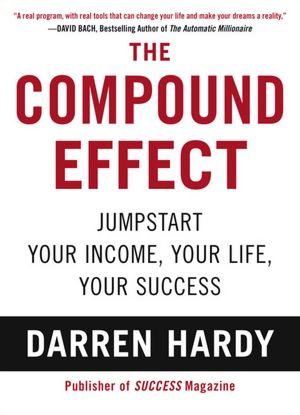
I recently had the opportunity to whittle down my “must read” stack of books on the end of my desk. This week I finished one from the stack: The Compound Effect by Darren Hardy.  The short message in Hardy’s book is simple enough:  Our life is made up of little choices we make each day of our lives. While each choice on its own may appear small, they add up—they compound over time to create who we are.

I enjoyed Hardy’s book for a number of reasons not the least of which is that it reaffirmed my writings and teachings.  In Choices for College Success (2nd edition, Pearson Education, 2011) I make the point that it’s great to have dreams but without action the dreams become fantasies. The old adage holds: What you are doing speaks louder than what you are saying.

Hardy makes his points with poignant metaphors.  He reminded me of a strategy I have used during speaking engagements and in classroom settings.  I ask the people in front of me to:

  • Visualize your most favorite spot in your home; the place where you are able to relax, unwind, and recharge.  Perhaps it is a comfortable chair; maybe it’s your bed.
  • Now visualize that I walk into your home and go directly to that prized location of yours. Once there, I dump the largest, slimiest, and most putrefied pile of garbage you can imagine. Right on your favorite spot!
  • How do like that?

Well, predictably, they are not pleased with that visual. They are bothered that someone would despoil something so personal and meaningful to them.

I then ask them why they would consider dumping garbage into their minds. I ask, “If you would not allow me to place garbage and unhealthy items on a thing (your favorite chair in this instance), why would you put those things into your mind?”   The point is made.

Hardy addressed a similar point in his chapter titled “Influences.” He used the metaphor of two glasses of water: one clean and clear; the other dirty and murky.  The clean one represents our minds fed with wholesome, positive, good, and uplifting information. This could come from “good” news, “good” books, “good” acquaintances, and “good” habits.  However, when we fill our minds with gossip, mean-spirited talk, ranting radio/television shows, or the evening news filled with chaos and mayhem the result is anything but a clean drink of water. The result: a dirty glass.  And now, with nothing but dirt as the filter, that is how we will tend to view the world. It can have an adverse impact on our relationships, our creativity, or physical healthy, and our emotional wellbeing.  We may end up being more fearful than hopeful; more scared and closed to the world than optimistic and open to possibilities.


Video recommendation for the week:

See the video below for a demonstration—a metaphor—that may help you visualize this situation-and what you can do about it.


As the video shows, you can apply an antidote by diluting—and eventually removing—the dirt we encounter with inspirational and positive stories and relationships. No, I’m not saying it is easy. And I am not minimizing the crud that is around us–and even happens to good people. But if you cannot avoid the bombardment of the dirtballs hurled in your direction, do what you can to add more clean water to your glass. Add enough and the dirt will be flushed away.  Make it a goal; craft a strategy; and enjoy clear thinking—not “stinkin’ thinkin’.”

Whether you have to limit your news intake, pass on the water cooler gossip, replace the tabloid with a solid piece of literature, and/or have a positive conversation with someone you love, make it a point in 2012 to search for the positive, focus on the positive, and lead a more positive life. This does not mean we should turn away from the problems of our world.  As part of our larger community we have an obligation to help it and nurture it to an ever better place.  But we also need to be mindful of the balance needed in our lives—if not for ourselves, then for those who depend upon us.

Your small choices will create your larger life.

Enjoy your week—and H.T.R.B. as needed!

Thank you for taking the time to read my blog post.  Please pass it (and any of the archived posts on this site) along to friends and colleagues. You can also follow me on Twitter, LinkedIn, and Facebook. If you get a chance, visit my Facebook page (www.facebook.com/stevepiscitelli) and click on the “LIKE” button.  Also, if you have suggestions for future posts, leave a comment.  Have a wonderful week!

© 2012. Steve Piscitelli and Steve Piscitelli’s Blog.

Posted in Balance, creating your future | 5 Comments

(#83) A Blogger’s Retrospective: 2011 in Review


Consider this a look back as we look ahead to the New Year. Perhaps a nugget or two will provide inspiration.

 It was back in May of 2010 when I made the decision to begin my first blog. I had 3 goals:

  • Experience a new (for me) aspect of social media
  • Develop and flesh out new ideas
  • Provide something worthwhile—not just another cyber rant.


I believe I have accomplished the first and the second. It is up to you whether I have accomplished the third.  My blog posts contain videos, book recommendations and summaries, questions to ponder, and always a takeaway to apply immediately to life.

 For this last-of-the-year post, I have returned to each of the previous 51 posts I have made to the blog in 2011—and provided a summary statement about each. I have linked each title to the actual blog should you want to read it or re-read it.

 Consider this a look back as we move toward the New Year. Perhaps a nugget or two will provide inspiration.    (Image: digitalart/freedigitalphoto.net)

 Thank you for your continued support and comments.  All the best to you and your family and your friends as you enjoy a wonderful 2012!

  1. 1.      Grounded And Rounded: *Student suggestions on staying focused and moving toward your goals.
  2. What Do Effective Teachers Do? *An examination of what effective teachers do—and how they care about what they do.
  3. The Student Perspective: What Do Effective Teachers Do? *A non-scientific survey of my students revealed their Top Ten Characteristics of Effective Teachers.
  4. The Antidote for Toxic Meetings: Be Brief, Be Bright, and Be Gone! *One of a few posts I wrote this year about the need for leaders NOT to live up to the expectations of dull, boring, and sleep-inducing meetings.
  5. How to Make Ideas Stick *Six steps (with examples) on how to get your point across to other people. Teachers, managers, parents, and others can benefit from this advice.
  6. Three Good Things *Promoting an attitude of gratitude.
  7. Happy Valentine’s Day: The First 35 Years *Thoughts on a “special” wedding anniversary.
  8.  In the Present Moment *Reflections and suggestions for quality down time.
  9. Stanton College Preparatory School: Alumni Making a Difference *A tribute to past students and a wonderful school.
  10. An Archaic System? Evaluating Assumptions About Education *We can be short-changing students if we continue on a path of “speed to market” with their education.
  11. Guns in the Classroom *Florida legislators wanted to allow guns in college classrooms. This did not pass into law.
  12. What We Say, We Become * With so many words uttered each day, we may forget that what we say does have an impact. On others and on our own growth and wellbeing.
  13. Saluting Spring! *A Jamaican twist on an old song to help us usher in the good weather.
  14. Mickey Mantle, Jamaica, and a Leisurely Read *The joy of reading for pleasure.
  15. Little Pleasures and Great Treasures * Many little things that add up to a great ride.
  16. Passion, Talent, Money *Finding the “sweet spot” where your talents and passions meet—and you get paid to do it!
  17. Remembering Dezmond Waters *A tribute to a friend and a community leader.
  18. Education and Politics: Problems or Solutions? * Do the folks who make the laws governing our schools have the best seat in the educational house to pass judgment?
  19. We Need More John Hunters * Remembering years ago when, with my students, we  experimented; we had fun; we had standards; and we worked. It was a day that teachers were allowed to teach; they had lots of latitude.
  20. Rethinking Pomp and Circumstance *Thoughts about whether a time-honored tradition has outlived itself.
  21. Life In The Happy Place! *A tribute to Atlantic Beach, Florida.
  22. Observations From The Airport *The tile pretty much sums this one up.
  23. College Completion: Asking the Right Questions *In education, what do we need to stop doing, keep doing, and start doing?
  24. Words Matter *Ten rules for successful communication from a master of communication (not me!)
  25. 100 Years of Marriage *Three married couples celebrate 100 years of marriage.
  26. Teaching: Creating An Experience *Thoughts on what “drives” my teaching.
  27. Patience. Patience! Patience? *Twelve lessons learned from shoulder surgery.
  28. Lessons from “Larry Crowne” *Real world applications about the good that community colleges do for our students and society.
  29. Government Overreach–OR Keeping Parents Accountable? * If a child is obese, should the parent be arrested for child abuse?
  30. Finding the Sweet Spot of Success and Personal Wellbeing * If we can balance, hone, and focus on each component of our lives we put ourselves in a better place to reach our goals.
  31. Are You A Critical Thinker? * What passes for critical thought many times is little more than narrow agendas that are presented with little or no objective information.
  32. The Power of Social Media *Four principles to help you make the most from your social media communication.
  33. Two Generations of Teachers Make a Difference for Our World *A tribute to a retiring colleague as well as two of the younger teachers who do well for our students and community.
  34. Lessons from Buddy (My Dog) *One person responded to the blog with, “Sounds like Buddy has life figured out.” He does!
  35. Thirty Years. A New Semester. Some Enduring Lessons. * I share my appreciation for the opportunity to work with a new group of students and to be a part of (if even in a small way) their journey.
  36. Sage Suggestions for Students *If you were to speak with a group of college students, what advice would you pass along? See what a Facebook survey yielded.
  37. I Know…But…! * If you have a presentation to make, please do NOT do these things.
  38. Dreams–Revisited *Strategies for effective goal setting—and movement.
  39. Blogging with a Purpose * Blogging is a form of social media that has become part of our culture.
  40. Hit The Reset Button * Stop. Be. Reset.
  41. My Forever Friend * Who are the people who are there for you—and you for them? Who are your forever friends? Have you told them lately?
  42. Going for the Goal * Sometimes mentors can help us…And while they are of incalculable value, there is another resource that sometimes gets ignored. You!
  43. Redundant Mediocrity * Let’s not accept ongoing-mediocrity. Let’s recognize and celebrate remarkable consistency.
  44. An Awareness of Civility *Would the corporate world tolerate—let alone accept—the incivility that occurs in our classrooms?
  45. Building Transformative Relationships *Are you enchanting in your relationships?
  46. A Code for Life *Elegance of simplicity coupled with the power of integrity.
  47. Where is Your Get Up and Do? *Procrastination is a dream killer.
  48. Warholism: What Would We Have Done? * Social media IS a game-changer for all of us. In more than one way.
  49. Philosophical Differences or Ideological Inflexibility? *Once we commit to an ideological road it becomes increasingly difficult to consider counter arguments or even think about compromise.
  50. Psychic Wages and Passion *The rewards of teaching—former students teaching current students.
  51. Time to Hit the Reset Button: Reprise * While we may not always have the opportunity to find, at the needed time, a quiet place to just “be,” the advice is worth heeding. Stop. Be. Reset.
  52. A Blogger’s Retrospective: 2011 in Review *Here it is. The annual review of the year’s titles for this blog.

 Enjoy your week—and H.T.R.B. as needed!

Thank you for taking the time to read my blog post.  Please pass it (and any of the archived posts on this site) along to friends and colleagues. You can also follow me on Twitter, LinkedIn, and Facebook. If you get a chance, visit my Facebook page (www.facebook.com/stevepiscitelli) and click on the “LIKE” button.  Also, if you have suggestions for future posts, leave a comment.  Have a wonderful week!

© 2011. Steve Piscitelli and Steve Piscitelli’s Blog.

Posted in Year in review | Tagged , | Leave a comment

(#82) Hit the Reset Button: Reprise


While we may not always have the opportunity to find,
at the needed time, a quiet place to just “be,”
the advice is worth heeding.  Stop. Be. Reset.

I wrote the words above in October of this year (Hit the Reset Button). The reminder was to slow down and take a breath.  Now that another semester is in the books, it’s time to reflect, refresh, and renew for the coming year. I have graded the last final exam, posted the grades and revised my syllabi for the coming semester. Time to stop, be, and reset.

In keeping with this theme of reflecting, I will leave you with one strategy, one announcement, and one reminder.

The Strategy: What Have I Done With 2011?

Sometimes at the end of a year (or a semester; or a particularly long project) we might be tempted to sigh, “I am glad that’s over. Let’s move on to the next one.”  I remember at a New Year’s Eve party many years ago, someone going through the ritual of burning her calendar for the ending year.  It was for this person a cleansing experience and a way of saying good riddance to the previous twelve months.

For me, rather than burn it, I plan to print out the entirety of my Outlook 2011 calendar. I will then sit down and take time to review what I did (and did not) do. I will look at each project, each task, and each appointment and ask myself some basic questions:

  • Was the time and effort worth the return (emotionally, socially, physically, spiritually, and financially)?
  • Was I passionate about what I did? Did it bring joy?
  • Were my relationships energizing—or did I end up with too many energy vampires in my life? And—was I an energy vampire for those around me?
  • Did I take time for the people who are really important in my life? Or was it all about me?
  • Did I take care of my personal wellbeing?
  • Did I use my talents for the best possible purposes to serve those around me? Did I end up being redundantly mediocre or remarkably consistent?
  • Did I give back to my community?

Rather than “burn” the year to a pile of ashes, I want to burn 2011 into my memory so that I can become a better person for it in 2012.

As a side note, next week’s blog post will be the last for 2011. I will post a retrospective of my 2011 posts (with a short summary of each one and a link to each post). It will provide its own review of the year for you.

The Announcement: A New Book

One of my major projects for 2011 was the writing of (and completion of) my ninth book: Study Skills: Do I Really Need This Stuff? (3rd edition, Pearson Education). I lived and breathed this project for the better part of ten months of my life.  I am thankful to Pearson Education for the opportunity to publish one more book. (It is one of the projects I will put under the microscope in my end-of-the year review.)  You will learn more about the lessons and strategies from the book during the first few months of 2012. Ordering information will be provided at that time. If you just can’t wait, there is pre-order information at Amazon and Barnes and Nobel.  🙂

The Reminder: Count My Blessings

This morning, shortly after a beautiful sunrise, my wife and I rode our bikes on the beach.  The morning sun shined brightly in a bright blue Florida sky. The ocean waves washed up on the sand; birds fluttered above; and the community awakened for a new day.  It reminded me of the many blessings I have—we all have.  Yes, there might be crud tumbling all around us. From the economy to foreign wars, we might sometimes feel like curling up in the fetal position and hope it all goes away.  Rick Hanson tells us in Buddha’s Brain that our brains can be Teflon for positive and Velcro for negative.  We can very easily get caught up in the drama of life and forget that there are great things happening all around us—to us, because of us, or in spite of us.

Happy holidays to you and your family.

Enjoy your week—and H.T.R.B. as needed!

Thank you for taking the time to read my blog post.  Please pass it (and any of the archived posts on this site) along to friends and colleagues. You can also follow me on Twitter, LinkedIn, and Facebook. If you get a chance, visit my Facebook page (www.facebook.com/stevepiscitelli) and click on the “LIKE” button.  Also, if you have suggestions for future posts, leave a comment.  Have a wonderful week!

© 2011. Steve Piscitelli and Steve Piscitelli’s Blog.

Posted in Balance | 8 Comments