(#121) Living with Purpose: Are You Betraying Yourself?


If what we do does not align with our purpose
(what makes us feel whole or complete or meaningful)
then we need to pause and ask ourselves some questions.

This week I began preparation for an upcoming webinar on social media.  I reacquainted myself with a few books and some of my past blog posts.  I had forgotten that on my very first post on this blog I put forth a basic premise:

NO matter whom your audience may be,
when using social media KNOW why you are using it.
In other words, don’t use it to be cute. Use it with a purpose.
Match your strategy to the goal.
This holds true for the classroom or the boardroom.

Ambro/FreeDigitalPhotos.net

Isn’t that the truth!  In fact, that advice goes far beyond social media. It goes to the heart of a meaningful and fulfilling life.  A colleague recently shared with me that her 60-hour weeks were beginning to take a toll.  “I don’t think I can keep up the pace for much longer,” she said.

Many of us have been/are in that position.  I know at the end of another 18-hour day, I sometimes will complain about my schedule.  I have to remind myself that I have chosen the schedule–the path I am on.  Of course, things come up we did not “choose”: the boss makes an unexpected demand; a child is sick; or you received a recall notice on your new car (like I just did!).  You can fill in the blank with your emergencies.  One of my strategies is to ask myself, “Did my busy schedule today get me closer to my goal? Did the activities have meaning?” My answers need to inform my direction going forward.


Video recommendation for the week:

The following video reminds us that we need to live a life that has integrity for us.  When that is the case, then it–our life–feels right. Have my choices been correct? Have I taken a detour? Is the detour moving me forward or betraying me?


Ask that simple yet powerful question of yourself: “Am I betraying myself?”

 In his book, The Courage to Teach, Parker Palmer reminds us of that “If the work we do lacks integrity for us, then we, the work, and the people we do it with will suffer.” (page 16). I believe we can extend this beyond work to life–to our purpose.  In essence, if what I do does not align with my purpose (what makes me feel whole or complete or meaningful) then I need to pause and ask myself some questions.  What kind of course correction can I make? Who can mentor me?

Have I betrayed myself?

Enjoy your week—and H.T.R.B.as needed!

REGISTER NOW for my October 12, 2012 P.D.Q. Webinar “Social Media with Purpose: Tips from a Non-Techie!”  Click here  or paste this link into your web browser:https://attendee.gotowebinar.com/register/2376790441069310976

Thank you for taking the time to read my blog post. Please pass it (and any of the archived posts on this site) along to friends and colleagues. You can also follow me on Twitter, LinkedIn, and Facebook. If you get a chance, visit my Facebook page and join in–or start–a conversation (www.facebook.com/stevepiscitelli). Also, if you have suggestions for future posts, leave a comment. Have a wonderful week!

 

Posted in Purpose | Tagged , , , , , , , | 4 Comments

(#120) Are You Intentional About Your Growth?


While I cannot control or manage the ticking of the clock,
I can manage my choices.  I manage my priorities and, thus, I manage my life.

I have written on this blog in the past about priorities ((#100) Milestones: Endpoints or Checkpoints? and (#87) Priority Management: Are You Doing the Right Things or Are You Just Doing Stuff?) and the need to focus efforts on what is important in our lives.  We cannot manage time. It is a finite number (24 hours in a day, 168 hours in a month, and 12 months in a year). We cannot manipulate it.  We can, however, manage our priorities. What we focus on becomes an indication of what is important in our lives.

I get pushback on this from time to time.  “But, Steve,” I hear, “what about if my kids get sick or the boss demands I work overtime, or a storm creates havoc in our community, or the car conks out. Those issues require that I have to move away from what is important (my goals, my dreams) and take care of those emergencies.”

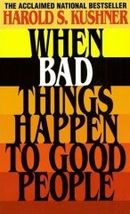
Yes, at times events confront us that we did not plan for or want deal with (see Rabbi Harold Kushner’s book “When Bad Things Happen to Good People”).  When we, however, decide to focus on those unexpected events they do become our priorities.  It becomes a priority to nurse our child, complete the work project, or get the car to the shop.  Even though we might not like it or we might not want to deal with it, the new situation has moved up the list quickly on our priority list.  Our priorities can–and often do–change in a matter of moments.

It becomes too easy to say in these circumstances that “I ran out of time to do what I really wanted to do.”  Time becomes the culprit to blame and shift attention. The actuality is we end up doing what we need to do in these times because our child, our job or our means of transportation IS the priority. We still can focus on our long-term priorities.

In an article in Success Magazine, John C.Maxwell quotes Jennifer Reed about the danger of “later.”

“Later is one of those dream killers, one of the obstacles we
put up to derail our chances of success. The diet that starts tomorrow,
the job hunt that happens eventually, the pursuit of the life dream
that begins someday….”

In short, this leads to what Maxwell refers to as accidental growth–and an easy path to creating ruts in our lives.

Maxwell presents an effective contrast between accidental growth and intentional growth.  He says that if we go about life in an ACCIDENTAL fashion we can find ourselves:

  • Planning to start that important project tomorrow  (“later”)
  • Depending on luck
  • Giving up too quickly
  • Talking big–but playing it safe
  • Thinking like a victim.

The person who is INTENTIONAL about his/her life will move through life

  • Insisting on action today–not tomorrow
  • Taking responsibility for his/her own growth
  • Relying on hard work
  • Persevering
  • Thinking like a learner.

Video recommendation for the week:

In this video, Maxwell explains the importance making and managing decisions that will shape our lives. These become our priorities. We manage them if we want to be intentional about our present and future.


I have a piece of self-advice that I remind myself of each day when I open my eyes: My life is the sum of the small and consistent choices I make and do each day.

While I cannot control or manage the ticking of the clock, I can manage my choices.  I manage my priorities and, thus, I manage my life.

That is intentional and that is powerful.

Enjoy your week—and H.T.R.B.as needed!

REGISTER NOW for my October 12, 2012 P.D.Q. Webinar “Social Media with Purpose: Tips from a Non-Techie!”  Click here  or paste this link into your web browser: https://attendee.gotowebinar.com/register/2376790441069310976

Thank you for taking the time to read my blog post. Please pass it (and any of the archived posts on this site) along to friends and colleagues. You can also follow me on Twitter, LinkedIn, and Facebook. If you get a chance, visit my Facebook page and join in–or start–a conversation (www.facebook.com/stevepiscitelli). Also, if you have suggestions for future posts, leave a comment. Have a wonderful week!

 

Posted in Priority management | Tagged | 1 Comment

(#119) You Might Have to Slow Down in Order to Go Faster


At times we have to turn off the thinking and let the ideas come and go; let them mix with the experiences.

This week I received an email message that I have heard often.  The sender had registered for one of my webinars and shared that she has been doing a lot of soul searching about a career direction; about life direction.  A lot of thinking.  She wrote:

Unfortunately all the “thinking” consumes me… I guess I can summarize by saying
busy, busy but accomplishing very little except to survive. I usually function at a
happy level… but something is missing. I know I can do more and want to. But
how to parlay talents into money…I am looking for that perfect idea,
that perfect  
fit for me.

I understand.  At times I find myself in the same conundrum. This past week I spoke with my students about the trap of doing a lot of “stuff” but not doing the right stuff.  Perhaps you have experienced this yourself. It’s the end of the day; you haven’t stopped all day; you’re exhausted.  But have you moved toward your goals? Or did you just do a lot of stuff?


Video recommendation for the week:

This video provides a reminder to me.  At the end of the day, when I cross out the day (never to have it again) did I move closer to my dreams?  Even when my dreams are a bit nebulous, what steps did I take to clarify them? 


Image: renjith krishnan/FreeDigitalPhotos.net

Back to the email above.  You’ll note the sender is looking for the “perfect idea.”  Than can be another trap. I have no idea what “perfect” is.   For me, that (searching for the “perfect” idea) would slow me down and become a reason not to do something.  If I were to concentrate on “this has to be perfect” I would end up doing nothing but a lot of thinking, fretting, and stalling.  I avoid the “perfect” syndrome.

Consider this example.  I wrote my first book about 15 years ago. It definitely was NOT perfect. It was, however, the start that I needed.  It got published.  That led to another book…better but still not a blockbuster.  Then another.  Now I am working on my 10th.  Perfect yet? Not by a stretch. Not sure any of my books will ever be “perfect.”  I believe that they are “right” for the time I write them.  But if I had stopped and waited until I got it perfect, I would have missed out on a lot of opportunities and growth. 

Make no mistake. Just because a work is not “perfect” does not mean we have to “settle” for second rate stuff.  I don’t care for the phrase, “Oh, that is good enough.”  Generally, when I hear that, whatever is in question is NOT good enough.  I have an obligation to do the very best I can with every project I commit to doing. Integrity requires that. 

Image: Stuart Miles/FreeDigitalPhotos.net

Years ago a friend who is a professor and practicing psychologist offered this advice:

At times we have to turn off the thinking and let the ideas come and go;
let them mix with our experiences.  For a week or two, just turn off the analysis.  Calm the mind.

As 1960s as it might sound, at times we have to go with the flow. We might just have to   slow down in order to go faster.  

Enjoy your week—and H.T.R.B.as needed!

REGISTER NOW for my September, 6 2012 P.D.Q. Webinar “Develop and Deliver POW-WOW-ERFUL Presentations!”  Click here  or paste this link into your web browser: https://attendee.gotowebinar.com/register/6414521493740300288

Thank you for taking the time to read my blog post. Please pass it (and any of the archived posts on this site) along to friends and colleagues. You can also follow me on Twitter, LinkedIn, and Facebook. If you get a chance, visit my Facebook page and join in–or start–a conversation (www.facebook.com/stevepiscitelli). Also, if you have suggestions for future posts, leave a comment. Have a wonderful week!


Posted in Dreams | 8 Comments

(#118) You Never Know Who is in the Audience


We just never know the impact we have.  And, we need to remind ourselves
of the impact others have on our lives.

A few weeks ago, I had an experience that reminded me of two truisms: 1. You never know who is watching and 2. You never know the impact you have on others.  Let me set up the situation.

Image: dan/FreeDigitalPhotos.net

I was speaking to a group of mentors and family members of entering first-year college students.  As each person entered the room, I gave them one of my H.T.R.B. wristbands. They stand for Hit The Reset Button and I use them to demonstrate a point about balance and well-being. The bands were inspired by one of my students.  She had recently returned from the Iraq War with significant physical injuries and post-traumatic stress disorder.  (See blog post #71 Hit The Reset Button.) 

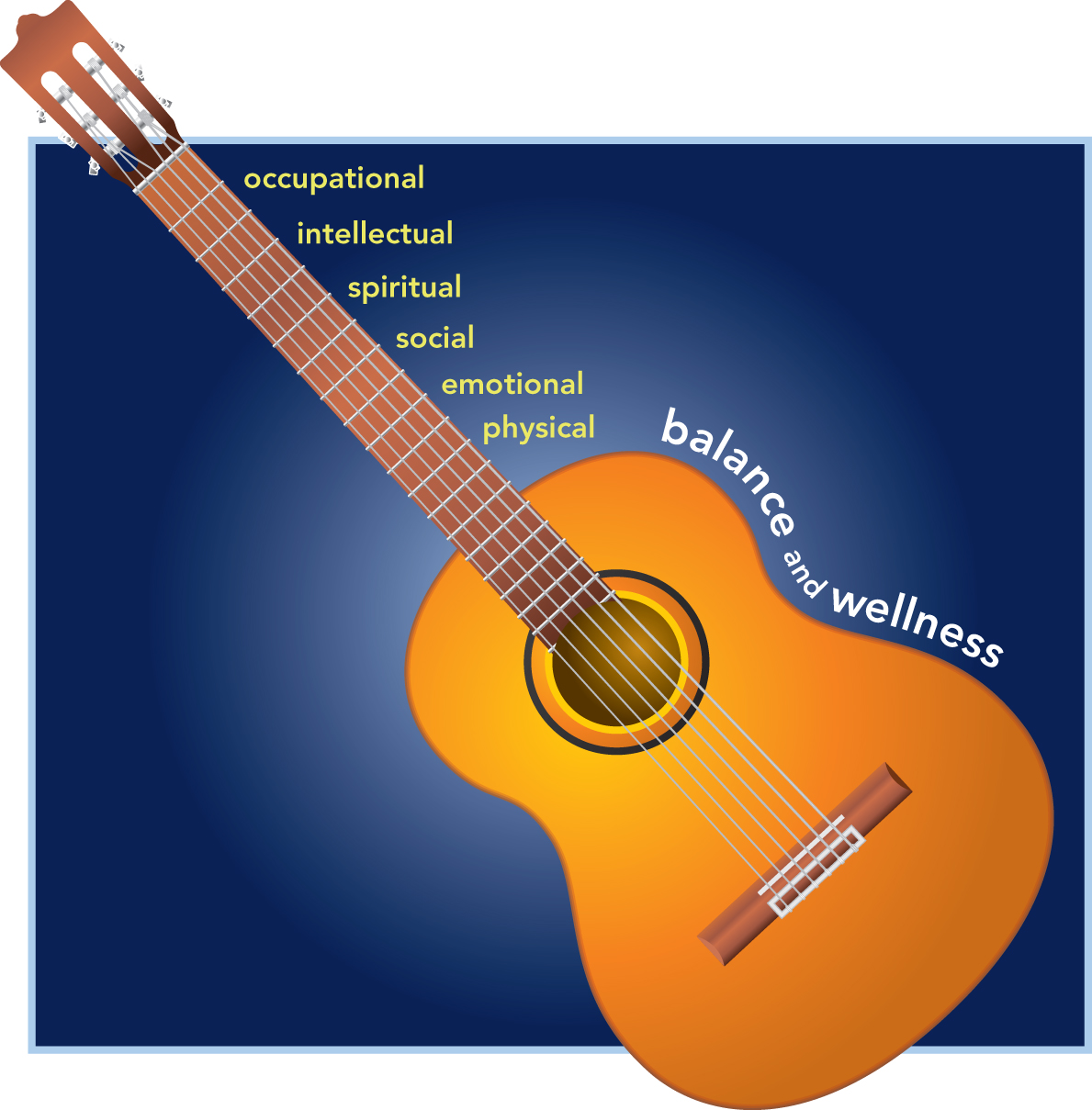
Toward the end of my program I touched on the 6 dimensional wellness model that I often speak and write about (#5 Balance Is Not Necessarily Even). I then explained how the HTRB band came to be.  I explained how my student faced daily struggles to just do the basic things most of us do without evening thinking or appreciating.


Video recommendation for the week:


When I finished my presentation I went to the back of the room. A lady came up to me smiling and told me that she is my former student’s mother! She told me that when she heard me tell the story to the audience she immediately called her daughter and told her, “The HTRB man is here and just mentioned you!”  She pulled me into the hallway, called her daughter again and put the two of us back in touch. My former student still has challenges but sounded wonderful. She still has HTRB in her heart.  We will be having lunch soon.

This is why I teach. 

We just never know the impact we have.  And, we need to remind ourselves of the impact others have on our lives.

What did you think of when you first saw the initials H.T.R.B.?

Sometimes, as an icebreaker activity before a program begins, I ask folks to write down what they believe HTRB stands for.  The responses reflect creativity and humor.  To close this week’s post, I will share some of the more intriguing submissions.  Enjoy!

  • How To Really Become
  • Help Teach Reach Build
  • How To Run Baby
  • Help To Retain Brilliance
  • Happy Teachers Retain Better
  • How Teacher’s Really Behave [Oh, my!]
  • Help Tomorrow Remain Bright
  • Have The Right Balance
  • Hot Tubs Really Burn
  • Hail The Right Brain
  • Help To Retain Basics
  • How Teachers Retain (the) Best
  • Hang Tight Right Back
  • How To Really Believe
  • Hungry Tiger Ransacks Paris [I’d like to climb in this person’s mind for a few moments!]
  • Hate The Rude B****
  • How The Right Behaves
  • Hot-Tub Retreat Bench
  • How To Relate Better
  • Honored To Reign Brightly
  • Hardworking Teachers Retain Better

And my favorite….

  • Hold The Relish Batman  

Enjoy your week—and H.T.R.B.as needed!

REGISTER NOW for my September, 6 2012 P.D.Q. Webinar “Develop and Deliver POW-WOW-ERFUL Presentations!”  Click here  or paste this link into your web browser:https://attendee.gotowebinar.com/register/6414521493740300288

Thank you for taking the time to read my blog post. Please pass it (and any of the archived posts on this site) along to friends and colleagues. You can also follow me on Twitter, LinkedIn, and Facebook. If you get a chance, visit my Facebook page and join in–or start–a conversation (www.facebook.com/stevepiscitelli). Also, if you have suggestions for future posts, leave a comment. Have a wonderful week!


Posted in Making a Difference | 6 Comments

(#117) Say What You Mean. Mean What You Say. Do What You Say.


Sometimes watching political campaigns is like watching a middle school class election.
(But that might be too hard on the middle schoolers.)

I am sure you have often heard people speak words that they don’t back up with action. Whether a co-worker, a friend, a celebrity, or a politician, we have all listened to someone say something that differs from what that person does.  Words become the reality.

Example.  What is said: “I want to hear all about your vacation!”  What is done: The inquiring person continues to check her phone for text messages while you are talking.

More than likely you have been guilty of a transgression or two in this area. I know I have to monitor myself to remain true to my word.

Example. What I say: “I really need to slow down and take time for daily meditation.”  What I do:  I continue running full throttle and say I’ll take time next week. Major disconnect between words and actions. Really, Steve?

Image: FreeDigitalPhots.net

The other night, an example of the disparity of words and action jumped at me from the television. I took a break from the computer and listened to some of the primary election results. When the results were announced for one of the contests, I shook my head and said to no one in particular, “Really?”

My reaction was to a “just in!” news item. The victorious candidate in this race released a victory statement praising his opponent as a man with “a record of accomplishment.”  The reporter then went on to report that the victorious candidate and his opponent were really disappointed that the campaign had turned ugly. “It’s something we really never wanted. We didn’t anticipate the race going this way,” said the victor in his election night remarks.

I had no dog in the hunt.  I did not favor one candidate. Both have “a record of accomplishment.”  But again, I have to ask, “Really?”  So, you are telling me two adults who did NOT want to do something had no control over the mudslinging in their campaigns?  Really?  And they both want to represent us and make laws that will affect our lives? They just cannot help themselves.  Really?


Video recommendation for the week:

Maybe the Moody Blues said it best:

Think about the words that you’re using
Speak for yourself
Say what’s on your mind
Think about the life that you’re choosing.


It happens with Democrats and it happens with Republicans. And it will happen in the presidential race (already is).   Our candidate is running on the record. Their candidate is negative. Is it only mudslinging if the other candidate does it to our candidate. If our candidate does it, then he is just stating the facts.  Really?

A friend of mine who is very involved in local party politics told me that unfortunately negative campaigning proves to be effective. I have heard that so often that it has lost any impact.  Is that another example of what we say—but do not mean? We want a clean race on the issues but we accept the mud as a necessary evil? And then we condemn the same mud?

Great example for our kids. Sometimes watching political campaigns is like watching a middle school class election.  (But that might be too hard on the middle schoolers.)

Image: FreeDigitalPhotos.net

 I am NOT picking on the politicians. We see it in all walks of life. I see it in higher education.  In this political season we do see it play out on television, radio, and the Internet with nauseating frequency.  I think I am wearing out my remote’s mute button from hitting it every time another “vote-for-me” ad pops up.


A simplified version of a Ralph Waldo Emerson quote might guide us the best, “What you do speaks so loudly that I cannot hear what you say.”

Enjoy your week—and H.T.R.B.as needed!

REGISTER NOW for my September, 6 2012 P.D.Q. Webinar “Develop and Deliver POW-WOW-ERFUL Presentations!” Click here or paste this link into your web browser:https://attendee.gotowebinar.com/register/6414521493740300288

Thank you for taking the time to read my blog post. Please pass it (and any of the archived posts on this site) along to friends and colleagues. You can also follow me on Twitter, LinkedIn, and Facebook. If you get a chance, visit my Facebook page and join in–or start–a conversation (www.facebook.com/stevepiscitelli). Also, if you have suggestions for future posts, leave a comment. Have a wonderful week!


Posted in Words and Action | 3 Comments

(#116) Simple Strategies for Adjustment and Transition to the College Culture


We can get much more from life if we pay attention
to our priorities…the choices belong to us.

The fall 2012 college semester is close at hand. Our classes at Florida State College at Jacksonville begin on August 27. That will mark the beginning of my 31st year in the classroom.  As I stated in my blog post at the beginning of the 2011 academic year, “I think I’m starting to get the hang of this teaching thing!”

Image: jscreationzs
FreeDigitalPhotos.net

Here are the main points I plan to pass along.

  • Priority management.  The biggest adjustment for many college students is how they use their precious hours in a day. They need to differentiate between the negotiable and non-negotiable items in their lives and put their focus and actions on what will bring them closer to their goals.
  • Critical thinking.   This vital skill set is in short supply. We need to help our students recognize their assumptions, evaluate information, and draw conclusions. Basically, they (like all of us) need to stop and think about their actions. We need to provide the tools for this thought process.
  • Campus resources.  College students will (more than likely) never again be in a place with so many resources dedicated to their success. From advisors to counselors to tutors to financial aid officers to computer labs to student organizations to classroom instruction they have a lot to draw on at their college.  They need to take the time to learn about and use these opportunities.
  • Professors. Obviously, this one is close to my heart.  I tell my students to “use me!”  Come to my office, call me, email me, come to class early—whatever it ethically takes, I want my students to use my experiences to help them reach their goals.
  • H.T.R.B. If you have read this blog with any frequency you know that I have written about the need to “hit the reset button” from time to time. I will advise the mentors and family members to help their students find strategies to maintain a healthy balance in life.
  • Positive influences. The choice of how we see the world is largely within our control.  We need to help our students understand what they surround themselves with (people and media for instance) will influence how they see and live in the world. It is their choice.

Video recommendation for the week:


And there is gold in each the above items for everyone of us. We can get much more from life if we pay attention to our priorities, critically think before we act, identify and use resources that will help us excel, find mentors to help us navigate life, care for all of our life dimensions, and surround ourselves with positivity (and limit exposure to the energy vampires  of life.) The choices belong to us.


Enjoy your week—and H.T.R.B.as needed!

REGISTER NOW for my September, 6 2012 P.D.Q. Webinar “Develop and Deliver POW-WOW-ERFUL Presentations!” Click here or paste this link into your web browser:  https://attendee.gotowebinar.com/register/6414521493740300288

Thank you for taking the time to read my blog post. Please pass it (and any of the archived posts on this site) along to friends and colleagues. You can also follow me on Twitter, LinkedIn, and Facebook. If you get a chance, visit my Facebook page and join in–or start–a conversation (www.facebook.com/stevepiscitelli). Also, if you have suggestions for future posts, leave a comment. Have a wonderful week!


Posted in Education, Teaching | 2 Comments

#115 Purpose and Passion


Our paycheck may not come from a calling but then not every calling is defined by a paycheck.

When we act with purpose we act with intent; we understand why we are doing what we are doing. Or, if we don’t truly understand why we are doing what we are doing, we know

Photo by Steve Piscitelli

it feels right for us.  It makes us feel whole.  Often I will ask an audience to examine why they put their feet on the floor each morning. Besides earning a buck, why do you do what you do? What passion drives you to do what you do? Are you inspired by what you do?

I friend recently asked me if the only job worth having was one a person had passion for. He related how he did not particularly like his job but the job (the hours, the rhythms of the workday, the pay) allowed him to live a lifestyle for which he had passion.  He raised a good point.  Can someone put his/her feet on the floor each morning, not like his/her job, and still have a purpose and passion for life?

The short answer: Of course you can.

My friend’s point is an important one and it made me take a deeper look.  For instance, today’s economy is such that there are (very probably) untold numbers of people who have

lost jobs for which they had passion.  Jobs that gave their days purpose and meaning. Many, when they find new employment, believe they are “lucky” to have a job; purpose and passion are a luxury—a dream. Does it mean their lives lack purpose? I don’t think so. 

Back to my friend above. He has developed and honed a wonderful talent over the past 35-40 years.  In his chosen field of work, he is very good. It just so happens his career talent is not what he is particularly passionate about. But even though he does not have a passion to do what he is doing—it is not a calling for him, it is a job—he still takes deep pride in what he does each day. He will never “phone it in.” He acts with continued discipline and integrity.  And I think that sets my friend apart from many other people we might encounter numerous times each day. 


Video recommendation for the week:

Parker Palmer provides insight on navigating the gap.


Like the young lady in Chicago’s Midway Airport last week.  A cashier, she looked bored—totally disengaged from what she was doing and the customers in front of her.  She barely grunted at me when I handed her my money. No smile, no eye contact, no connection. I don’t pretend to know what was going on in her life.  What I do know is that for that momentary transaction there was no passion; she was a terrible representative for her employer. And she did not (it appeared) care.  Another example of redundant mediocrity

My friend, on the other hand, is an example of remarkable consistency. He is a reminder that even when our talents and passions do not align we can still have a passion for what we do because caring about doing a good job is the right thing to do.  Our paycheck may not come from a calling but then not every calling is defined by a paycheck.

The reminder for me is that no matter what we do, we owe it to ourselves, the task and the people around us to do it with pride and integrity.  Author Parker Palmer says it best, “If the work we do lacks integrity for us, then we, the work, and the people we do it with will suffer.”

Enjoy your week—and H.T.R.B.as needed!

REGISTER NOW for my August 8, 2012 P.D.Q. Webinar “Study Skill Strategies: Success in the Classroom and Beyond!” Click here or paste this link into your web browser:https://attendee.gotowebinar.com/register/6856101855536438784

Thank you for taking the time to read my blog post. Please pass it (and any of the archived posts on this site) along to friends and colleagues. You can also follow me on Twitter, LinkedIn, and Facebook. If you get a chance, visit my Facebook page and join in–or start–a conversation (www.facebook.com/stevepiscitelli). Also, if you have suggestions for future posts, leave a comment. Have a wonderful week!


Posted in Passion | 1 Comment

(#114) What You SAY and What You DO


Where is your line in the sand?  What will you definitely not negotiate away—
and what things will you or do you decide are not values to you? 

At the recently-completed Noel-Levitz Conference on Student Recruitment, Marketing and Retention I had the opportunity to hear Frank Bucaro (www.frankbucaro.com) speak about ethics.

He stressed the importance of maintaining a moral compass and knowing where our “line in the sand” is when it comes to making decisions. He referenced a concept that I have written about (Choices for College Success, 2nd edition and Study Skills: Do I Really Need This Stuff, 3rd edition): In order to draw that line in the sand accurately you must know what is negotiable and what is non-negotiable in your life. That is, you have to know what you value—and what you will not compromise.


Video recommendation for the week:


I have written about this in a previous blog post (Priority Management: Are You Doing the Right Things or Are You Just Doing Stuff?). At that time I said, “Look at your list of activities for a week. Are they negotiable or non-negotiable? Are you doing the right things or are you just doing stuff?

From Piscitelli, CHOICES FOR COLLEGE SUCCESS, 2nd ed. (Pearson, 2011)

Bucaro’s use of the same terminology got me thinking again about the non-negotiables of life.  We all have six dimensions in our lives—and each dimension has its own set of negotiable and non-negotiables.

Homework for you

For each dimension below I have listed general examples of non-negotiable items. The last piece of each dimension asks for your answers as they relate to your life. Take a few minutes and begin the reflective process.  Where is your line in the sand?  What will you definitely not negotiate away—and what things will you or do you decide are not values to you? 

One final thought: Be mindful of what you SAY and what you DO. It’s one thing to SAY “I will not negotiate my health away.”  It’s another thing to live that mantra.

  • Social.
    • Examples of non-negotiables.
      • Spending quality time with friends, family and/or colleagues.
      • Maintaining community connections.
    • What is YOUR specific example of a non-negotiable in this dimension of YOUR life?
  • Occupational.
    • Examples of non-negotiables.
      • Performing consistent quality work.
      • Mentoring colleagues in your area.
    • What is YOUR specific example of a non-negotiable in this dimension of YOUR life?
  • Spiritual.
    • Examples of non-negotiables
      • Setting aside quiet reflective time for connections to a higher being.
      • Taking time to quiet your mind (meditation).
    • What is YOUR specific example of a non-negotiable in this dimension of YOUR life?
  • Physical.
    • Examples of non-negotiables.
      • Maintaining a regular and (appropriate) challenging exercise routine.
      • Eating a healthy diet consistently.
    • What is YOUR specific example of a non-negotiable in this dimension of YOUR life?
  • Intellectual.
    • Examples of non-negotiables.
      • Feeding your mind a consistent diet of good literature.
      • Maintaining a consistent level of curiosity and life-long learning.
    • What is YOUR specific example of a non-negotiable in this dimension of YOUR life?
  • Emotional.
    • Examples of non-negotiables.
      • Applying healthy, legal, and ethical stress reducing strategies on a regular basis.
      • Limiting/eliminating time with energy vampires and haters.
    • What is YOUR specific example of a non-negotiable in this dimension of YOUR life?

Complete the above exercise on a regular basis.  If you are honest with yourself about your answers, you will have a touchstone by which to check your personal value system.

Enjoy your week—and H.T.R.B. as needed!

REGISTER NOW for my August 8, 2012 P.D.Q. Webinar “Study Skill Strategies: Success in the Classroom and Beyond!” Click here or paste this link into your web browser: https://attendee.gotowebinar.com/register/6856101855536438784

Thank you for taking the time to read my blog post. Please pass it (and any of the archived posts on this site) along to friends and colleagues. You can also follow me on Twitter, LinkedIn, and Facebook. If you get a chance, visit my Facebook page and join in–or start–a conversation (www.facebook.com/stevepiscitelli). Also, if you have suggestions for future posts, leave a comment. Have a wonderful week!

 

Posted in Integrity, Words | 2 Comments

(#113) Creativity Takes Work


Creativity also embraces all the disappointments and frustrations on the road to a new way of doing things. They are part of the process.

Imagine: How Creativity Works by Jonah Lehrer (Houghton Mifflin Harcourt, 2012) takes a look at creativity from, I think, an unorthodox perspective.  And his analysis is brilliant.  He turns some assumptions about the creative process on their collective heads.  The biggest takeaway for me was simply that we all have the ability to be creative—and it takes persistence.  In other words, you gotta work for it! Creativity is a product of persistence and effort (lots of it).

Lehrer cites research and pop culture.  Among his more intriguing findings (at least to this reader) include:

  • Focus? While attention and focus are important, Lehrer tells us that “Occasionally, focus can backfire and make us fixated on the wrong answers.” Insight has a better chance of occurring only after you relax.
  • Daydreaming can inspire innovation.  But we have to maintain enough awareness to know when we are having a creative thought.  That is the rub!  Drifting is easy…noticing, tougher.
  • The color blue stimulates mental relaxation and nurtures creativity.
  • Mistakes.  Yo-Yo Ma and the art of making music: “If you are only worried about making a mistake, then you will communicate nothing.”
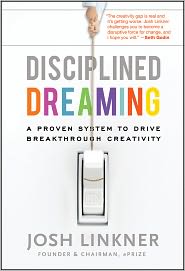
  • Rules do exist.  Lehrer’s work reminded me of what Josh Linkner’s Disciplined Dreaming had to say: Creativity is not a random act of wackiness.  Both authors referenced the art of jazz music.  As Lehrer states, “The jazz pianists, for instance, needed to improvise in the right key and tempo and mode. Jackson Pollock had to drip paint in a precise pattern….”
  • Turn off the censors. Successful improv artists can turn off the filters/censors in their brains. They are able, when on stage, to get outside of their heads.  If we don’t “let go” we will “constrain our own creativity.”
  • Collaboration. Innovation flourishes in a “culture of collaboration.” Innovations are more likely when outsiders are brought in. Avoid the temptation to work only with friends and known entities.  That will limit you. Do whatever you can to encourage interaction.  If you stay with the same people, you end up doing the same thing.
  • Bathrooms!  Lehrer relates a great and illustrative story about Steve Jobs and the reconstitution of the Pixar building.  Jobs focused the building’s attention on one open area that encouraged (forced?) interaction.  This included placing the only set of bathrooms in this atrium area.  Why? Because “everybody has to run into each other….Small talk of employees is not a waste of time…they are a constant source of good ideas.”
  • More interactions. The Allen Curve (named for Professor Tom Allen of MIT) shows that the employees who were the “high-performers” were those who had the most interactions with their colleagues. “According to Allen’s data,” Lehrer found, “office conversations are so powerful that simply increasing their quantity can dramatically increase creative production; people have more ideas when they talk to more people.”
  • Brainstorming? Lehrer cites research studies that proclaim brainstorming is less effective than people working alone and then sharing ideas.  Criticism is actually very important in the creative process. We need to have candid discussions.  Pixar uses a strategy called “plussing.” Any criticism that is given must also present a plus or new idea that builds on the original idea.
  • Urban friction.  The diversity and expanse of urban populations create opportunities for innovation and creativity.
  • Innovation gaps. Companies that encouraged cross-pollination with other companies (employees working with other employees) saw increased innovation. Those that thrived on secrecy did not.  When we work with strangers and folks from other areas, according to Lehrer, we have “knowledge spillover.”  This is what happened with the Homebrew Computer Club in 1975. That was where Steve Wozniak and others engaged in friendly collaboration and “schematics of the Apple I were passed around freely.”
  • Obstacles. When corporations erect obstacles (read: hierarchies) they “stifle conversations, discourage dissent, and suffocate social networks.”
  • Education. Rote learning is the antithesis of the creative process.
  • Effort. “Nobody is talented enough to not have to work hard, and that’s what grit allows you to do…grit allows you to take advantage of your potential.” Angela Duckworth, psychologist (University of Pennsylvania).

Imagine reminded me that creativity is more than that moment of insight and exhilaration. Creativity also embraces all the disappointments and frustrations on the road to a new way of doing things.  They are part of the process.  But how many people quit and never enjoy the result?

Enjoy your week—and H.T.R.B. as needed!

REGISTER NOW for my August 8, 2012 P.D.Q. Webinar “Study Skill Strategies: Success in the Classroom and Beyond!”Click hereor paste this link into your web browser:https://attendee.gotowebinar.com/register/6856101855536438784

Thank you for taking the time to read my blog post. Please pass it (and any of the archived posts on this site) along to friends and colleagues. You can also follow me on Twitter, LinkedIn, and Facebook. If you get a chance, visit my Facebook page and join in–or start–a conversation (www.facebook.com/stevepiscitelli). Also, if you have suggestions for future posts, leave a comment. Have a wonderful week!
 

Posted in Creativity | 5 Comments

(#112) Creating Experiences


Think of the coming weeks and months. What experiences (small or big) have you planned that will create wonderful memories for you and those you love? 

During the last week of December 2011, I conducted a 52-week review of my life. The process went like this:

  • I printed out the 52 weeks of my 2011 calendar.  All my personal appointments and my professional opportunities.  Everything was printed. I color-code my calendar appointments so that I can easily see categories and projects (like: writing, program development, program rehearsal, program delivery, campus activities, house projects, meetings with friends, dates with my wife, and so on).
  • I went to a local beach coffee shop, found a quiet corner, and started my 52-week review.
  • I made note of what activities took up most of my 52 weeks–and which ones did not get much attention.

It was eye-opening exercise.  While I knew that campus teaching, writing, and program delivery would take up a lot of time, I was shocked by what was NOT there.  Or at least, what was NOT there enough times.  I found that important things like lunch with friends was not as prevalent as I had thought.  And while my wife I spend quite a bit of time together, I felt like we could have done more special things.

The activity, in short, re-emphasized the importance of balance in life for me. My wife and I have always been on the same page about the importance of experiences over material possessions.  We will always remember our experiences (especially peak experiences) but the things in life will often (mostly?) lose their luster over time.  Consequently, we renewed a promise to make sure we had one special or stand-out experience each month.  It could be huge and distant (like a major trip) or small and local (like a concert at the beach).  It had to be something out of the ordinary for us; something we both could enjoy; something that would create a memory.

So far in 2012 we have been true to our promise.  Some months we have made time to create two unique

(Photo by Steve Piscitelli)

experiences.  From the outside looking in, these experiences might seem small. From our perspective they are significant.  For instance, take this weekend.  We went to Alachua, Florida and dedicated time working at the Retirement Home for Horses at the Mill Creek Farm.  What a wonderful facility for old, abused, and neglected horses. We spent Saturday morning grooming the horses and cleaning their hooves.


Video recommendation for the week:

Generally, we gave them love. And they loved us back.  That was a wonderful experience and we added to it.


When we finished giving the last carrot to a horse, we drove west to the Gulf of Mexico and the sleepy fishing

(Photo by Steve Piscitelli)

town of Cedar Key, Florida.  We spent the night in a quaint motel, had a great dinner, listened to music, watched a tropical rainstorm come off the Gulf of Mexico, and talked of our day.  A great experience. We have wonderful memories.

A colleague told me this week that she and her husband were going to do a “staycation” at the end of July.  You know, shut off the phones and emails, stay home, and enjoy the family.  That reminded me of something my wife and I did in 1998. That year we took a “virtual vacation” here at the beach.  For four days we made believe we were on vacation.  We planned for it—and loved the “getaway” that we created.  I eventually wrote an article for the local paper about the experience.  It was titled Best vacations are those at comfortable, easy-to-reach sites.  I concluded that article with these words:

When our trip was over, we were relaxed. We had been away for four full days.
The mail was piled in the corner of the table and the newspapers,
still in their bags, stacked in the corner of the kitchen. We had much to keep us busy –
so much so that we didn’t complete all the activities we had planned on doing.
(Guess that means we’ll have to come back next year!)

We are “going back” for our August 2012 experience. 

Think of the coming weeks and months. What experiences (small or big) have you planned that will create wonderful memories for you and those you love? 

Enjoy your week—and H.T.R.B. as needed!

REGISTER NOW for my August 8, 2012 P.D.Q. Webinar “Study Skill Strategies: Success in the Classroom and Beyond!” Click here or paste this link into your web browser: https://attendee.gotowebinar.com/register/6856101855536438784

Thank you for taking the time to read my blog post. Please pass it (and any of the archived posts on this site) along to friends and colleagues. You can also follow me on Twitter, LinkedIn, and Facebook. If you get a chance, visit my Facebook page and join in–or start–a conversation (www.facebook.com/stevepiscitelli). Also, if you have suggestions for future posts, leave a comment. Have a wonderful week!

Posted in Living a remarkable life | 1 Comment