
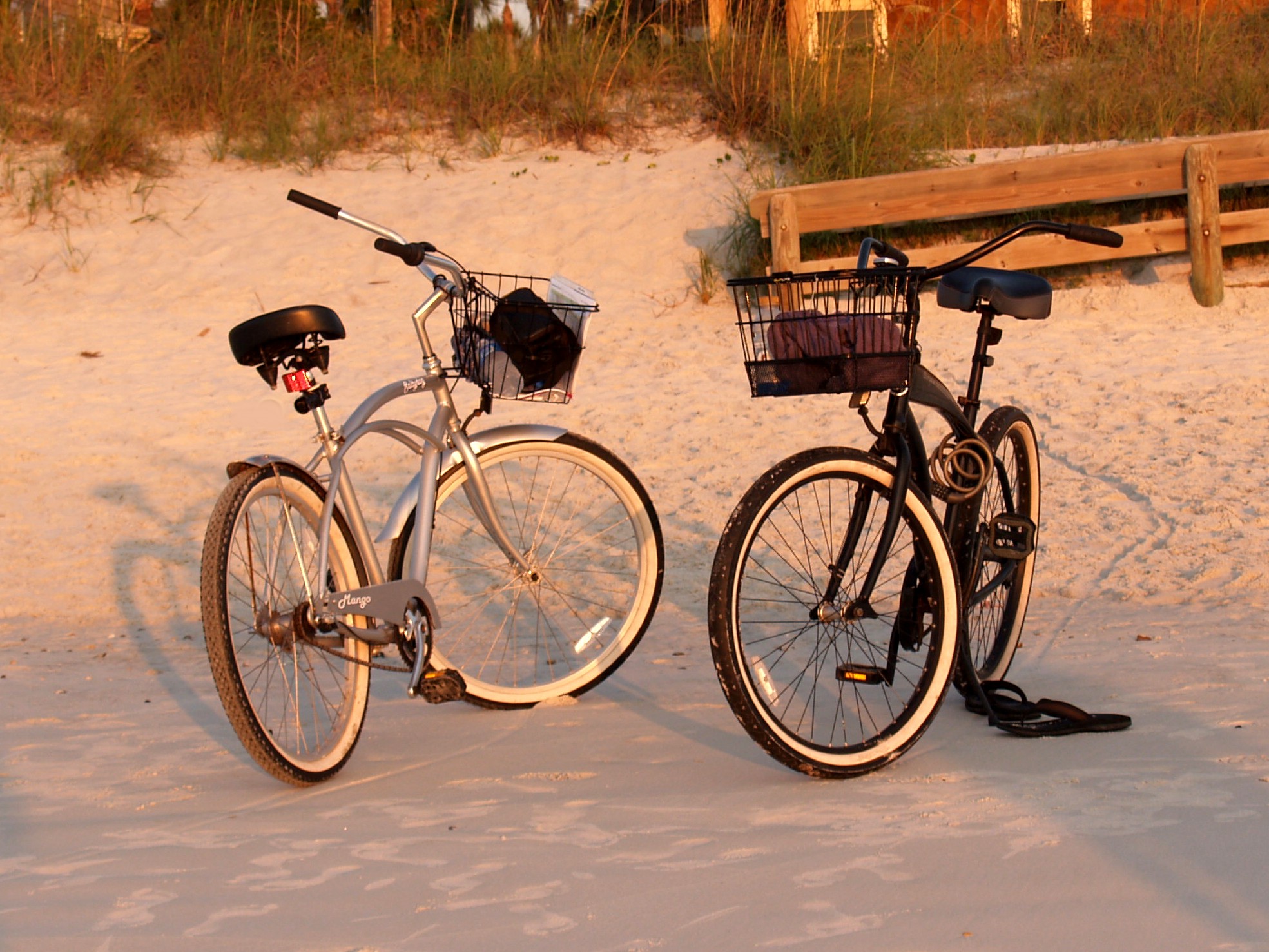
#11 Help Others Find Their Happy Places


A few weeks back I wrote a blog titled “Finding Your Happy Place.”  I made the point that many things can drive us to distraction if we let them.  My short list included: work stresses, relationship issues, economic woes, environmental concerns, health challenges, and political frustrations.  These things (and more) can grind people down day after day. I then posed the question “Wouldn’t it be nice, if people could find a place—physically or emotionally—were they could back away from the stresses of life and recharge—even if for a few moments? A place that would bring a bit of peace—a slice of happiness.  In other words, finding their own happy place!”
For this blog, I would like to pose a few random thoughts about how we can help co-workers, friends, and family members find (or maintain) their happy place.  In no particular order:

  • Brighten up the office—place flowers on your desk. Leave a flower on co-workers desk.
  • Bring flowers home.
  • Buy a cup of coffee or can of soda and share a few moments of conversation.
  • Going to the mailroom? Pick up a package/mail for a colleague.
  • Set a lunch date.
  • Extend a sincere compliment.
  • Send a congratulatory email about a recent accomplishment.
  • Recognize an accomplishment in the next staff meeting.
  • Send a birthday card–written in your hand and with a personal message. For managers, don’t delegate this to your assistant; do it yourself.
  • Send a personal birthday greeting via email.
  • Laugh.
  • Ask-listen-ask. That is, ask questions about the other person; listen to her answer; respond with another question about that person.  The conversation is not about you.
  • Send an anonymous thank you card acknowledging a certain contribution of the person.
  • Talk–really talk–to the custodian, cafeteria cashier, parking lot attendant. Say thank you!
  • Surprise someone–buy coffee for the person behind you in line.
  • Squelch gossip.
  • Respond to requests, voicemail, email in a timely and appropriate manner
  • Give people their space.
  • Smile.

Recognition and civility do not need to cost money or take lots of time. Thank you notes or pats on the back can have incredible results for the recipient—and the person extending the recognition.

What do you do?

© Steve Piscitelli and Steve Piscitelli’s Blog, 2010.

Posted in Find Your Happy Place | 14 Comments

#10 Has Connection Created Disconnection?


A few weeks ago, my wife and I enjoyed an early evening walk on the beach. The sun setting in the west cast a golden glow over the sand dunes and bounced off the ocean to the east. Sea oats rustled in the breeze.  Waves gently rolled to the shore and the gulls clacked above.  Glorious sights and pleasing sounds.  Nature at its best.

As we walked off the beach, I noticed a young lady walking towards us with her dog.  As we passed each other, I noticed her ears plugged with the ubiquitous white ear buds. Rather than looking at the wonders of the beach a few yards in front of her, she was feverously pounding out what appeared to be a text message.  Her thumbs moved with purpose.

Many of us have seen such scenes play out in various locales: airports, grocery stores, classrooms, staff meetings, meals with friends, and cars. Have we become that busy, that important, and that concerned that we just have to stay in touch all of the time? Or, are we shouting into the darkness—guilty of narcissistic pleasures? Do people really care about what we are doing every minute? Perhaps our world has changed so much that thumb dexterity and constant connection is the new reality. One common refrain is that we have become addicted to these devices.

In a blog post, Nicholas Carr dismisses “talk of ‘Internet addiction’ as rhetorical overkill.”  Maybe we are dependent, he says, but not addicted. Carr believes we must do an “honest examination of how deeply our media devices have been woven into our lives and how they are shaping those lives in far-reaching ways, for better and for worse.”  (http://www.roughtype.com/archives/2010/05/not_addiction_d.php).

Hmm…for better or worse….

Clay Shirky in his excellent new work Cognitive Surplus writes of the positive aggregate impact new technologies will have on our society. We are becoming producers of information rather than mere consumers.  He presents well-reasoned arguments for how we can use these technologies for our benefit. And don’t talk of wasting time with social media.  Shirky points out that Wikipedia was created with about 100 million aggregate hours of work.  How much television do Americans watch? Shirky puts the figure at 200 billion hours in one year.  The young lady we saw on our beach walk may be part of the new information producing generation—for better or worse.

Erik Qualman paints a compelling picture of the changing times. Lest you think I am a Luddite, know that his book Socialnomics was a game changer for me. (I recommend his video “Social Media Revolution” at http://www.youtube.com/watch?v=sIFYPQjYhv8.)  I finished that book and began a positive (if not measured) experience with Facebook, Twitter, Tweet Deck, LinkedIn, and blogs.  And I have enjoyed this—even if I am still just scratching the surface.  With 500 million people venturing into Facebook (albeit at varying degrees of participation) it is obvious social media is NOT a fade.  It is here to stay.

But…and maybe this is the recovering Luddite in me…have we become so connected that we have become disconnected? I sit with colleagues who cannot have their cell phones out of site; they have to constantly check to see if they missed something.  If they are in a conversation and the phone rings or a text tone sounds, they dropped the face-to-face conversation to check the message.  Maybe I hang with a very important group of people who must be close at hand for immediate response about major issues. Or maybe not.

Have we become so connected that we have become disconnected?  Connected to the phone, to the text, to the latest app—but disconnected from the live human being in front of us.  Or is this the new way of doing things? Am I becoming my father’s generation—boohooing the loss of an early civility?  A golden era—that never really existed?

It is a new world—for better or worse.  While I do think it is much better—that recovering Luddite still appreciates talking eyeball to eyeball without the interference of a piece of machinery.

© Steve Piscitelli and Steve Piscitelli’s Blog, 2010.

Posted in Connection-Disconnection | Leave a comment

#9 PRIDE for Life


Last week in Atlanta I spoke about The Five CHOICES for Student Success.  In reality, this was a session about LIFE success. The choices I examined went beyond the classroom and college campus.  If we can practice and adhere to each of these choices, our chances for success increase.  Think of the following as our call to action.  Make the CHOICE to act with:

  • PURPOSE. Know your direction and act with specificity.  What is it that drives you? Why do you put your feet on the floor each morning? What pulls you from bed day after day?  While I find long-term goals quite motivating, they can be rather intimidating to others.  In our fast-food-I-want-it-now-world, they lack immediacy. And they require work. Don’t sabotage yourself with shortcuts and—dare I say—laziness.  Evaluate your goal and the steps you must take to make the goal a reality. If you really want it, start with one step—even if it is a small step.
  • RESPONSIBILITY.  Know what you need to do and take the initiative to get it done.  If you are responsible, your are accountable for your actions. You have to answer for what you do.  Here is a strategy I heard John Maxwell articulate:  At the end of each day, ask yourself three questions: What should I stop doing? What should I keep doing? What should I start doing?  Answer honestly and then take responsible action.  Doing so can move you closer to your goals.
  • INTEGRITY.  Know that you are acting with honesty, respectfulness, and responsibility.  Integrity is doing what is in alignment with our core values. Parker Palmer (Courage to Teach) reminds us that when, “The work we do lacks integrity for us, then we, the work, and the people we do it with will suffer.”  Are your goals aligned with your core values? If they are not, then why are you moving toward them? Some people reach a goal, only to ask themselves, “What the heck was that all about? Is this all there is?”
  • DISCIPLINE. Know how to develop powerful habits.  One author has poignantly said, “The way we spend our days is the way we spend our lives.” How true.  Build habits that lead you toward your dreams; avoid those behaviors that move you further from your dreams.
  • EQUILIBRIUM. Know how to work for balance and well-being in your life. This can be difficult with the stressors of daily life bombarding us. BUT it is vitally important. In an earlier post on this blog site, I suggested that acting selfishly can, in fact, be very healthy. Consider that here.  Understand what you need to do physically, emotionally, and spiritually to maintain balance in your life.  And then do it.

You will notice the acronym formed from our call for action is PRIDE.  This call for action—these five CHOICES—reflect pride in your life; pride in your goals.  What are you doing to do to get what you want?

© Steve Piscitelli and Steve Piscitelli’s Blog, 2010.

Posted in Success | 12 Comments

#8 Finding Your Happy Place


On a clear crisp March Saturday in 2009, my wife and I were enjoying lunch at a marina in St. Augustine, Florida. The occasion was my birthday and a Willie Nelson concert later that evening. Such a laid back day reminded us of all we had to be grateful for in our lives: our health, our friends, our marriage, our community.  To be sure, hardships have presented themselves along the way, but we have been fortunate.  We were in a happy place.

As we talked, I started to jot down a couple of thoughts about what can drive people (us included) to distraction at times.  My short list included: work stresses, relationship issues, economic woes, environmental concerns, health challenges, and political frustrations.  These things (and more) can grind people down day after day. Wouldn’t it be nice, if people could find a place—physically or emotionally—were they could back away from the stresses of life and recharge—even if for a few moments? A place that would bring a bit of peace—a slice of happiness.  In other words, finding their own happy place!

Before we paid the bill that day, I had penned most of the words to my song Find Your Happy Place!  Today, the song is complete—and the title track for my new CD.  It is a reminder that we have to care for ourselves.

So, with that in mind, I would like for this blog post to be a compilation of your thoughts on what you do to find your happy place.  Where is it? Is it a physical place? An emotional retreat? A spiritual touchstone? A community gathering—or an isolated spot?  Let’s focus on those ethical and legal ways you maintain balance in life.

I look forward to reading about your happy place!

© Steve Piscitelli and Steve Piscitelli’s Blog, 2010.

Posted in Find Your Happy Place | 17 Comments

#7 Where is the Line for “APPROPRIATE” Behavior–and Who Draws the Line?


This week’s blog post draws its inspiration from an Arkansas news story a colleague shared with me.

The brief version:

  • According to ArkansasBusiness.com four employees (including three on-air personalities) filmed and posted “two profanity-laced spoof videos” on YouTube.
  • The general manager of the NBC affiliate KARK stated, “A number of KARK employees acted on their own accord to produce unauthorized, offensive and distasteful videos that were subsequently posted to the internet.  I am personally shocked and saddened by the behavior of these employees. KARK has no tolerance for this type of behavior and messages that degrade and discredit our community and our employees. As a result, those involved have faced swift and appropriate disciplinary action….”
  • The four employees were fired.   (http://www.arkansasbusiness.com/article.aspx?zone=AB_DailyReport_Friday&lID=&sID=&ms=&cID=Z&aID=122987.54928.135113)

Discussing the story with colleagues and my wife brought thoughts about what constitutes appropriate behavior; or for that matter, appropriate speech. I realize the courts deal with this at the highest legal level—but what about at the level of each of us as members of a community?  Is everything game? Is nothing too sacred for skewering? Can anything be said?

I can remember when I was beginning my teaching career.  A veteran teacher on my team came unglued when she heard a student use the phrase, “that’s screwed up.”  When I asked about her concern, she said, “Don’t you know what screwed up really means?”  In her eyes, the student’s speech (and probably society in general) had slipped a bit on the civility scale. I did not see the big deal.

Now, with 30 more years in my rearview mirror, I understand my former colleague’s concern. For instance, growing up, my generation used the phrase “I am ticked off.” Well, we know what that was code for, don’t we?  But, now, I hear more and more people in both the classroom and professional settings blurt out, “That really p@@@es me off!”  Have we slipped a bit more? Is civility a casualty of informality and shock value?

The video spoof mentioned above uses the F-bomb numerous times. Two of my colleagues found other references in the videos offensive to women. Yet some people might make the argument there is nothing wrong with these videos—and nothing inappropriate about using the F-bomb in such creative endeavors. “It’s merely an attention grabber,” they might say.

The questions raised—and they are not new to this time period—are (1) “How do we determine the line of appropriateness?” (2) “Who should draw that line?”  (3) “Should there even be a line?”

What do you think?

© Steve Piscitelli and Steve Piscitelli’s Blog, 2010.

Posted in Appropriate Behavior | 7 Comments

#5 “Balance Is Not Necessarily Even”


[NOTE: I previously posted this on Blogger on June 27, 2010.]

[NOTE: This is an excerpt from my recently released book Choices for College Success (Boston: Pearson Education, 2011, pages 17-19.) While the book addresses student success, the topic for this blog applies to all of us.]

Dr. Bill Hettler, cofounder of the National Wellness Institute (NWI), developed the Six Dimensional Wellness Model. This very simple yet powerful model reminds us that a balanced life needs more than three good meals and a restful night’s sleep. Each of the six dimensions has an impact on the other five. According to the NWI, no single category operates by itself; all six–social, occupational, spiritual, physical, intellectual, and emotional–impact each other for a balanced or unbalanced life….

Each life dimension is intimately related to your growth as an individual. By taking notice and care of each dimension of your life, you will take important steps toward turning your dreams into realities. If ignored, however, any one of the dimensions can have a detrimental effect on the others. For instance, if you consistently operate on too little sleep, eat less than nutritious food, associate with negative people, or depend on the “help” of drugs and alcohol to cope with life’s challenges, your life dimensions will eventually weaken. In short, the choices you make have consequences.

When thinking of the concept “balance” you may envision something with equal parts. For instance, a balanced wheel might have six evenly spaced spokes. Most likely, one of your dimensions probably looms as the most significant in your life. It is the strongest or the one that serves as the “rock”–the foundation, the base–for our lives. For some people, the spiritual dimension is their guiding light. In times, when their entire world seems to be crumbling around them, they can draw on their spiritual strength to maintain balance and safely weather the turbulence.

For you, the physical dimension may be the part of life that provides a strong foundation. In times of stress, you might find that physical exercise, yoga practice, or a cup of green tea helps you stay calm. Or the social dimension may provide solace.

Whatever dimension is your strength it may well overshadow all the other dimensions of your life. Moreover, your “base” dimension might very well change over the course of your life.

Give yourself a reflective moment and do the following. First, rank order your life dimensions. Which one is the strongest in your life? Which is the second strongest and so on until you have ranked all six. (For this activity, “strongest” means the dimension helps you maintain health and balance.) Once you have your ranking, consider how each dimension affects your life. Finally, how can you use your strongest dimension to help you strengthen your weakest dimensions? Write a plan for the coming week—and make the choice to take action.

© Steve Piscitelli and Steve Piscitelli’s Blog, 2010.

Posted in Balance | 11 Comments

#4 When is being selfish not being selfish?


[NOTE: I previously posted this on BLOGGER on June 20, 2010.]

In his book, Choices That Change Lives, Hal Urban presents a powerful activity that I have adapted and used in many of my workshops. There are three steps:

  • First, write the three (or five, or ten, or fifteen) things that are the most important in your life.  These could be people, things, processes—whatever you place a priority upon. 
  • Next, list the three (or five, or ten, or fifteen) things that take most of your time each week.  (Do not count the time you sleep.) 
  • The final step is to compare the two lists, do they match; do they connect? 

 In every audience I have used this activity with, I see heads shaking as if to say, “What I say I value is NOT where I am investing my time.”  It is a quick activity that can be an effective reality check. At the very least, it provides pause for thought.

  Recently, I did this activity with an added twist.  After the audience compared their two lists, I asked, “How many of you listed yourself at the top of either list?”

 In a professional grouping of approximately 75 people, very few people put themselves first. I asked them to think about that.  How could they be good for anyone else if they were not taking care of themselves physically, emotionally, intellectually, socially, and spiritually?  I suggested they think about being “selfish”—that is, spend time strengthening and maintaining balance in their lives.

 Later that day I received an email from one of the participants: “If you are spending time on the things you value, is that not putting yourself first?  One’s own name wouldn’t need to be on either of the lists!”

 It was (and is) a great question that stimulated an energizing email exchange. We can renew ourselves by “spending time on the things we value.”

 This same participant also wrote: “I believe what bothers me is the ‘taking care of me.’ This ‘taking care of yourself’ philosophy is being interpreted into ‘It is totally ok for you to be selfish at whatever costs.’  We make choices in life.  Choices to have a family. Choices to own a home. Choices to work outside the home. Choices to strive for a particular income level. All these choices come with it responsibility of time and demands on oneself.  To bail on any of it because ‘you deserve to take care of yourself’ shows lack of character and responsibility and commitment to something you made a choice to do.”

 Again, good points.  But I do not believe that “taking care of yourself” has to equate with a “lack of character, responsibility, and commitment.”

  What I am suggesting is that we take care of ourselves physically, emotionally, and spiritually.  I am NOT saying we should shirk responsibilities because I deserve “it” (whatever “it” may be). Yes, we do make choices—and we have to live with those choices. 

 For instance, parents have an all-encompassing job that, at times, does take every waking moment. The same happens from time to time in the workplace. And the parent and worker can very well value what they are doing. That is, they love their children; find their work exciting.  However, if that person collapses physically, emotionally, intellectually, or spiritually, will that person be any good to those he/she has made a choice to provide for (for example, children, spouse, employees). If I make sure to carve out time each day for physical conditioning, I know that I will be a better person for those I work with and live with. And, with discipline, I can do that and not “bail” on any of my responsibilities.

 Perhaps “selfish” is too harsh a word; carries too much baggage.  Whatever we call it (“selfish” or “investment” or “…”) this does not give us license to disregard our responsibilities. In one of my books, I write, “Think of balance as being in a condition of contentment when you feel intellectually alert, emotionally stable, and physically strong.” This is living in a healthy, respectful, and responsible manner. 

 Is this selfish? Does this show a lack of character? What do you think?

© Steve Piscitelli and Steve Piscitelli’s Blog, 2010.

Posted in Being selfish | 29 Comments

#3 A Value Without Virtue Can Be Dangerous


[NOTE: I previously posted this on Blogger on June 13, 2010.]

Cleaning out some old files last night, I came across a presentation that I made a number of years ago to a group of high school students on their induction into the National Honor Society. At the time I had been inspired by Don Trent Jacobs, who had taught on the Pine Ridge Reservation in South Dakota. His writings and our subsequent conversations helped me formulate my thoughts for the students.  On that evening in 2002, in a high school auditorium, the students and I examined the concepts of value and virtue. Here are a few of the takeaways.

A value is important to us; it might even be a life-driving force.  A virtue, on the other hand, is something that has more universal implications and makes the world a better place.  Values may or may not make the world a better place.  A value without virtue can be dangerous. You may know people who value an end but that end does not make the world a better place.

Outside forces—usually someone else’s values—continually challenge us to stay on a virtuous path. As you confront life’s challenges nurture and draw on these virtues: courage, fortitude, patience, generosity, honesty, and humility. Each, in its own way, can give you the strength to continue to learn and grow.

Courage.  Life is about courage; taking calculated risks; preserving in spite of fear.  An old Seminole saying goes something like, “If you are not close to the edge, you are taking up too much room.”  Think of a brave act you have accomplished.  Think of the many risks you have taken.  Draw on that same strength each day.

Fortitude. Learning is about the ability to stick with things.  The ability to endure; the ability to do what is right and healthful.  Think of the person who has stuck with you in times when you thought no one would.  It could be a parent, a teacher, a boss, a friend, a spouse, a partner, a minister.  Do the same for another living being.

Patience.  Waiting, tolerance, not vengeful or seeking retribution. I have to admit, this is not one of my strong suits.  (My idea of patience is to count to one!)  When you find yourself being “short” with someone, try to count to at least two!

Generosity.  Giving and sharing ideas, wealth, possessions, and time.  Teachers, for example, give a lot more than facts and homework.  They give their ears, their thoughts, their hearts and their time.  A mentor gives without question or hesitation.  What do you give back to them? To others?

Honesty.  An honest person is trustworthy; is willing to do what he/she says she/he will.  This is a sincere person.  We are bombarded with gimmicks and tricks that don’t necessarily improve the final product—us.  We have to have the determination to separate what works–what is authentic to our identity–from the glitz.  Be honest with others—and yourself.

Humility.  Freedom from pride and arrogance.  A very good friend of mine held the all-time basketball scoring record at the University of Missouri, Raleigh from until 1986.  Consider his humble words:  When you do something well, make it look like you’ve been there before!”  It’s what you might refer to as class.

            When you run into difficult times, reflect on the virtue that can pull you through.  Seek a friend, a parent a mentor, a coach–someone who has the virtue that you need to build; the virtue to make your life joyful—for you and the world around you.

© Steve Piscitelli and Steve Piscitelli’s Blog, 2010.

Posted in Values and virtues | 5 Comments

#2 Moving from Unremarkable to REMARKABLE!


[NOTE: I previously posted this on Blogger on June 6, 2010.]

In the immediate aftermath of the abortive Time Square car-bombing (May 2010), media sources began painting a picture of the alleged suspect in the incident.  One particular description caught my attention.  When asked to describe the suspect, a college professor said the suspect had been an “unremarkable” student. 

            While the incident had massive societal implications on so many levels, I was particularly struck by the word “UNREMARKABLE”—and (ever the teacher!) I thought of a way to relate that descriptor to success on campus and in life.

            Think about it. Are you interested in living an “UNREMARKABLE life”?  Would you be happy with the following description of your life?

  • You hope for an average college career that will prepare you for an average job.
  • You hope for an average career.
  • If you marry, you hope for an average partner. Together you will have average children.
  • You will live in an average house, living an average life, with a bunch of average friends.
  • Upon your death, you will be remembered as one average person who led a rather UNREMARKABLE life.

YUCK!

            While I have met many people who were living that life, I have NEVER met anyone who said they aspired to such a life! And for most of you reading this blog, I KNOW in my heart that you do not want to such a life.  (After all, how many people do you know who wake up each morning saying, “Gee, I can’t wait for another average day in my life!”?) But occasionally, we all get off track; we all need a little motivation (or loving kick in the butt) to raise our game.  When that happens to you or to a friend or to a family member, consider the following reminders to help you make the necessary changes in your life that will move it to REMARKABLE:

  • Knowledge is not power.  It is not enough to know that a change is needed.  You have to do something with the information—you have to use the knowledge.  I recommend any of Larry Winget’s works for more information on this commonsensical approach to change. In particular, check out his books People Are Idiots—And I Can Prove It and Shut Up, Stop Whining, And Get A Life! [For a selected bibliography, you may wish to check http://stevepiscitelli.com/bibliography.htm.]
  • You need to have a clear vision of where you want to go. But long-term goals can be a bit intimidating—and for some, the lack of immediacy creates a demotivator.  The Heath brothers’ book Switch: How To Change Things When Change Is Hard provides an excellent strategy. They suggest we develop a “Destination Postcard.”  As the Heaths describe it, “A vivid picture from the near-term future that shows what could be possible” will make the destination compelling and visible. It might be the best postcard you ever write—and receive!
  • The Heaths also encourage us to focus on the short-term victories to get us to the long-term celebration.  They suggest replacing “milestones” with “inch pebbles.” In this way we can make the long-term goal more immediate.
  • Finally, listen to and learn from those around you. Find a mentor or two to move you forward.  I am fortunate to tour this great country with two giants in the area of student success: Robb Sherfield and Amy Baldwin. From them, I have learned that change is not a singular thing…it is a process that requires attention and hard work. More specifically, if we want to change—if we want to grow into a REMARKABLE life—we have to embrace a five-step process: 1. Have COURAGE; 2. take ACTION; 3. take calculated RISKS; 4. maintain an appropriate ATTITUDE; and 5. be patient—change takes TIME.  Think of the acronym CARAT.  Just as a carat represents the value of a diamond, this five CARAT change will add value to your life. Embrace it! Live it! Enjoy it!  And live the REMARKABLE life you can have.

Until later, choose well, live well, and be well!

© Steve Piscitelli and Steve Piscitelli’s Blog, 2010.

Posted in Living a remarkable life | 2 Comments

#1 Social Media–Know When And How To Use It


[NOTE: I previously posted on Blogger on May 31, 2010.]

I am in Austin, Texas presenting at the NISOD conference.  Yesterday I had the good fortune to facilitate an all-day pre-conference institute with Robb Sherfield (author of Cornerstone) and Amy Baldwin (author of The Community College Experience).  One of the topics we discussed was how to use social media for motivation and engagement in the classroom.  This was (probably) the 6th or 7th time we have worked with this topic in a workshop setting.  This morning, I did a solo session titled “The Dot Commies Are Comin’ The Dot Commies Are Here!” Again, this was about social media in the classroom.  No matter where in the country we do this workshop, there are a couple of recurring points:

  • NO matter who your audience may be, when using social media KNOW why you are using it. In other words, don’t use it to be cute. Use it with a purpose.  Match your strategy to the goal.  This holds true for the classroom or the boardroom.
  • People are interested in SKYPE. The ability to video conference (two people) computer to computer for FREE and with good quality is attractive.  Audio conferencing with more than twenty people at a time is also available. One participant yesterday was excited about the prospect of using this technology to connect with students on various campuses.
  • Digital video cameras allow you to develop quick (and high quality) learning objects for students, staff, community groups, and the like.
  • No matter how good the technology is there are bound to be glitches.  Recognize that, accept that, and plan for it. BUT do not avoid social media and technology because there MIGHT be a glitch.
  • As a teacher it is my responsibility to let my students know this technology exists. They can choose to use it or not…but they need to know it is there.  And it is not going away!  Which leads to my last point…
  • As Eric Qualman points out in his book Socialnomics (http://socialnomics.net/), social media is not a fad. It is not going away.  We should do what we can to help shape the discussion about appropriate uses of the technology for teaching and learning.  Again, this is important for the classroom and the boardroom.

I welcome your thoughts on the best way to use social media to connect in education–and in the corporate world.

© Steve Piscitelli and Steve Piscitelli’s Blog, 2010.

Posted in Social Media | 10 Comments