#21 Goals, Failure, and Choosing to Move Forward


In their book Built to Last Jim Collins and Jerry I. Porras describe what they refer to as BHAGs. In their research of successful companies they found that companies that set big, hairy, audacious goals left their competition in the dust. In other words, these companies did not settle for making goals that would be easily reached–they set goals that required effort to attain. They make you stretch.
When setting a goal think of another acronym HOG.  Set a huge outrageous goal.  Think of this as a reminder not to settle for something that will not allow you to take advantage of your best efforts. If you aim high and take appropriate action steps, you will move further than you may have thought possible. Yes, you may stumble; you may even fail to achieve a particular goal. But if you aim low (the easy way), you will hit your mark every time–and more than likely never achieve your potential.

We can all remember stories of people (famous and not so famous) who failed miserably but were able to rebound from the pits of despair and find success in the aftermath.  It may be hard to find the unseen benefits in a failure at the time it happens but they are there.  Consider some of these more famous “failures.”

  • Award-winning actress and comedienne Lucille Ball was dismissed from acting school.
  • Early in their career, a record company rejected the Beatles because the company did not like their sound and thought “guitar music was on its way out.”
  • His high school basketball team cut future hall-of-fame basketball player Michael Jordan.
  • Long before his famous inventions, a teacher told Thomas Edison that he was stupid.
  • A newspaper fired Walt Disney because he lacked creativity.

Life is full of risks–and failed attempts. Just because you fail at something does not make you a failure. It simply means you failed at that attempt.  As cliché as it sounds, the only failure in a failure is the failure to get up and do it again.

If Michael Jordan had never rebounded from his high school failure, think of the basketball and athletic genius the world would have missed.  Therefore, the next time you do not achieve what you want and you consider quitting, think of what the world might miss if you do not persevere toward your dream!

Think about your favorite novel or movie for a moment. The hero started at a certain point in life and ended at another at the conclusion of the story. The final scene usually represented some type of success or progress for the main character. However, that achievement did not occur without twists and turns of the plot. Those adventures–or misadventures–kept you turning the pages of the book or sitting in your seat watching the screen. As the hero made his way toward a particular goal, an obstacle presented itself and the hero detoured from his goal. He had to gather his thoughts, refocus, and then move back up the road toward the goal. This continued until he reached the final scene.

Just like the hero, you, too, will probably have missteps along the way. Goals are set in the real world. Problems, unforeseen circumstances, and “bad luck” are also part of the real world. Expect them, plan for them, and make choices that keep you moving toward the desired result. 

[The above is an excerpt from Piscitelli, Steve. Choices for College Success, 2nd edition. Boston: Pearson Education, 2011. Pages 63-64; 68.]

© Steve Piscitelli and Steve Piscitelli’s Blog, 2010.
Posted in Failure | 27 Comments

#20 Don’t Let Anyone Take Your Passion


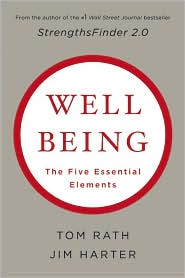
In their book Well Being: The Five Essential Elements, Rath and Harter found that only “20% of people give a strong YES when asked if they like what they do.”   They further found that people with a high level of career satisfaction were more likely to thrive in their lives as a whole.  Twice as likely!

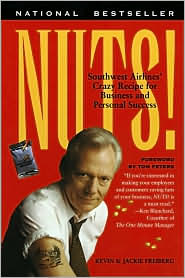
In Guts: Companies That Blow the Doors Off Business-as-Usual and Nuts: Southwest Airlines’ Crazy Recipe for Business and Personal Success, Kevin and Jackie Freiberg make a compelling argument for taking care of the employee.  They maintain that companies are nimble because they trust their employees and remove the “black hole” of bureaucratic rules that drain creativity—and productivity.

It really is common sense. Take care of the employees and the employees will take care of the customer. Let the professionals do their jobs; get out of their ways.  This does NOT mean the employer has to make the employee “happy.” It does NOT mean accepting shoddy work. But it DOES mean trusting the employee.

A nibble here and
A nibble there
Before you know it
You’re gasping for air
Energy vampires
The same ol’ tune
Oh, yeah, they suck the air right out of the room!
(“Energy Vampires”—Steve Piscitelli)

Like it or not, we will run into those who want to suck the life right out of us.  We follow our hearts; do what is right; make a difference—and, still, someone is standing in the way. You probably have heard the idiom, “No good deed goes unpunished.” And it can be especially frustrating when the person is a supervisor or someone who can throw some major obstacles in your way. Such is the situation a friend shared with me recently. A tough professional situation is challenging the passion that drives this friend to get up each morning.  What to do? Quit? Ignore it? Confront it? The situation is frustrating and draining.  About the best I could muster was, “Don’t let anyone take your passion.”

What lies behind us and what lies before us are tiny matters compared to what lies within us. 
(Ralph Waldo Emerson)

The more I thought about it, though, that simple statement holds a lot of power.  And it has driven me along in times when I had similar challenges.  (No, it is not easy…but I guess if it were easy, then everybody would be doing it, right?) And when we examine history, we find significant changes made by those who just would not be deterred by huns, philistines, or energy vampires. Years ago, one of my first supervisors made a desk plate for me. I still have it in my office:

Illegitimi non carborundum.

Loosely translated: Don’t let the bastards grind you down.

What has worked for you?

 © Steve Piscitelli and Steve Piscitelli’s Blog, 2010.
Posted in Passion | 14 Comments

#19 Today-Tomorrow-Yesterday


A dear friend of mine recently sent me the book Reach for the Stars. It is one of those volumes of compiled wisdom quotes attributed to sages, authors, politicians, and modern-day celebrities.  Brief statements with powerful insights.

One quote in particular grabbed my attention—and it kept pulling me back to the page each day I opened the book. It came in the form of a question,

When will you realize that “today” IS the “tomorrow” you hoped for “yesterday”? (Ken Keyes, Jr.)

I have previously written on this blog of the importance of An Attitude of Gratitude (August 16, 2010). I stated then, “I can be a bit of a whiner at times—don’t like to admit; but it is true.  And the reality is I have NOTHING to whine about. At times, it is easy to dwell on the misfortunes of life…and that kind of thinking is deadly.”   When I read the “today-tomorrow-yesterday” quote above, I thought again about the importance of gratitude. But more specifically, I thought about how we do create our future. Our actions move us towards our dreams; they create our reality.  Likewise, our inaction creates its own reality.

There was one word, however, in the quote that did not resonate with me—hoped.  For me, that sounded passive; too much like “let’s see what will happen.”  With a slight rewrite I came up with,

Today is the tomorrow I created yesterday.

The word “created” emphasizes the need to take action to make my tomorrow be what I envision. It necessarily includes responsibility and accountability for what I desire for my future.   I have to admit, though, a lot of my creations have not panned out like I had planned.  Guess that is the difference between “hope” and “creation.”  The results come about because of work I have done (or not done), positions I have placed myself in (or not), and relationships I have nurtured (or ignored).

As you embark on your new week, consider what actions you will take to make your goals reality. What do you want your future to look like? Make today’s actions move you closer to your dreams of tomorrow.

© Steve Piscitelli and Steve Piscitelli’s Blog, 2010.
Posted in creating your future | 9 Comments

#18 Crab Pot Mentality!


I learn so much from my students; constantly.  Last week was the latest example.  In class, we were watching a few selected scenes from the powerful and compelling movie Homeless to Harvard. The movie chronicles Liz Murray’s inspiring journey as she went from a drug-addicted dysfunctional family, to a foster care facility, to homeless, to Harvard. The true story provides real-life examples of concepts such as belief systems, values, goals, motivation, and locus of control.

One scene shows a confrontation between Liz and a teacher on one side, and one of Liz’s friends (Chris) from the streets.  Liz has just been told by her teacher that she has the highest grades in her school and, as a reward, she is being sent on an all-expenses paid trip to Boston. The purpose of the trip is to get Liz thinking about college. You can see it on Chris’s face: Liz is moving up, out, and about to leave her behind.  Rather than be happy for her friend, Chris lashes out and says “It’s all crap.” The teacher offers Chris the same chance but tells her she will have to work hard to get what Liz has accomplished. Chris responds with, “Not freakin’ interested.”

When we discussed this scene in class, I used the term “hater” for Chris. The students got the message and were ready to talk about it—as many of them have “haters” in their lives.  These are the people who will pull them down, dash their dreams, and/or sabotage their plans.  The “haters” want to hold the person back with questions like, “Who do you think you are?” Or “Do you think you’re better than me?”

When I used “hater” (which had been introduced to me by a student, also) this past week, one of my students said that she used “crab pot mentality” to describe the same thing.  She said when crabs are put into a cooking pot, they start to clamber up the side of the pot to escape. An interesting thing happens on their way to freedom: The crabs left behind reach up and pull the fleeing crabs back into the pot.  Rather than see anyone live for another day, the crabs appear to be content to all die.

What a powerful metaphor!  I did a quick Google search and found a number of references to “crab pot mentality.”  Here are just three:

Whatever you choose to call these people—haters, crabs, energy vampires, saboteurs, dysfunctional—they can kill a dream if we allow them into our world.  If you have run into these energy suckers, please share your strategies. What is your antidote to their poison?

 © Steve Piscitelli and Steve Piscitelli’s Blog, 2010.

Posted in Haters | 80 Comments

#17 Is Multitasking a Myth?


Recently, I had my students keep a log of their time use for a week.  They listed how many hours spent working, going to class, doing family chores, sleeping, and the like.  All activities had to add up to 168 hours—the number of hours in a week.  A number of students had totals in excess of 168; one totaled 280 hours for the week!  When I asked where they found the “additional hours,” they responded, “I multitask!”  Hmm.
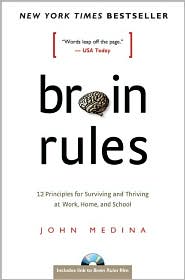
While it is true that a certain bit of multitasking does take place naturally (for instance, right now I am typing, breathing, seeing) when it comes to focus and attending to stimuli, multitasking is a myth.  At least so maintains, John Medina in his book Brain Rules: 12 Principles for Surviving and Thriving at Work, Home, and School. Medina, a developmental molecular biologist, bluntly argues, “Research shows that we can’t multitask. We are biologically incapable of processing attention-rich inputs simultaneously. We must jump from one thing to the next.”
His argument rests on research that suggests every time we have two or more competing stimuli, there are four sequential steps that have to happen as we move from stimulus to stimulus.

  1. Shift alert. The brain readies itself for the shift in attention.
  2. Activation for the task at hand. The brain follows the command to do whatever the task is—such as typing an email.
  3. Disengagement. When the brain attends to incoming stimulus (say, a phone call), it disengages from task #1 and readies itself for a new shift alert.
  4. Activation for the new task at hand. The brain now pays attention to the new task (the phone call).

Medina says the steps have to take place each time we engage something new–or simply shift attention back and forth between two stimuli. So, while we may still be typing while talking, the research says that we are actually shifting gears continually during the process—following the four steps above. This results in accomplishing both tasks at a slower rate (up to twice as long) and a 50% increase in errors. (See Medina’s brief and funny video “The Brain Can’t Multitask” at http://www.youtube.com/watch?v=xO_oEGHWSMU.)
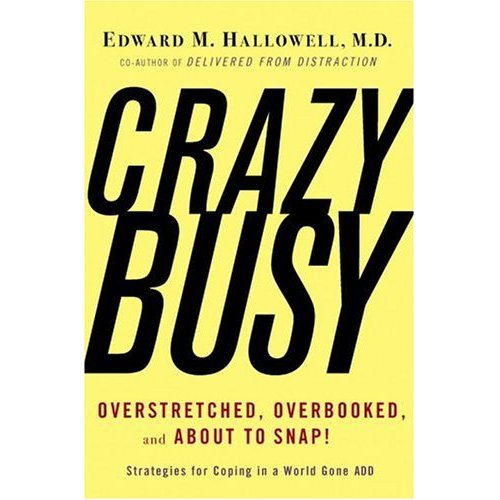
Edward Hallowell puts it this way in his book Crazy Busy: Overstretched, Overbooked, and About to Snap!
“Multitasking refers to a mythical activity in which people believe they can perform two or more tasks simultaneously as effectively as one. To appreciate how faulty this notion is, consider…one of the first things you do is turn down the radio if lost in your car. Why? Because you want to pay single-minded attention to the task of finding your way.”
One of my students said she did her homework at the same time she watched her child. The reality, I suggested, was that the child was in the same room while she read her book. When she raised her eyes from the book to watch her child, she went through the four steps above—and for however long she was engaged with the child, she was NOT doing her homework.  When she returned to her book, she then was NOT watching her child.
The research merits consideration.  Think of when you have been switching back and forth between two tasks. Possibly, you asked, “Where was I?” Or maybe you had to reread the paragraph you thought you were reading as you were talking on the phone or watching the football game.
And so while we may be doing two things at the same time, the research suggests, at the very least, effectiveness has been significantly compromised.
Now, it’s time for me to power down the computer and to focus on Sunday Night Football.

© Steve Piscitelli and Steve Piscitelli’s Blog, 2010.

Posted in Multitasking | 14 Comments

#16 How Big Is Your BUT?


Last semester I asked my students to share some advice. Specifically, I wanted to know what piece of wisdom they would pass along to first-year college students.  What had they learned that would help the students coming behind them be successful in school—and life?

 One student response stood out amongst the rest. In part he said, “They need to envision their dream and remember every single day why they are in college. When Monday rolls around, drag your but out of bed and get to class.”

 Great advice. Simple and straightforward.  As I read it a second time, I noticed a spelling error:  “but” only had one “t” and it needed two (as in short for buttocks). The more I thought about it, however, my student had hit on something powerful.  If we want to reach our goals, if we want to be successful, and if we want to have a life of significance, we need to drag our 2-T butt out of bed—and we need to drag our 1-T but out of bed. 

 Yes, to be successful we have to eliminate the word but from our vocabulary. That small three-letter word serves as a huge eraser for everything that comes before it in the sentence.  Think about it:

  • I know I need to get the gym BUT I am just not a morning person.
  • I really want to lose weight BUT my schedule is too hectic to eat right.
  • I need to spend more time with my family BUT I need to make the money while I can.
  • I need to follow a budget BUT I have plenty of time to save for retirement.

 But is a powerful demotivator. Along with the word try it becomes a huge excuse as to why a person has not done what he or she knows should be done.  (See my video “Two Words To Eliminate From Your Vocabulary” at http://www.facebook.com/video/video.php?v=360750311975.)

 The question this week to consider is “How big is your BUT?”  How often do you excuse yourself with a sentence that begins with something like, “I tried…but….”  Is your big BUT holding you back?

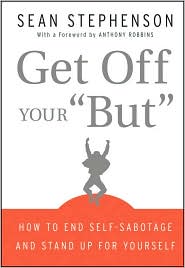
 Sean Stephenson wrote a wonderful book titled Get Off Your “But”: How to End Self-sabotage and Stand Up for Yourself.  He reminds his readers that there is a “BUT Triple Threat.”

  1. BUT fears. These are the “what ifs” in our lives.  We might find ourselves constantly postponing action; living a cyclical worst case scenario.  “I would like to change jobs but what if the new one does not work out.”  “Yes, I want to go back to school but what if I cannot do the work?” “I want to try out for the team/band/play but what if I fail.”  Stephenson believes “we are so afraid of looking bad that we forget no one’s looking at us—just like you, other people are looking at who’s looking at them.”  A colleague of mine once quipped, “80% of the people don’t care that you have a problem—and the other 20% are glad you have the problem!” So why waste time in this realm?
  2. BUT excuses. Some people get in a loop of rationalizations. And like most loops, they end up where they began—only now they have a pile of but excuses as baggage.  “I would have made that job change but the economy is too tenuous/it’s not the best time/I will do it next year/I will wait until the car is paid off.”  Believe me; I understand how this cycle can constantly replay.  We can always find a reason to postpone an action.  Stephenson suggests to project into the future and ask yourself: “If I continue this behavior, what will happen to me? Where will I be? Do I like the result?”
  3. BUT insecurities. Rooted in self-esteem issues of I am not good enough, talented enough, strong enough, pretty enough, popular enough, or smart enough these can be paralyzing.  There is a difference between a realistic assessment and a self-defeating pronouncement.  For me, a realistic assessment is that I am not talented enough to play guitar like Eric Clapton.  A self-defeating pronouncement would be that I will never be able to play guitar because I have no talent. The reality is that although I may not be very good with a guitar, I have recorded two CDs and play my guitar regularly around the nation.  Ask a trusted friend or family member to help you separate reality from the insecurities.

What are your dreams? What is holding you back—fact or fiction?  How big is your BUT?

 © Steve Piscitelli and Steve Piscitelli’s Blog, 2010.

Posted in Excuses | 13 Comments

#15 Offensive or Remarkable?


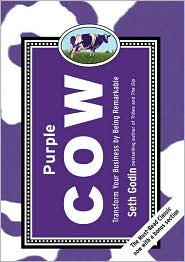
Seth Godin’s book Purple Cow: Transform Your Business by Being Remarkable maintains that traditional marketing no longer works. He writes that businesses need to develop a Purple Cow. That is, “anything phenomenal, counterintuitive, exciting, and remarkable.”  He argues, “Consumers ignore a lot of brown cows, but you can bet they won’t ignore a Purple Cow.”

 He encourages business people to be mavericks; outrageous enough to stand out from the crowd.  Vanilla does not make it according to Godin. He exhorts his readers with phrases like:

  • Go for the edges. Challenge yourself.
  • Safe is risky.
  • A product for everyone is a product for no one.
  • Criticism comes to those who stand out.

 Using the Godin standards above, I think my new CD (Find Your Happy Place!) might have hit the big time! That is, if “offensive” is a Purple Cow.  Let me briefly explain.

 In addition to online sales (iTunes, Napster, Amazon, CD Baby), a few local retailers carry Find Your Happy Place!  A few weeks ago, one of these outlets hosted an election eve party for one of the local primary contests.  The owner mixed my CD into the music shuffle for the gathered audience. 

 A few days later, the proprietor told me that some of the party guests told her they were “offended” by one of my songs. They asked her to remove the CD from the play list.

 “Offended!”  Wow.  Strong word. Goes beyond saying I do not like your voice or songwriting. It is a moral condemnation.  But for the life of me I could not figure out what was offensive.  There is no profanity and I write about what I observe.  Maybe truth offends. Perhaps.

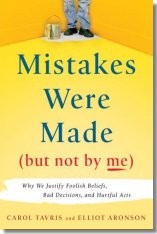
 The song in question is the first track of the CD, Mistakes Were Made (But Not By Me).  I got the idea for it after reading a book by the same name. It is about self-justification; about how people find ways, in the face of overwhelming counter evidence, to rationalize what they do and/or believe.  The book is a wonderful read.  I wrote the song from the perspective of people who are quick to blame others for their mistakes. I based the entire song on sarcasm…from the point of view of someone who might believe he/she is correct and the rest of the world is out of step.  I picked four scenarios and sang about how each person might justify his/her actions: a demanding parent of a student; a conniving boss; a double-talking politician; and a cheating spouse. Musically, it has a great Jimmy Reed-type of groove that my good friend Billy Bowers added on lead guitar. With Billy’s nimble fingers and Mike Shackelford’s bluesy harp, the song cooks (in my humble opinion).

 Now, maybe I should rename the song Mistakes Were Made (But Not By Me—and By The Way This Is All Done With Tongue Firmly Implanted In Cheek!).

 Or just maybe this “offensive” song is “remarkable” enough to send the CD to the top of the charts.  After all, Godin says, “Criticism comes to those who stand out.”

Whatever happens, I haven’t stopped smiling since hearing the news.  Mistakes were made—but not by me. 

 © Steve Piscitelli and Steve Piscitelli’s Blog, 2010.
Posted in Being REMARKABLE | 6 Comments

#14 “IZE” on Your Future


The school year has a nice energizing rhythm. Each new semester allows students and teachers the opportunity to start fresh. In essence, to have a “do over.”  We get to look to the future (near and long-term) and make decisions about what we want to do with the next few months.  If the previous semester was not particularly fruitful, the new one provides new opportunities. And if the preceding term had been marked by success, we get to build on that.  In either case, we keep our eyes on the future.

Whether you are on campus, at work, raising a family, or overcoming a life trauma, let me suggest a five-step model to help you look to the future.  With a bit of poetic license, here is my “ize” on your future list: 

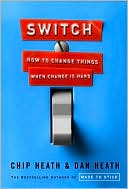
  • Visualize. Before we can reach a goal, we have to be able to see it—at least some general idea of what we are aiming for.  In their book Switch, the Heath brothers suggest we write a “Destination Postcard” that describes in vivid detail where we are headed. In this way, we can touch, smell, see, and/or hear our dream. It gives it reality. There is a story I once read about the founder of IBM. Supposedly, his first step to build the corporation was to visualize what it would look like once it was successful. He then visualized what the IBM workers would look like and what they would be doing when successful. Finally, he started to act that way immediately.  So, can you see your goal; can you see what you want to accomplish? If you want to make it to the Dean’s List, do you know exactly what that means? If you want to be the leading sales person for the coming quarter, do you understand the target—specifically?  I believe Yogi Berra, the Hall of Fame catcher for the New York Yankees, was credited with saying something like, “If you don’t know where you are going, you’ll get there every time.” Visualize your purpose as specifically as you can.
  • Prioritize.  Once you know where you are going, figure out how you are going to get there.  What steps will you need to take? Who can help you? What resources will you need?  How much time will this dream require of you? When will you act?  Let me suggest two strategies. (1) The Two-Minute Drill.  Whenever you feel overwhelmed and consider saying, “I don’t have the time to go after my dream” call for the two-minute drill.  Ask yourself what you can do in just two minutes that will get you closer to your goal. Just TWO MINUTES.  Put everything else aside and concentrate on your goal—and do something concrete for two minutes.  Tomorrow do two minutes in the morning and two minutes in the evening. The next day, stretch it to 3 minutes…and so on.  Build a habit of action.  (2) Eliminate the words “try” and “but” from your vocabulary.  “Try” becomes an easy excuse as in “Well, I tried.” “But” erases everything that comes before it in the sentence.  “I know I should go to the gym…but…I am so tired. Maybe tomorrow.”  Build habits of priority management.
  • Exorcize. Fear can be paralyzing. It can bring up all sorts of images and concerns about the future.  Confront your fears. Are you fearful because you lack confidence in your abilities? If so, ask a mentor to give you feedback. Perhaps you have the ability to move forward; you just need a little reassurance.  Leadership expert John Maxwell reminds us that 60% of our fears are unwarranted, 20% are based on something that already occurred (so we cannot change that), and 10% have little impact (http://www.successmagazine.com/maxwell-the-big-5-challenges-people-face/PARAMS/article/1148/channel/22). Strategy: Each day do something you fear. Nothing foolish, mind you, just something that stretches you out of your comfort zone.
  • Exercise.  (OK, I know, exercise ends with “ise”—but it sounds like “ize”. More poetic license.) If we want to reach our goals we have to take care of ourselves. I have written about this in earlier posts on this blog. (For instance, see “When is being selfish not being selfish” and “Balance is not necessarily even.”)  Tom Rath’s new book, Wellbeing: The Five Essential Elements, summarizes a Gallup study on wellness conducted in 150 countries. Rath states, “Upon completion of the research, five distinct statistical factors emerged. These are the universal elements of wellbeing that differentiate a thriving life from one spent suffering.” (p. 5) The fourth element listed is Physical Wellbeing. What do you do to keep you body in shape? Are you engaging in self-sabotaging activities? How big has your “but” become? (See “Prioritize” above.)
  • Realize. This is when we get to enjoy the goal. The work, the passion, the failures, the successes lead us to this point. Maybe it is just as we envisioned it in our Destination Postcard; perhaps we have made some adjustments along the way. What we do today, will in great part determine what our future will look like.

Keep your “ize” on your future.

© Steve Piscitelli and Steve Piscitelli’s Blog, 2010.
Posted in Dreams | 11 Comments

#13 Are there words we should NEVER say—and who makes that decision?


Last week, Laura Schlessinger called it quits for her syndicated radio show. The timing of the announcement appears to have been due to the brouhaha over her on-air use of the N-word. She used the word a number of times while responding to a caller.  You can view a news clip at http://abcnews.go.com/Business/video/dr-laura-schlessinger-quits-radio-show-11426221 for some context about the incident.

According to the Washington Post (http://www.washingtonpost.com/wp-dyn/content/article/2010/08/19/AR2010081906491.html), Schlessinger told Larry King that on one hand she was energized by the end of her show. She said, “I want to regain my First Amendment rights. I want to be able to say what is on my mind.”  According to the same article, Sarah Palin told Schlessinger “Don’t retreat…reload.” Others have called Schlessinger’s comments unacceptable and despicable.  The lines are drawn.

CNN i-report posted an online article titled “Conversation About Disparaging Words”—and posed the following questions:

Is it ever appropriate to use racial slurs, anti-homosexual terms and other bad words? If it is, tell us the situation. Has the Web changed the situation of when and where it’s OK to use these words? (http://ireport.cnn.com/ir-topic-stories.jspa?topicId=482889).

I pose similar questions to you.  Are there words that we should NEVER say in any situation?  Are there words that some people CAN say, but those same words remain off limits to others?  Should the decision be based on history, common sense, location, or the moment?

For instance, Bob Dylan used the N-word in his song “Hurricane.”  Chris Rock uses it on stage. Is it ok for celebrities to use that word in the context of their craft?  Or possibly, Dylan, if he were writing “Hurricane” today would not use the word because of the reaction. Perhaps.

While this is the most recent incident, it goes beyond the N-word. Ethnic groups have certain words they find offensive. Advocates for people with cognitive disabilities have their list of words.  And so on.

And who is the word police? Who determines the words—and how should that determination be made?

For me it is common sense and historical.  As a student of history, I realize the hatefulness with which the N-word was used.  Why would I want to perpetuate that?  Knowing that its use creates tension, hurt feelings, and uneasiness then why use it? But should my moral compass be the same for others?

I remember when I was teaching high school more than twenty years ago, I actually did play the Dylan song mentioned above for a sociology class.  I thought the word, as used in the song, had power and purpose. It drove home a point about discrimination and prejudice.  But I still did not just slap it on and play it. I brought the lyrics to African American colleagues and African American students for their input.  Not one objected.  I played the song in class; it generated reasoned and passionate discussion.  Perhaps it was the time. Perhaps it was because the students trusted me and knew the word was one piece of a lesson—and not being used to hurt or to be cool.  Would their response be the same today? I am not sure.

What do you think? Are there words we should NEVER say? And who makes that decision?

© Steve Piscitelli and Steve Piscitelli’s Blog, 2010.

Posted in Words | 9 Comments

#12 An Attitude of Gratitude


Tonight I was a fortunate man.  Along with six very good friends, I performed my new CD Find Your Happy Place! for an appreciative and accepting crowd at Lillie’s Coffee Bar (Neptune Beach, Florida).  There were people present from the last forty years of my life. They braved a monsoon at the beach to come out and enjoy the music and friendship.
I can be a bit of a whiner at times—don’t like to admit; but it is true.  And the reality is I have NOTHING to whine about. At times, it is easy to dwell on the misfortunes of life…and that kind of thinking is deadly.  Tonight was a reminder that I have so many things to be thankful for.  We all do.  Perhaps you are one of those people who says “thank you” on a regular basis. If so, good for you!  If not, stop for a moment—even if all hell is tumbling down around you—and give thanks for the good around you.
Tonight, I shared the stage with Jeff, Robin, Jim, Rick, Billy, and Shack. They exemplify what good people do for other individuals—and for their community.
Here is part of what I shared with my good friends after tonight’s event:

Thank you for a very magical night.  I thoroughly enjoyed myself.  I am a realist enough to know that a night like this does NOT happen without people like you.  I know that is cliché…but it is so true…there are so many lessons that were present tonight.

  • Selflessness. You folks prove that—you live that.  You are all about the other person.  One of the cardinal principles of public speaking is to remember that it is NEVER about the speaker—it is always about the audience.  You personify that.
  • Mentoring. Each of you personifies that, too… I am a person who has been blessed with a love for music—and a good deal of chutzpah to get up and do stuff that people with a lot more talent choose not to.  And I am able to do that because each of you have mentored and supported me along the way.
  • Enjoying the present.  You all know how to do this. We are only guaranteed what is in front of us…You know how to milk every moment from every day.  All of you do.  That is inspirational.
  • Joy.  Happiness is fleeting…but joy is lasting.  While I do hope that my song “Find Your Happy Place!” resonates with people, I also realize we have to find joy in life.  Thanks for helping to share that feeling.

Who in your life would you like to reach out to and say thank you?  Who should you reach out to?
We live in an amazing time.
Life is truly amazing when one has great friends like I do.  I AM happy and fortunate.
For what and for whom are you grateful? Consider reaching out to them today.

© Steve Piscitelli and Steve Piscitelli’s Blog, 2010.
Posted in Gratitude | 1 Comment