
(#61) Finding the Sweet Spot of Success and Personal Wellbeing


Venn diagrams can strike fear into the hearts of those of us who are mathematically-challenged. Those pesky circles–the brainchild of John Venn circa 1880–intersecting here and overlapping there can be intimidating.  Wikipedia.com says the Venn diagram “shows all possible logical relations between a finite collection of sets (aggregates of things).”

Again, for the mathematically challenged (like me), the response to the explanation above is a simple, “Huh?”

I have found, however, a way to use the diagram that would make my 10th grade math teacher, Mr. Nicoletti, proud. I think.  Anyway, here is my application of a math principle to personal success and well-being.

Explanation

Think of success and wellbeing as the cross-section–the intersection–of many factors.  Some we have a natural inclination or attraction to; others require more effort and concentration on our part. If we spend too much time on one component, while ignoring other pieces of the puzzle, we will not enjoy maximum results. We may have to moderate in one dimension, while picking up the pace in another. When carefully choreographed, this back-and-forth dance will lead us to a sweet spot–a place of rhythm and harmony.

My examples below are in sets of three.  They easily can be in sets of four, five, or more.  The point is that if we can balance, hone, and focus on each component we put ourselves in a better place to reach our goals.

Examples

  • People, Place, Purpose.  Richard Leider (Repacking Your Bags; The Power of Purpose) reminds us that we will have a better chance of leading a satisfied and contented life if we are with the people we love, in a place we love, pursuing a purpose we love.  Think about that. Have you ever worked for an employer where you loved what you were doing (purpose), enjoyed who you worked with (people), but just did not like the location (place)?  Or maybe you loved the place and people but the purpose was not a fit for you. The sweet spot: the intersection of all three.
  • Talent, Passion, Money.  Perhaps you have worked on a project or a job that you had talent to do.  You excelled!  Perhaps you were even paid well. But you did not have the fire in the belly to do the job. In short, you lacked passion for the task.  Jim Collins (Good to Great; Built to Last) challenges us to consider how we can apply our talent(s) to our passion–and get someone to pay us for doing that! The sweet spot: the intersection of all three.
  • Ambition, Potential, Initiative. I have met a lot of people with ambition. I have worked with individuals who had potential.  But I have found that without initiative, the first two will not amount to much.  All three are needed: the desire (ambition), the ability (potential), and the drive (initiative). The sweet spot: the intersection of all three.
  • Dreams, Action, Reality. If you follow this blog, you have read my thoughts on these three.  Dreams are great; they can provide fuel. But they need legs–they need action–to get us from the dreaming to the realizing.  The lack of action will create its own reality–just not the one we hoped for originally!  The sweet spot: the intersection of all three.


    Video recommendation for the week:


  • Exercise, Diet, Rest. These three practices are part of a balanced life.  Again, we need moderation, don’t we?  If I diligently exercise my body but fail to fuel it with appropriate nutrients, I won’t get the best return on my efforts.  If I become obsessed with one component but ignore one or both of the others, the results will be less than fulfilling for me. The sweet spot: the intersection of all three.
  • Stop, Keep, Start. I have written and spoken about this triumvirate. I first heard leadership guru John Maxwell speak of these.  When examining a process or a relationship, for instance, it is good to identify the things we need to stop doing (those that are sabotaging us), those we need to keep doing (the things that are working for us), and what we need to start doing (new or revised methods).  For maximum result, we have to do all three.  If we stop doing something that has hindered our progress but fail to implement that which would put us on a more successful path, then our chances for success are minimized.  The sweet spot: the intersection of all three.

The above are simple illustrations that success and wellbeing are multi-faceted.  I have seen many students put all of their efforts into their math class–but neglect their history assignments. A balanced approach takes practice–but has the benefit of life in the sweet spot.

I would love to hear your examples.

Enjoy your week!

[Thank you for taking the time to read my blog post.  Please pass it (and any of the archived posts on this site) along to friends and colleagues. You can also follow me on Twitter, LinkedIn, and Facebook. If you get a chance, visit my Facebook page and click on the “LIKE” button.  Also, if you have suggestions for future posts, leave a comment.  Have a wonderful week!]

© 2011. Steve Piscitelli and Steve Piscitelli’s Blog.


Posted in Balance, Personal Wellbeing | 2 Comments

(#60) Government Overreach–OR Keeping Parents Accountable?


One of the chapters in my book Choices for College Success (Pearson, 2011) provides a broad view of the six dimensions of life (social, occupational, spiritual, physical, intellectual, and emotional). Titled “Treating Yourself with Respect,” its premise is that we have to care for all aspects of our being for a balanced life.  When we discuss this chapter in class, part of our discussion addresses nutrition, exercise, and general physical fitness.  Pretty basic stuff–at least for some of us. We spend some time looking at dietary labels and nutrition numbers for some typical fast food menu items.  We also look at a couple of video clips concerning obesity; one of which addresses childhood obesity.  Invariably, my students shake their heads, let go with a “tsk-tsk-tsk,” and generally agree that this epidemic in our country is costly in dollars, lost potential, and lives.  Yes, there may be medical and pharmaceutical reasons for obesity, but in so many cases it appears to be a case of too many calories in and not enough time on the treadmill. The students are almost all of one mind on this conclusion.


Video recommendation for the week:

A look at obesity and one approach to deal with its consequences.


The last few semesters I have posed this situation to my classes: If a child is obese, should the parent be arrested for child abuse?

Whoa!  Does that get them talking!  The responses are all over the road. From “You bet! The parents definitely negligent.”  To: “That is no business of the government!”

Last week, an article titled “Should Parents Lose Custody of Super Obese Kids?” (by Lindsey Tanner  http://hosted.ap.org/dynamic/stories/U/US_MED_OBESE_KIDS_CUSTODY?SITE=KYB66&SECTION=HOME&TEMPLATE=DEFAULT), reported that the Journal of the American Medical Association said “putting children temporarily in foster care is in some cases more ethical than obesity surgery.”

(You may find this video clip of interest as well.http://youtu.be/bSj9d1P72sc   While it is not connected to the news article, it is connected to the topic.)

So the questions this week are:

  • ·         Is this (taking an obese child from his/her parents) appropriate or would this be considered government overreach?
  • ·         Is this (obesity) any different than any situation in which a child is neglected or abused?
  • ·         Or more simply, if a child is obese should the parent be held accountable? If so, how? If not, why not?

[Thank you for taking the time to read my blog post.  Please pass it (and any of the archived posts on this site) along to friends and colleagues. You can also follow me on Twitter, LinkedIn, and Facebook. If you get a chance, visit my Facebook page and click on the “LIKE” button.  Also, if you have suggestions for future posts, leave a comment.  Have a wonderful week!]

© 2011. Steve Piscitelli and Steve Piscitelli’s Blog.
 

Posted in Physcial health | 9 Comments

(#59) Lessons from “Larry Crowne”


Larry Crowne is a rather predictable romantic comedy. As Tom Hanks said on a television talk show, “I go to school and Julia Roberts is my teacher and guess what happens?”   Crowne (Hanks’ character) faces a series of personal challenges, not the least of which is that he was fired from his job.  (Without giving too much away), he finds his way to the local community college campus, enrolls in an economics class and a speech class, makes some friends, and navigates through the semester.

I was drawn to the movie for two reasons: I like Hanks’ work and I was intrigued by the community college setting.  I have been teaching for three decades; more than half of that time has been at the community college. I love the diversity of students, the intimacy of our class settings, and the mission we carry out each day in our community.  Larry Crowne highlighted what is good about our community colleges. A few takeaways include:

  • Non-traditional students. This label is almost becoming a cliché. Come to a community college and you will see more than the “traditional” 18-22 year old college student. Much more. In any given term, in any given class, I can have students ranging in age from 18 to 70. I have retired career military; divorced mothers looking for a new start; single parents wanting a way out of where they are; business owners who have seen their businesses close; laid off workers; international students; motivated people wanting to get to the career of their dreams; and recent high school graduates exploring higher education.  Larry Crowne was an unemployed worker looking to retool.
  • Support groups.  One thing that will help students persist in their education is a connection to a support group. It helps if they feel they “belong” and can find comfort and support.  Crowne finds that from younger students on campus. I love watching young students interact with students who could be their parents or grandparents.  Respect has no age limit.
  • Mentoring.  This connects to the point above. A mentor is someone with wisdom; a person who can guide us.  And age is not necessarily a factor.  While Larry Crowne became an inspiration for some of his classmates, he was “mentored” by younger students.  We see this all the time on community college campuses.
  • Classroom distractions. The movie correctly points out that not every student walks into our classrooms with burning desire. Some sleep in class while others answer–yes, answer–their phones or text messages.  It can be quite disheartening.  As Roberts’ character says at one point, “I wonder if I make any difference to anyone sitting in my classroom.”
  • Teachers do make a difference.  As we see from Crowne’s experience, the teacher and the class DO make a huge difference.  Whether it is an older student fearful as to whether he can cut it in college or  a younger student looking for direction, the classroom can open up a whole new world.  It allows students to work on making their dreams become reality.

If there was one thing about the movie that made me cringe a bit, it was the rather one-dimensional view of the classroom instructor.  Roberts’ character is portrayed as a bored (taking to drink) character who does not really want to be in the classroom.  The one other instructor we see teaching is a lecture-driven economics instructor.  I can tell you from years of experience that you will find passionate, animated, and creative teachers who cannot wait to work with the students.  I wish at least one of that type would have been portrayed. 
Larry Crowne is an entertaining movie. It is a small reminder of what our community colleges can and do accomplish daily.

[Thank you for taking the time to read my blog post.  Please pass it (and any of the archived posts on this site) along to friends and colleagues. You can also follow me on Twitter, LinkedIn, and Facebook. If you get a chance, visit my Facebook page and click on the “LIKE” button.  Also, if you have suggestions for future posts, leave a comment.  Have a wonderful week!]

© 2011. Steve Piscitelli and Steve Piscitelli’s Blog.

 

Posted in effective teaching | 2 Comments

(#58) Patience. Patience! Patience?


This past week, a ”first” happened in my life.  I had my first surgery.  Actually, if you count the tonsillectomy I had back in 1974, it’s my second.  But based on pain level–and my “weenieness”–this was my first surgery.

A bum shoulder has been giving me problems for the last few years. I did physical therapy and I took prescribed drugs. Both had temporary effects–but nothing long- lasting.  This past Tuesday, I “went under the knife” to repair multiple bone spurs and a tear in the recalcitrant shoulder. 

No problem, I thought. I will be sore a while; go to PT; and quickly get back to life as I knew it. My doctor told me it would be about three to four months to have a complete recovery. Of course all was dependent on what was discovered when he entered the shoulder. (Aside: I love this guy…especially when he said I was too YOUNG to not do something about the discomfort and get back to my regular regimen.  Gotta love it anytime someone recognizes my youth. )

Well, there were no surprises. The bone spurs were there; the tear was not visible on the MRI, but we knew it was a possibility. If there were surprises, they were on my end.  Here are a couple of the lessons I took from the experience.

Lessons reaffirmed:

1. Pain is part of the process. When the body is invaded by a knife and other foreign instruments, it is an “insult” to the body.  And it is going to hurt.  Not during the operation. The team did a great job to minimize my discomfort. 

2. I readily admit that I am a weenie.  I did not anticipate the level of discomfort–PAIN–I would feel after the surgery.  My wife (a nurse for 36 years) calmly said, “You’re not a weenie. Everyone has a different tolerance for pain.”  (Any wonder that I am still with this lady after 35 years of marriage…always looking at the positive.)

3. I take a lot of basic things I do each day for granted. Here I am five days post-op, typing with one hand, taking medication every four hours, and on very limited duty. Driving? Nope. Daily workout? You kidding me–not close! With the drugs I am getting a sound sleep, right? Nope. Sleeping in a chair for about 90 minutes at a time.  Activities in every room of the home are affected. EVERY room.

4. Recovery is a process.  Each day I have gotten stronger. Sleeping longer.

5. Don’t baby the insult.  Even though the body was invaded by the surgery, I cannot sit in a corner and wait for it to heal on its own. I was in physical therapy less than 72 hours after my surgery. 

6. I am part of the healing process.  I know that sounds obvious. I have exercises to do each day (three times). Got to do them.  There are no shortcuts.

7. Nurses are angels. I admit I am biased here. My bride has been a nurse for 36+ years.  The nurses who took care of me/prepped me for the surgery were great. They had a sense of humor and made me feel comfortable.

8. Ask questions.  I did all along the way.  Hey, it’s my body and my health.

9. Medical technology is amazing. Just the medical marvel of the doctor sticking a camera-type contraption into my shoulder; followed by tools to break (!) the bone spurs and stitch the tear.  That is pretty amazing.  I am thankful for that level of expertise.

10. I am a partner with the doctor in the process.  We talked about options. His straightforward approach was appreciated. He and his assistant answered all questions and let me know the options all along the way.

11. Patience.  Patience! Patience? My idea of patience has always been to count to one. It is not one of my strong suits. (Patience that is; I can count to one very well, thank you.)

12. Gratitude. Again, though, I am so grateful for all I have.  Except for one thing…with all the advancements in the medical world, why is it that the hospital gowns have not changed?

 [Thank you for taking the time to read my blog post.  Please pass it (and any of the archived posts on this site) along to friends and colleagues. You can also follow me on Twitter, LinkedIn, and Facebook. If you get a chance, visit my Facebook page and click on the “LIKE” button.  Also, if you have suggestions for future posts, leave a comment.  Have a wonderful week!]

© 2011. Steve Piscitelli and Steve Piscitelli’s Blog.

Posted in lessons reaffirmed | 4 Comments

(#57) Teaching: Creating An Experience


[Thank you for taking the time to read my blog post.  If you think this is worthy, please pass it along to friends and colleagues. You can also follow me on Twitter, LinkedIn, and Facebook. If you get a chance, visit my Facebook page and click on the “LIKE” button.  Also, if you have suggestions for future posts, leave a comment.  Have a wonderful week!]

This past week I had the opportunity to work with faculty and administrators at Tallahassee Community College.  I was there to facilitate a training session–by time I left, I was energized.  What an honor to spend time with folks with such a dedication to student success. Creative, curious, and compassionate. Thank you, TCC, for your hospitality.

Among the topics of the day, I was asked to share a few thoughts about my teaching philosophy.  In short, what drives my teaching?  Every teacher needs to find his/her own rhythm in the classroom.  I enjoyed the opportunity to share what drives my efforts. Here is my top five.

    • Variety. It does not matter what level we teach (and I have taught 7th grade through university), a key to effective teaching is variety.  Elementary school teachers have nailed it–switch gears frequently to keep the students engaged. 
    • Steak and Sizzle. You better have content when you walk into the classroom.  Professional ethics require that we have “meat”–substance. Don’t waste the students’ time.  At the same time, don’t bore them. Some scoff and say we should not entertain–we should educate.  First, I don’t think the two are mutually exclusive. Second, I think of my time as a classroom student.  Yes, I was turned on by the content–but there was nothing like a teacher who could parlay an exciting delivery with competence of content.  Always maintain rigor. That does not, however, have to mean stale, dull, lifeless, and devoid of humanity.  Always connect with the students as human beings.

Video recommendation for the week:

  • Music and Video.  Bring both into the classroom. Engage the multiple intelligences and varying learning preferences of the students.  Again, this is not for entertainment purposes.  No tool should ever drive the goal of the classroom.  The goal should be enhanced/furthered by the tool.  Create a YouTube channel; upload your own videos; download your “favorites” to use in class.  Have fun!
  • Text. Reading is as important in the Net-Gen Age as it ever was.  The delivery has changed but the need to discern fact from fiction still remains an important skill. Find print resources on the Internet, in the local paper, in the school paper, a recent scholarly journal, or a student blog.  Make it relevant…and further a timeless skill.
  • EXPERIENCE. Whatever the teacher does, he/she should create an experience.  The class should pop!  I remember an old professor telling me a number of years ago that his job as a professor was to “profess.”  His students were to absorb his professorial thoughts.  Perhaps he was mesmerizing…I doubt it.  Even in the era of high-stakes testing–or maybe because of them–we need to do more than “profess.”  Engage, excite, energize–create an experience that will drive the class forward. A colleague of mine is found of asking his audiences, “If you took away grades and attendance, would your student still come to your class?”  Hmm…..Create an experience with both sizzle and steak, and you make it more difficult for them not to come.  That experience is what keeps me coming back to the classroom.


    Video recommendation #2 for the week:


  • BONUS.  I am still a work in progress. Each semester I feel like I understand the craft to teaching a little bit more.  And semester I realize how much I still have to learn.  It is fun to explore and experience!


© 2011. Steve Piscitelli and Steve Piscitelli’s Blog.


Posted in effective teaching | 2 Comments

(#56) 100 Years of Marriage


[Thank you for taking the time to read my blog post.  If you think this is worthy, please pass it (and any of the archived posts on this site) along to friends and colleagues. Also, if you have suggestions for future posts, leave a comment.  Have a wonderful week!]

Sometimes the numbers just add up. And occasionally the numbers tell an interesting story.  Like the number 100.  Let me explain.

For those who follow this blog, you may remember my post of February 13, 2011 titled “Happy Valentine’s Day: The First 35 Years.”  That post was a celebration of 35 years of marriage with my bride, Laurie.  At that time, I wrote

For us, there is no secret; no formula. We have had our difficulties like all others.
Heck, truth be told, we didn’t know what we were getting into. We didn’t have a
checklist of what we wanted or were looking for. But, if you held me down to provide
a secret; I’d say it is simply giving each other space…
But mostly the reason for our
success and longevity is that I “married up”….!

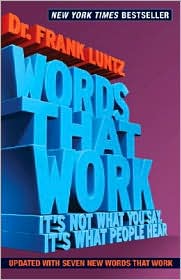
This weekend, my wife and I got together with four college friends–two married couples–to celebrate 100 years of marriage.  You see, in addition to our 35 years together, Jeanne and Scott have 33 years, and Brian and Eileen total 32 years.  Add them up–yep–100 years of marriage. 

We decided to do our own renewal of vows. So we all met on Anna Maria Island (southwest coast of Florida) for a weekend of memories, laughs, good food, old college photos (did I already mention “laughs”?), and a hearty dose of appreciation for what we have in each other as spouses and as friends.  Kind of like our 2011 version of the Big Chill.

On our last evening, we gathered on a rooftop deck overlooking the Gulf of Mexico and shared words, music, and sentiments about what we meant to one another.  I want to share a few of the lines Laurie and I repeated; words from “The Art of A Good Marriage” by Wilferd A. Peterson.  Simple yet elegant, these words spoke to our hearts. 

Happiness in marriage is not something that just happens.
A good marriage must be created…

It is establishing a relationship, in which the independence is equal, dependence is mutual and the obligation is reciprocal…

It is not only marrying the right partner, it is being the right partner.

The words reminded me of the “work” a relationship takes. Sometimes we are fortunate to cross paths and share our lives with very special people. That is something to be thankful for (and I AM)–but there are no guarantees.  The relationships take daily work. Peterson said it well when he wrote that a marriage does not just happen. There is a reminder for us in that beyond marriage, as well. Whether it is a corporate team, a college class project, or a neighborhood friendship it is about being the right person.

I thank God for being blessed with the right people…and pray I do better each day to be the right person myself.

© 2011. Steve Piscitelli and Steve Piscitelli’s Blog.
Posted in Relationship | 18 Comments

(#55) Words Matter


As an author, my success depends in part on my choice of words and how I turn a phrase. Some days I am more successful than others. At times, the words fly from my mind to the computer screen without much effort. Other times, I wonder if I will ever write a coherent thought again. I currently am writing a revision of one of my books.  Some days I feel like I am developing an industry leading text; other times, I feel like I belong in a developmental English class.

It simply goes with the territory.

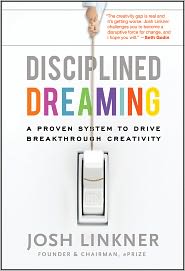
My March 20, 2011 post to this blog (“What We Say, We Become”) drew a suggested reading from a colleague: Words That Work: It’s Not What You Say, It’s What People Hear by Frank Luntz. 

Early on in the book, Luntz presents his top ten list for effective communication. His list instructs the novice and reminds the veteran that the reader (or listener or viewer) may not hear what we think we are communicating.  This advice is not only powerful for authors; it can be a powerful tool in the hands of an employee wanting to sell his boss on an idea, a salesperson wanting to close a deal, a citizen wanting to convince the local government about the wisdom of a certain policy, or spouse speaking to spouse. Here are Luntz’s suggestions.

Ten Rules of Successful Communication

1. Simplicity. Luntz reminds us that fewer than 30% of Americans have graduated from college. Keep the message simple and on point. Otherwise, you risk speaking over your audience’s head. It doesn’t matter how eloquent you are, if the audience does not get it, you have not communicated your point. Period.

2. Brevity. Luntz says that “small beats large, short beats long, and plain beats complex.”  Think of marketing slogans that have made it.  “Just Do It” comes to mind.

3. Credibility. No matter what you are writing about be sincere, be credible, and be reputable. Avoid grandiose promises that cannot be delivered and beware of the expectations you are creating in your audience.  Are they believable? Can you deliver?

4. Consistency. Repetition has power. “Message consistency builds customer loyalty,” says Luntz.  This is important when branding a product or service.

5. Novelty. What are you offering that is new to your client (readers, viewers)? While consistency is valued, so are those things that stop us with a bit of shock and awe. Tap into the adventuring spirit of “new and improved.”

6. Sound and Texture.  One of the coolest words I remember learning in my early school years was onomatopoeia.  I’ll pause for you to dig back in your memory bank.

Remember it?  It’s using a word that imitates the sound of the word itself. Like “bang” or “boom.” The sixth rule is  to use words that have a certain alliteration to them. They help the reader  (listener) make connections and better remember your message.  Former Vice President of the United State Spiro T. Agnew (no doubt thanks to his speech writers) understood this when he uttered memorable word combinations like “nattering nabobs of negativity (negativism).”

7. Aspiration.  Help people feel the emotion you attempt to create.  Make them feel good, long for something or somebody. In short, when you speak or write aspirationally–as Luntz calls it–you help them sense a better place.

8. Visualize. Your words need to “paint a vivid picture.”  If your audience can’t see it, they will have a difficult  time understanding what’s in it for them.

9. Ask a question.  Take what you want to say, put it in the form of a question, and it personalizes the message for the receiver.  “Are you as successful as you want to be?”  “What do you need to do to get closer to your dream?” Questions by nature can lead to a dialogue–an interaction that makes the listener (viewer) an active part of the communication process.

10. Context and relevance.  If you propose a solution, make sure you have identified the problem.  When you identify the problem, make sure it has meaning to the audience. Make an emotional connection.


Video recommendation for the week:

Perhaps a picture will say it more effectively. In this case, the message in this video below is simple: “Change your words, change your world.”


© 2011.  Steve Piscitelli and Steve Piscitelli’s Blog.
Posted in Words | 4 Comments

(#54) College Completion: Asking the Right Questions


While in Austin, Texas last week, I took part in a focus group conducted by the Bill and Melinda Gates Foundation.  Thirteen invited guests, along with the facilitator, explored the question of how to increase community college persistence/graduation rates. For the foundation, this continues to be a part of an ongoing initiative that has been examining how to help more students achieve post-secondary success.

The Gates Foundation website maintains:

A high school education is not enough to compete in today’s global economy.
Yet by age 30 most Americans have not earned a college degree or certificate.
Our Postsecondary Success Strategy aims to dramatically increase the number
of young adults who complete their postsecondary education, setting them up
for success in the workplace and in life. 


Actually, the goal can be viewed as such:

(1) Graduate All High School Students College Ready

+

(2) Help All Young People Get Degrees That Count

=

Helping Young People Reach Their Potential

As we ate dinner, the conversation touched on issues of vital importance to the future of our students–and the future of our nation.  Some of the topics:

  • Promoting effective approaches to developmental education (core competencies)
  • Establishing clear pathways to completion
  • Supporting and helping promising practices get to significant scale
  • Training excellent teachers (Are the faculty “college ready”?)
  • Improving reading levels (a major predictor in success)
  • Evaluating planning and pedagogy
  • Using technology effectively (and with purpose)
  • Identifying the “right” tools that can support faculty to help students.

One of the questions posed was “What does a system that helps students “start right” look like?”

I proposed we think of the topic from a different point of view.

Borrowing a strategy from Josh Linkner’s book Disciplined Dreaming: A Proven System to Drive Breakthrough Creativity, let’s look at this from the opposing perspective. Let’s ask ourselves, What does a system that hinders students from starting right look like?  That is, if we were to purposely develop an educational system whose main objective was to keep students from getting a degree, what would it look like?

One can immediately think of a number of obstacles that can stand in the way of students either entering or completing their post-secondary programs. For instance, road blocks can be posted in

  • Applying for admittance
  • Taking placement tests
  • Securing financial aid
  • Navigating the advising process
  • Meeting with professors
  • Juggling family demands
  • Keeping a job
  • Developing meaningful and disciplined habits of academic and student success

And the list can and does go on. 

From here, we need to ask ourselves three simple questions:

1. What do we need to stop doing?

2. What do we need to keep doing?

3. What do we need to start doing?

I propose we use these three very simple questions to examine all aspects of the college process on our campuses.  Whether it is financial aid, the business office, the student center, the testing center, the classroom, or faculty offices, these three questions can lead us in positive directions–directions that will improve our students’ opportunities.  Now, they still need the “will” to achieve. We can help them with the “how.”

©2011. Steve Piscitelli and Steve Piscitelli’s Blog.

Posted in Post-secondary success | 1 Comment

#53 Observations From The Airport


I’m just saying….

First, air travel is amazing. Really, when you think of it, you can get from point A to point B incredibly fast. As Louis C.K. reminds us, “You’re sitting in chair in the sky!” (See video clip at the end of this post.) And you will find some very nice people along the way as well. 

Having said that, I would like to make a few observations from my most recent trek through airports. In no particular order:

  1.  Apps rule! I recently deplaned in Atlanta (Concourse B) for a connecting flight to Austin.  I checked the monitor for the next plane. “A3” was the designation.  On the way to Concourse A, I checked three more monitors along the way.  (I know—a bit compulsive!) “A3” they all assured me.  When I got to “A3,” I checked the monitor behind the gate desk.  Sure enough, my flight was listed-and it was on time. Life was good.  I settled in by the window; made a couple of phone calls; read some email; and pulled out my book to read.  For the heck of it, I checked the Delta app I had just downloaded.  I was getting familiar with it, and decided to check on my next flight for grins. After all I was at the gate and really did not need the information. Imagine my surprise when I found out—on my phone—that the gate for my flight had been changed.  I turned around and the saw that the desk monitor had been changed to another flight. There was no announcement to those of us in the gate area. Luckily I discovered this in time to get to my new gate (back in Concourse B!).  Observation #1: Never depend on the airline or airport (not sure who dropped the ball here)—continually check on your outgoing flight.  (Observation 1.5:  I love my Android Atrix!)
  2. Think like a driver.  Folks, were are in it together when we travel.  If you are going to stop and look at a monitor, please pull to the side of the hallway—out of the line of traffic.  You might have a lot of time to kill—but the guy running to catch his next flight would appreciate a little courtesy.  Same for those who are just moseying down the corridor creating a bottleneck.  I am all for enjoying the journey but, again, others behind you have connections to make. Observation #2:  Slow walkers please use the inside lane. (Observation #2.5:  Don’t just stop without checking behind you. You might get barreled over by someone who has not retired yet.)
  3. Think like a driver (part 2). When you deplane and head for your next plane or baggage claim you might want to consider not just walking straight into the oncoming foot traffic (see #2 above). Observation #3:  Merge with care. (Observation #3.5:  Even if  you check the monitor, keep you airline app handy. See #1 above.)
  4. Move for oncoming vehicles. When you hear one of those courtesy airline carts coming down the hallway beeping the horn—get out of the way. Way out of the way!  On my return trip to the corrected gate (see #1 above), I heard one of those carts coming my way. I moved. Thank God I did; for as the cart went by me, the driver of the cart was looking to the right as the cart was moving straight ahead.  Observation #4. Protect your body…move.  (Observation #4.5: Move quickly.)
  5. Thank you Flight #1487 Crew. Let me finish on a positive note.  Lately I have had a number of misfortunes with Delta: cancelled flights, mechanical problems, gates closing early, and less than courteous agents.  But I realize there are bad days for all of us. On my most recent flight to Austin (see #1 above), I had the great fortune to have a wonderful flight crew. EVERY ONE of them was helpful, cheerful, smiling, and organized. When I asked if there was room for my guitar (on a completely full flight), I was told, “Absolutely!” (I gave the attendant a CD for his kindness. These people should be doing training seminars on how to provide great customer service. While I will complain about poor service, I will show my gratitude for good service.) This was a wonderful experience. Observation #5: There are very good people out there willing to help and make your travel experience a good one.”


© Steve Piscitelli and Steve Piscitelli’s  Blog, 2011.

Posted in Air travel | 13 Comments

#52 Life In The Happy Place!


Richard Leider pointed out in The Power of Purpose that life is good when we can manage to have the Three Ps of our lives align with one another: People, Place, and Purpose.  Those of you who know me (or follow this blog), know that those three components of life are crucially important to me.  The Three Ps remain constant beacons for me. My blog post of February 13, 2011 speaks to the people part of my life. A number of posts (most recently, April 17) point out the significance of purpose in life.  And if you have ever been anywhere close to me, you know I love the place where I live: Atlantic Beach, Florida.

Atlantic Beach is a simple seaside residential community of about 15,000 people. Spend any time here and you know it is not just a zip code–it is a community. My wife and I can bicycle or walk everywhere on this island.   Yesterday, May 21, 2011, marked the 25th anniversary of Dancin’ in the Streets and it reminded us of how very fortunate we are to live in such a wonderful part of the world.

Taking place where Atlantic Beach, FL and Neptune Beach, FL come together at the ocean, this annual day of music and revelry has evolved from a very humble block party (with three bands and a couple of kegs of beer) into a beach rite of spring. Put together by a stalwart committee of locals who wanted to see their community celebrated, it is a first-rate day of live music (about 10 hours worth), kids’ games, food from local restaurants, and the wares from dozens of street vendors.  Dancin’ has helped to raise money to refurbish the communities’ Town Center–a cozy collection of shops, restaurants, and two hotels that are nestled on the sands of the ocean. The event organizers represent those who have a purpose to celebrate the people and place where they live.

One of the cool highlights this year was our quest to enter the Guinness World Book of Records as the event with the most people dancing the Hokey Pokey.  (A city in Iowa held the record going into our event yesterday.  I believe they had something on the order of 7,300 people dancing.)

I know, I know. It sounds so, well, hokey! But it was fun, innocent, and energizing.  And at 5:30 p.m. yesterday, the crowd joined as one to hokey and pokey to their hearts content! It was pretty neat to see young kids, “elderly” folks, and ages in between dancing side by side. Laughing, singing, and putting their right foot in and out and shaking it (and all other body parts) all about! So incredibly great to see so many people coming together as one–even if for one dance, and even if for something pretty simple.  (Makes me, also, wonder what we could do with that kind of power on a more global level. But that is another blog post.)

I don’t know if we won the world record–but it was a hoot to go for it.  And it continues to be a hoot to live in paradise.  I will leave you with my CD’s title music video–filmed (in part) in Atlantic Beach. All the songs were written and rehearsed here as well.  Quite an inspirational place.

I am a lucky man!


Video recommendation for the week:

Turn up the speakers and enjoy the title song from my second CD.


                     © Steve Piscitelli and Steve Piscitelli’s Blog, 2011.

Posted in Community | 2 Comments