
One of the lessons I built upon was the importance of reading,
understanding, and evaluating different viewpoints.
That involved reading, listening to, and discussing various ideologies.
Critical thinking was, well, critical!
As a teacher, I enjoyed the connections I helped students build in the classroom, on campus, and within the community. When I taught 7th grade, I organized a model United Nations where my students “represented” the nations of the world. In 9th grade, they took part in a model Constitutional Convention. One year, they participated in a Mock Court process. Each of these learning experiences involved research and critical thinking.
One of the assignments my AP US History students completed was The Presidential File. In this project, they identified what they believed were the top domestic and foreign policies for each administration (and explained why). They also rated each presidency on a scale of 1 to 5 and had to justify their scores. There was no “right or wrong.” Instead, they needed to base their reasoning on historical evidence.
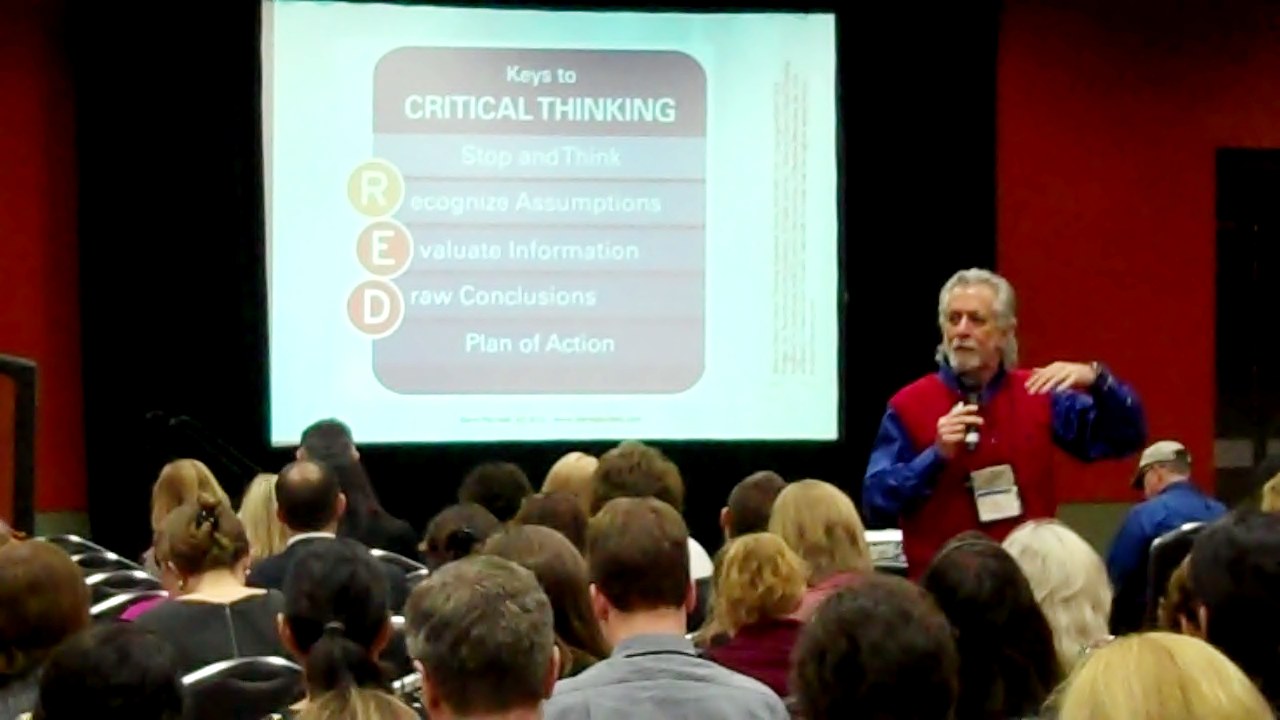
My students consistently performed well regardless of the event or task. Even in college-level classes, our discussions required careful and thoughtful dialogue. On the first day of each semester, I encouraged open discussion, urging students to express their opinions, regardless of political or social views. I expected civility and for them to support their positions with evidence, reasoning, and critical thinking, rather than simply claiming, “Well, it’s my opinion. So it cannot be wrong.” Some students found this challenging, while others thrived. Overall, the conversations were lively and engaging.
I was fortunate during my 33-year teaching career. I had great mentors and, for the most part, demanding leaders. One of the lessons they reinforced was the importance of reading, understanding, and evaluating different viewpoints. That involved reading, listening to, and discussing various ideologies. Critical thinking was, well, critical!
Could we review every piece of evidence related to a specific issue? Of course not. However, we did try to discuss different perspectives. I hoped that my students would take what they discussed with their classmates and apply it outside of the classroom, and hopefully build bridges.
To understand history, we need to read it. After reading, we should discuss and critically evaluate what we’ve learned. Then, we can apply our insights to our ideologies. What do we need to tweak or change altogether? What has been confirmed? Are we truly listening, or just adding to the noise of collective monologues?
~~~~~
You will find more about me at www.stevepiscitelli.com.
And you can still order:
- My first novel, The Voice in Your Ear, was released on September 17, 2024. You can order the book (e-book or print copy) here. If you’d like to hear the song I wrote and recorded as the soundtrack for the book, click here. (P.S. Thank you for taking a chance on a “first-time” novelist.)
- Sharing Wisdom Across the Ages: From Elementary School to Retirement (eBook and paperback versions) was released on January 1, 2023. Click here for more information.
- Roxie Looks for Purpose Beyond the Biscuit (2020) is available in eBook and paperback format. Click here.
- Community as a Safe Place to Land (2019, print and e-book) is available on Amazon. The above link provides more information (including seven free podcast episodes spotlighting the book’s seven core values).
- Stories about Teaching: No Need to be an Island (2017, print and e-book). Available on Amazon. One college’s new faculty onboarding program used the scenarios in this book. Contact me if you and your team are interested in doing the same. The accompanying videos (see the link above) could stimulate community-building conversations at the beginning of a meeting.
©2025. Steve Piscitelli
The Growth and Resilience Network®
Atlantic Beach, Florida

 The Growth and Resilience Network®