#41 An Archaic System? Evaluating Assumptions About Education


Some random thoughts on the education scene.

Earlier this week a colleague shared an article that appeared in The Chronicle for Higher Education titled “Actually going to class for a specific course? How 20th-Century.”  The gist of the article: With so
many resources available for “just-in time” learning, why even have a traditional college course any longer? The author posits,

                             In an era when students can easily grab material online, including lectures
by gifted speakers in every field, a learning environment that avoids courses
completely—or seriously reshapes them—might produce a very effective new
form of college.

What followed were thoughts about reforming the current higher-ed model. One alternative offered was called the “UnCollege.”  More below.

Having been a classroom teacher (7th grade, high school, and college) since 1982, I have seen the challenges, the bureaucracy, the high-stakes tests, and various reform ideas. And I have seen what works: hard work, creative lessons, teachers with freedom, students who care, management that listens, a family that supports, and a neighborhood that promotes educational values.

Yes, there is always a need to evaluate what we do and make sure we are appropriately preparing our students for the post-industrial age.  But what will that look like? Will it require a workforce adept at taking standardized tests? Will it require creativity?

In a 2006 TED Talk (http://www.youtube.com/watch?v=iG9CE55wbtY), Sir Ken Robinson mentioned that children who were entering school in that year would retire in 2065. Think about it, he suggests. We have difficulty gazing into our crystal ball 20 years down the road. Yet we are expected to prepare students for a future which we have no clear idea how it will look.

At the risk of sounding like a dinosaur, we might want to keep a few things in mind before we decide to throw away the “traditional classroom and structure.”  It seems to have become almost fashionable to say “if it used to be then it shouldn’t be.”

Sure the information age does allow students to “easily grab material online.” But what sometimes is missing in this picture is that so MANY students have NO idea how to “easily grab material online”—especially quality material. We all know that they may be adept at surfing the web—but that does not mean they are information literate. The vast numbers of students I have encountered in the classroom still need (and mostly desire) the personal guidance.

The Chronicle article also questioned the wisdom of the 16-week model of college semesters. Is it too long? Maybe–maybe not.  More and more we hear about “speed to market.”  That is, get students into and out of college as soon as possible.  But to quote Keith Jackson, “Whoa, Nelly!”

One of my concerns is exactly this “speed to market.” There are some maturation processes that cannot be sped up.  Quick example. When I taught Advanced Placement United States History (a yearlong course in the high school), many of my students took into the 3rd grading period (18 to 27 weeks) to develop mature essay writing skills that would score a 3, 4 or 5 on the national exam.  If those students were “sped to market” and had to complete the course in half the time, I wonder how many would have “passed” the national exam. And even if they were able to score well, what would they have missed in more tantalizing conversations and debate and exploration that a longer tenure in the classroom fostered?

The UnCollege idea was described by The Chronicle article in part as:

                 …Everything will be self-directed—unstudents will decide what “assignments”
they should complete and then evaluate how well they think they’ve done.
Participants are encouraged to post their projects and self-evaluations online
to form their “experience transcript.

Really?  When I go to the hospital, I hope my doctor did not get his degree from an institution that allowed him to choose what he wanted to learn—and evaluate what he did himself—and then develop his own “experience transcript.” Same with the pilot flying my plane; mechanic fixing my car; and the electrician running new wire in my house. Nowadays, it seems that anything that smacks of real experience and expertise (unless it belongs to the students) is considered old-fashioned and outdated. That is a shame.

There is a great cell phone commercial with just a one word script: “Really?”  I think we should keep that one word question in mind when we hear some of these reform ideas–and question the assumptions.                                       

© Steve Piscitelli and Steve Piscitelli’s Blog, 2011.

Posted in Education | 3 Comments

#40 Stanton College Preparatory School: Alumni Making a Difference


If we did all the things we are capable of,
we would literally astound ourselves.”

-Thomas Edison-

This week saw me in Washington, D.C. speaking at the annual conference of the National Association for Developmental Education.  Besides the opportunity to spend a little time in our nation’s capitol (always a treat for me), I had the good fortune to meet and work with many dedicated college instructors from around the nation.  More than 1,000 instructors who make a difference on a daily basis attended this annual event.  Conferences such as NADE always excite me. At the very basic (and, really, the most important) level, I get to share ideas with colleagues from around the nation.  This sort of give-and-take keeps my professional “saw sharpened.”

But this trip had added significance for me as I was able to touch base with a couple of students from years ago.  Before I came to the college ranks, I taught for 11+ years in the Duval County Public Schools (Jacksonville, Florida).  More specifically, I had the great opportunity to teach at Stanton College Preparatory School. Stanton was where I cut my teaching teeth.  After leaving my first career (in criminal justice), fate placed me at Stanton as an intern in the spring of 1982.  The school had opened its doors as an academic magnet the previous fall.  I had no idea how fortuitous this placement would be for me.

Without a doubt, the years I taught and learned at Stanton rank among the most memorable and professionally meaningful in my career. I worked beside great colleagues. But more than that, I shared class time with some of the most remarkable young people I have EVER had the opportunity to teach.  These young folks were absolutely wonderful to work with. Intelligent, compassionate, humorous, and challenging (in a very good way). 

I had students who scored perfect scores on the SAT. Some were drama “stars”—and others who were budding rock stars and ballerinas. One served as a Congressional page. A good number were interested in national politics. Others had a passion for the environment. Their interests and concerns were as varied as their backgrounds. They were intellectual and they were fun.  Social media has allowed me to stay in touch with some of these students over the years.  I am always amazed (but never surprised) at how much these young people have accomplished. Today they are attorneys, business owners, teachers, researchers, mothers, fathers, doctors, political activists—and so much more. 

While in D.C. I got to spend time with two of the Stanton alum: Kim Mihalik and Terry Kaden.

Kim is an accomplished engineer, world traveler—and now a successful business owner (see: www.theneatlife.com).  She introduced me to a wonderful Ethiopian restaurant in the Adams Morgan area of D.C.—and then coffee at the energy-filled Tryst Coffee House.  Kim also took the time to come to one of my presentations at the conference. What an honor that was for me.  I joked with her that she is now older than I was when I taught her (“way back” when she was in the 9th grade). What an absolute delight to spend time with her. Beautiful, articulate, confident, witty, and smart. What a package! She even drew a map for me so that I could easily find my way back to the hotel from the coffee shop.  


Terry actually lived with my wife and me during his senior year in high school. His family had the opportunity to relocate to (ironically) the D.C. area.  Terry wanted to complete his high school education at Stanton (and his parents concurred).  My wife and I were fortunate: we got a “son” for about nine months—and then he went off to college on someone else’s nickel!  Terry was actually one of the first students I ever taught in my career. He was in the 7th grade geography class in which I did my internship.  He still likes to remind me that he “broke me in” as a teacher.  I subsequently had Terry as a student in 9th grade government/economics, 10th grade world history, and 11th grade Advanced Placement United States History.  He ended up graduating as the salutatorian of his graduating class.  Today, he is married, expecting his second child (with his lovely wife Natasha), and a very successful attorney in the D.C. area. A long way from the days of writing essays in a non-air conditioned Florida classroom in the mid-1980s! We got the chance to catch up, swap stories and laugh at the Matchbox restaurant. (If you ever go, get the mini-burgers and the spicy meatball pizza. Yum!)   

 A joy of teaching—and I am not aware of many other professions that provides this ongoing “psychic wage”—is to see lives unfold  and the positive impact  they have on the world around them. Kim has done that—and continues to shine on all those who come into her circle. Terry is leaving his mark on the legal and corporate world. And both are wonderful friends and citizens of their communities. And these are only two of the many, many, many Stanton students who are doing great things for our world.  The school, the teachers, and the students make a difference.  I am fortunate to have shared in a little bit of their remarkable journey.

In a world that can be very jaded and cynical at times it is refreshing to be around these vibrant young people. They DO make a difference.

Posted in Making a Difference | 9 Comments

#39 In the Present Moment


I love words—especially those words that lay a hand on my heart.  Words that call out to me to reread them, then cause me to pause and reflect for a moment.  Yesterday I had such a moment.  While reading a passage from Buddha’s Brain, I came across these words of Tenzin Priyadarshi:


If there is no stillness,
there is no silence.
If there is no silence,
there is no insight.
If there is no insight,
there is no clarity.

Those who know me well, know that I do not slow down often. I generally have a number of projects and passions going at once: teaching, speaking engagements, writing, community work, early morning gym workouts, running on the beach, music endeavors, home chores, connections with friends, time with my bride, and on and on.  No complaints; I am fortunate to do what I love to do. What is generally missing (for me), though, is some quality “still time.”

I have read about the importance of meditation—and how it can improve one’s life emotionally, physically, socially, and spiritually. Buddha’s Brain tells us that “people are now learning meditative practices to become more productive, pay better attention, heal faster, and feel less stressed.” It helps us concentrate which can help us tap into insights.

I do realize that the reason I struggle with this is that I have not made it a priority in my life. My wife diligently finds time to meditate. I easily find other things to move ahead of “still time” on my daily list. And, I always have an excuse.  Each day, however, I make a new promise to do better.

Over the past few months, a number of people in my life have had significant life-changing diagnoses. Each one caused me to stop in my tracks and reflect—and remind myself that life does go by in a blink. We have to appreciate what is in front of us at this moment.  (I wrote about this October 31, 2010 in my post on this blog titled “No Promises.”)

People smarter than me have said that we end up spending a lot of wasted time ruminating about the past (something we cannot change) and inventing our future (often times conjuring up little “worry mini-dramas” that NEVER come to pass).

Perhaps we should aspire to the philosophy of one of my students this term.  When I call roll each class session, most students either say “present” or “here.”  One young fellow, cheerfully responds every day with “In the present moment!”

That seems like a very worthy goal.


©2011. Steve Piscitelli and Steve Piscitelli’s Blog

Posted in Mindfulness | 14 Comments

#38 Happy Valentine’s Day: The First 35 Years


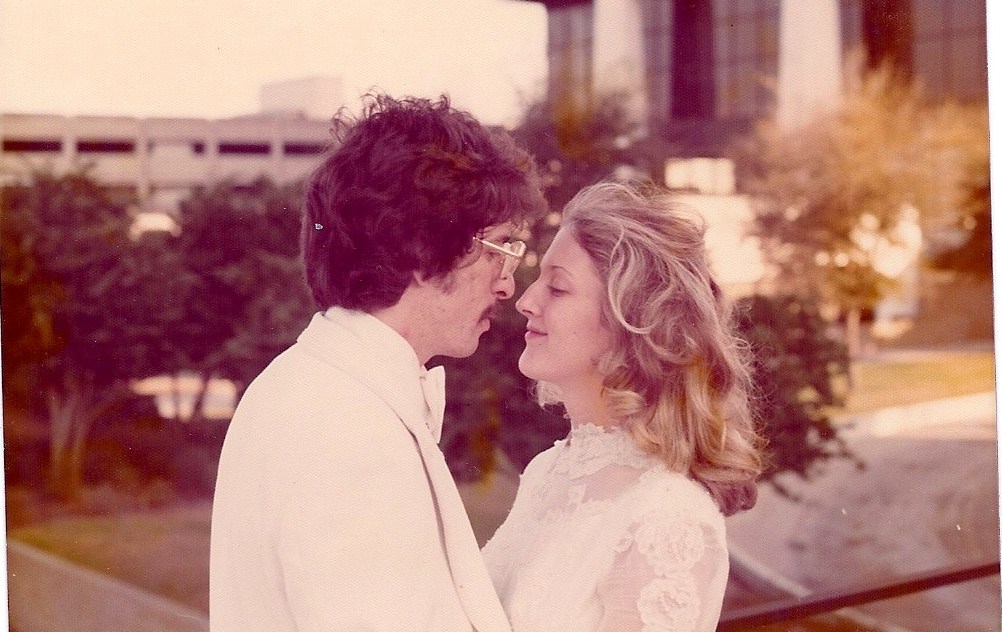
This week’s blog posting will have a bit more personal indulgence than past posts.  Valentine’s Day is not just another holiday on the calendar for me. It is my wedding anniversary. And February 14, 2011 is particularly special as it marks our 35th year.  Thirty five years!  Amazing to think of that number. It seems like it belongs to someone else—someone much, much, much older! Where did the time go?  My wife and I agree that it has gone by in a blink. 

My wife Laurie (Hoppi) and I met on a blind date (Wednesday, January 21, 1975; we went to a Jacksonville University Dolphin basketball game at the old Jacksonville Coliseum) during my senior year in college.  Three months after our introduction, I graduated and started a career.  One month after that, Laurie moved to Jacksonville.  Nine months after that we were married. The year was 1976. The nation was celebrating its bicentennial; Pittsburg beat Dallas in Super Bowl X; a new figure on the national political scene won the Democratic Caucus in Iowa—and eventually the presidency; the Toronto Blue Jays baseball team came into existence; Apple Computer Company was created by Steve Jobs; the Ramones released their first album; my New York Yankees were swept by the Cincinnati Reds in the World Series.

But obviously for this 22-year old couple, the big news was our wedding—and the beginning of a life adventure.

A few of my remembrances of that day 35 years ago:

    • We got married at Christ the King Church in Arlington (suburb of Jacksonville, FL).
    • It was near 80 degrees that day.
    • Laurie’s flowers were tulips.
    • Her bride’s maids were all high school friends. That amazed (in a good way) me then. Still does today.
    • I got a little weepy at the ceremony. My mother told me to buck up!
    • The wedding reception was at the old Hilton Hotel on the Southbank of the St. John’s River. There was no Jacksonville Landing. There was no Riverwalk. In fact, there was not much on the riverfront.
    • The band performed “our song” at the wedding –which had been written and recorded by a relative newcomer: Billy Joel. The song:“You’re My Home.”


  • My brother-n-law was in charge of my bride’s car that day. I think he lost it.
  • One of the guys in the wedding party (affectionately known as Worthless) had just purchased a new car. Brand spanking new. One of the bride’s maids burned a hole in the new interior with a cigarette. He handled it very well.
  • The wedding reception was like a fraternity party. Really!  Most of the people there were of the Phi Delta Theta persuasion.
  • One of our friends, decades later, swore that he was not at our wedding. We have a photo below to prove he was. Guess he REALLY enjoyed the open bar that day!
  • The big dance of the day was—the BUMP!  My Aunt Philomena, who made the trip with my mother and grandmother, did the bump with a fraternity brother.
  • I got sick as a dog…not from what you think.  By the second night of our new life together we were on our way to the Keys for our honeymoon—and I had a 104 degree fever and a terrible flu or whatever.  I think Laurie was seriously thinking about an early trade in on this model.

Someone recently asked me about the “secret” to 35 years of marriage.  I never like those types of questions. The answers usually sound so freakin’ pompous and self-serving.  For us, there is no secret; no formula. We have had our difficulties like all others. Heck, truth be told, we didn’t know what we were getting into.  We didn’t have a checklist of what we wanted or were looking for.  But, if you held me down to provide a secret, I’d say it is simply giving each other space.  We have encouraged each other, supported each other, and challenged each other along these 35 years.  We have NEVER “kept score.” You know, the kind of relationship you might hear something like, “Well, I did such and such last week…so you have to do such and such this week.” 

But mostly the reason for our success and longevity is that I “married up”!  Yep, I hit the jackpot.  I know, I know. Cliché!  But if there is such a thing, I married an old soul.  Laurie lets so many things roll off her back—while I fuss and fume.  One card I got her this year pretty much summed it up: “Of course I love you. Who else would put up with all my crap?”  She is pretty amazing.


Video recommendation for the week:

In “Remember When,” Alan Jackson sings:

Remember when thirty seemed so old
Now looking back, it’s just a stepping stone
To where we are to where we’ve been
Said we’d do it all again…Remember when….


One of the songs on my latest CD was my first stab at a love song. While it is not Alan Jackson quality, “Coffee and Candles” does have a turn on words that I am proud of:

When young turns to old
And fast becomes slow
No matter the pace
Together we’ll go…..

Here’s to the next 35! Together, we will definitely go.  I love you, Hop!


(c) 2011. Steve Piscitelli and Steve Piscitelli’s blog.

Posted in Relationship | 16 Comments

#37 Three Good Things


Greetings from the 30th Annual Conference on the First-Year Experience. I always enjoy the opportunity to meet, talk, and work with colleagues from around our nation. It is truly one of the many good things that I have in my life. Which brings me to our topic this week….

What happened in your life today that was good? What did you witness that made your heart glad? For what are you grateful? Here are four items that helped me re-focus on gratitude.

1. On August 16, I posted “An Attitude of Gratitude” on this blog. At that time I had expressed my appreciation for all the good folks who came out to my CD release performance. I was truly humbled by the show of support, friendship, and love. I, also, noted the following in that blog post:
I can be a bit of a whiner at times—don’t like to admit; but it is true. And the reality is I have NOTHING to whine about. At times, it is easy to dwell on the misfortunes of life…and that kind of thinking is deadly…Perhaps you are one of those people who says “thank you” on a regular basis. If so, good for you! If not, stop for a moment—even if all hell is tumbling down around you—and give thanks for the good around you.

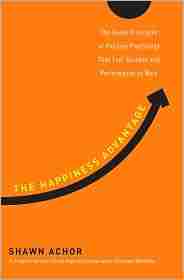
Those words came back to me recently as I read The Happiness Advantage. Shawn Achor presents seven principles of positive psychology—and offers up a number of strategies that, when practiced, have moved people toward a happy (happier) life. For instance, he presents research that suggests our brains have a propensity to recognize patterns. If, for example, we tend to spend our days scanning the horizon for negatives and what might go wrong, we will end up finding it over and over again. It becomes a pattern. The brain will seek out those experiences; it will recognize them over the more positive experiences. His antidote is to consciously seek out the good each day.

This is more than the feel good (but many times empty) rhetoric of “just think positive thoughts.” Based on Achor’s work I have created a daily ritual for myself. At the end of each day, right before I retire for the evening, I write three things that happened to me (or that I initiated or that I observed) that were good. They do not have to be large or life-changing. They just have to have been good things in my day. Some of the items I have listed over the last three weeks include:
• A quiet dinner with my wife
• A strong morning workout
• A great discussion with my students
• A smile from a cashier
• Singing with a friend
• Lunch with a friend
• A wonderful full moon
• A beach walk with my dog
• A crisp morning.

As you can see, none are earth shattering—but all are recognition that wonderful things are all around me. And they are there every day. What I have found is that I am (as Achor said) becoming more aware of those good things (little and big) that grace my life daily. It is becoming more of a habit (a pattern) to search for and concentrate on the good. Since I am a “recovering whiner,” I backslide—but not nearly as much as in the last few weeks.

2. In one of his pieces (Everything’s Amazing and Nobody’s Happy), comedian Louis C. K. also reminds us of the need to recognize the positive.
3. Buddha’s Brain (Rick Hanson with Richard Mendius) maintains that our brains are Velcro for negative events but Teflon for the positive. The authors advise us to actively look for the positive in our environment—and once it is found, savior and absorb it.


Video recommendation for the week:

4. A scene from the Mask of Zorro reminds us to concentrate (focus) on the “small” things in our life. Eliminate the distractions. In the long run, this helps with the “big” things.


What Three Good Things graced your life today? Write them down. Perfect. Do it again.

(c) 2011. Steve Piscitelli and Steve Piscitelli’s blog.

Posted in Gratitude | 16 Comments

#36 How to Make Ideas Stick


This past Tuesday proved to be a magical day in one of my history classes.  I’d like to think EVERY day IS magical—but the reality is some days classes struggle.  Sometimes it is because the students have not come prepared; more often it is because I have not structured a session with enough “POP” and “SIZZLE” to grab and keep attention.  While I continue to improve each year, there are still those days when I think I might put myself to sleep.

Salespeople sell items; teachers sell ideas. All of us are “selling” a state of mind.

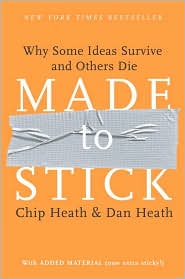
A recent read of Chip and Dan Heath’s book Made to Stick: Why Some Ideas Survive and Others Die helped me refocus my teaching energies. The Heaths present a six-step model that, when studied and followed, will help ANYONE who wants to/needs to present a point and make sure that point stays with the audience.  Whether you are a salesperson, leader, mid-level manager, teacher, or a politician, ignore the Heaths at your own peril.  Here, briefly, are their six points and a personal brief illustrative example for each. The steps are not necessarily sequential—but the stronger each one is in your presentation, the “sticker” your idea becomes.

  1. Simple. Make sure your core point is out front. As the Heaths say, “Don’t bury the lead.”
    a.       Example. One day as students were packing up to leave I said, “As you read your chapter, pay particular attention to pages 499-501. The next class will take a look at the United States policy toward Native Americans in the late part of the 19th century.” From all of the chapter material, I focused their attention on one core issue we would discuss in class. 
  2. Unexpected. Grab attention. This is where you have to “zag” rather than “zig.” Think about what you can do to surprise your audience (even if it is an audience of one).
    a.       Example.  When the students came back the next class, they found me and a guest at the front of the room—sitting there with our guitars out and ready to play. Whoa!  I could see the expression on their faces as they walked in the door, “This is not going to be like any typical history class!”  My friend, John Longbottom, and I performed one of his songs (“Legends”). There was a second unexpected twist. The students, after hearing the song, believed the message was about the ill-treatment of the Native Americans at the hands of the United States government. Actually, John wrote it about the Irish-English wars. The unexpected takeaway for the students was that discrimination against minorities takes place in many lands, with many different types of people—and upon further study one can find similarities.
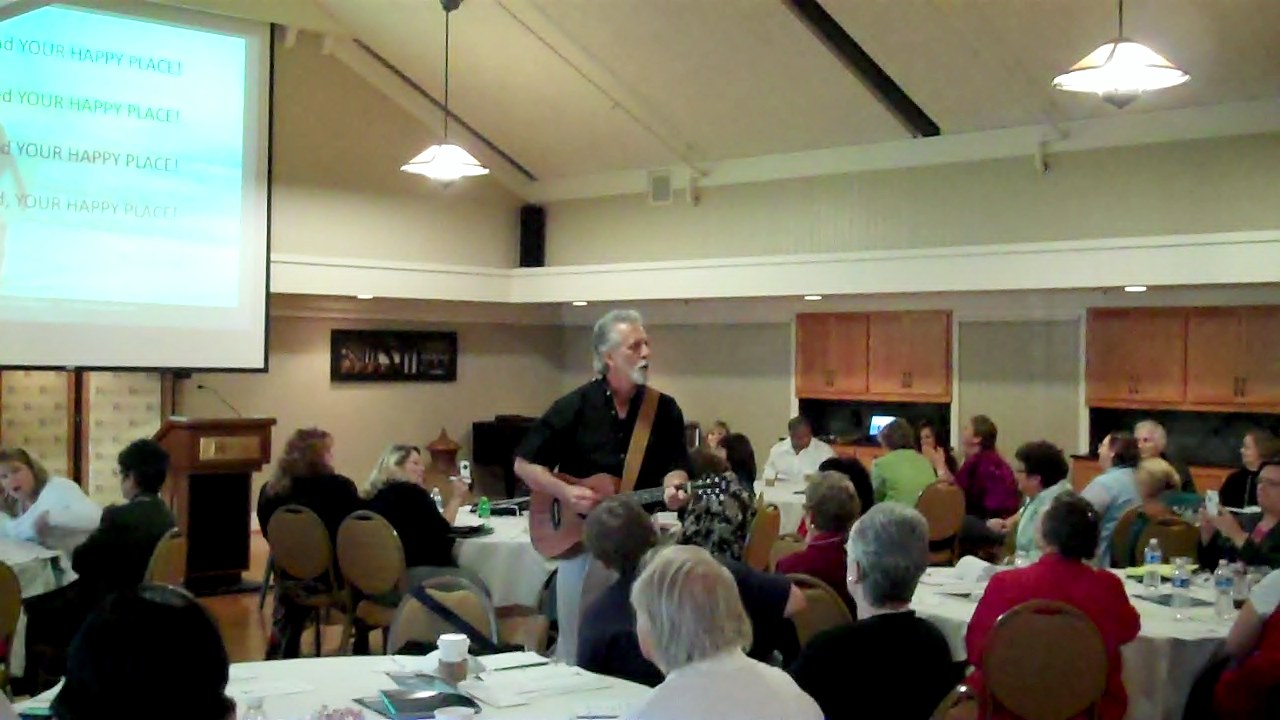
    c.       Example II. I love to begin my speaking engagements by singing one of my songs. The song I chose always relates to the topic/audience at hand. It is so unexpected (for those who have never seen me before) that it immediately grabs attention.  One audience member told me after an engagement that when she saw “this person with jeans and a guitar” she knew it wasn’t going to be the usual keynote. That is what I want to create!
    d.      Example III.  One of my student success topics is priority management. It is a theme in my latest book (Choices for College Success) and it is a theme in my classes.  Here is an engaging and unexpected way to start a session on priority management.


    Video recommendation for the week:


  3. Concrete. Provide specific images. Make it so the people you are speaking to can “see” what you are selling.
    a.      Example. Back to the lesson on Native Americans…John’s lyrics provide concrete imagery. Words like: “took from us our land;” “took from us our men folk;” and “took from us our language” evoked images for my students.   You can also see how this step connects with the 5th step of emotion.  Listen to the song by clicking on the video below.


    Video recommendation #2 for the week:


  4. Credible.  What makes you (the speaker) believable to the audience?
    a.       Example.  Staying with the song example above…John is Irish-English. He also explained some research he was doing for a project on Native Americans in Oklahoma. He is connected to the topic.
  5. Emotional. You have to make the idea stand out. The audience has to feel it.
    a.       Example. After John’s performance in our history class, one of my students sent me the following email: “… I must say that after class I was speechless. The songs had so much meaning and placed so much on my heart. Once again thanks to you and Mr. Longbottom.”   When the message touches a heart, it has emotion my friend.
  6. Story. Give context to your idea with an engaging story. The Heaths explain that a good story is not the same as arguing with the audience.  An effective story will help flesh out the above steps. Think of the stories you have heard stories that evoke emotion, provide specific imagery, and grab attention with an unexpected twist.
    a.       Example.  The song, in the example above, is the story.
    b.      Example II. I begin many of my speaking engagements with a story—and I incorporate stories throughout. To be effective the story needs to relate to the reason the people are sitting in the audience. In other words, I don’t want to waste their valuable time.  Sometimes I relate a current event or a workplace epiphany. Other programs start with me singing my song “End-of-the-Semester Blues.”  In all cases, the story is the opening—the lead—for my program. It is pointed, generally emotional, and it is unexpected.

You put a lot of effort into your presentations. Review them for the six steps above. Whether it is music, a demonstration, or a story, make your message pop and sizzle—and leave the audience thinking about your message long after you have left the building.

© Steve Piscitelli and Steve Piscitelli’s Blog, 2011.

Posted in remarkable presentations | 2 Comments

#35 The Antidote for Toxic Meetings: Be Brief, Be Bright, and Be Gone!


“This is time I will never get back.” Such was the lament of a colleague at a recent meeting. Between mountains of statistics tossed our way, PowerPoint slides jammed with way too much information, and speakers talking at the audience with virtually no interaction, you can understand my friend’s assessment.

It does not have to be this way.  True, at times we have to come together for information sharing—and it might be a downright dull statistics-sharing session . We can, as meeting leaders, do better than live up to those expectations of dullness.  That is, if we believe our meetings are worth the time and effort.

Let’s review some of the very basic dos and don’ts of successful meetings.

  • Put yourself in the audience. I remember years ago reading about a music superstar who said that before every concert—before people came into the arena—he would sit in various seats looking back at the stage. He did this so that he would not forget to remember the audience perspective when performing. If you are leading a meeting, do the same thing.
  • Show respect for the audience. This goes along with the item above. This means, in short, don’t waste their time. Do your sound and technology checks before the meeting starts; start ON TIME; have a POINT; finish ON TIME—or before if you have covered what needs to be covered. And remember to show not tell. A wonderful grad school professor of mine, Dr. Bill Merwin, was a master at this. When he introduced us to a particular strategy, he modeled that behavior. It proved very effective. Try it at your next meeting.

    Video recommendation for the week:

  • Death by PowerPoint. Comedian Don McMillan presents a great list of what NOT to do with PowerPoint.

  • Think like an elementary school teacher. The successful elementary school teachers know they need to switch things up or they risk “losing” their students. Do the same if you are the meeting leader. Use illustrative stories; keep the statistics to an absolute necessary minimum; build in time for meaningful collaboration; get people moving.  Varying the methodology is critical. As the leader, don’t feel you need to impress your audience with your knowledge of minutiae.  Use video, music, graphics, and substantive Q and A.
  • Think like Steve Jobs. In his book The Presentation Secrets of Steve Jobs, Carmine Gallo says to remember the “10-minute Rule.” Jobs is a master of shaking up his meetings every 10 minutes or so. Keep the audience’s anticipation level high.
  • The meeting is for the audience. Gallo reminds meeting leaders simply, “It’s not about you. It’s about them.”
  • A.E.D. nearby?  At one point in a meeting, I heard a colleague mumble that if the meeting got anymore dreadful someone would need to get an AED (automated external defibrillator). Ouch.
  • Make it Stick! The Heath brothers’ wonderful read Made to Stick should be mandatory reading for all presenters, teachers, and meeting organizers. They propose six steps if you want an idea to live past the meeting time: Make the message simple, unexpected, concrete, credible, emotional—and told with a story.


  • Turn off the smart phones, i-Phones, Blackberries.  Enough said!
  • Consider the $ investment.  If 25 people are sitting in a two-hour meeting, that meeting has just cost 50 hours of wages/salary. You have traded 50 hours of productivity for 2 hours of meeting time. Is it worth it?  It very well might be. As the leader you want to make sure it is.

    Video recommendation #2 for the week:

  • Don’t become Ben Stein. Or more to the point, the character he played in Ferris Bueller’s Day Off. Remember the classic scene with Ben Stein endlessly repeating “Bueller…Bueller…”? Well, once the audience is numbed by a continual parade of numbers and jammed-full PowerPoint slides (see above), the audience will fail to distinguish between speakers; each one will be one more unobtrusive sound. Then all you need to do is start counting the nodding (as in sleeping) heads around the room.

  • Be Brief, Be Bright, Be Gone! That is the name of one of the songs from my first CD, Same Tune, Different Song (www.stevepiscitelli.com).  Get to the point. Do it with style and competence. Then let people get on with their lives.
Posted in effective meetings | 1 Comment

#34 The Student Perspective: What Do Effective Teachers Do?


Last week’s blog examined the question “What do effective teachers do?”  I listed and briefly described a number of effective characteristics I have observed (locally and around the nation) in my nearly 30 years of classroom experience.

With the beginning of a new semester, I took the opportunity to ask some students the question, “What are the characteristics of an effective teacher?”  For this week’s blog post, I have compiled these (non-scientific) responses and would like to share some impressions with you.  First, a few basics:

  • Sample. 66 students responded.
  • Responses. The students had a couple of minutes to jot their thoughts. Some students listed 2 or 3 characteristics; others 6 or more. The most a student listed was 11.  The total number of responses came in at 334 (for an average of just over 5 per student respondent).
  • Compilation. There were (obviously) a number of duplicate responses. Some responses I took the liberty (again, not scientific) of combining; like “intelligent” and “smart.”  I realize we can nuance these terms and might come up with additional (or fewer) categories. To keep this manageable, I will share with you the top five characteristics students identified.

Top Five Student-Identified Characteristics of Effective Teachers

  1. Understanding/Patient/Compassionate.  38 (57.5%) students listed one of these.
  2. Willing to help/explain clearly. 33 (50.0%) want a teacher who is willing to lend a helping hand in explaining material—especially when it is difficult to comprehend.
  3. Interactive/interesting/energetic/enjoys teaching/enthusiastic/likes to teach.  26 (39.4%) students want their teachers to show some passion for what they are doing in the classroom.  If we were to throw in humorous/entertaining/makes light moments the number rises dramatically to 38 or nearly 58% of the students—which would move this to #1 on our list. (As I said—a non-scientific reporting.)
  4. Listens. 15 (24%) of the respondents said they want a classroom instructor who listens to their questions and concerns.
  5. Intelligent/smart. 13 (19.6%) students believe knowledge of the subject matter is important to be an effective teacher.  Competent was another characteristic listed (9 students).  An argument could be made to lump “competent” with “intelligent and smart.” The reason I did not is that we have all met some pretty smart people who are not competent to teach.  That is, they know their material but they have no idea how to relate that material. In other words, they cannot teach!

There were a number of other characteristics that popped up a few times: respectful, organized, firm, encouraging, well-spoken, uses a variety of methods, and approachable to name a few.

What I find interesting—but not surprising—in this anecdotal overview is that students (at least these students) place a lot of emphasis on the human side of teaching. They want a connection with another human being.  Like so many things in life, we know it when we see it—but it is so difficult to quantify.  While I might be able to place a number on how much a teacher knows about her discipline (say, with a test), it is much more difficult to measure her energy, enthusiasm, and humor. As one of the students said, “Everyone can be a teacher but some teachers have the talent to really teach.”  Amen!


Video recommendation for the week:

Last week I left you with an in-your-face video by Taylor Mali. This week, here is a clip of Bill Gates speaking at a TED gathering on how to “make” teachers great.
Enjoy!


  © Steve Piscitelli and Steve Piscitelli’s Blog, 2011. 


Posted in effective teaching | 6 Comments

#33 What Do Effective Teachers Do?


During a meeting this past week, an age-old question presented itself once again.

What makes a teacher effective?

It has been posed ever since I have been in the profession. It comes up in state legislatures as well as the halls of Congress and the Oval Office. Parents want to know the answer; school administrators raise the question; taxpayers want an answer, too.

In their book, Practical Magic: On the Frontlines of Teaching Excellence, Roueche, Milliron, and Roueche state that good teaching practices have been researched for more than half a century—and “repeated studies of student and faculty assessment of college faculty reveal that teaching characteristics most highly correlated with effectiveness fall into three categories: intellectual competencies, motivational attributes, and interpersonal skills.” (p. 54)

What do effective teachers do?

Can it be measured? Perhaps…but by what method? Testing? That covers one aspect—and may miss huge gains in non-tested areas.  What I have seen that passes for “evaluation of teaching” in nearly 30 years in the classroom is woefully lacking. You won’t be able to measure it by one or two administrative classroom visits per academic year.  Some of these “observations” neither see the beginning nor the end of a lesson; nor do they see the first day and the last day of a term to witness the affective gains so many of our students make—gains that will serve our students well in society at large.

Somewhere between “We will measure you based on scores and grades” and “There is NO way to measure effectiveness” there lies the truth.  Is it difficult? You bet….if it was easy, it would have been done years ago.

Unfortunately, we have non-teachers telling us what teaching is. Or people who have long since been removed from classroom teaching and see our students as data points on an Excel spreadsheet. They miss the fact that our students have whole lives.  

And it often seems that because everyone at one time or another has gone to school, that makes them qualified to teach. Have you ever heard of someone contemplating a career change say, “Hey, I think I will be a teacher. I have lots of experience to share.”   While experience is valuable, it takes much more than that to be an effective teacher.  (I am not a parent—but I have observed a lot of them. Does that make me a parent?  Does it make me qualified to make summary judgments and set down rules for all parents?)

So what do effective teachers do?  Here are just a few of the characteristics I have observed during my career:

  • ·         Engaging. Effective teachers know how to bring the students into a lesson so that the students can feel, taste, smell, and experience the material. 
  • ·         Relevance. Part of being engaging.  The effective teachers show students how material is related to their lives. This is not always easy—and not always achieved. But the good ones never stop aiming for relevance.
  • ·         Motivating. You do the first two items above, this follows. As a teacher I realize I am, at best, a momentary motivator. One of my many responsibilities is to help students tap into their internal motivation.
  • ·         Provide timely and meaningful feedback. Students need feedback now…not three weeks after an assignment was completed.  Of course, when the system piles more and more bodies in a classroom, this becomes an elusive goal. Can’t have it both ways: lots of students AND consistent meaningful feedback.
  • ·         Give a damn!   I have not figured out how to measure this one on a test.  The effective teachers I have worked with do care about their students. Call it what you want—tough love, zero tolerance—they show the students they are more than a name on the attendance page.  I make it a goal each semester to know every student’s name by the second week of the term.  Sounds pretty basic, doesn’t it? Until I hear students say, “I appreciate that you know who I am.”
  • ·         Are consistent. So many of the students I work with are not used to someone who is in it for the long-term. They are used to rules constantly changing.  Effective teachers say what they mean—and mean what they say.
  • ·         Mentor. Like it or not, teachers are role models. We mentor by our words—and our actions.  We expect students to be punctual—well, we better be punctual. We demand quality—we better give that same quality every day. We want civility—then we must treat everyone with respect.
  • ·         Prepare. Last year I witnessed a teacher speaking at (yes, “at” not “to”) an assembly of students.  This teacher was not prepared-did not know the audience needs, did not prepare appropriately.  Woefully ineffective.
  • ·         Learn—constantly.  Effective teachers are constantly learning.  They read, experience, and observe.
  •            Take care of themselves. Beyond intellectual growth, efffective techers take care of their physical, emotional, social, and spiritual dimensions of life.
  • ·         Advocate for their students. Teachers are in touch with students daily—more so than a lot of other adults in the students’ lives. We see their educational and personal needs. Effective teachers help students find their collective voices.
  • ·         Advocate for their profession. As cliché as it sounds, those who love teaching put their feet on the floor each morning and do not drag themselves to school. They are drawn to school. Effective teachers love their profession and do what they can to educate others as to what they, their students, and their communities need.
  • ·         Make a difference. Effective teachers make a difference in the lives of their students.  And we may not even know that for years down the road.  Recently a student I had more than 10 years ago at the college told me that I did more for her writing skills than any class.  She reminded me, “And I did not like it one bit when you graded my paper with all those red marks!”  Not sure how many of the tests that are used to measure teacher effectiveness reach out ten years down the road. But in how many cases is that when the fruits of effective teaching ripen?


    Video recommendation for the week:
    Taylor Mali says it forcefully in this in-your-face video clip that has had more than 1.5 million views.  (Thanks to a colleague from Arkansas who shared it with me.)


When we deal with the whole person, why in the world are we measuring success based on one or two measures? Bottom line: Effective teachers make a difference!

That IS what they do and that is what they make.

© Steve Piscitelli and Steve Piscitelli’s Blog, 2011.


Posted in effective teaching | 5 Comments

#32 Grounded and Rounded


What is it that keeps a high school student centered, focused, and pleasant? For that matter, what keeps any of us grounded?  At a recent holiday gathering I was taken by the high school daughter of some friends. Taken by her involvement in school and co-curricular activities; taken by her academic achievements; and taken by the confidence with which she carried herself.  Two words came to mind: GROUNDED and ROUNDED.  Perhaps being “rounded”—diversity of activities and interests—has helped her to be “grounded.” Or maybe grounding brings about the rounding.  Powerful and often illusive concepts. 


Video recommendation for the week:


I asked some students what the recently-completed semester meant to them.  Some of their responses suggest ways to move toward becoming grounded and rounded:


  • Learn how to interact with different types of people.
  • Classes will provide lessons that you think you know but realize you only have a basic knowledge of.
  • Learn how to avoid letting obstacles stand in my way.
  • In order to grow, my life must change.
  • Listen to classmates around you.
  • I pushed myself into succeeding in what I thought I could not.
  • Remember the T-N-T Principle: Today-Not-Tomorrow.
  • I learned that success does not have a name on it. It belongs to whoever wants it and gets it.
  • To make it somewhere in life you have to start with you before you can start anywhere else.
  • Find some new friends.
  • Knowing that we all have choices.
  • Remember the question, “What are you doing to get what you want?”
  • Little things add up which can keep me from reaching bigger things.
  • I always wake with this quote every morning: “Never, never, never, never, give up.”
  • Set Huge Outrageous Goals (HOGs)!
  • I came to the realization that no one is going to push you more than you. No one will want your dream as much as you and no one will live with the choices you make in life but you.

2011 brings with it the wonders and challenges like every previous year. Perhaps 2010 was a great year that you remember fondly. Or maybe it was one of those years that you just as soon forget.  Whatever the case may be, I will leave you with a Carl Bard quote: “Though no one can go back and make a brand-new start, anyone can start from now and make a brand-new ending.”

Happy New Year!

© Steve Piscitelli and Steve Piscitelli’s Blog, 2010. 

Posted in Balance | 5 Comments